

 App Store

COIN ERRORS & VARIETIES · NICKEL
1972 Nickel Errors: D Doubled Dies, Wrong Planchets and Damage
Inspect the actual 1972-D date and reverse diagnostics before confusing nickel varieties with the famous 1972 doubled-die penny.
 HeriBase TeamPublished
In this article
What should you know first?
1972 nickel errors include documented wrong-planchet strikes and specific doubled-die varieties, but a blank mint position is normal on the unmarked circulation issue. Brian’s Variety Coins catalogs 1972-D WDDO-001 on the numeral 2 and WDDR-001 on reverse lettering. These are nickel attributions, not the famous 1972 Lincoln cent doubled die.
What do the real coins show?
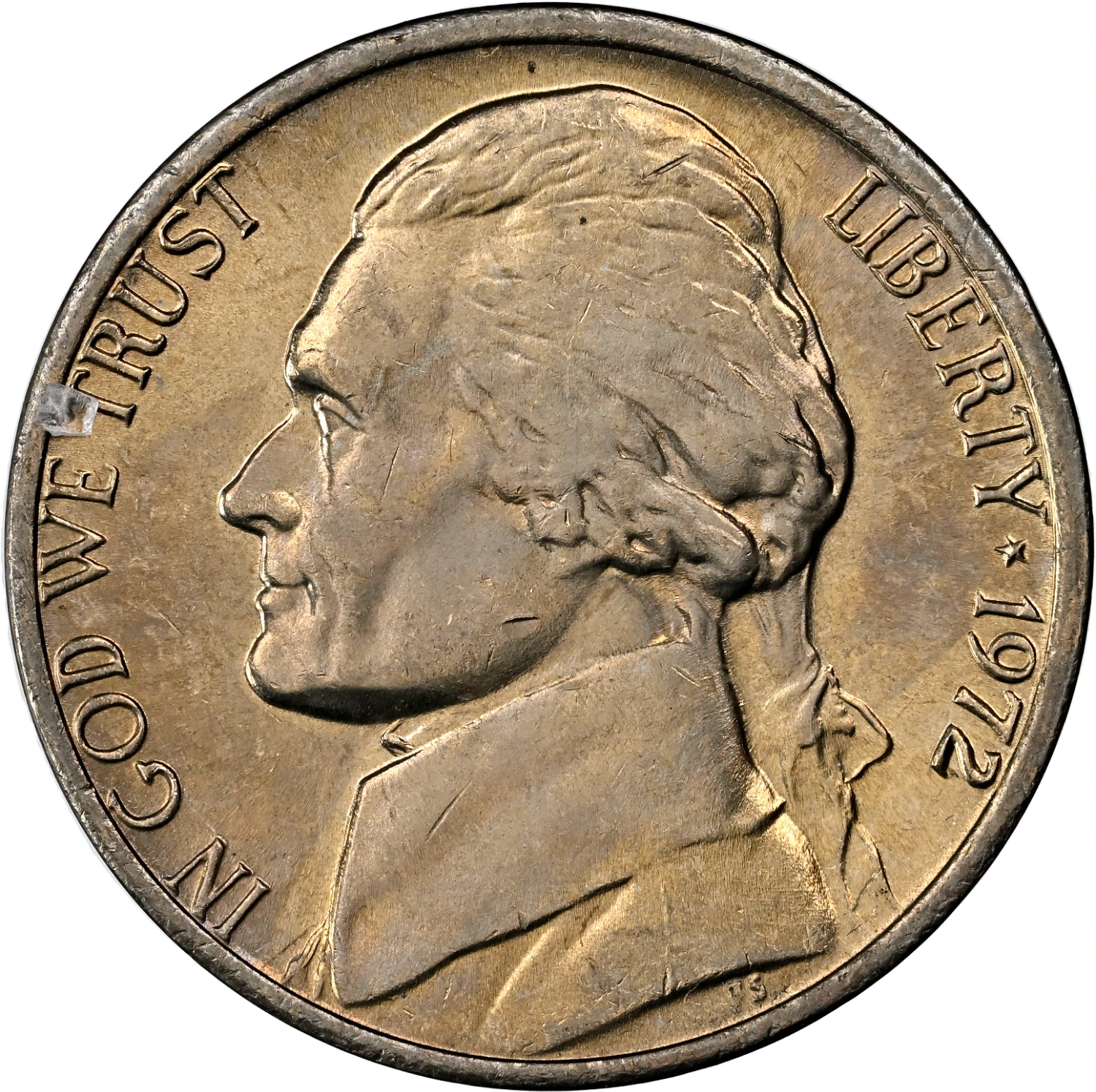
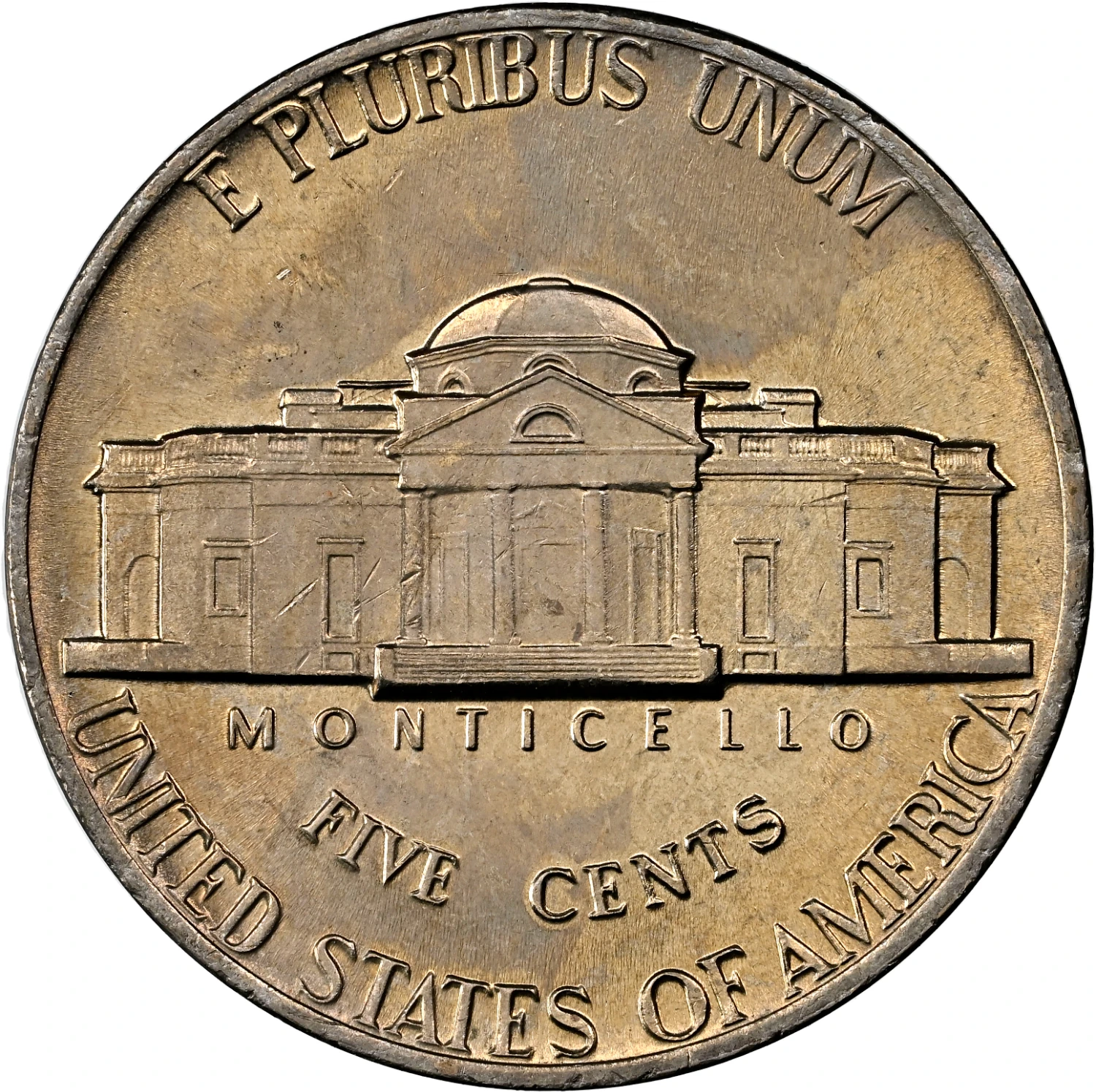
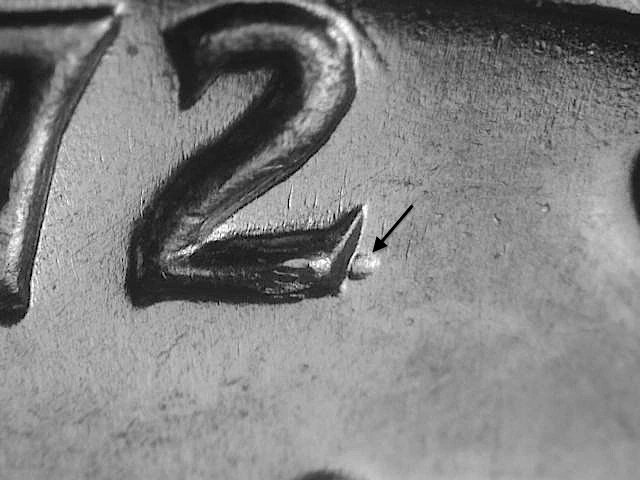
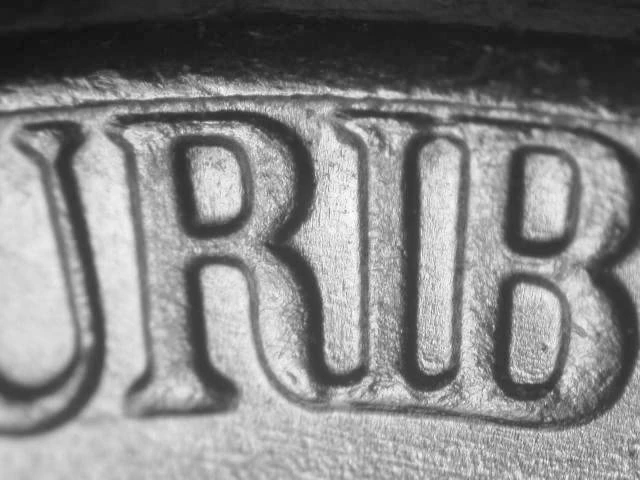
What is normal for this issue?
The 1972 nickel continued the Jefferson portrait and Monticello reverse. Its ordinary 5-cent alloy is 75% copper and 25% nickel, with a nominal mass of 5.00 g. It is not a wartime silver nickel. A dull gray surface therefore does not establish a special composition.
The year appears frequently in searches because the 1972 doubled-die penny is well known. That cent is a different denomination, design and attribution. A 1972 nickel must be matched to nickel diagnostics;the same year is not permission to borrow a penny’s photographs or prices.
For the broader mechanisms and other dates,compare the nickel error guide. A year-specific attribution still needs the exact diagnostics described below.
How do normal coins and errors compare?
| Coin or observation | Where to look | Meaning | How to confirm | Value context |
|---|---|---|---|---|
| Unmarked 1972 circulation nickel | No letter in normal mint position | Ordinary issue | Check complete date and manufacture | No missing-P premium |
| 1972-D WDDO-001 | Close doubling on numeral 2 | Cataloged doubled-die obverse | Match the date feature and die markers | No matched sale quoted here |
| 1972-D WDDR-001 | Doubling on reverse legend, right building edge and AMERICA | Separate cataloged reverse variety | Compare spread and markers | Do not borrow WDDO prices |
| 1972 on dime blank | Underweight, undersized planchet with restricted design | Documented wrong-planchet strike | Certification and correct blank identification | Different category from a doubled die |
Which diagnostics identify the actual cases?
What does 1972-D WDDO-001 actually show?
The catalog describes close Class VIII tilted-hub doubling on the 2 in the date. It is a small localized diagnostic, not the broad lettering spread familiar from the 1972 cent. Confirm the slanted die scratch left of Jefferson’s front collar and the scratch in the hair above the forehead before calling it the same die.
How does WDDR-001 differ?
This separate 1972-D reverse listing shows Class II doubling on E PLURIBUS UNUM, increasing toward the right, and on AMERICA and the building’s right edge. Its listed markers include an obverse gouge near the right edge of the U in TRUST and a reverse dot inside the large central semicircular window. Do not combine diagnostics from separate catalog entries.
What is the evidence for wrong-planchet 1972 nickels?
Heritage records an NGC MS 63 unmarked 1972 nickel struck on a 10-cent blank, with a recorded mass of 2.24 g. Nickel dies on a much smaller dime blank produce a different design envelope. Other records concern cent blanks;the donor denomination and metal must be identified rather than inferred from an orange photograph.
Could the feature be damage?
Is a flattened second outline a doubled die?
Machine doubling can leave shelf-like extra edges that reduce the apparent device. The photographed WDDO diagnostic is a particular form of die-made doubling. Match the actual feature and markers rather than labeling every doubled-looking 2 as the variety.
Does a brown nickel prove a cent-planchet error?
No. Toning, environmental damage and coatings can make a normal 5.00 g nickel brown. A claimed cent blank must agree with mass, diameter, metal and the design’s fit on the blank.
What do the price records establish?
| Coin or category | Grade or attribution | Amount | Source and date | Basis and limitation |
|---|---|---|---|---|
| Ordinary worn 1972 nickel | Unmarked or D | 5¢ | Face denomination | No error premium |
| 1972 on 10¢ blank | NGC MS 63;recorded 2.24 g | $345 | Heritage auction 1144, lot 12404, September 26, 2010 | Historical reported result for a specific wrong-planchet coin |
| 1972-D WDDO-001 or WDDR-001 | Exact die attribution required | Not quoted | Brian’s Variety Coins catalog accessed November 16, 2026 | No independently matched completed-sale range established |
A cataloged die variety and an accidental wrong-planchet strike should have separate price comparisons. The $345 record does not price a normal-weight nickel with a thick-looking date. Preserve the recorded grade and the 2.24 g measurement when discussing that particular auction example.
For doubled dies, the catalog demonstrates what to identify, but it is not itself a completed-sale record. A seller’s label or a photograph with enlarged arrows does not establish a market range. Obtain an attribution and compare the same variety, grade and surfaces before deciding whether certification costs make sense.
How should you check your coin?
1.Separate denomination and mint
Confirm 5 C,1972 and the mint position. Keep unmarked, D and S Proof comparisons separate.
2.Compare both sides
Photograph the 2 and the complete reverse. Check Wexler markers as a set, not just one suggestive line.
3.Measure an alleged off-metal coin
Record actual mass and diameter. Refer a convincing wrong-planchet candidate to a specialist;do not scrape the surface to inspect the metal.
Keep the original photographs and measurements together. HeriBase can help with an initial photo-based identification; a coin-specific error attribution or certified grade still requires the appropriate evidence.
What is the key takeaway?
The 1972-D date and reverse doubled dies have specific small diagnostics. Keep them separate from ordinary unmarked nickels, the 1972 penny and wrong-planchet auction coins;each category requires its own identification and price evidence.
What else do collectors ask?
Is a 1972 no-mint-mark nickel rare?
The blank mint position is normal for the unmarked circulation issue. It is not a missing-P error.
Where is doubling on 1972-D WDDO-001?
The catalog identifies close doubling on the numeral 2 in the date. Additional die markers help confirm the exact listing.
Is WDDR-001 the same variety?
No. It is a reverse doubled-die listing with diagnostics on the legend, AMERICA and the building’s right edge.
Is this the valuable 1972 doubled-die penny?
No. The Jefferson nickel and Lincoln cent are separate denominations with different diagnostics and market records.
Are 1972 nickels silver?
The ordinary issue is 75% copper and 25% nickel. It is not the wartime silver alloy.
What does the $345 sale prove?
It records the specified 1972 nickel on a dime blank, NGC MS 63, in 2010. It does not establish a value for every doubled-looking or discolored 1972 nickel.
Where can you verify the evidence?
References and further reading
- Brian’s Variety Coins:1972 nickel doubled-die listings
- Heritage:1972 nickel on dime blank and dated sale records
- NGC: ordinary 1972 nickel reference
References accessed November 16, 2026. Publication dates and historical sale dates are retained separately. A catalog attribution is not itself a sale or a current buying offer.