

 App Store

COIN VALUE GUIDES · PENNIES
1967 Penny Value:No Mint Mark, Copper Content and SMS Coins
Identify a 1967 Lincoln Memorial cent, compare ordinary Red Mint State prices and distinguish normal missing mint marks from Special Mint Set manufacture.
 HeriBase TeamPublished
In this article
Quick answer
A normal worn 1967 penny is a copper-alloy Lincoln Memorial cent with a one-cent face-value baseline. No mint mark is expected, not a missing-letter error. The absence of a letter cannot by itself prove where an individual coin was struck. Special Mint Set (SMS) cents are a separate collector category and also lack mint marks.
The PCGS guide checked October 23, 2026 lists ordinary regular strikes with Red color at $8 in Mint State 63, $18 in Mint State 65 and $26 in Mint State 66. These references assume the stated grade and original color; they do not value a brown worn coin or an SMS specimen.
Coin photos
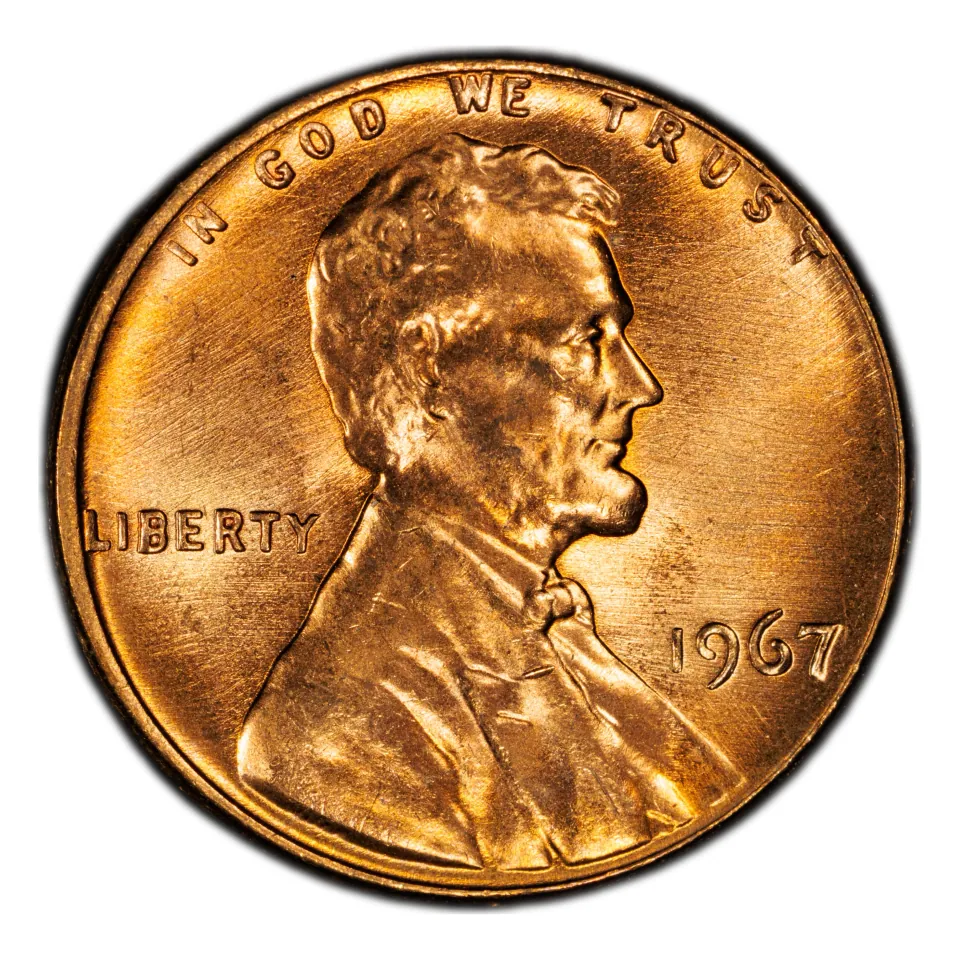
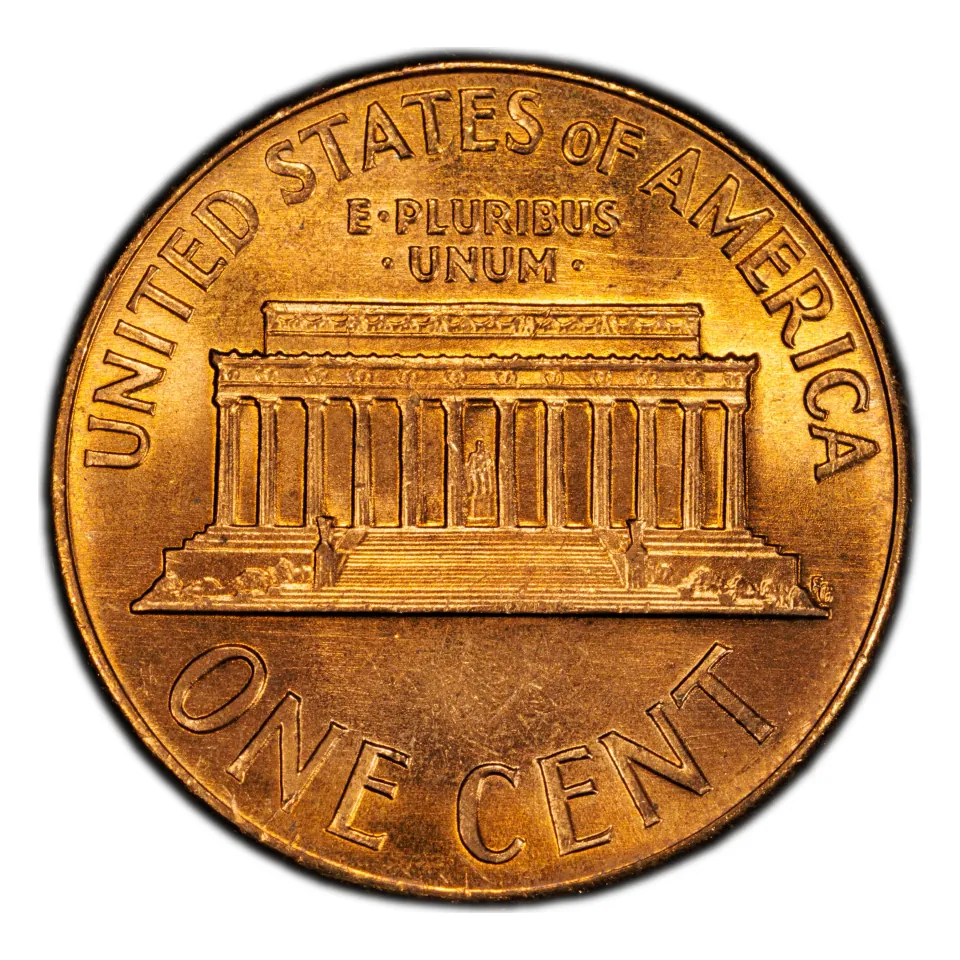
Basics & coin story
The 1967 cent belongs to a transition in U.S. coin production. Mint marks were omitted during 1965–1967 amid efforts to address coin shortages. Their return in 1968 explains why a missing letter has a different meaning here than on a later Denver coin. The Mint’s historical announcement documents that change; it does not turn every unmarked 1967 cent into a special variety.
Lincoln’s portrait by Victor David Brenner remained paired with Frank Gasparro’s Memorial reverse. The standard alloy was still 95% copper and 5% zinc, at 3.11 grams. The later copper-plated zinc cent had not yet replaced it. The 1982 penny composition guide explains why color alone cannot separate those later metals.
Collector Special Mint Sets filled the gap left by the temporary suspension of annual Proof sets. PCGS catalogs the 1967 SMS cent separately as a Special Strike, commonly abbreviated SP. An attractive regular strike can look bright too, so set context and manufacturing characteristics matter more than shine alone.
| Feature | What to check |
|---|---|
| Design / denomination | Lincoln portrait and Memorial reverse / 1 cent |
| Standard alloy | 95% copper, 5% zinc |
| Nominal weight / diameter | 3.11 g / 19 mm |
| Edge | Plain |
| Mint letter | None expected on normal 1967 issues |
| Regular strike | Compare MS grade and BN, RB or RD color |
| Collector issue | Special Mint Set; separate SP entry |
Identification
Read the complete date before searching for a letter
Look below the date without assuming a missing D or S. The normal 1967 absence of mint marks was a production policy, not evidence that a particular letter failed to strike. A shape resembling a letter needs examination for damage, deposits or alteration; it does not create an ordinary 1967-D or 1967-S circulation issue.
Separate an SMS cent from a regular strike
SMS describes the collector product and manufacturing category. It is not a grade. A coin from a broken set can lose its packaging while retaining its special-strike identity, but a reflective loose coin needs a careful comparison with a documented specimen. Cleaning can produce misleading brightness, and an ordinary uncirculated cent should not receive an SMS label simply because it has little wear.
Keep copper color separate from condition
Brown (BN), Red-Brown (RB) and Red (RD) describe retained copper color; Mint State describes the absence of circulation wear. The price examples here use RD. A brown coin can be uncirculated, while a reddish circulated cent is still worn. Inspect Lincoln’s cheek and hair, the Memorial and the fields rather than relying on the overall color.
Condition & value
Amounts are in U.S. dollars. PCGS retail-guide examples were checked October 23, 2026 and apply only to the stated issue, grade and designation. They are not guaranteed purchase offers; current market conditions and selling costs can change the amount received.
| Issue | Grade / condition | Value or reference | Basis | Important condition |
|---|---|---|---|---|
| Ordinary worn 1967 regular strike | Circulated | 1¢ face-value baseline | Denomination | No automatic missing-mark premium |
| 1967 regular strike, RD | MS63 | $8 | PCGS retail guide | Original Red; problem-free |
| 1967 regular strike, RD | MS65 | $18 | PCGS retail guide | Grade and color must match |
| 1967 regular strike, RD | MS66 | $26 | PCGS retail guide | Not a price for a worn cent |
| SMS / attributed error / other color | Exact issue and designation | Use separate evidence | Different comparison | No ordinary RD price transferred |
For a loose cent, begin with wear and surface status. Luster interrupted by friction differs from contact marks on an uncirculated coin. Spots, corrosion, scratches and artificial color can make a numerical guide comparison inappropriate even when the date is sharp. The coin grading scale and cleaning-signs guide explain the general checks.
Do not use an exceptional auction result as the starting price for every 1967 cent. A useful comparable must identify the same regular or SMS issue, numerical grade, copper color and any recognized attribution. A seller’s asking price is not a completed sale, and the cost of certification can exceed the likely premium on an ordinary example. Photograph the full coin and any specific feature before seeking an appraisal.
For neighboring dates, compare the 1968 penny guide. Mint marks returned in 1968, so that year’s S and D rules should not be projected backward onto 1967.
Summary
No mint mark is normal on a 1967 penny. Identify regular strike versus SMS, then assess wear and original copper color. Ordinary worn cents and certified Red Mint State coins occupy different value categories. Preserve the surfaces, use an exact comparison and investigate an alleged error independently of the missing letter.
FAQ
Is a 1967 penny with no mint mark rare?
No. Mint marks were normally omitted in 1967. Their absence alone does not establish rarity, a missing-letter error or the precise mint of an individual coin.
Is a 1967 penny copper or zinc?
The standard alloy is 95% copper and 5% zinc, with a nominal weight of 3.11 grams. It is not the later copper-plated zinc cent.
Is a shiny 1967 penny necessarily an SMS coin?
No. A bright regular strike or a cleaned coin can be reflective. Identify Special Mint Set manufacture from appropriate evidence, not shine alone.
Can a brown circulated 1967 cent use Red MS65 prices?
No. MS65 is an uncirculated grade and Red is a separate color designation. Both must match the comparison coin.
References
References and further reading
- PCGS CoinFacts: exact issue, specifications and available guide evidence
- U.S. Mint: mint marks restored after the 1965–1967 omission
- PCGS: separate 1967 Special Mint Set cent
Sources and quoted guide evidence checked October 23, 2026. Guide estimates, historical sales, face value and metal-content calculations are identified separately.