

 App Store

COIN VALUE GUIDES · PENNIES
1968 Penny Value:D, S, No Mint Mark and Proof Identification
Compare 1968-D Red penny values, identify Philadelphia and San Francisco issues, and understand why an S mint mark does not automatically mean Proof.
 HeriBase TeamPublished
In this article
Quick answer
An ordinary worn 1968 penny is a common Lincoln Memorial cent with a one-cent face value. No mint mark is normal for Philadelphia; D identifies Denver. San Francisco made both regular-strike and Proof cents with S, so that letter alone does not identify the finish.
The PCGS retail guide checked October 22, 2026 lists 1968-D Red coins at $6 in Mint State 63, $14 in Mint State 65 and $20 in Mint State 66. Mint State (MS) means uncirculated, and Red (RD) is a copper-color designation. These estimates apply to Denver regular strikes meeting those conditions, not every bright or worn 1968 penny.
Coin photos
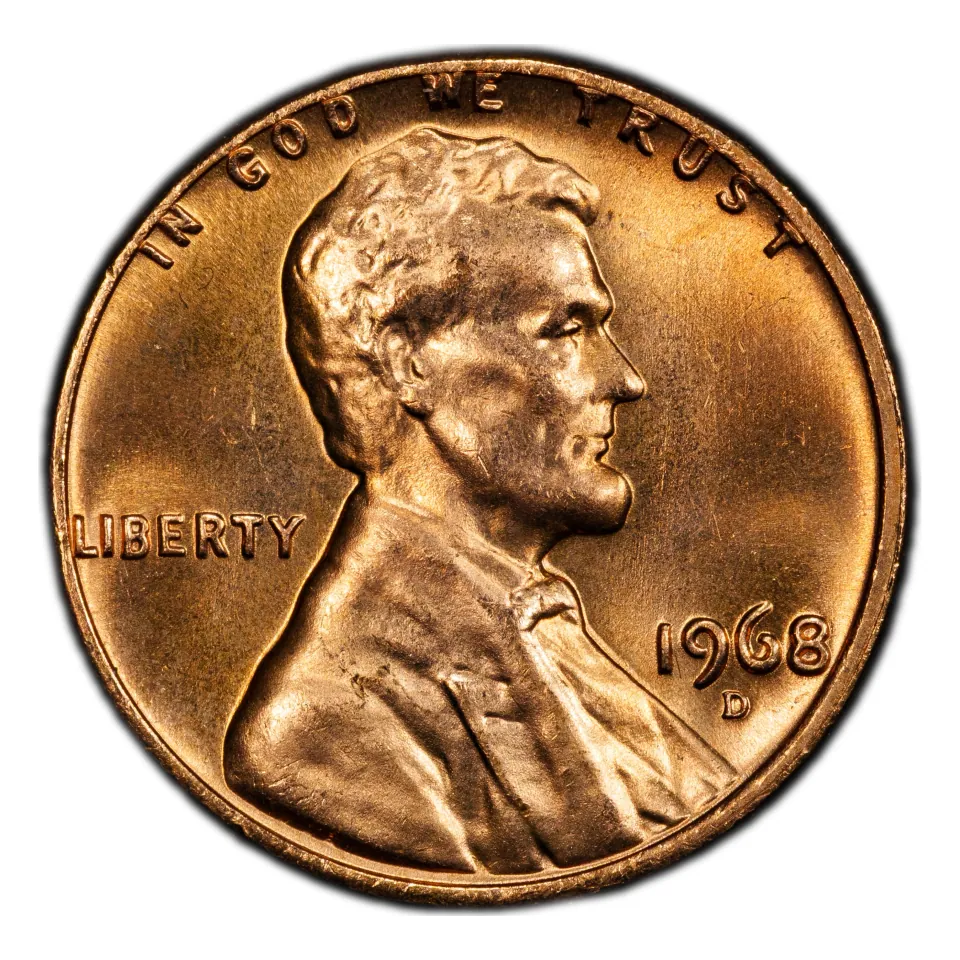
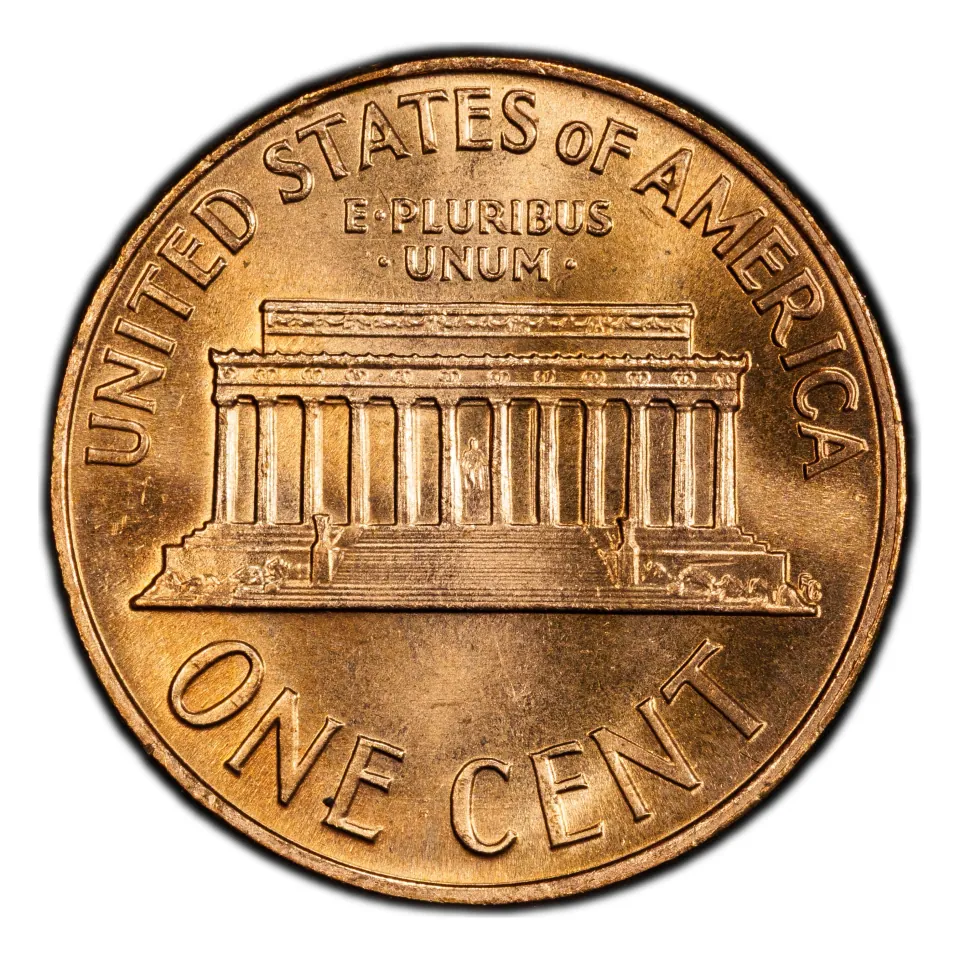
Basics & coin story
The 1968 issue marks the return of mint marks after their omission on 1965–1967 coins. The Mint’s January 4, 1968 announcement also displayed a San Francisco Proof set. That restored letter is useful information, but its meaning still depends on the denomination and manufacturing category.
PCGS records 2,886,269,600 Denver regular cents and 258,270,001 San Francisco regular cents. The Memorial reverse by Frank Gasparro accompanies Victor David Brenner’s Lincoln portrait. The year therefore belongs to the copper-alloy Memorial series, rather than the earlier wheat design or the later copper-plated zinc cent. The 1969 penny guide covers the following date separately.
| Feature | What to check |
|---|---|
| Type / denomination | Lincoln Memorial cent / 1 cent |
| Metal | 95% copper, 5% zinc |
| Nominal weight / diameter | 3.11 g / 19 mm |
| Edge | Plain |
| Regular marks | No letter: Philadelphia; D: Denver; S: San Francisco |
| Proof issue | San Francisco, also marked S |
| Mint-mark location | Obverse, below 1968 |
Identification
Use the date before applying a no-mark rule
A Philadelphia 1968 cent normally lacks a letter. Denver and San Francisco regular strikes carry D and S. Do not describe the no-mark cent as an omission error simply because mint marks returned that year; Philadelphia’s regular convention was still to leave this cent unmarked.
An S cent can be a regular strike or a Proof
A 1968-S regular strike and a 1968-S Proof are different issues. Proof describes a collector manufacturing method, not just a shiny surface. Original set context, field texture, detail and expert examination are more useful than the letter by itself. A polished circulation coin does not become a Proof.
Attribute a repunched mint mark or doubled die precisely
PCGS lists a Denver repunched-mint-mark attribution, FS-501, and a doubled-die-reverse attribution, FS-801. Those are specific entries, not names for every thick D or blurred Memorial. Match the relevant die diagnostics and location. Scratches, reflected light and mechanical doubling do not establish either variety. Photograph the feature before seeking an attribution.
Condition & value
Amounts are in U.S. dollars. PCGS retail-guide examples were checked October 22, 2026 and apply only to the stated issue, grade and designation. They are not guaranteed purchase offers; current market conditions and selling costs can change the amount received.
| Issue | Grade / condition | Value or reference | Basis | Important condition |
|---|---|---|---|---|
| Ordinary worn regular strike | Circulated | 1¢ face-value baseline | Denomination | No automatic premium for the date |
| 1968-D, RD | MS63 | $6 | PCGS retail guide | Denver regular strike, original Red |
| 1968-D, RD | MS65 | $14 | PCGS retail guide | Problem-free uncirculated example |
| 1968-D, RD | MS66 | $20 | PCGS retail guide | Correct grade and color required |
| Philadelphia / S regular / S Proof | Exact issue and grade | Use matching entry | Separate comparisons | Do not substitute Denver prices |
| Attributed RPM or DDR | Exact variety and condition | Variety-specific evidence | Attribution required | No premium based on blurred lettering |
Inspect Lincoln’s cheek and jaw for friction, then look for contact marks, spots and hairlines in the fields. Weakly defined detail can reflect the strike or dies rather than circulation, so sharpness alone should not determine Mint State status. A genuine uncirculated coin can still have marks from handling and storage.
Brown (BN), Red and Brown (RB), and Red are separate copper-color categories. A brown cent cannot be priced from a Red row simply because it has the same numerical grade. Color in a phone photograph can also shift with lighting. Use the grading guide and the penny value-checking workflow before assigning a grade or paying for certification.
Summary
Read no mark, D or S, then identify regular strike versus Proof before choosing a price. The special trap for 1968 is treating every S cent as a Proof. Match original color and numerical grade, and investigate alleged Denver varieties through exact diagnostics rather than an unusual-looking letter.
FAQ
Is a 1968 penny with no mint mark an error?
No. Philadelphia normally issued the 1968 cent without a letter. Its absence alone does not establish rarity or an error.
Is every 1968-S penny a Proof?
No. San Francisco produced both regular-strike and Proof cents with S. The manufacturing category must be identified separately.
How much is a 1968-D penny worth?
An ordinary worn coin has a one-cent face value. PCGS Red regular-strike guide examples checked October 22, 2026 were $6 at MS63, $14 at MS65 and $20 at MS66; these conditions must match.
Does a thick D prove a 1968-D repunched mint mark?
No. A recognized repunched-mint-mark variety requires matching diagnostics. Damage, mechanical effects and blurred photographs are insufficient.
References
References and further reading
- PCGS CoinFacts: exact issue, specifications and available guide evidence
- PCGS: San Francisco regular-strike issue
- PCGS: Philadelphia regular-strike issue
- U.S. Mint: restoration of mint marks in 1968
Sources and quoted guide evidence checked October 22, 2026. Guide estimates, historical sales, face value and metal-content calculations are identified separately.