

 App Store

COIN VALUE GUIDES · QUARTERS
1963 Quarter Value:90% Silver, D, No Mint Mark and Proofs
Identify a 1963 Washington silver quarter, compare Philadelphia values, locate the reverse mint mark and separate regular strikes from collector Proofs.
 HeriBase TeamPublished
In this article
Quick answer
A normal 1963 Washington quarter contains 90% silver, with approximately 0.1808 troy ounce of fine silver at its nominal 6.25-gram weight. No mint mark is normal for Philadelphia; a D on the reverse identifies Denver. The standard issues are different from the copper-nickel clad quarters introduced in 1965.
The PCGS retail guide checked October 22, 2026 lists Philadelphia regular strikes at $17 in Very Fine 20, $25 in Mint State 63 and $30 in Mint State 65. These estimates apply to problem-free coins of the stated issue and grade. A Denver coin, a Philadelphia Proof or an attributed variety needs its own comparison.
Coin photos
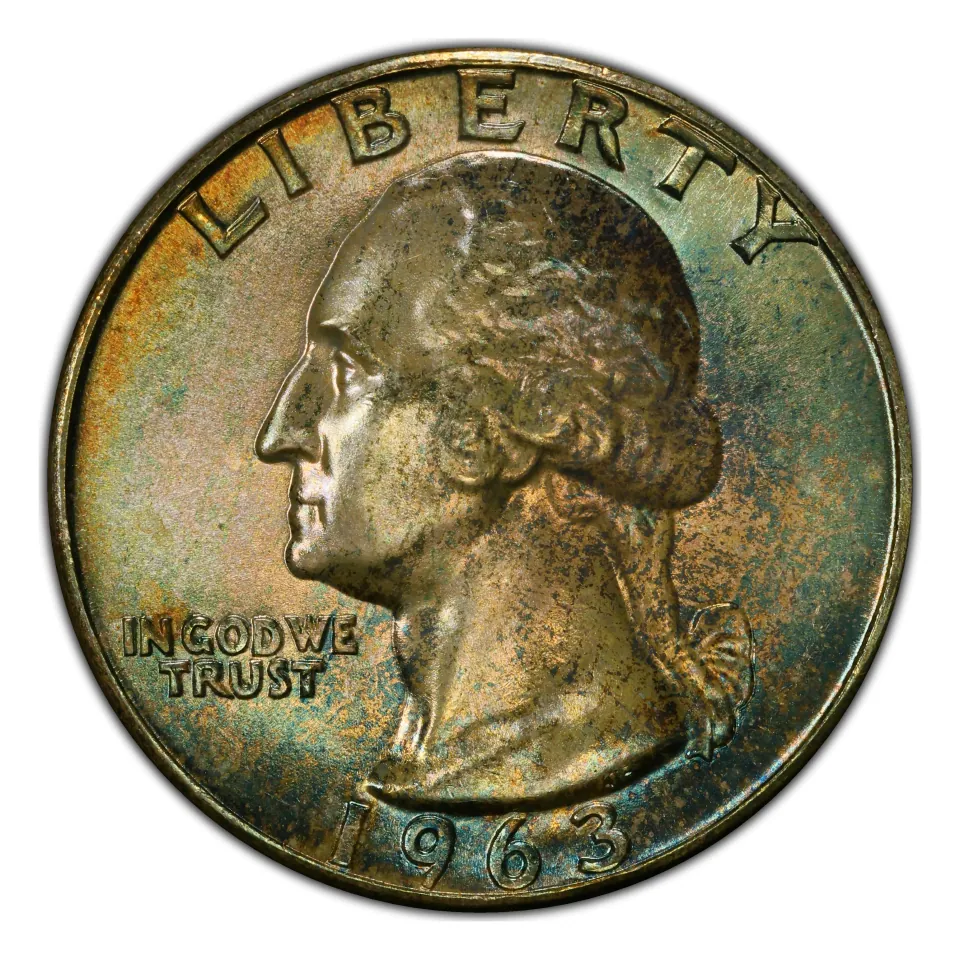
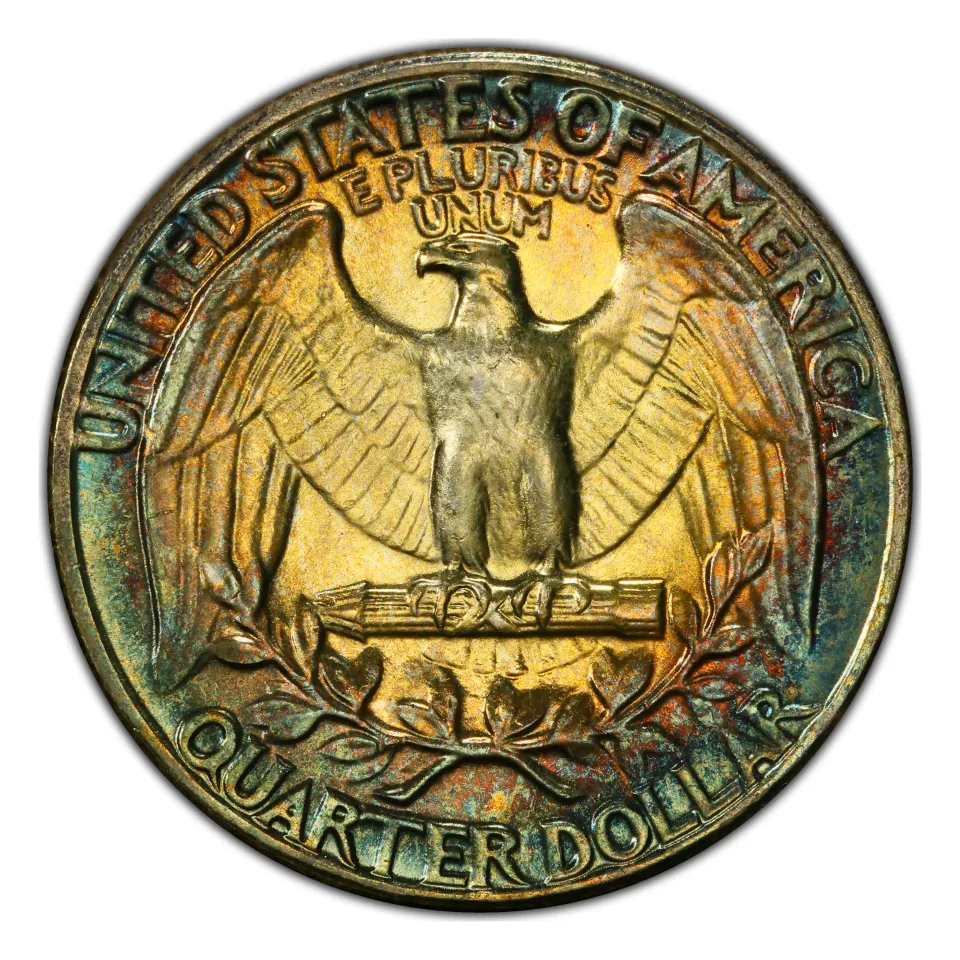
Basics & coin story
John Flanagan’s Washington portrait first appeared in 1932 to honor Washington’s 200th birthday. In 1963 it still accompanied the eagle reverse and the 90% silver standard. The date falls just before the final 1964 regular silver-quarter issue and the 1965 change to clad metal.
PCGS records 74,316,000 Philadelphia regular quarters in 1963. Such output helps explain why an old silver coin can be common while a particularly well-preserved example earns a condition premium. Original production is not the number surviving in a specific grade. The adjacent 1964 quarter guide explains the final regular silver year without supplying interchangeable prices.
| Feature | What to check |
|---|---|
| Type / denomination | Washington quarter, eagle reverse / 25 cents |
| Designer | John Flanagan |
| Metal | 90% silver, 10% copper |
| Nominal weight / diameter | 6.25 g / approximately 24.3 mm |
| Fine silver | Approximately 0.1808 troy ounce |
| Edge | Reeded |
| Regular issues | Philadelphia: no mark; Denver: D |
| Proof issue | Philadelphia, also without a mint mark |
Identification
Find the D on the reverse
Inspect below the eagle’s wreath and above QUARTER DOLLAR. The 1963 mint mark is not beside Washington on the obverse. A missing letter in the normal Philadelphia location is expected, so the coin should not be advertised as a missing-mark error solely for that reason.
No mark does not establish a Proof
Philadelphia made regular strikes and a separate collector Proof. Both lack a mint mark. Proof is a manufacturing category, commonly graded PR, while an uncirculated regular strike uses Mint State, or MS. Reflective fields, crisp detail and original set context support identification; a polished coin’s shine does not create Proof status.
Check the correct silver period
The normal 1963 issue is not a modern clad quarter with an unusual color. Its silver composition is expected. Conversely, a white edge alone does not prove authenticity or identify an alleged off-metal error. The date, design, mint, weight and physical surfaces should agree. Keep an unusual piece unchanged for examination rather than testing it by scratching.
Condition & value
Amounts are in U.S. dollars. PCGS retail-guide examples were checked October 22, 2026 and apply only to the stated issue, grade and designation. They are not guaranteed purchase offers; current market conditions and selling costs can change the amount received.
| Issue | Grade / condition | Value or reference | Basis | Important condition |
|---|---|---|---|---|
| 1963 Philadelphia regular | VF20 | $17 | PCGS retail guide | Problem-free circulated example |
| 1963 Philadelphia regular | MS63 | $25 | PCGS retail guide | Uncirculated, correct mint |
| 1963 Philadelphia regular | MS65 | $30 | PCGS retail guide | Original surface quality must match |
| Contained silver | Approximately 0.1808 troy oz | 0.1808 × silver spot per oz | Metal-content calculation | Not a fixed buying quote |
| 1963-D / Proof / attributed variety | Exact issue, grade and designation | Use matching evidence | Separate entries | No Philadelphia regular-strike price transferred |
A contained-silver reference is approximately 0.1808 times the silver price per troy ounce. That measures metal rather than collector retail value or a dealer’s guaranteed offer. Silver-market changes, buying spreads and selling costs can move the amount received away from a printed guide figure.
For condition, inspect Washington’s hair and cheek and the eagle’s high points for friction, then the fields for contact marks and hairlines. Weak strike, wear and cleaning are different issues. A coin should not receive an MS65 comparison simply because the date is clear or the surface is bright. Use the grading guide and the cleaning-identification guide for the general examination steps.
Summary
Read the 1963 date, check the reverse for D, and separate regular strike from Proof before using a price. The 90% silver content is normal. Preserve the surfaces, calculate the metal reference separately and compare the same mint and grade when seeking an offer.
FAQ
Is a 1963 quarter silver?
Yes. A standard 1963 Washington quarter is 90% silver and contains approximately 0.1808 troy ounce of fine silver at the nominal weight.
Where is the mint mark on a 1963 quarter?
It is on the reverse below the wreath and above QUARTER DOLLAR. D identifies Denver; no mark is normal for Philadelphia.
Is a no-mint-mark 1963 quarter a Proof?
Not necessarily. Philadelphia made regular strikes and a separate Proof issue without a mint mark. Identify the manufacturing category independently.
Can a 1963-D quarter use Philadelphia prices?
No. Denver is a separate issue. Match the mint, numerical grade, surface status and any attributed variety before using a price.
References
References and further reading
- PCGS CoinFacts: exact issue, specifications and available guide evidence
- PCGS: Denver issue and separate identification
- U.S. Mint: silver-quarter history and 1965 composition change
- NGC: silver Washington quarter nominal weight
Sources and quoted guide evidence checked October 22, 2026. Guide estimates, historical sales, face value and metal-content calculations are identified separately.