

 App Store

COIN VALUE GUIDES
1964 Dime Value: No Mint Mark, D, Silver and Proofs
Identify 1964 Roosevelt dimes, compare no-mark and Denver issues, calculate silver content, and separate ordinary coins, Proofs, Full Bands and special strikes.
 HeriBase TeamPublished
In this article
How much is a 1964 dime worth?
A normal 1964 dime contains 90% silver, so an ordinary worn coin is valued using silver content rather than ten cents alone. No mint mark is normal for Philadelphia; D identifies Denver. Published November 9, 2026 guide figures were $3.48 circulated and $4.30 broadly uncirculated; Proofs and exceptional designations need separate comparisons.
Evidence reviewed November 13, 2026. All quoted prices retain their stated dates and conditions.
Which real coin details should I compare?
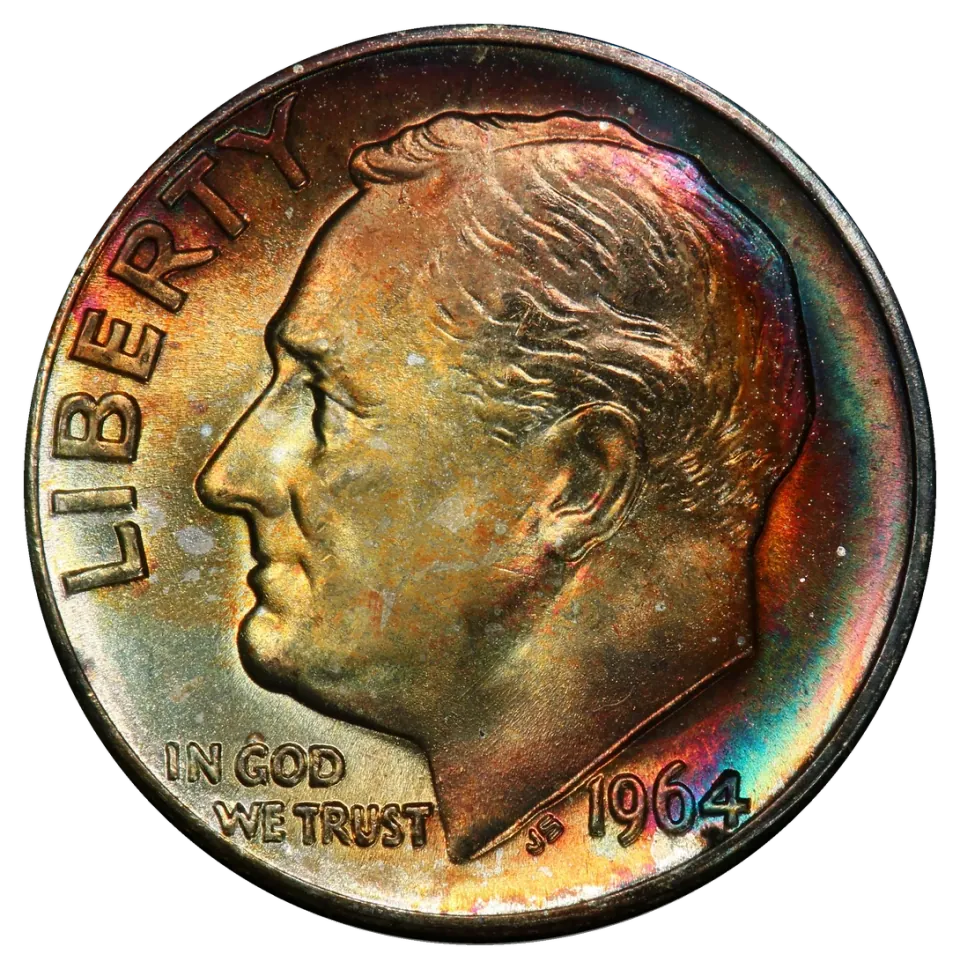
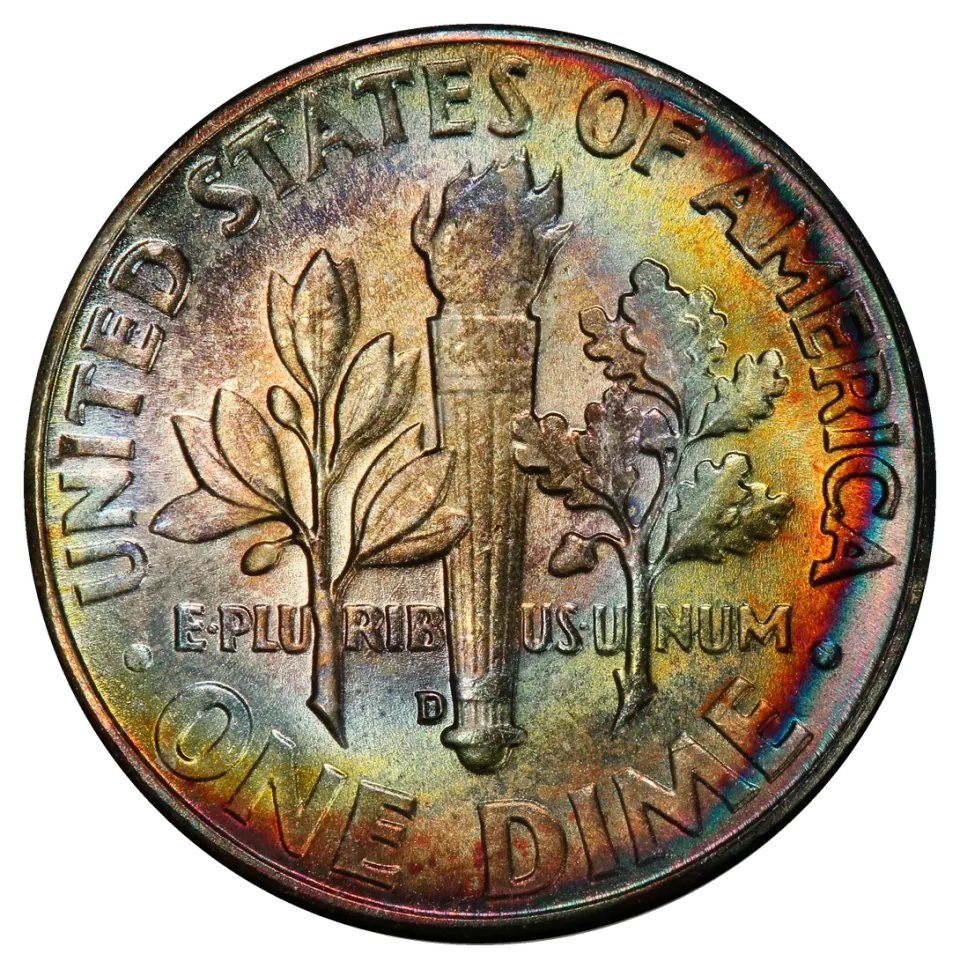
How do the issues and values compare?
What makes 1964 important in Roosevelt dime history?
John R. Sinnock’s Roosevelt dime entered circulation in 1946, honoring Franklin D. Roosevelt after his death. The torch, olive branch and oak branch on the reverse continued through the 1965 material change. The 1964 date marks the last normal 90% silver circulation issue; a familiar design alone does not identify the metal. The Roosevelt dime series guide explains the longer sequence.
How much silver is in a 1964 dime?
The nominal specification is 2.50 grams, 17.9 millimeters and a reeded edge, with 90% silver and 10% copper. Nominal fine-silver content is approximately 0.07234 troy ounce. A metal-content calculation is 0.07234 × silver price per troy ounce. At a hypothetical $50 silver price that equals about $3.62. This example is arithmetic, not a current spot quote or a dealer purchase offer.
Wear can remove metal, and buyers may use standard circulated-silver pricing conventions. Retail premiums, shipping and selling costs differ from an arithmetic melt figure. Do not combine a silver price from one date with a guide quotation from another and call the difference a guaranteed profit.
| Issue | Condition / category | Amount | Reference date | What the figure means |
|---|---|---|---|---|
| 1964 no mint mark | Good / Fine / Extremely Fine | $3.48 | CoinStudy, Nov. 9, 2026 | Published circulated guide, not a live silver quote |
| 1964-D | Good / Fine / Extremely Fine | $3.48 | CoinStudy, Nov. 9, 2026 | Same dated broad circulated categories |
| 1964 or 1964-D | Mint State, broad guide category | $4.30 | CoinStudy, Nov. 9, 2026 | Not an assigned MS63 or MS65 price |
| 1964 Proof | PCGS PR69 Deep Cameo | $184 | Heritage, June 10, 2008; lot 22379 | Historical individual auction total; 15% buyer premium included |
| Either regular mint | Nominal silver content at hypothetical $50/oz | $3.62 | Calculation example | Not a dated market quotation |
Is a no-mint-mark 1964 dime an error?
No. Philadelphia circulation strikes normally have no mint mark. Denver coins carry D on the reverse near the lower left of the torch. Do not look beside the obverse date as on many later issues. The paired specimen above is a Denver coin; its missing obverse letter is normal because the letter is on the other side.
How do ordinary coins, Proofs and Full Bands differ?
| Category | Identification | Manufacture / grade | Value approach | Common mistake |
|---|---|---|---|---|
| Circulation strike | No mark or reverse D | Wear or Mint State preservation | Silver baseline plus justified premium | Every bright coin is a Proof |
| Philadelphia Proof | No mint mark; confirmed Proof surfaces | PR grades; Cameo categories if qualified | Match Proof grade and contrast | No mint mark makes it a missing-S Proof |
| Full Bands | Complete separated torch bands | PCGS qualifying Mint State designation | Match FB grade and issue | Any visible torch lines qualify |
| Special Mint Set-style strike | Specialist attribution required | Rare 1964 special-strike category | Use authenticated comparable records | An unusually shiny dime is SMS |
| Altered / plated coin | Surface or edge changes | May have damage | Do not use problem-free prices | Color proves another alloy |
Full Bands (FB) concerns the horizontal bands binding the torch. PCGS requires full separation of the upper and lower bands without cuts or marks across them on qualifying Mint State coins. It does not mean the portrait is unworn by itself. A lower-grade FB coin and a higher-grade non-FB coin are separate comparisons.
Were 1964 Proof dimes made in San Francisco?
The normal 1964 Proof dime was a Philadelphia product without a mint mark. A 1964 dime lacking S therefore is not comparable to the famous missing-S Proof errors of later years. Proof is a method of manufacture, not a synonym for a high grade. The $184 sale above concerns PR69 Deep Cameo, not a typical loose circulated dime or every 1964 Proof.
What about 1964 SMS and alleged missing-mint-mark errors?
Special Mint Set (SMS) is often used loosely online. The scarce recognized 1964 special strikes require expert attribution and cannot be established from shine, missing letters or an ordinary date. Do not infer their mintage from the normal Proof-set production figure. For actual production faults, use the dime error guide and compare weight, edge and both faces rather than a seller’s headline.
How do I avoid overpaying for a common silver dime?
Start with identity and a dated silver baseline. Look for wear on Roosevelt’s cheek and hair, then inspect the fields and torch for contact marks, cleaning or weak strike. An uncertified MS claim does not make a coin equivalent to a certified gem. Use the grading scale for terminology and compare multiple completed sales before seeking paid grading for an ordinary specimen.
How can I check my coin in three steps?
- 01Confirm 1964 and inspect the reverse beside the torch for D or the normal blank Philadelphia area. Record weight and edge without treating wear as an alloy error.
- 02Separate circulation strikes, Proofs and specialist special-strike claims. Check torch bands and surfaces; do not certify a designation from brightness.
- 03Use the dated circulated guide or a silver calculation for an ordinary coin. For a premium, match issue, manufacture, numerical grade and designation to completed sales.
What should I remember?
1964 is a silver-composition date, and a Philadelphia coin normally has no mint mark. A Denver D is on the reverse. Ordinary coins need a silver-based comparison; Proof, FB and special-strike prices belong to narrower categories.
Keep the reference date and condition beside every figure. The broad $4.30 guide category and the old $184 PR69 Deep Cameo sale are not interchangeable prices.
What else do collectors ask?
Is a 1964 dime without a mint mark silver?
A normal Philadelphia 1964 dime is 90% silver. No mint mark is normal for that issue; authenticity and alteration remain separate checks.
Where is the D on a 1964 dime?
On the reverse, to the left of the base of the torch. It is not beside the obverse date.
How do I calculate the silver value?
Multiply nominal fine-silver content, approximately 0.07234 troy ounce, by the silver price per troy ounce. That gives a metal-content reference, not a guaranteed dealer offer.
Is a 1964 no-S dime a rare Proof error?
No S is normal for a Philadelphia 1964 Proof. Do not apply later missing-S Proof-error comparisons to this date.
What does Full Bands mean?
For PCGS qualifying Mint State Roosevelt dimes, both upper and lower horizontal torch bands must be fully separated and free of interruptions across them. FB is separate from numerical grade.
Can I identify a 1964 SMS dime by its shine?
No. The recognized special-strike category needs specialist attribution. Ordinary Proofs, polished coins and bright circulation strikes can be misidentified.
Why are the guide and melt example different?
They use different bases and dates. The November 9 guide is a published market reference; the $50 silver example is hypothetical arithmetic. Neither guarantees a present selling price.
Which references support this guide?
References and further readingExpand
- CoinStudy: 1964 dime valuesCaptured guide dated November 9, 2026: circulated $3.48; broad Mint State $4.30.
- PCGS: regular 1964 dimeNormal composition and specifications.
- PCGS: 1964 Proof dimePhiladelphia Proof issue; separate manufacture.
- PCGS: Full Bands on Roosevelt dimesBand separation and designation criteria.
- PCGS: 1964 special-strike dimeSpecialist category, not an ordinary no-mark premium.
- Heritage 28062, lot 22379PR69 Deep Cameo, $184 including 15% buyer premium, June 10, 2008.