

 App Store

COIN VALUE GUIDES · HALF DOLLARS
1962 Half Dollar Value:Franklin Silver, D, Proofs and Full Bell Lines
Identify a 1962 Franklin half dollar, locate the reverse mint mark and compare ordinary Philadelphia values separately from Full Bell Lines and collector Proofs.
 HeriBase TeamPublished
In this article
Quick answer
A standard 1962 half dollar is a Franklin half containing 90% silver, with approximately 0.3617 troy ounce of fine silver. No mint mark identifies Philadelphia and D identifies Denver. Philadelphia also made a separate collector Proof without a mint mark; the missing letter alone cannot distinguish it from a regular strike.
The PCGS guide checked October 23, 2026 lists ordinary Philadelphia regular strikes at $37 in Very Fine 20, $44 in Mint State 63 and $55 in Mint State 65. Those are non-FBL comparisons. Full Bell Lines (FBL), Denver coins and Proofs require their own issue-and-designation evidence.
Coin photos
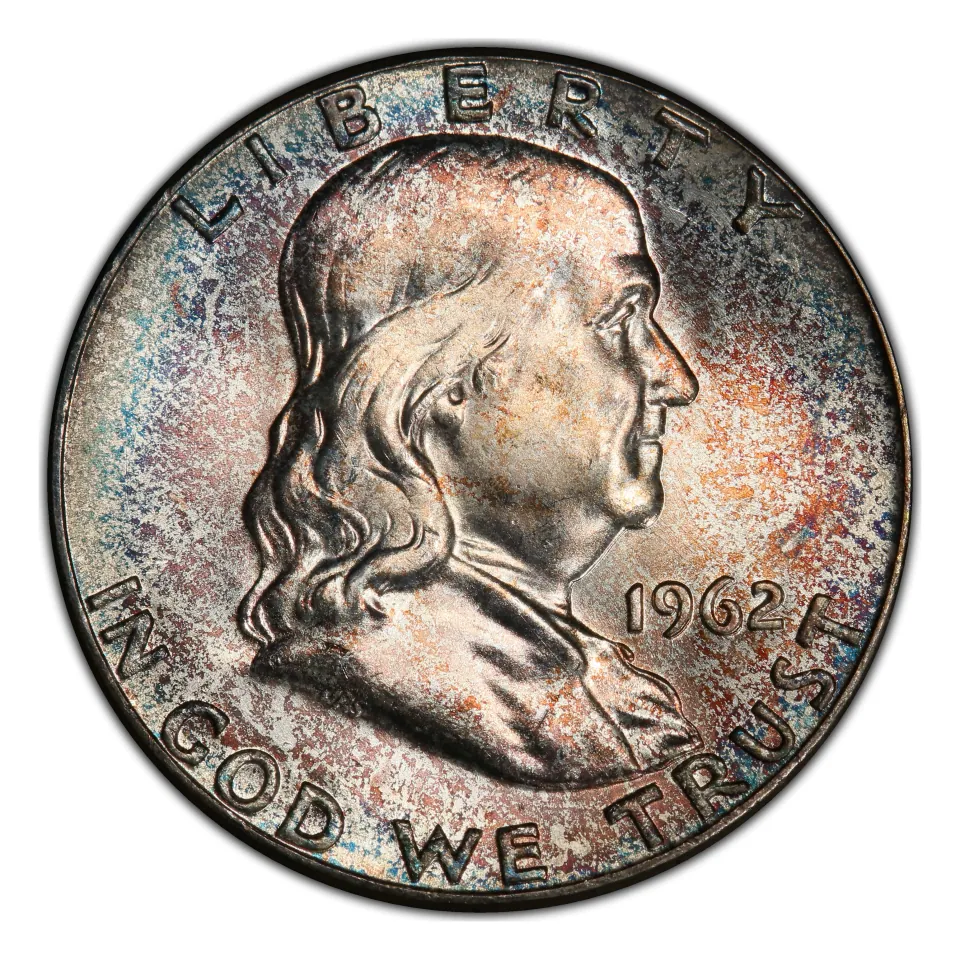
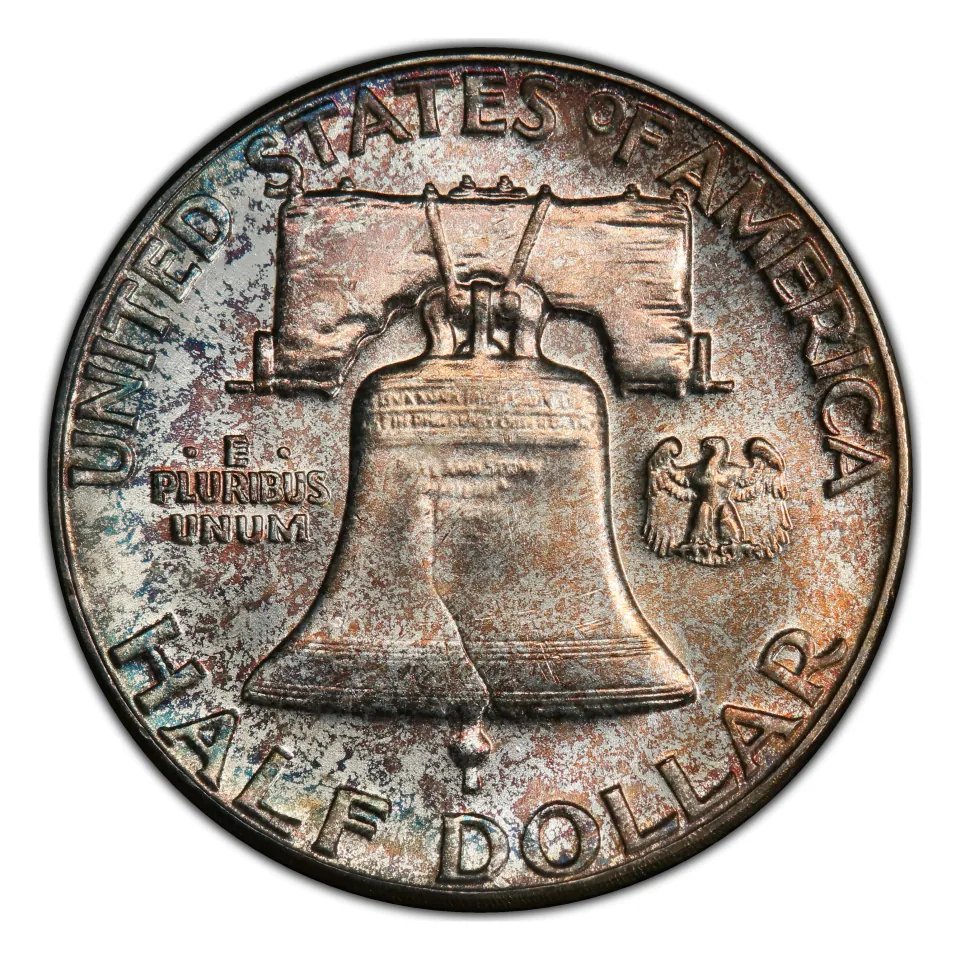
Basics & coin story
The Franklin half dollar was issued from 1948 through 1963. The 1962 date therefore belongs near the end of that series, before Kennedy replaced Franklin in 1964. Franklin’s portrait faces right; the reverse combines the Liberty Bell with a small eagle. The eagle is an intentional part of the design, not an added device or mint mark.
PCGS records 9,714,000 Philadelphia regular strikes for 1962. The original production total is separate from the number surviving with a particular grade or strike designation. Collectors can seek an ordinary circulated example, a well-preserved regular strike or a Proof without treating them as interchangeable products.
The Bell gives this series a distinctive collecting focus. Fine lower horizontal lines can be incompletely impressed even on an unworn coin. That is why Full Bell Lines is evaluated separately from the numerical grade. A high-grade label without FBL does not imply a damaged coin, and FBL does not mean Proof manufacture.
| Feature | What to check |
|---|---|
| Type / denomination | Franklin half dollar / 50 cents |
| Principal design | Franklin portrait; Liberty Bell and small eagle |
| Composition | 90% silver, 10% copper |
| Nominal weight | 12.50 g |
| Diameter / edge | Approximately 30.6 mm / reeded |
| Fine silver | Approximately 0.3617 troy ounce |
| Regular issues | Philadelphia: no mark; Denver: D |
| Mint-mark location | Reverse above the Liberty Bell |
| Collector issue | Philadelphia Proof, no mint mark; separate PR comparison |
Identification
Confirm Franklin before applying a Kennedy rule
A 1962 half with the normal U.S. design depicts Benjamin Franklin, not John F. Kennedy. The familiar Kennedy-era rule for 40% silver in 1965–1970 does not describe a 1962 Franklin. Compare the date, portrait and Bell reverse together, then locate the mint mark above the bell.
Separate a D coin from a no-mark coin
The reverse letter identifies Denver. No letter is normal for Philadelphia regular strikes and Proofs. A bright no-mark coin still requires a finish assessment; do not apply Proof prices simply because it reflects a lamp. Preserve original set packaging if available, but check that the coin matches its claimed product.
Understand what FBL adds
Full Bell Lines concerns the completeness of designated horizontal lines near the lower Bell. It is separate from wear, marks and the normal crack in the Liberty Bell design. Consult the grading service’s criteria and clear reference images before making the attribution. A scratch, glare or one sharp segment is not sufficient evidence for an FBL premium.
Condition & value
Amounts are in U.S. dollars. PCGS retail-guide examples were checked October 23, 2026 and apply only to the stated issue, grade and designation. They are not guaranteed purchase offers; current market conditions and selling costs can change the amount received.
| Issue | Grade / condition | Value or reference | Basis | Important condition |
|---|---|---|---|---|
| 1962 Philadelphia ordinary regular | VF20 | $37 | PCGS retail guide | No FBL premium assumed |
| 1962 Philadelphia ordinary regular | MS63 | $44 | PCGS retail guide | Problem-free uncirculated example |
| 1962 Philadelphia ordinary regular | MS65 | $55 | PCGS retail guide | Ordinary non-FBL entry |
| Contained silver | Approximately 0.3617 troy oz | 0.3617 × silver spot per oz | Metal-content reference | Not a guaranteed offer |
| 1962-D / FBL / Proof / named variety | Exact issue and designation | Compare separately | Different entries | No ordinary Philadelphia price transferred |
Circulated Franklin halves combine a silver-content reference with collector demand. The approximate metal calculation is 0.3617 times the silver price per troy ounce. It changes with the market and does not include every buying spread, fee or collector premium. A retail guide is a different kind of reference from a metal calculation or a completed sale.
Inspect Franklin’s cheek, the fields and the Bell for friction and marks. A heavily toned surface can make examination harder without proving either damage or originality. Cleaning can remove material or leave hairlines, so do not polish the coin before asking for an opinion. Use the grading scale and cleaning guide for the general assessment.
If a holder states FBL, compare with an FBL coin from the same service, mint and grade rather than adding an arbitrary percentage to the ordinary chart. Proof cameo contrast is another separate designation. The 1963 Franklin half-dollar guide covers the final year with its own values; the 1952 guide provides an earlier date comparison.
Summary
Read the Franklin portrait, check the reverse mint mark, and separate ordinary regular strikes, FBL coins and Proofs. The normal 1962 coin is 90% silver. Its metal reference and date-specific collector price answer different questions, so match the complete issue and preserve the surface before comparing offers.
FAQ
Is a 1962 half dollar a Kennedy half?
No. The normal 1962 U.S. half dollar is a Franklin half. Kennedy half dollars began in 1964.
How much silver is in a 1962 half dollar?
The standard Franklin half is 90% silver and contains approximately 0.3617 troy ounce of fine silver at its nominal 12.50-gram weight.
Where is the D on a 1962 Franklin half dollar?
On the reverse above the Liberty Bell. No mark identifies Philadelphia; regular strikes and Philadelphia Proofs both lack a mint letter.
Does Full Bell Lines mean a 1962 half dollar is a Proof?
No. FBL is a strike-detail designation for regular strikes. Proof is a separate manufacturing category, and each needs its own comparison.
References
References and further reading
- PCGS CoinFacts: exact issue, specifications and available guide evidence
- U.S. Mint: Franklin and Kennedy half-dollar chronology
- PCGS: Full Bell Lines grading criteria
- NGC: Franklin half-dollar series and specifications
Sources and quoted guide evidence checked October 23, 2026. Guide estimates, historical sales, face value and metal-content calculations are identified separately.