

 App Store

COIN VALUE GUIDES · HALF DOLLARS
1963 Half Dollar Value:Franklin, D Mint Marks and Full Bell Lines
Identify the final-year Franklin half dollar, compare Philadelphia, Denver and Proof issues, and understand silver content and Full Bell Lines without mixing Kennedy values.
 HeriBase TeamPublished
In this article
Quick answer
A regular 1963 U.S. half dollar is a Franklin half dollar containing 90% silver, not a Kennedy half dollar. Its nominal weight is 12.50 grams and its fine-silver content is approximately 0.3617 troy ounce. No mint mark identifies Philadelphia; a D above the Liberty Bell identifies Denver.
For a problem-free Philadelphia regular strike without a Full Bell Lines designation, the PCGS guide checked October 21, 2026 lists $37 in Very Fine 20, $44 in Mint State 63 and $55 in Mint State 65. Denver coins, Proofs and Full Bell Lines examples need separate comparisons. Contained-metal value and actual dealer offers move with the silver market.
Coin photos
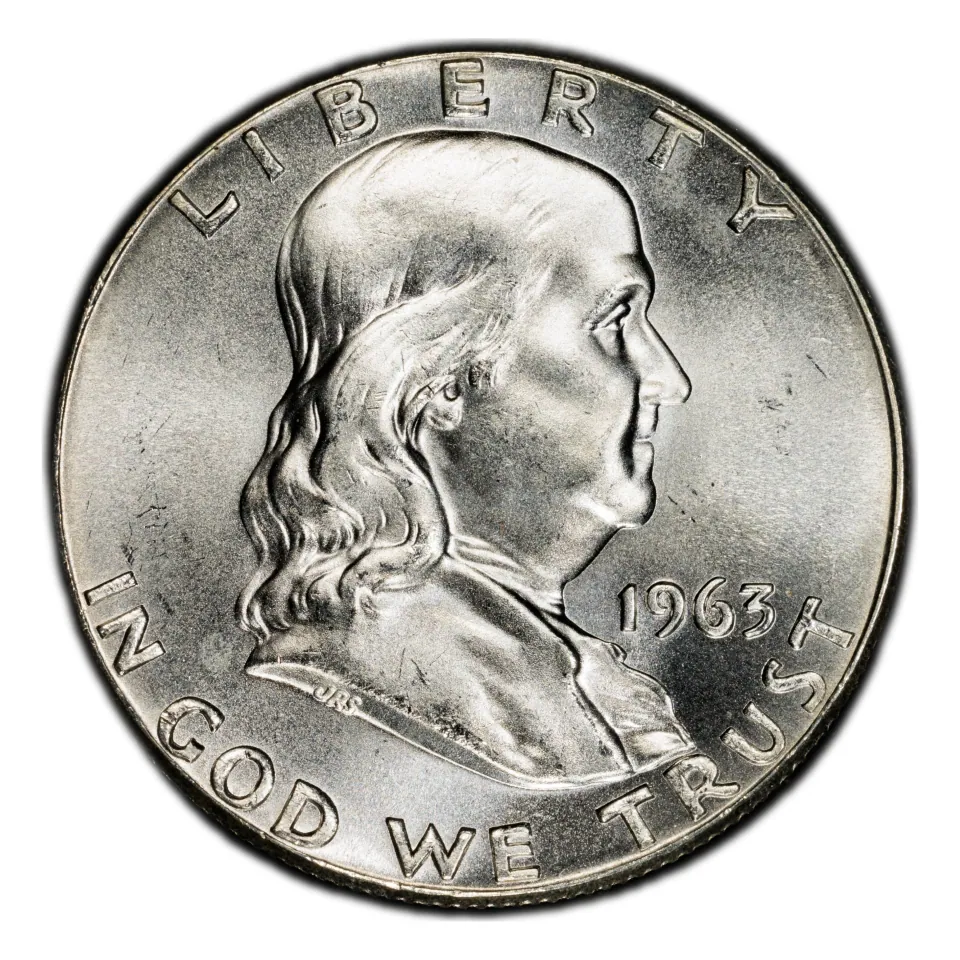
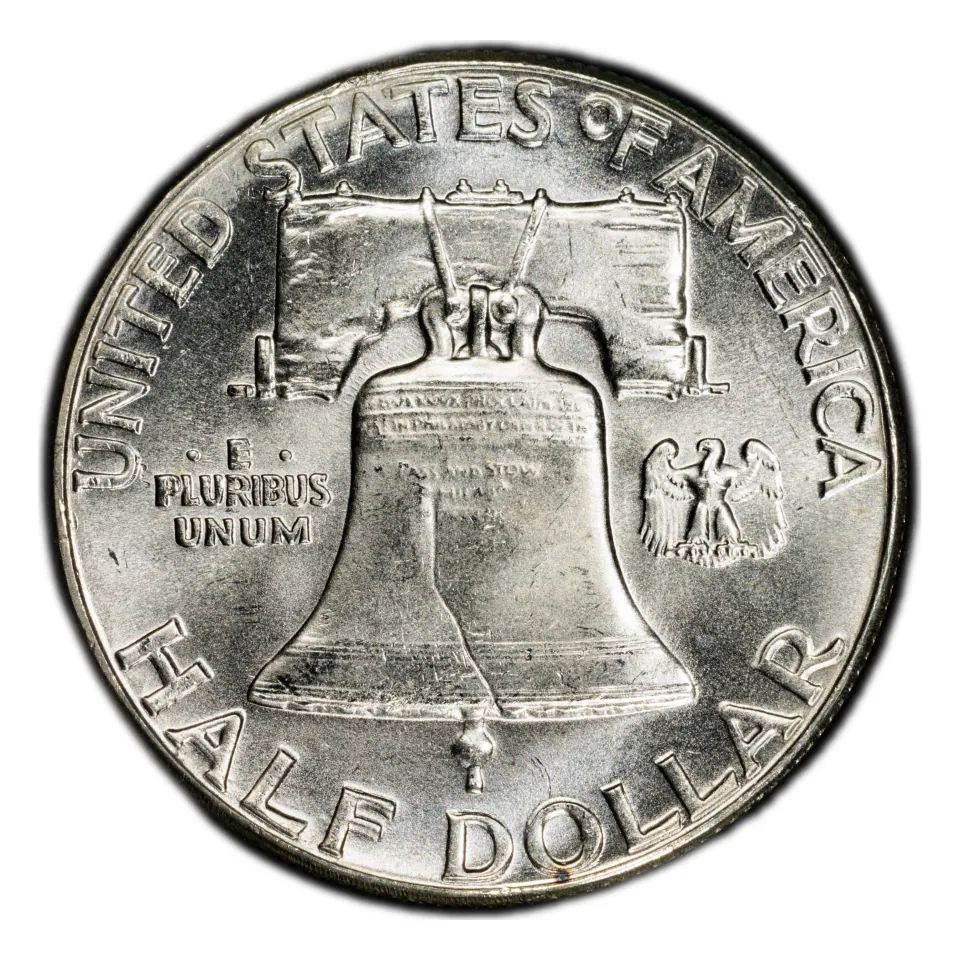
Basics & coin story
The Franklin half dollar ran from 1948 through 1963. Its portrait and bell connected a founding-era statesman to a national symbol of independence. The small eagle on the reverse also distinguishes the design from a simple medal or token.
After President Kennedy’s death in November 1963, the half dollar design changed for 1964. That makes 1963 the final Franklin date, but a final year is not automatically a low-mintage rarity. Philadelphia made 22,164,000 regular coins and Denver made 67,069,292. The 1964 Kennedy guide begins the next design, not another 1963 variety.
| Feature | What to check |
|---|---|
| Series / denomination | Franklin half dollar, 1948–1963 / 50 cents |
| Composition | 90% silver, 10% copper |
| Nominal weight | 12.50 g |
| Fine silver | Approximately 0.3617 troy ounce |
| Edge | Reeded |
| Mint mark location | Reverse, above the Liberty Bell |
| Issues | Philadelphia regular and Proof; Denver regular |
Identification
Turn to the bell for the mint mark
Inspect the space above the Liberty Bell. A D indicates Denver; no letter is normal for Philadelphia. Do not search only under the date as you would for a later Kennedy half. Read the 1963 date before choosing a series or metal-content chart.
Full Bell Lines is not just a visible bell
The Full Bell Lines (FBL) designation concerns the continuity and definition of horizontal lines near the bottom of the bell on eligible uncirculated coins. A bright bell, a high numerical grade or visible lines in one area does not establish FBL. Strike quality, contact marks and the grading service’s criteria must be considered together.
Proofs and circulated coins follow different paths
A Philadelphia Proof has no mint mark, just as the regular strike does. Its collector manufacture and finish require a Proof comparison, with Cameo designations evaluated separately. Conversely, a reflective coin with hairlines may have been cleaned. Use surface-preservation checks before interpreting shine as quality.
Condition & value
Amounts are in U.S. dollars. PCGS retail-guide examples were checked October 21, 2026 and apply only to the stated issue, grade and designation. They are not guaranteed purchase offers; current market conditions and selling costs can change the amount received.
| Issue | Grade / condition | Value or reference | Basis | Important condition |
|---|---|---|---|---|
| 1963 Philadelphia, regular | VF20 | $37 | PCGS retail guide | No FBL designation |
| 1963 Philadelphia, regular | MS63 | $44 | PCGS retail guide | Problem-free uncirculated coin |
| 1963 Philadelphia, regular | MS65 | $55 | PCGS retail guide | Ordinary non-FBL comparison |
| 1963-D or Full Bell Lines | Exact grade / designation | Use matching entry | Separate catalog comparison | D and FBL are different distinctions |
| 1963 Proof | Proof grade / contrast | Use Proof entry | Collector issue | No mint mark does not identify the finish |
For a worn coin, calculate the metal reference as approximately 0.3617 multiplied by the current silver price per troy ounce. Compare that with current buying offers and any collector premium; the metal calculation does not include dealer spreads or selling costs.
For an uncirculated coin, inspect Franklin’s cheek, hair and the bell’s high points for rub and marks. A raw coin should not be assigned an FBL premium merely because the lines appear in a photograph. The grade guide and half-dollar identification overview help sort mixed collections before a specialist assesses better pieces.
Summary
Identify Franklin, locate the reverse mint mark and separate regular strikes, Proofs and FBL coins. A 1963 half dollar contains 90% silver, but its collector price depends on the exact issue and preservation. Keep the surface original and compare a matching entry rather than transferring Kennedy prices.
FAQ
Is a 1963 half dollar a Kennedy coin?
A regular 1963 U.S. half dollar is a Franklin issue. The Kennedy design began in 1964.
How much silver is in a 1963 half dollar?
The standard Franklin half contains 90% silver, approximately 0.3617 troy ounce of fine silver, at a nominal total weight of 12.50 grams.
Where is the D on a 1963 half dollar?
The Denver mint mark is on the reverse above the Liberty Bell. No letter in that position is normal for Philadelphia.
Does MS65 automatically mean Full Bell Lines?
No. Full Bell Lines is a separate designation. Numerical grade alone does not establish that the bell meets the required line-detail criteria.
References
References and further reading
- PCGS CoinFacts: exact issue, specifications and available guide evidence
- PCGS: 1963-D specifications and issue distinction
- PCGS: 1963 Full Bell Lines entry
Sources and quoted guide evidence checked October 21, 2026. Guide estimates, historical sales, face value and metal-content calculations are identified separately.