

 App Store

COIN VALUE GUIDES · KENNEDY HALF DOLLARS
1964 Kennedy Half Dollar Value:Silver, Mint Marks and Proofs
Find the right value for the first Kennedy half dollar: start with its silver, then separate ordinary coins from collectible finishes and varieties.
 HeriBase TeamPublished Updated
 In this article
How much is a 1964 Kennedy half dollar worth?
The U.S. half dollar dated 1964 is the first-year Kennedy issue. A normal circulated 1964 Kennedy half dollar is worth more than its 50-cent face value because it contains 90% silver. NGC’s retail guide lists about $21.75–$22.50 for ordinary Philadelphia and Denver coins across circulated grades, checked October 14, 2026. These are dated guide estimates, not guaranteed buying offers; silver-price changes can move the baseline.
Uncirculated quality, Proof manufacture and verified varieties can add a premium. The same guide lists ordinary coins from either mint at $30 in Mint State 63 (MS63) and $45 in MS65. Accented Hair Proofs and rare Special Mint Set (SMS)–designated specimen strikes belong in separate comparisons. A missing mint mark is normal for Philadelphia and does not make a coin rare.
For your coin, confirm the 1964 date, look on the reverse for a D or no mint mark, and match the finish and condition before comparing recent sold examples. Cleaning, damage or an unverified special-issue claim can make a price comparison misleading.
Recognize the first Kennedy half dollar
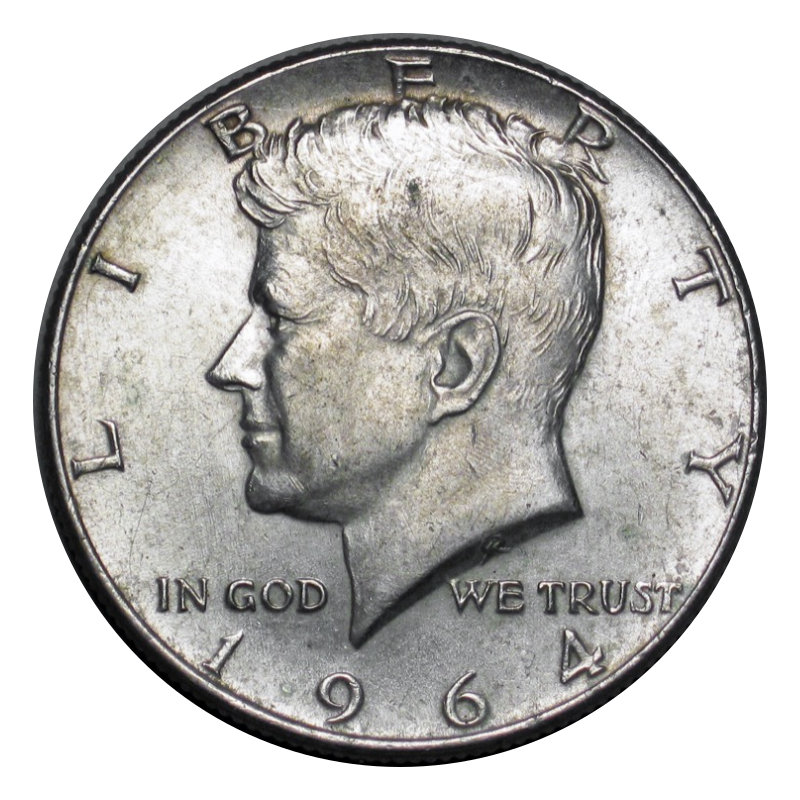
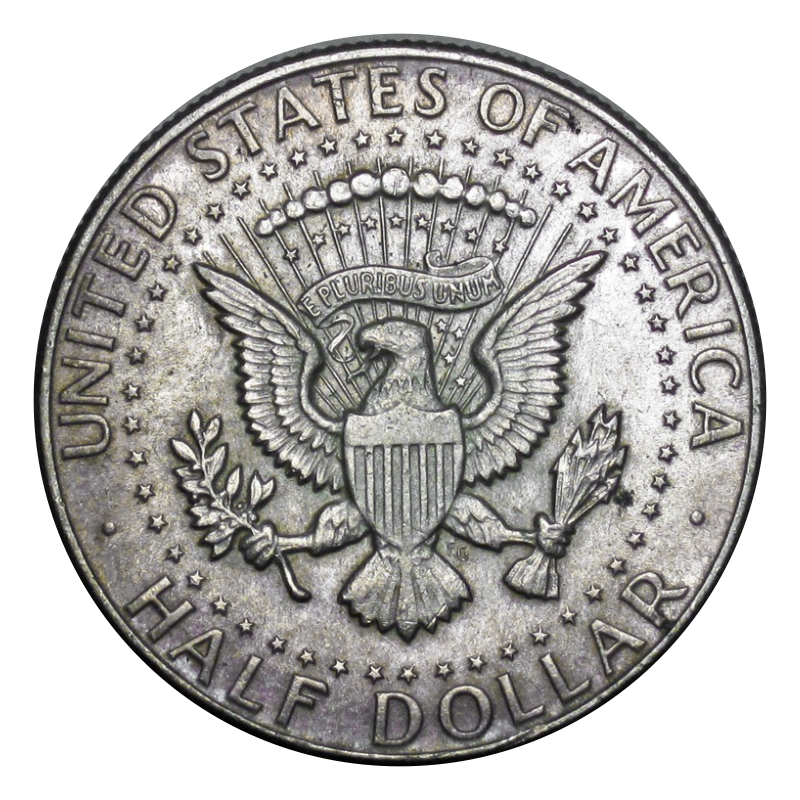
The photographs show the design and visible surface detail, not an assigned numerical grade. Keep both sides together when identifying a coin: the portrait side establishes the year, and the reverse supplies the 1964 mint mark.
The coin story: a memorial made in months
After President John F. Kennedy’s assassination in November 1963, the U.S. Mint moved quickly to create a circulating memorial. Chief Engraver Gilroy Roberts adapted his earlier medal portrait for the obverse; Frank Gasparro adapted the presidential seal for the reverse. Existing medal models helped the team work within an exceptionally short schedule.
In his own recollection, Roberts described the half dollar being chosen partly because Jacqueline Kennedy did not want Washington’s portrait removed from the quarter. Congress approved the new coin on December 30, 1963. Denver began regular production in late January 1964, followed by Philadelphia. The eagle, shield, olive branch and arrows brought the language of the presidential seal into everyday coinage.
Why 1964 matters for silver
1964 was the first Kennedy half-dollar date and the only year of the regular circulation series made in 90% silver. The standard 1965–1970 issues used 40% silver instead. Later collector silver editions exist, so “all Kennedy halves after 1964 contain no silver” is incorrect.
| Feature | Details |
|---|---|
| Face value | 50 U.S. cents |
| Metal | 90% silver, 10% copper |
| Standard weight | 12.50 g |
| Fine silver content | Approximately 0.3617 troy ounce |
| Edge | Reeded |
| Designers | Gilroy Roberts (portrait); Frank Gasparro (reverse) |
The silver figure follows from 12.50 g × 90%, converted to troy ounces. Weight and appearance are useful checks, but neither alone authenticates a particular coin.
For later dates, use the Kennedy half dollar series and silver-year guide. For Franklin, Walking Liberty and other designs, use the 50-cent coin guide. The prices on this page apply specifically to 1964.
Check the mint mark, finish and variety
Where is the 1964 D mint mark?
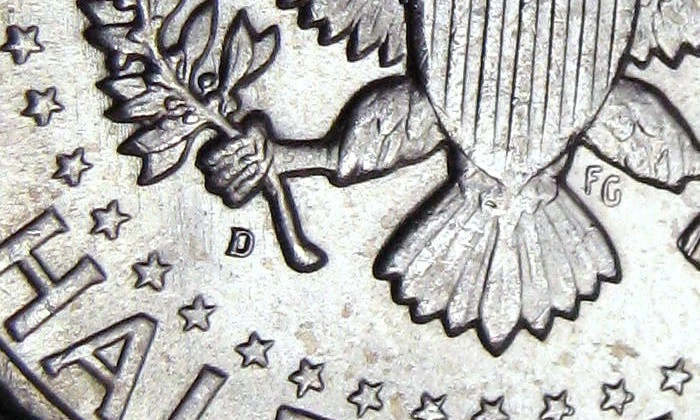
Turn the coin to the eagle side. Look below the olive branch, left of the eagle’s tail and above the word HALF. A small D identifies Denver. A normal Philadelphia coin has no letter there. The nearby FG initials belong to designer Frank Gasparro; they are not a mint mark.
Ordinary strike or Proof?
A Proof is a specially manufactured collector coin, not simply a coin that has stayed unworn. The 1964 Proofs were made in Philadelphia and have no mint mark, just like that mint’s ordinary strikes. Consequently, a blank mint-mark area cannot settle the finish.
Mirrorlike fields and carefully formed detail can support a Proof identification, but lighting and polishing can be deceptive. Original set packaging, a reliable attribution and examination of both sides help establish the issue. Cameo descriptions refer to contrast between the devices and fields; they are not interchangeable with a numerical grade.
What makes an Accented Hair Proof different?
The Accented Hair variety belongs to the 1964 Proof issue. PCGS identifies stronger hair strands above Kennedy’s ear and a largely missing lower-left serif on the I of LIBERTY as useful diagnostics. The reverse’s FG initials also have a diagnostic difference. Several features must agree; strong-looking hair in a photograph alone is insufficient.
Do not apply an Accented Hair price to every 1964 coin. If the required lettering and finish cannot be confirmed, keep the identification open and obtain sharper close-ups or an expert assessment.
And the rare 1964 SMS coins?
Special Mint Set (SMS) is the term commonly used for a small, unusual group of 1964 specimen strikes. Their history remains uncertain, and their attribution is a specialist matter. A satin appearance alone does not establish one. These coins must be separated from ordinary business strikes, Proofs and the publicly issued 1965–1967 Special Mint Sets.
1964 Kennedy half dollar value by condition
The NGC guide snapshot below was checked on October 14, 2026. Amounts are in U.S. dollars for ordinary issues in the listed grades, excluding special varieties and designations. They are retail estimates for graded coins, not a promise of what a dealer will pay.
| Issue | Circulated | MS63 | MS65 | MS66 |
|---|---|---|---|---|
| 1964 · no mark | $21.75–$22.50 | $30 | $45 | $120 |
| 1964-D | $21.75–$22.50 | $30 | $45 | $135 |
MS means Mint State: no circulation wear, with the number describing the grade. An uncirculated coin can still have contact marks. Our coin grading scale guide explains the distinctions.
Silver gives a baseline, not a fixed selling price
For a full-weight genuine coin, multiply approximately 0.3617 troy ounce by the current silver price per troy ounce. At an illustrative $60 silver price, that calculation gives about $21.70. This example is arithmetic, not a live quote. Buying spreads, fees and any collector premium affect the amount you receive.
That explains why a worn 1964 half can be worth far more than face value without being rare. It also explains why an old price screenshot can become stale even when the coin’s condition has not changed.
Separate grade, finish and surface problems
Compare the portrait’s exposed areas, the fields and the reverse together. A coin with attractive shine can still have wear, hairlines or polishing. Do not clean it to improve a listing photograph; our cleaned-coin identification guide covers the signs that make two otherwise similar coins poor price matches.
For Proofs, compare the same variety, numerical grade and cameo designation. For a claimed SMS coin, confirm the specialist attribution first. Those prices do not belong in the ordinary-strike table, and a high sale for either type is not evidence that a typical pocket-change example is equally valuable.
Turn the guide into a realistic comparison
Use a specific completed-sale search such as 1964-D Kennedy half dollar MS65, then inspect the photographs, certification, sale date and buyer’s premium. For an ungraded coin, seek comparable ungraded examples or obtain a condition assessment before borrowing a certified price. A seller’s unsold asking price is not a completed transaction.
Photograph both sides in even light and use HeriBase to help organize the identification. Verify the returned year and issue against the coin before using any reference value; the HeriBase user guide explains the workflow. If the expected premium depends on a special finish, variety or high grade, our coin appraisal guide can help you choose the next assessment step.
The key takeaway for a 1964 Kennedy half dollar
An ordinary 1964 Kennedy half dollar has 90% silver and a substantial premium over face value; the dated circulated guide range here is about $22. Further value depends on condition, finish and a verified variety. No mint mark is normal, while Proof, Accented Hair and SMS claims need separate evidence.
Confirm the date and reverse mint mark, preserve the surfaces and compare recent sales of the same issue and grade. Use silver content as a starting point and seek expert review before assigning a rare-coin price.
Frequently asked questions
Is a 1964 Kennedy half dollar with no mint mark rare?
No. Philadelphia normally used no mint mark on its 1964 Kennedy halves, including ordinary strikes and Proofs. A blank mint-mark area alone does not establish rarity or Proof status.
Are all genuine 1964 Kennedy half dollars silver?
The original 1964 Kennedy half-dollar issues are 90% silver and 10% copper. Standard weight is 12.50 grams, equivalent to about 0.3617 troy ounce of fine silver. Appearance alone does not authenticate a coin.
Is a 1964-D half dollar more valuable than one with no mint mark?
Not automatically. Ordinary circulated guide values are similar. At higher grades, prices can differ, so compare the same condition and surface quality rather than valuing the letter D in isolation.
How can I tell whether my coin is an Accented Hair Proof?
First establish that it is a 1964 Proof. Then check the hair above the ear and the lower-left serif of the I in LIBERTY, along with the other documented diagnostics. Strong hair detail alone is not enough; unclear examples need expert attribution.
What is the silver value of a 1964 half dollar?
A standard genuine 1964 Kennedy half contains about 0.3617 troy ounce of silver. Multiply that amount by the silver price per troy ounce for a metal-content estimate. Collector premiums, dealer spreads and selling costs are separate; the result is not a guaranteed cash offer.
References
- NGC · Kennedy half dollar price guideOrdinary 1964 and 1964-D base-grade rows, updated October 14, 2026; retail estimates, not individual sale results.
- U.S. Mint · Engravers’ recollectionsFirst-person accounts of the 1963–1964 design and production process.
- PCGS CoinFacts · 1964 regular strikeStandard weight, composition, designers and issue context.
- PCGS · 1964 Kennedy half dollarsSilver transition, ordinary and Proof issues. Historical price quotations are not used as current values.
- PCGS · Accented Hair diagnosticsHair, lettering and designer-initial diagnostics for the Proof variety.
- PCGS CoinFacts · 1964 specimen strikeSpecialist attribution and the uncertain history of SMS-designated specimen strikes.