

 App Store

COIN VALUE GUIDES · SERIES GUIDE
Kennedy Half Dollar Value:Silver Years, Mint Marks and Key Issues
Sort Kennedy halves by era and metal, recognize collector editions, and choose a sensible way to build the series.
 HeriBase TeamPublished
 In this article
How much are Kennedy half dollars worth?
Kennedy half dollars dated 1964 are 90% silver; regular 1965–1970 issues are 40% silver. Ordinary worn copper-nickel clad issues from 1971 onward usually begin at their $0.50 face value. Special silver collector editions are exceptions, so “after 1970” does not mean every Kennedy half is silver-free.
The standard silver amounts are about 0.3617 troy ounce for a 1964 half and 0.1479 troy ounce for a 1965–1970 half. Multiply by the current silver price to estimate metal content value; date, condition and collector demand may add a premium. That calculation is not a guaranteed dealer offer.
Set aside 1970-D, Proofs, silver Bicentennial pieces and other identified collector issues for a separate comparison. Check the year, mint mark and finish together. Kennedy’s portrait debuted in 1964 and appeared through 2025; the 2026 circulating half dollar temporarily uses the Enduring Liberty design.
Recognize both sides
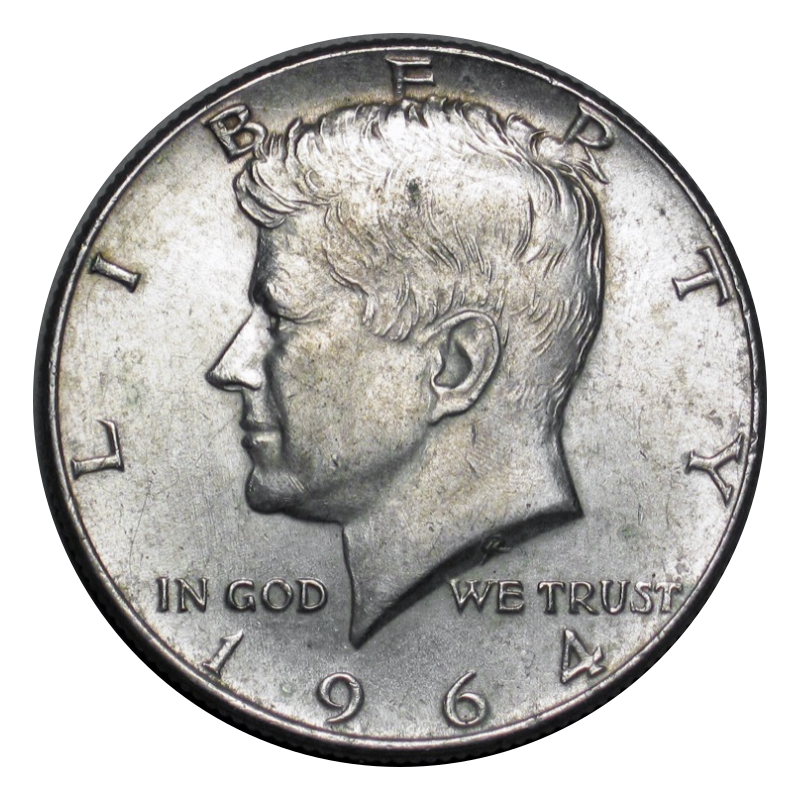
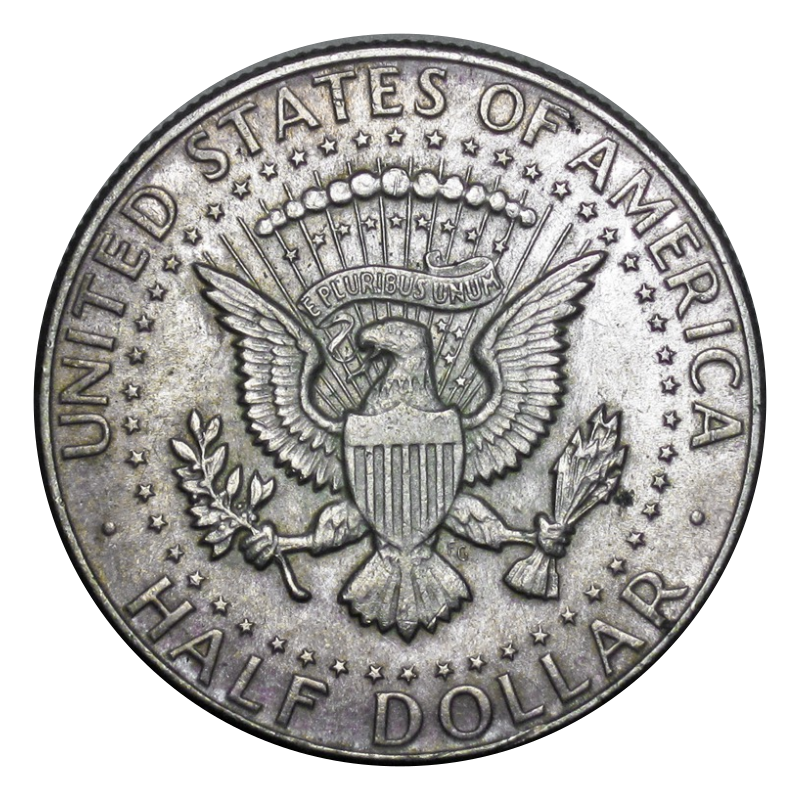
The coin’s story and basic facts
A memorial made for everyday money
After President John F. Kennedy’s assassination in November 1963, the Mint moved quickly to prepare a tribute. President Lyndon Johnson signed the authorizing legislation on December 30, 1963. Gilroy Roberts prepared the portrait and Frank Gasparro the reverse, drawing on work already made for Kennedy’s presidential medal.
The first coins reached the public in 1964. Many people saved them as keepsakes. Their history helps explain why a half dollar can feel unusual in everyday change without being a scarce collectible: public attachment and limited spending are different from low surviving supply.
Three changes that organize the series
The original silver composition changed to 40% silver in 1965 and to copper-nickel clad for regular issues in 1971. For the Bicentennial, coins struck in 1975 and 1976 used the dual date 1776–1976 and Independence Hall reverse. The usual eagle returned in 1977.
In 2026, the half dollar temporarily carries an Enduring Liberty design. A Statue of Liberty half dated for the 250th anniversary is a different design issue, not a Kennedy portrait variety. For comparisons with Franklin, Walking Liberty and other types, use the 50-cent coin guide.
| Feature | What to know |
|---|---|
| Denomination | 50 cents; one-half U.S. dollar |
| Kennedy portrait era covered here | 1964–2025, including the Bicentennial reverse |
| Designers | Gilroy Roberts, obverse; Frank Gasparro, standard reverse |
| Diameter | About 30.6 mm |
| 1964 standard issue | 12.5 g; 90% silver |
| 1965–1970 standard issues | 11.5 g; 40% silver |
| Regular clad issues from 1971 | 11.34 g; copper-nickel clad; no silver |
How to sort Kennedy halves by year and mint
1. Read the date before judging the metal
Separate 1964, 1965–1970 and later dates. Place dual-dated 1776–1976 coins in their own group. Those groups are more useful than sorting by brightness: wear, toning, lighting and plating can all change appearance. A silver-colored surface alone is not a composition test.
2. Find the mint mark in the correct place
On a 1964-D half, D is on the reverse below the eagle, above HALF DOLLAR. Coins dated 1965–1967 have no mint mark. From 1968, look on the front beneath the portrait and above the date. Philadelphia used no mark on earlier issues and added P to half dollars in 1980.
Use the 1964 Kennedy guide for the close-up mint-mark image, first-year Proofs and Accented Hair comparison. The letters FG in the reverse design are Frank Gasparro’s initials; they are not a mint mark.
3. Separate finish and special issues
Proof describes manufacture, not metal content. San Francisco made both clad and silver Proofs in parts of the series, and Bicentennial S-mint coins also require a composition check. Do not assume an S automatically means silver.
The 1970-D was distributed in Uncirculated Mint Sets. The 1987-P and 1987-D were also collector-set issues. These deserve their own price comparison, but a set-only origin does not make every example expensive. From 2002, half dollars were produced primarily for collectors, while Federal Reserve orders could still supply circulation.
Kennedy half dollar value by silver era and issue
| Issue | Metal | Silver content | Value starting point | What to confirm |
|---|---|---|---|---|
| 1964 | 90% silver | 0.3617 troy oz | Silver plus any collector premium | Mint, strike and condition |
| 1965–1970 | 40% silver | 0.1479 troy oz | Silver plus any collector premium | 1970-D and special finishes separately |
| Ordinary worn clad issues, 1971 onward | Copper-nickel clad | None | $0.50 face-value baseline | Exclude silver collector editions |
| 1776–1976-S silver editions | 40% silver | 0.1479 troy oz | Metal plus issue-specific premium | Clad S-mint Proofs also exist |
| 1992–2018 silver Proofs | 90% silver | 0.3617 troy oz | Compare matching Proof sales | Do not confuse with clad Proofs |
| Silver Proofs from 2019 | 99.9% silver | Check issue specifications | Compare matching Proof sales | Finish, year and packaging |
A metal-value calculation you can update
If silver were $50 per troy ounce, the nominal metal content would be about $18.09 for a 1964 half and $7.40 for a 1965–1970 half. This is an illustrative input, not today’s silver quotation. Dealer spreads, wear and transaction costs affect what you receive, and a collectible coin can trade above its metal value.
What deserves a closer look?
Look for attractive original surfaces, a verified special issue or a recognized variety. Keep 1964 pricing in the dedicated first-year value chart and compare other dates at the same grade and finish. Do not apply a top-grade auction result to an ordinary circulated coin.
For a manageable collection, start with one example of each major metal and reverse type. Expand to dates and mint marks only after deciding whether to include Proofs and special sets. Use the grading guide for wear terminology and the appraisal guide before paying to certify a potentially valuable piece.
What to remember
Sort Kennedy halves by metal and issue before looking up prices: 1964 is 90% silver, 1965–1970 is 40%, and ordinary later clad coins usually start at 50 cents when worn. Silver Proofs and Bicentennial collector pieces are exceptions that need their own identification.
Read the date, find the mint mark and establish the finish. Calculate silver content separately from collector premium, then compare the same issue and grade. Keep an attractive coin intact rather than polishing it to improve its appearance.
Frequently asked questions
Are all Kennedy half dollars silver?
No. Standard 1964 issues are 90% silver and regular 1965–1970 issues are 40% silver. Regular issues from 1971 are copper-nickel clad, but special silver collector editions also exist.
Is every 1776–1976 Kennedy half dollar silver?
No. Bicentennial halves were made in copper-nickel clad and in 40% silver collector editions. An S mint mark alone does not establish the composition because clad S-mint Proofs also exist.
Why is the 1970-D Kennedy half dollar special?
It was issued in Uncirculated Mint Sets and is the final regular-strike date of the 40% silver era. Its actual premium still depends on condition and comparable sales.
Is the 2026 half dollar a Kennedy half dollar?
The 2026 circulating half dollar temporarily uses the Enduring Liberty design. It is a different design issue from the Kennedy portrait halves covered in this guide.
Which Kennedy half dollars are worth more than 50 cents?
Silver issues, identified collector editions, recognized varieties and exceptionally well-preserved coins can be worth more than face value. Ordinary worn clad coins usually start at $0.50. Check the year, mint mark, metal, finish and condition before using a higher price.
References
Sources
Research checked October 15, 2026. Price-guide figures retain the stated date and conditions. HeriBase Team prepared this guide; photographs illustrate identification and are not a physical appraisal.
- U.S. Mint · Director Adams’s announcementAuthorization date and designers.
- PCGS · Remembering John F. KennedyPublic response and ordinary worn clad face-value context.
- U.S. Mint · Half DollarBicentennial history, clad specifications, collector production and 2026 design.
- PCGS CoinFacts · 1964 half dollar90% silver composition and nominal weight.
- PCGS CoinFacts · 1969-D half dollar40% silver composition and nominal weight.
- PCGS · The 1970-D Kennedy Half DollarMint Set distribution and composition transition; old prices in that article are not used here.
- NGC · Kennedy Half DollarsSeries history and collector issues.
- U.S. Mint · Mint MarksMint-mark chronology and meaning.
- PCGS · Bicentennial silver half dollar40% silver collector issue.
- U.S. Mint · 2019 Silver Proof SetTransition to 99.9% silver Proofs.
- PCGS · The 1987 Kennedy Half DollarsCollector-set distribution of the 1987-P and 1987-D.
- PCGS CoinFacts · 1992-S Silver ProofReturn of 90% silver Proof Kennedy halves.
- U.S. Mint · Mint Marks Restored to Coins1968 placement beneath the Kennedy portrait.