

 App Store

COIN VALUE GUIDES · HALF DOLLARS
1952 Half Dollar Value:Franklin Silver, Mint Marks and Bell Lines
Identify a 1952 Franklin half dollar, compare Philadelphia guide values, calculate its 90% silver content, and distinguish Full Bell Lines, Proofs and ordinary bell details.
 HeriBase TeamPublished
In this article
Quick answer
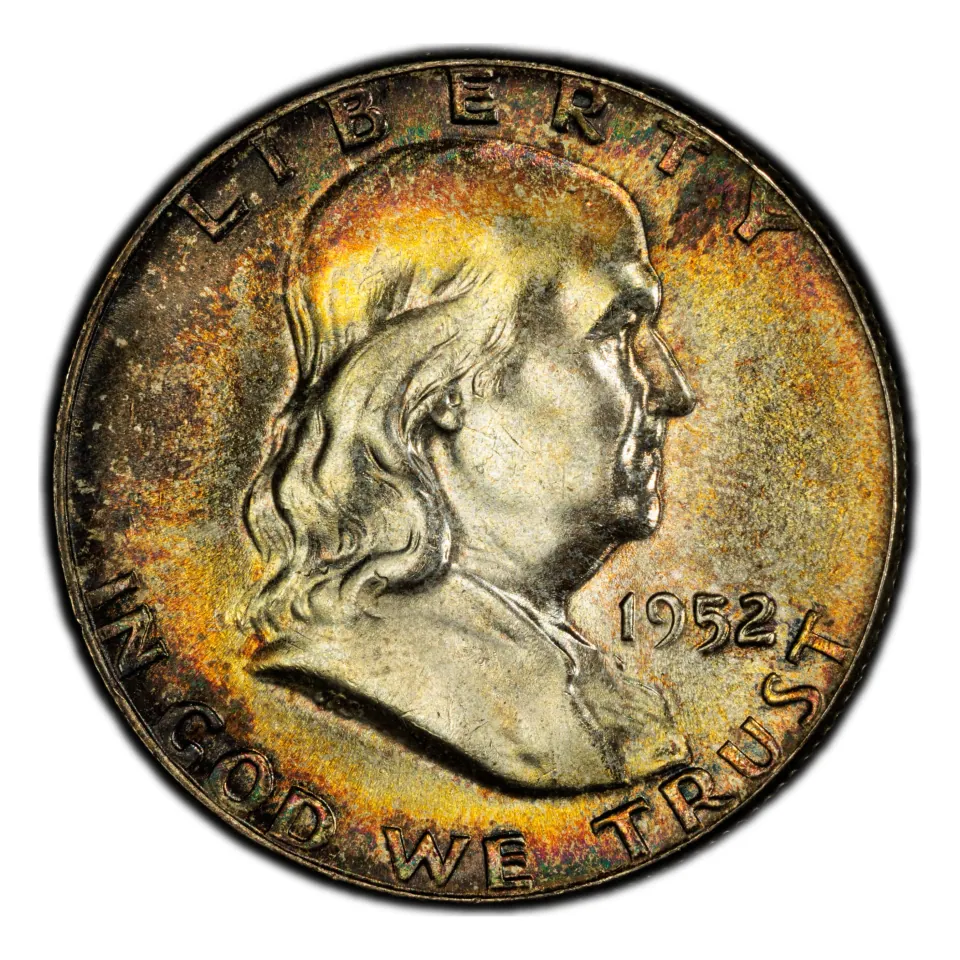
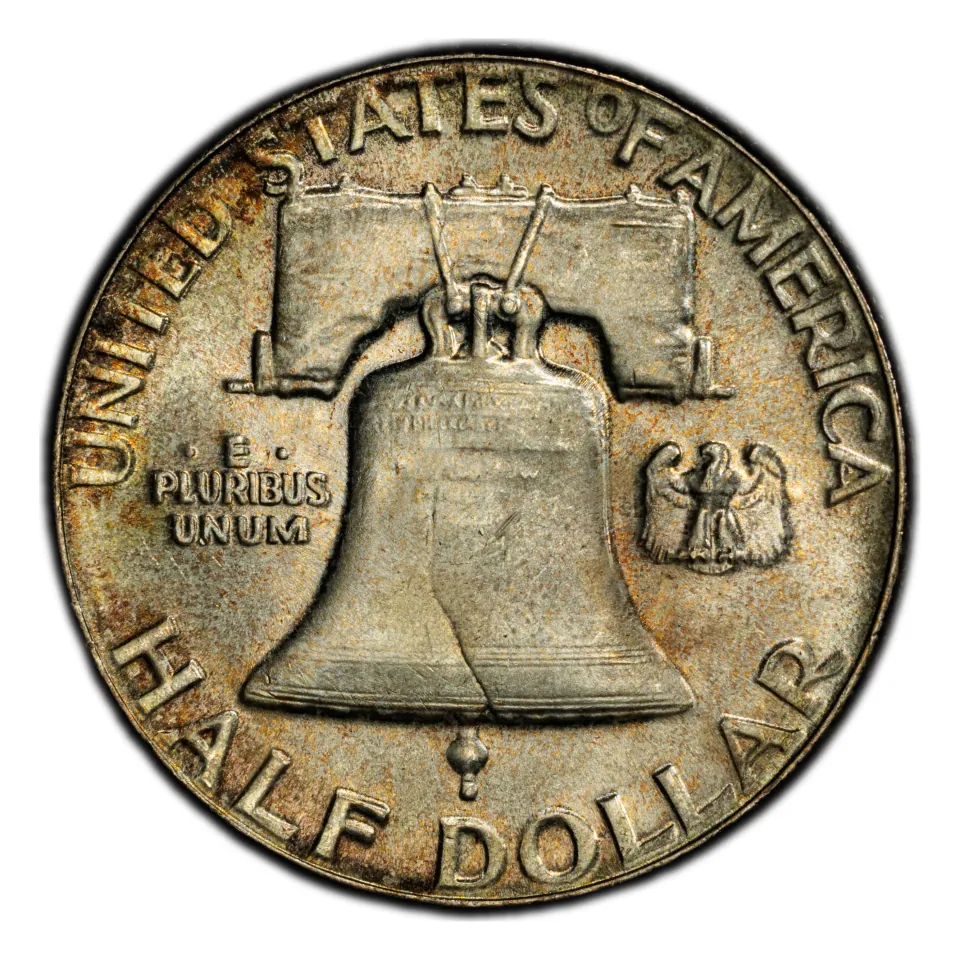
A normal 1952 U.S. half dollar is a Franklin half dollar containing 90% silver. It weighs 12.50 grams nominally and contains approximately 0.3617 troy ounce of fine silver. Philadelphia coins have no mint mark; Denver and San Francisco coins have D and S above the Liberty Bell.
The PCGS guide checked October 22, 2026 lists a Philadelphia regular strike without the Full Bell Lines designation at $37 in Very Fine 20, $44 in Mint State 63 and $80 in Mint State 65. These are retail guide estimates, not dealer offers. Full Bell Lines (FBL), other mints and the separate Philadelphia Proof need their own comparisons.
Coin photos
Basics & coin story
The Franklin design entered circulation in 1948, replacing the Walking Liberty half dollar. The Mint’s original announcement credits Director Nellie Tayloe Ross with advocating the Franklin and Liberty Bell pairing and John R. Sinnock with giving the design sculptural form. The small eagle beside the bell and its visible crack are part of the intended reverse.
The 1952 date sits within the Franklin series of 1948–1963, before Kennedy’s portrait arrived in 1964. Its earlier 90% silver standard is different from the 40% silver Kennedy halves of 1965–1970. For a later Franklin date, compare the 1963 half-dollar guide without transferring that date’s prices to 1952.
| Feature | What to check |
|---|---|
| Series / denomination | Franklin half dollar / 50 cents |
| Metal | 90% silver, 10% copper |
| Nominal weight / diameter | 12.50 g / approximately 30.6 mm |
| Fine silver content | Approximately 0.3617 troy ounce |
| Edge | Reeded |
| Regular issues | No mark, D and S |
| Mint-mark location | Reverse, above the Liberty Bell |
| Proof issue | Philadelphia, no mint mark; separate from regular strikes |
Identification
Turn to the bell to find the mint mark
The date is on the portrait side, but the D or S is on the reverse above the bell, below the upper lettering. No letter is normal for Philadelphia. Do not use the later Kennedy obverse mint-mark location when examining a Franklin half.
The bell’s crack is normal
The vertical crack belongs to the Liberty Bell design. It is not the same thing as a cracked coin or an accidental die break. Full Bell Lines refers to horizontal detail near the bell’s base, not the vertical crack. A line that cuts into the surface, a raised die feature and the modeled bell crack need different interpretations.
Full Bell Lines is separate from grade
PCGS applies FBL to qualifying regular strikes graded Mint State 60 or above, examining separation of the lower bell lines and major disturbances. A numerical MS65 grade alone does not establish FBL. Marks, strike weakness and other problems can interrupt the detail. Compare the same grading service’s designation rather than assuming all standards or photographs are interchangeable.
Keep the Proof market separate
A 1952 Philadelphia Proof also lacks a mint mark. Proof is a manufacturing category, commonly graded PR, rather than another word for an attractive regular strike. Cameo contrast adds a further distinction. A reflective surface or clear bell lines does not by itself turn a regular coin into a Proof.
Condition & value
Amounts are in U.S. dollars. PCGS retail-guide examples were checked October 22, 2026 and apply only to the stated issue, grade and designation. They are not guaranteed purchase offers; current market conditions and selling costs can change the amount received.
| Issue | Grade / condition | Value or reference | Basis | Important condition |
|---|---|---|---|---|
| 1952 Philadelphia, non-FBL regular | VF20 | $37 | PCGS retail guide | Problem-free circulated comparison |
| 1952 Philadelphia, non-FBL regular | MS63 | $44 | PCGS retail guide | Uncirculated; no FBL premium included |
| 1952 Philadelphia, non-FBL regular | MS65 | $80 | PCGS retail guide | Correct grade and surface status |
| Contained silver | Approximately 0.3617 troy oz | 0.3617 × silver spot per oz | Metal-content calculation | Not a guaranteed buying quote |
| D / S / FBL / Proof | Exact issue and designation | Use matching evidence | Separate entries | No Philadelphia non-FBL price transferred |
For an ordinary circulated example, silver content gives a useful starting reference, but it does not fix a retail price. Multiply approximately 0.3617 by the current silver price per troy ounce, then compare actual offers and matching sales. Guide values and metal markets can move at different speeds, and fees affect a seller’s proceeds.
Inspect Franklin’s cheek and the bell’s broad surfaces for rub, marks and hairlines. A coin can retain readable bell lines while having circulation wear or cleaning damage. Use grade definitions and cleaning-identification guidance before comparing an uncertified coin with a premium holdered example.
Summary
Identify the Franklin design, find no mark, D or S above the bell, and use the 90% silver specification. Keep the ordinary grade, FBL designation and Proof identity separate. The modeled bell crack is normal; preserve the surface and use the exact mint-and-designation comparison when seeking an offer.
FAQ
Is a 1952 half dollar silver?
Yes. Standard Franklin halves of 1952 contain 90% silver and 10% copper, with approximately 0.3617 troy ounce of fine silver at the nominal weight.
Where is the mint mark on a 1952 half dollar?
It is on the reverse above the Liberty Bell. D identifies Denver, S identifies San Francisco, and no mark is normal for Philadelphia.
Is the crack in the bell a 1952 half-dollar error?
The vertical crack is part of the Liberty Bell design. It is different from a mint error or damage to the coin.
Does MS65 automatically mean Full Bell Lines?
No. The numerical grade and FBL designation are separate. Compare a qualifying coin with the same mint, grade and designation, using the relevant grading service’s criteria.
References
References and further reading
- PCGS CoinFacts: exact issue, specifications and available guide evidence
- U.S. Mint: original Franklin and Liberty Bell design announcement
- PCGS: Full Bell Lines criteria
- NGC: Franklin half-dollar weight, diameter and silver content
Sources and quoted guide evidence checked October 22, 2026. Guide estimates, historical sales, face value and metal-content calculations are identified separately.