

 App Store

COIN VALUE GUIDES · WHEAT PENNIES
1957 Penny Value:No Mint Mark, 1957-D, Proofs and Original Color
Identify ordinary 1957 wheat cents, compare Philadelphia and Denver Red-grade references and avoid pricing worn Brown coins from exceptional auction results.
 HeriBase TeamPublished
In this article
Quick answer
A normal 1957 penny is a bronze Lincoln wheat cent with either no mint mark for Philadelphia or D for Denver. There is no ordinary 1957-S circulation issue. A worn common example is not a major rarity simply because it has wheat ears or lacks a mint letter.
The PCGS Red reference rows consulted October 26, 2026 list Philadelphia at $7 in MS63 and $20 in MS65, and 1957-D at $7 and $17 in the same grades. These are retail estimates for uncirculated Red coins. Brown circulated pieces, Proofs and authenticated varieties need separate comparisons.
Coin photos
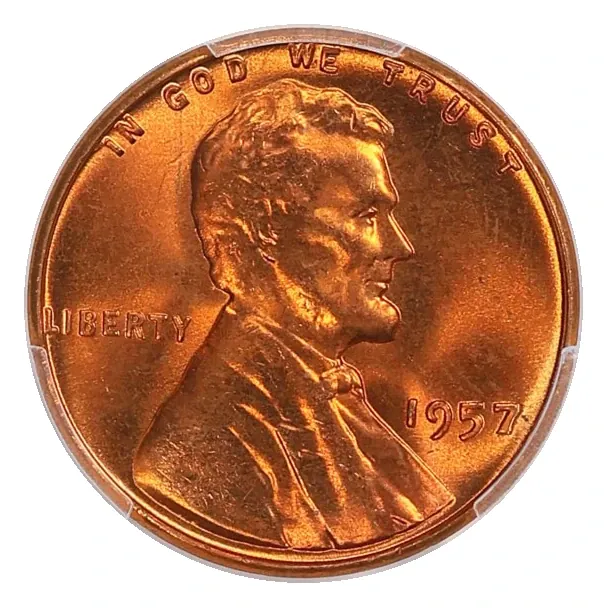
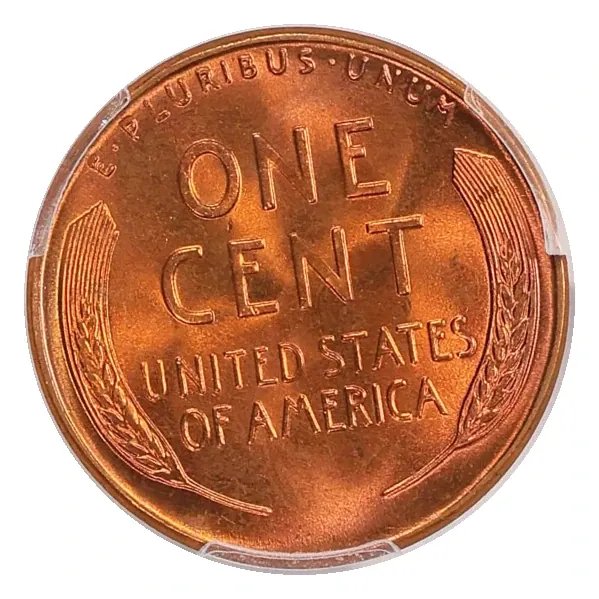
Basics & coin story
The wheat reverse was nearing the end of its fifty-year run in 1957. Lincoln’s portrait, first issued in 1909, remained on the cent as the reverse changed to the Memorial in 1959. A 1957 coin therefore belongs to the older wheat design without being scarce solely for its age.
Philadelphia and Denver produced regular cents, while Philadelphia also made a separate collector Proof. San Francisco did not supply an ordinary S-mint issue for this date. An apparent S needs a clearer examination rather than an invented catalog entry.
The wheat-penny overview distinguishes common dates from key dates. The nearby 1955 guide covers a famous doubled die in another year; its rarity prices cannot be transferred to a 1957 coin with vague doubling.
| Feature | What to check |
|---|---|
| Type / denomination | Lincoln wheat cent / 1 cent |
| Designer | Victor D. Brenner |
| Normal composition | 95% copper, balance tin and zinc |
| Nominal mass / diameter | 3.11 g / approximately 19 mm |
| Regular mints | Philadelphia without a letter; Denver with D |
| Normal S-mint issue | None for 1957 |
| Mint-mark location | Obverse beneath the date |
| Proof / color | Separate Philadelphia Proof; BN, RB and RD are color designations |
Identification
Read the date and mint area under diffuse light
Keep all four date digits readable, then inspect beneath them for D. A mark in the surface or dirt in that area is not enough to identify another mint. No letter is expected for a Philadelphia regular strike or Proof.
Match Red, Red-Brown or Brown
The reference rows below are RD, meaning the coin retains the Red surface designation under the grading service’s standard. They are not prices for any coin that looks orange under a lamp. Lighting, corrosion and cleaning can all change a photograph’s color.
Do not polish a cent or use chemicals to create a brighter comparison. Original luster, marks and wear must be assessed along with color. The photographed Philadelphia MS67RD example illustrates the design and color category; the lower-grade figures do not price that individual coin.
Separate Proofs and production errors
A 1957 Proof is a collector-manufactured issue, not a regular strike that happens to be shiny. Original set context, surfaces and a reliable attribution help settle manufacture. A purported off-center strike or doubled die needs corresponding physical diagnostics; damage and machine doubling should not be advertised as the rarest possible error.
Condition & value
Amounts are USD. The cited guide was consulted October 26, 2026; its displayed update date is stated below. Values apply only to the specified issue, grade and designation, and are not guaranteed purchase offers.
| Issue | Grade / condition | Value or reference | Basis | Important condition |
|---|---|---|---|---|
| 1957 Philadelphia ordinary, RD | MS63 / MS65 | $7 / $20 | PCGS guide | Uncirculated Red reference |
| 1957-D ordinary, RD | MS63 / MS65 | $7 / $17 | PCGS guide | Exact Denver entry |
| Ordinary worn BN example | Actual circulation wear | Compare matching circulated coins | Common-date market | No single guide price asserted here |
| Philadelphia Proof | Exact PR/PF and contrast | Use Proof evidence | Separate manufacture | A blank mint area does not prove Proof status |
| Claimed variety or mint error | Authenticated attribution | Case-specific | Specialist examination | A blurred feature alone establishes no premium |
The retrieved PCGS table states an October 21 update. Its MS65 Red figures describe specified certified-quality comparisons, not a promise that submitting a raw cent will return that grade or produce a profit. Submission and selling costs may exceed a common coin’s premium.
For ordinary circulated pieces, compare similar wear and surface condition or assess a group as a group. A bulk offer for many cents and a packaged single-coin retail listing use different assumptions. Keep any particularly well-preserved candidate separate before deciding whether professional grading is worthwhile.
Use the grading guide for condition terms and cleaning-identification guide for surface problems. Preserve both faces in a record and choose recent completed sales of the actual mint and designation.
Summary
Confirm 1957, distinguish no mark from D, and evaluate original color and condition. The ordinary date is common; Proofs and verified errors require separate evidence. Avoid using a high-grade Red price for a worn Brown penny.
FAQ
Is a 1957 penny without a mint mark rare?
No mint mark is normal for Philadelphia. Scarcity depends on the actual issue, condition and any verified attribution, not the absent letter alone.
Is there a normal 1957-S penny?
There is no ordinary 1957-S circulation issue. Recheck any apparent S against the full coin and a reliable catalog.
Are 1957 pennies made of copper?
The normal alloy is 95% copper, with the balance tin and zinc. It is not a copper-plated zinc cent.
Do all uncirculated 1957 pennies qualify as Red?
No. Preservation and color designation are separate assessments; compare BN, RB or RD as appropriate.
References
References and further reading
- PCGS: 1957 Philadelphia issue
- PCGS: 1957-D issue
- PCGS: 1957 and 1957-D Red price rows
- U.S. Mint: mint-mark chronology
References consulted October 26, 2026. Price tables retain the update dates stated in the text; guide estimates, face values and completed transactions are different forms of evidence.