

 App Store

COIN VALUE GUIDES
1946 Nickel Value: No Mint Mark, D, S and Full Steps
Compare 1946 nickel values by mint and grade, locate the reverse mint mark, and distinguish ordinary Jefferson nickels from Full Steps and attributed varieties.
 HeriBase TeamPublished
In this article
How much is a 1946 nickel worth?
Most worn 1946 nickels have little premium over five cents; no mint mark is normal for Philadelphia. Published dealer guides list ordinary MS65 examples around $18–$24 by mint, while qualifying Full Steps coins require separate comparisons. Check the reverse mint mark, preservation and Monticello’s steps before choosing a price.
Evidence reviewed November 13, 2026. All quoted prices retain their stated dates and conditions.
Which real coin details should I compare?
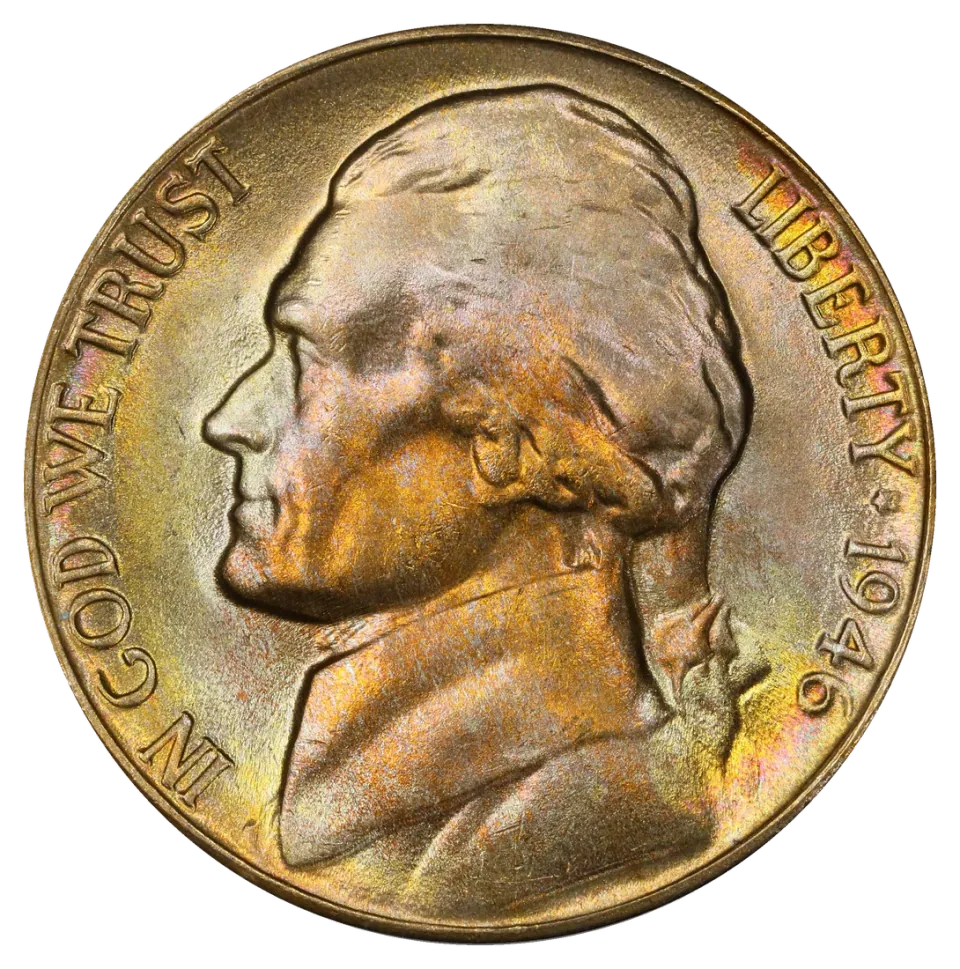
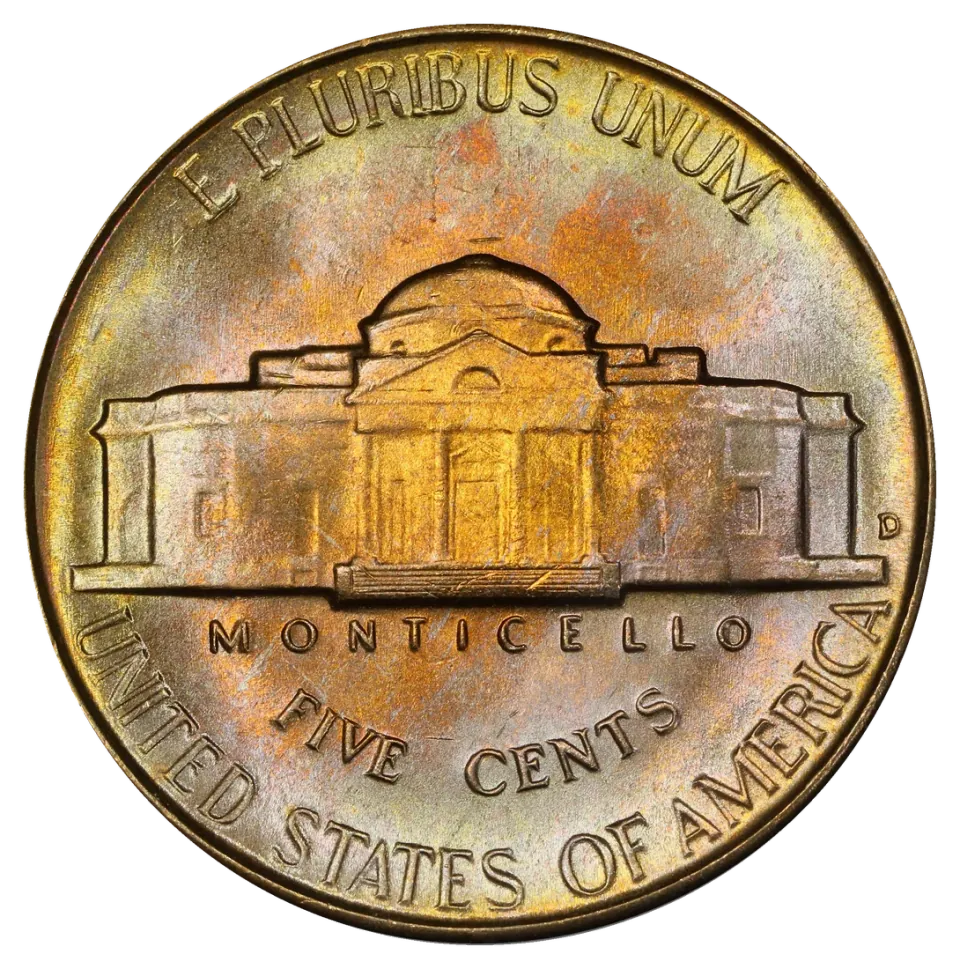
How do the issues and values compare?
Where is the mint mark on a 1946 nickel?
Turn the coin over. A small D or S sits to the right of Monticello; a regular Philadelphia coin has no letter there. The absence of P is normal, not a missing-mint-mark error. The mint mark moved in later Jefferson issues, so a modern obverse location is not the right place to search on a 1946 coin.
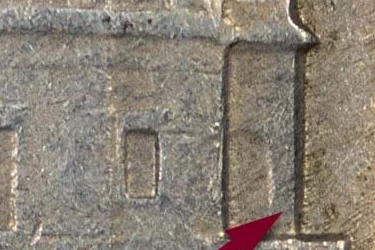
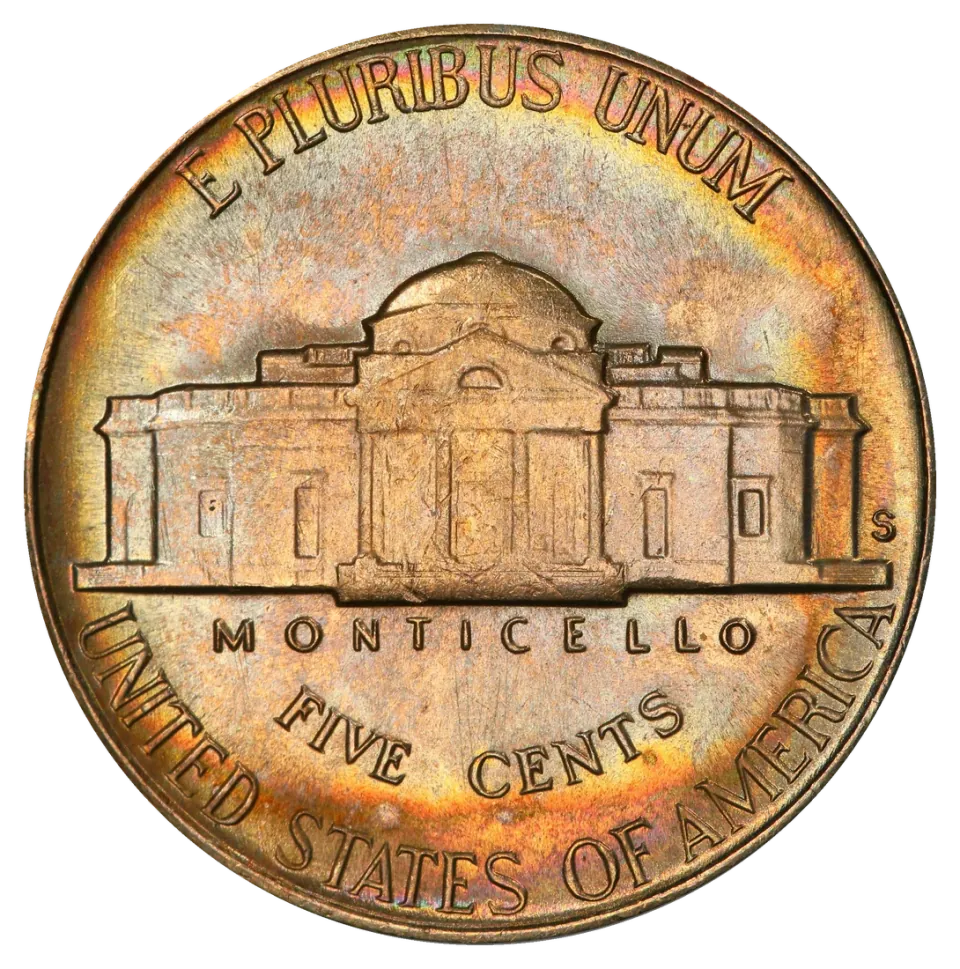
How do no-mark, D and S values compare?
The following are Gainesville Coins’ published reference estimates, checked November 13, 2026. They are not live bids, guaranteed resale prices or auction results. VF means Very Fine, XF Extremely Fine, AU About Uncirculated and MS Mint State. Coins with cleaning, corrosion or other damage are different comparisons.
| Issue | VF / XF | AU | MS63 / MS65 | Comparison basis |
|---|---|---|---|---|
| No mint mark · Philadelphia | $0.05 / $0.05 | $1 | $10 / $24 | Ordinary strike; no Full Steps premium |
| 1946-D · Denver | $0.05 / $1 | $1 | $4 / $22 | Same numerical grade, ordinary strike |
| 1946-S · San Francisco | $0.05 / $0.05 | $1 | $4 / $18 | Lower mintage does not ensure the highest price |
Philadelphia struck 161,116,000 coins, Denver 45,292,200 and San Francisco 13,560,000, according to PCGS issue records. Mintage explains production volume, but surviving quality and demand help determine value. The lower S mintage does not make every worn S coin rare. Compare a specific mint at a specific grade rather than ranking all three by production alone.
What does Full Steps mean, and why does it matter?
Full Steps is a strike-detail designation, not a mint error. PCGS requires at least five complete, uninterrupted steps on qualifying Mint State Jefferson nickels. Inspect the horizontal lines at the base of Monticello for weak strike, contact marks and breaks. NGC uses its own 5FS and 6FS designations; do not silently treat different services or step counts as identical.
| Issue | Condition | Ordinary guide | Full Steps guide | Limit |
|---|---|---|---|---|
| 1946 Philadelphia | MS65 | $24 | $120 | Gainesville reference; not a certified grade for the photo |
| 1946-S | MS65 | $18 | $50 | Same mint and grade; designation must be established |
| Any mint | Circulated | Use circulated comparisons | Do not apply a Mint State FS price | Strong-looking steps alone do not make a worn coin MS |
The paired photographs are location references, not a claim that the illustrated coins qualify for Full Steps. A soft strike can leave a technically unworn coin with incomplete steps. Conversely, sharp detail does not erase wear or cleaning. Use the coin grading scale to separate preservation from strike before estimating a designation premium.
Is a 1946 nickel silver?
A normal 1946 nickel is 75% copper and 25% nickel, nominally 5.00 grams and 21.2 millimeters with a plain edge. It returns to the regular alloy after the wartime 35% silver issues of 1942–1945. Those wartime coins have a large mint letter above Monticello; a small 1946 D or S beside the building belongs to a different identification system. Brown or golden toning does not change the alloy.
What is the story behind the Jefferson design?
Felix Schlag’s Jefferson portrait and Monticello reverse entered service in 1938. In 1946 the familiar design continued while the wartime composition ended, making the year useful for learning the difference between design continuity and material changes. Compare the earlier 1941 nickel guide for prewar mint and condition checks.
Does an unusual rim or doubled letter make it valuable?
Not by itself. A doubled die needs matching, repeatable diagnostics; a repunched mint mark needs its own attribution. Contact marks, corrosion and flat machine doubling do not automatically qualify. Check nickel error identification for the broader categories. Do not attach a Full Steps or variety price to a generic “1946 error” listing.
How can I check my coin in three steps?
- 01Record 1946, then inspect the reverse beside Monticello for D, S or the normal blank Philadelphia area. Check both faces and the plain edge.
- 02Separate wear from strike quality. Examine the steps without rubbing the surface; record marks or cleaning before choosing a grade comparison.
- 03Compare the same mint, numerical grade and step designation in dated guides and completed sales. Keep credible variety candidates uncleaned for specialist examination.
What should I remember?
A blank reverse mint-mark area is normal on a Philadelphia 1946 nickel. Ordinary worn coins generally have little premium; Mint State quality and an established Full Steps designation can change the comparison.
Identify the mint, then preservation, then step detail. Use the dated ordinary and FS columns separately; the photographed coin has not been assigned a certified grade here.
What else do collectors ask?
Is a 1946 nickel with no mint mark rare?
No mint mark is normal for Philadelphia. It does not establish rarity; condition and any authenticated variety still matter.
Where is the D or S on a 1946 nickel?
On the reverse, to the right of Monticello. Do not use the obverse mint-mark location found on later Jefferson nickels.
Are 1946 nickels silver?
Normal 1946 nickels are 75% copper and 25% nickel. They are not the 35% silver wartime issues of 1942–1945.
What is a Full Steps 1946 nickel?
It is a qualifying Mint State coin with sufficiently complete Monticello step detail under the grading service’s standard. PCGS requires at least five uninterrupted steps; the designation is not a mint error.
Why is the 1946-S not always more valuable than the D?
Mintage alone does not set price. Surviving condition, strike quality, designation and collector demand affect a matched-grade comparison.
Are these figures guaranteed selling prices?
No. They are dated published dealer-guide estimates. Actual transactions, certification, surface quality and selling costs can produce different results.
Should I clean the steps before grading?
No. Cleaning can damage original surfaces and reduce collector interest. Use neutral lighting and clear photographs instead.
Which references support this guide?
References and further readingExpand
- Gainesville: 1946 nickelPublished ordinary and Full Steps reference estimates, checked November 13, 2026.
- Gainesville: 1946-DPublished grade-specific reference estimates.
- Gainesville: 1946-SOrdinary and Full Steps reference estimates.
- PCGS: 1946 nickelPhiladelphia production and normal issue specifications.
- PCGS: 1946-DDenver production and issue identification.
- PCGS: 1946-SSan Francisco production and issue identification.
- PCGS grading standardsFull Steps criteria; designation and numerical grade are separate.