

 App Store

PAPER MONEY GUIDES
1935 Silver Certificate Dollar Bill Value:Series, Motto and Star Notes
Read 1935 series letters, distinguish motto and emergency designs, and compare an ordinary dollar with a certified Gem example.
 HeriBase TeamPublished
In this article
Quick answer
A common circulated 1935-family $1 silver certificate is not automatically rare because it lacks IN GOD WE TRUST. The full series, replacement star, emergency features and original paper grade determine its collector category.
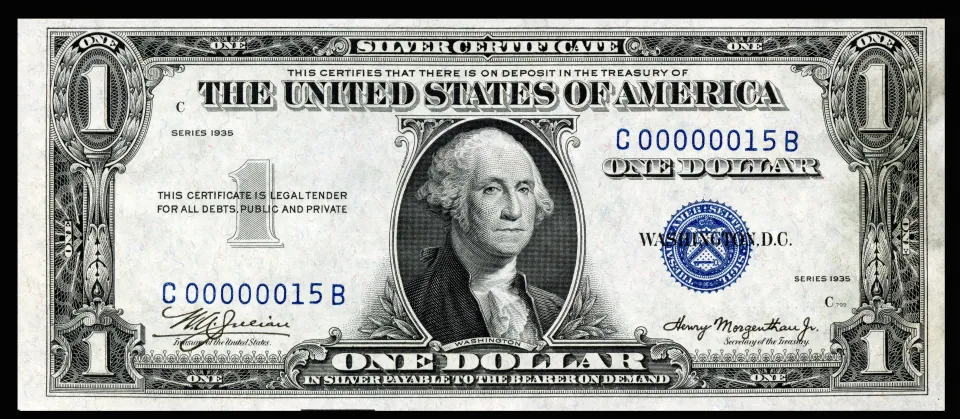
A plain Series 1935 Fr.1607 graded PMG 66 EPQ sold for $124 on December 23, 2025. This certified Gem result does not establish the value of an ordinary folded 1935E or a Hawaii emergency note.
Banknote reference photos
What this series represents
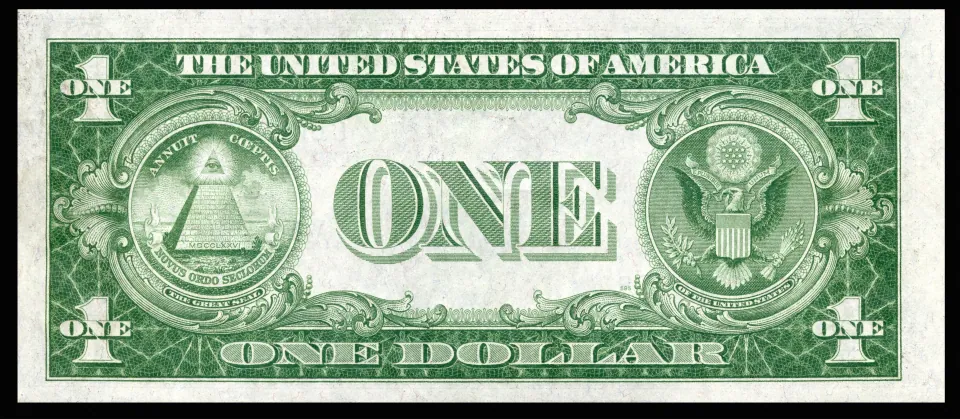
The 1935 dollar introduced the familiar back with both sides of the Great Seal of the United States. Washington’s portrait and a blue Treasury seal make the face recognizable, but the series family continued through multiple signature and printing changes.
The motto was added during later production. Earlier series normally lack it; Series 1935G exists with and without it, and Series 1935H carries it. A no-motto back is therefore often a normal design, not an omitted-print error. Read the date and suffix together before comparing the back to a modern dollar.
How do you identify the right issue?
Which series should I write down?
Copy the complete 1935 series, including A through H where present, alongside the signature pair. Plain Series 1935 is Fr.1607 with Julian–Morgenthau signatures. Later suffixes have their own catalog entries. Avoid treating every note in the family as a plain 1935.
How should the motto be checked?
Look above the large ONE on the reverse. A no-motto 1935-family back must be compared with the correct series. For 1935G, record whether the motto is present; the distinction is intentional. Missing-motto claims require design knowledge before any theory about omitted printing.
What separates Hawaii and North Africa notes?
The Hawaii 1935A dollar has brown seals and HAWAII overprints. The North Africa 1935A certificate uses a yellow seal. Both are emergency contexts, rather than ordinary blue-seal variants selected only by shade. Match their full catalog identity and authenticate the added printing when a premium is claimed.
How do I handle replacements and fancy serials?
Record a printed star before the serial digits separately from any numerical pattern. Ordinary star notes and exceptional low or repeating numbers are not interchangeable. Use the replacement-note guide and fancy serial guide to classify each feature before selecting sold examples.
What does the value evidence actually show?
| Issue / check | Condition / identification | Value / composition | Evidence / basis | Comparison limit |
|---|---|---|---|---|
| Common blue-seal 1935-family | Ordinary circulated | $1 denomination baseline; premium requires matching sales | Not a universal retail quote | Read complete suffix and check damage |
| Plain 1935; Fr.1607 | PMG Gem Uncirculated 66 EPQ | $124 | Heritage 142552, lot 84236; Dec. 23, 2025 | Includes 20% buyer’s premium |
| 1935G motto / no motto | Exact type and paper grade | Separate type comparisons | Intentional design distinction | No motto alone is not an error |
| Hawaii / North Africa / stars | Exact issue and grade | Use exact catalog sales | Emergency or replacement market | Do not use an ordinary blue-seal Gem as an appraisal |
Heritage’s Fr.1607 sale realized USD $124 for one certified 66 EPQ note on December 23, 2025, with the 20% buyer’s premium included. The reference photograph here is a design specimen, not the auction note. A certified Gem result is a condition-specific data point rather than a price range for the entire family.
When researching a circulated note, exclude top-population, low-serial and emergency lots unless the same feature is present. Inspect folds, pinholes and repairs on both sides. Silver certificates can have collector premiums, but their former redemption promise does not track silver spot prices. Compare the 1957 family guide for the later motto design.
Summary
Record the suffix, seal and emergency features, then inspect the back for the correct motto type. A missing motto can be normal; a Gem result applies to Gem paper. Preserve the note and compare its actual issue and condition.
Frequently asked questions
Is a 1935 dollar without the motto an error?
Usually not. No-motto backs are normal for much of the family. Series 1935G has both motto types, so identify the exact series.
What is the difference between 1935 and 1935E?
They are different series entries within the family. Include the suffix and signatures when comparing prices.
Are brown and yellow seals just faded blue seals?
Do not assume so. Hawaii and North Africa emergency issues have distinct seal and overprint features requiring exact identification.
How much did the cited Gem note sell for?
One plain Series 1935 Fr.1607, PMG 66 EPQ, realized $124 on December 23, 2025, including buyer’s premium.
Can I exchange the note for silver bullion?
No. Silver-certificate redemption in silver ended in 1968. The present collector market is separate.
Should I use the same value for a star note?
No. Match the replacement series, block, paper grade and any special serial independently.
References
References and further reading
- BEP: Great Seal and motto history
- Heritage: plain 1935 Gem, December 23, 2025
- PMG: 1935-family motto and emergency catalog entries
- BEP: emergency notes
Historical sale dates and conditions are retained beside each example. References reviewed November 17, 2026; historical results are not live offers.