

 App Store

PAPER MONEY GUIDES
1934 $5 Bill Value:Seal Colors, Series and Star Notes
Distinguish blue-seal silver certificates, green-seal Federal Reserve notes and Hawaii emergency issues before valuing a 1934 five.
 HeriBase TeamPublished
In this article
Quick answer
A 1934 $5 bill may belong to different currency classes, so there is no single value for the date. Check the printed title, seal color, full series, district or emergency overprint, replacement star and paper grade.
A two-note group of 1934 and 1934A blue-seal silver certificates, both PMG 55 EPQ, sold for $207.40 on March 10, 2026. That is the whole pair’s price, not an amount for each circulated 1934 five.
Banknote reference photos
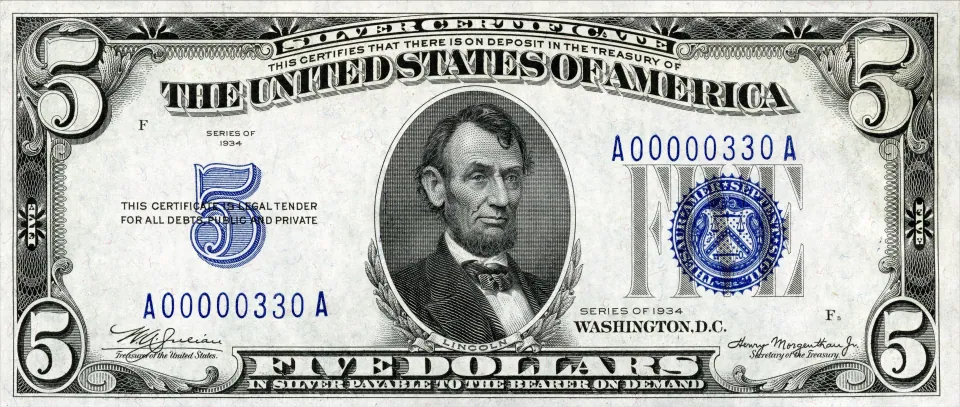
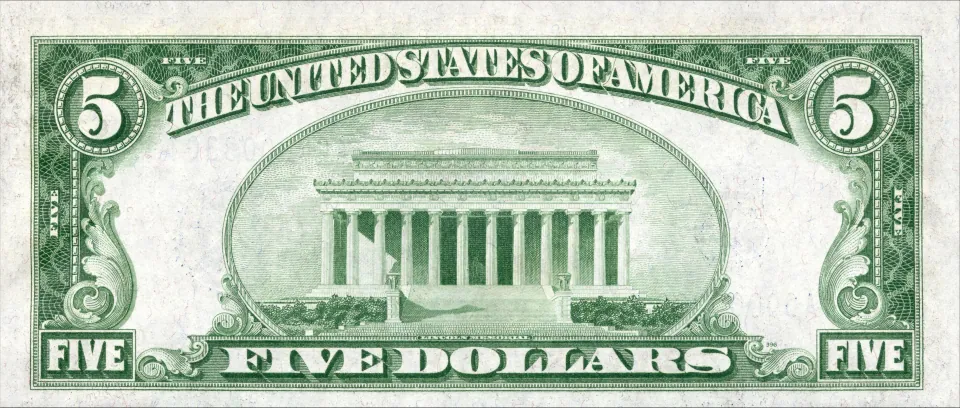
What this series represents
Series 1934 fives reflect a period when several forms of United States currency circulated. A blue-seal silver certificate and a green-seal Federal Reserve note could share Lincoln’s portrait without representing the same obligation or catalog entry. The issue title resolves that ambiguity.
Wartime emergency currency adds another distinction. The 1934A Hawaii $5 Federal Reserve note used a brown seal and HAWAII overprints; North Africa silver certificates used a yellow seal. These special issues belong in their own comparisons. They should not be called ordinary “brown discoloration” or merged into the blue-seal price because of a shared year family.
How do you identify the right issue?
Which title and seal should I record?
Start with SILVER CERTIFICATE versus FEDERAL RESERVE NOTE. Normal blue and green seals distinguish those classes; emergency issues require their complete overprints and context. Copy 1934 with any suffix. A signature change can identify a different series even when the main design remains recognizable.
How do I use a Friedberg reference?
The ordinary plain-series blue-seal $5 is Fr.1650; Series 1934A is Fr.1651. Federal Reserve entries use a different number and district identification. A star adds a replacement distinction. A short auction title that omits the currency class can therefore send a collector to the wrong price entry.
What about light green seals, dark seals and mules?
These are specialist distinctions within the appropriate Federal Reserve issues. A mule involves a pairing of plate generations, not a hybrid denomination or a hand-added mark. Establish the exact attribution from plate details and a specialist catalog before using a mule price. Do not diagnose it from a darkened photograph.
What should condition inspection include?
Check the white margins for pinholes, edge splits and stains, then the back for folds and repairs. Preserve full photographs of any overprint. A genuine note with an emergency overprint still requires a condition comparison; the feature does not erase damage.
What does the value evidence actually show?
| Issue / check | Condition / identification | Value / composition | Evidence / basis | Comparison limit |
|---|---|---|---|---|
| Ordinary blue-seal certificate | Series and paper grade | $5 denomination baseline; collector premium varies | Identification before valuation | No blanket price for all 1934 notes |
| Fr.1650 + Fr.1651 pair | Both PMG About Uncirculated 55 EPQ | $207.40 for both notes | Heritage 142610, lot 82317; March 10, 2026 | Includes 22% buyer’s premium |
| Green-seal Federal Reserve | District, series, plate variety and grade | Use separate comparables | Different currency class | Do not substitute blue-seal prices |
| Hawaii / North Africa / replacement | Exact emergency or star issue | Research exact catalog entry | Specialized issue market | Authenticate overprints and keep damage visible |
The verified USD $207.40 lot contained two silver certificates: a plain Series 1934 Fr.1650 and a Series 1934A Fr.1651. Both were PMG About Uncirculated 55 EPQ. The 22% buyer’s premium is included in the total. Taxes and delivery costs are not represented by that quoted lot total.
The paired result shows collector demand for attractive original paper without establishing a universal retail range. A worn green-seal five, a brown-seal Hawaii note and a star certificate require separate sold records. Read the certificate overview for the historical redemption distinction and printing errors versus ordinary features before assuming an unusual seal is an error.
Summary
Classify the note by title, seal and any emergency overprint, then include the series suffix and condition. Use the $207.40 example only as a two-certificate comparison and obtain matching evidence for other issue classes.
Frequently asked questions
Are all 1934 $5 bills silver certificates?
No. Green-seal Federal Reserve notes and specialized emergency issues also require consideration. Read the issue title.
Does a blue-seal five contain redeemable silver today?
No. Its historical certificate wording does not provide current silver redemption. Collector value concerns the banknote.
What is a brown-seal 1934A Hawaii five?
It is a wartime emergency Federal Reserve issue with HAWAII overprints, requiring separate attribution and comparisons.
Is $207.40 the value of one 1934 note?
No. It is the realized total for two PMG 55 EPQ silver certificates sold together on March 10, 2026.
What does a mule mean on these notes?
It is a specialist plate-pairing attribution. Confirm the relevant plate details and catalog entry rather than inferring it from seal color.
Do series letters change the price comparison?
Yes. Record the full series and match the currency class, signatures, district where relevant, replacement status and paper grade.
References
References and further reading
- Heritage: 1934 and 1934A certificate pair, March 10, 2026
- BEP: wartime currency and emergency seal context
- PMG: silver-certificate and Federal Reserve entries
Historical sale dates and conditions are retained beside each example. References reviewed November 17, 2026; historical results are not live offers.