

 App Store

PAPER MONEY GUIDES
1928 $2 Bill Value:Series Letters, Red Seals and Condition
Identify the first small-size red-seal $2 family and avoid confusing a low-serial auction result with an ordinary 1928 note.
 HeriBase TeamPublished
In this article
Quick answer
The value of a 1928 $2 bill cannot be read from the year alone. Identify its series letter, red-seal United States Note design, replacement status, full serial and paper grade. The family runs from 1928 through 1928G.
A 1928 note graded PMG 66 EPQ with serial number 9 sold for $3,120 in 2020. Its single-digit serial is a major special feature; the result is not a price for an ordinary-number 1928 two.
Banknote reference photos
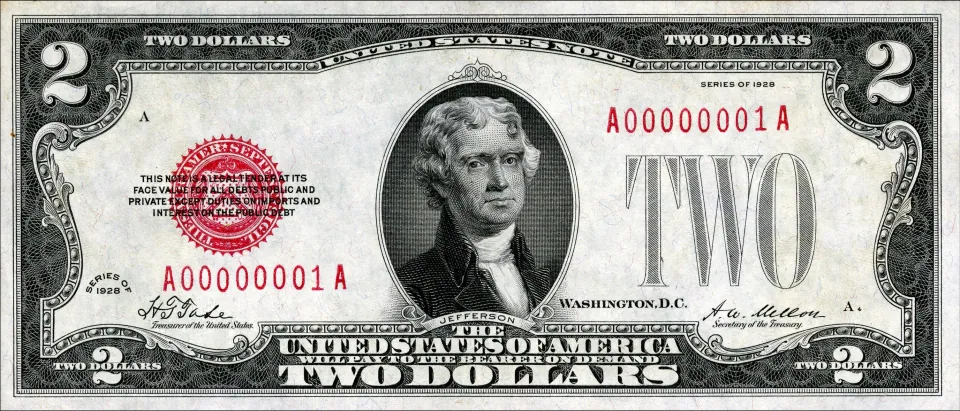
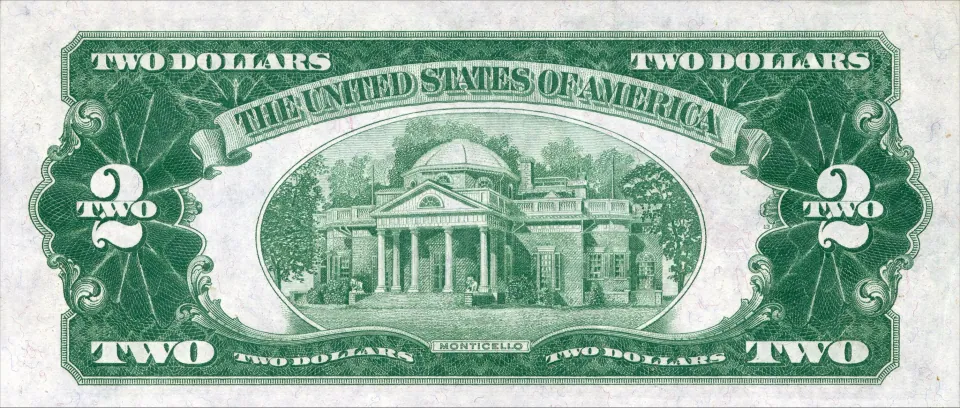
What this series represents
The Series 1928 family introduced the small-size two-dollar United States Note. The printed year identifies the series; the new small-size currency entered public use in 1929. That distinction matters when a seller describes a note as printed in the exact year appearing on its face.
Jefferson’s portrait and Monticello linked the denomination to the older red-seal design tradition. A modern Declaration of Independence back is a different issue. The 1928 family’s successive signature pairs and series letters create separate catalog entries, so a set assembled by year alone can hide meaningful differences.
How do you identify the right issue?
Where should I start on the face?
Find TWO DOLLARS, UNITED STATES NOTE, the red seal and the series near the portrait. Copy 1928 with its letter, including a plain 1928 if none is present. The first plain-series issue is Fr.1501 with Tate–Mellon signatures; do not extend that identification to every later suffix.
Which serial features deserve separate research?
A printed star denotes a replacement, while an unusually low number can be a separate collector feature. Retain every leading zero. A serial such as 00000009 belongs in the low-serial market; an ordinary eight-digit number does not inherit its premium. See how special serial patterns are classified.
Is a missing corner an old superstition or an error?
Whatever the reason for a removed corner, missing paper is damage rather than an intact uncirculated characteristic. Compare a cut or torn note with similarly impaired examples. A face and back scan should show the full edges so that a tight photo cannot hide a missing corner.
How should later suffixes be compared?
Use the complete catalog entry and replacement status instead of ranking every suffix from memory. Demand and survival differ by issue and grade. A 1928G comparison does not automatically price a 1928B star; an ordinary plain 1928 comparison does not price a single-digit serial.
What does the value evidence actually show?
| Issue / check | Condition / identification | Value / composition | Evidence / basis | Comparison limit |
|---|---|---|---|---|
| Ordinary 1928-family note | Full series; circulated | $2 denomination baseline; collector premium needs comparables | Not a live quote | Age alone does not establish a range |
| Plain 1928, Fr.1501; serial 9 | PMG Gem Uncirculated 66 EPQ | $3,120 | Heritage 3577, lot 20518; April 24, 2020 | Includes 20% buyer’s premium; exceptional low serial |
| 1928A through 1928G | Exact series and grade | Compare the matching entry | Signature and series distinctions | Do not transfer the serial-9 result |
| Star / missing paper / repairs | Specific issue and impairment | Separate research required | Replacement or condition market | Keep altered notes out of problem-free comparisons |
The documented USD $3,120 result belongs to a plain Series 1928 note bearing single-digit serial 9, not just a high paper grade. Heritage also mentioned slight seal underinking. The price includes the 20% buyer’s premium. The note pictured in this guide is a design reference and is not that auction specimen.
For an ordinary note, find recent sales with the same series, normal serial and comparable paper. Do not use a spectacular low-number sale as a ceiling and invent a percentage discount. If a valuable replacement or special serial is plausible, obtain a physical assessment before selling. The $2 overview supplies the broader design context.
Summary
Copy the series suffix and all serial digits before researching a 1928 two. Keep replacements, exceptional low numbers and damaged paper in separate comparison groups; the serial-9 record is an example of why that separation matters.
Frequently asked questions
Is every 1928 $2 bill worth thousands?
No. The cited $3,120 sale had serial number 9 and a PMG 66 EPQ grade. Ordinary serials and circulated paper need different comparisons.
Was every Series 1928 note printed in 1928?
No. A series year is not an individual printing date. The small-size issue entered use in 1929 and later suffixes identify further series.
What does 1928G mean?
It is a later series within the 1928 family. Include G, the signatures and replacement status when looking up a catalog entry.
Does a cut corner add value?
Missing paper is condition damage. Do not price it as an intact, problem-free example.
Does a star mean a counterfeit?
No. A printed replacement star is an intended numbering feature. Authenticity still requires the whole note to be examined.
Is the photograph the $3,120 specimen?
No. It is a design-reference note. The auction’s grade, serial and price apply only to the specimen described in that lot.
References
References and further reading
- Heritage: serial 9, PMG 66 EPQ, April 24, 2020
- U.S. Currency Education Program: small-size currency history
- PMG: paper grading
Historical sale dates and conditions are retained beside each example. References reviewed November 17, 2026; historical results are not live offers.