

 App Store

COIN VALUE GUIDES · PENNIES
1919 Wheat Penny Value:No Mint Mark, D, S and Original Surfaces
Identify a 1919 Lincoln wheat penny, compare Philadelphia, Denver and San Francisco by grade, and understand why original color and strike change the market.
 HeriBase TeamPublished
In this article
Quick answer
A readable 1919 wheat penny is an early Lincoln cent, but a worn Philadelphia coin is not automatically rare because it is more than a century old. NGC’s Brown guide lists Fine references at 40 cents for Philadelphia, $2.25 for Denver and $2 for San Francisco. Philadelphia and Denver rows were last updated August 29, 2019; the S row September 18, 2020. All were accessed November 13, 2026 and are dated guide estimates, not current offers.
Mint and preservation become more important at higher grades. NGC lists Extremely Fine 40 Brown references of $3, $18 and $10.50 in that order. Red Mint State cents belong to a different market from worn brown examples. Weak striking, cleaning, corrosion and an uncertain mint mark can invalidate an apparently close comparison.
Coin photos
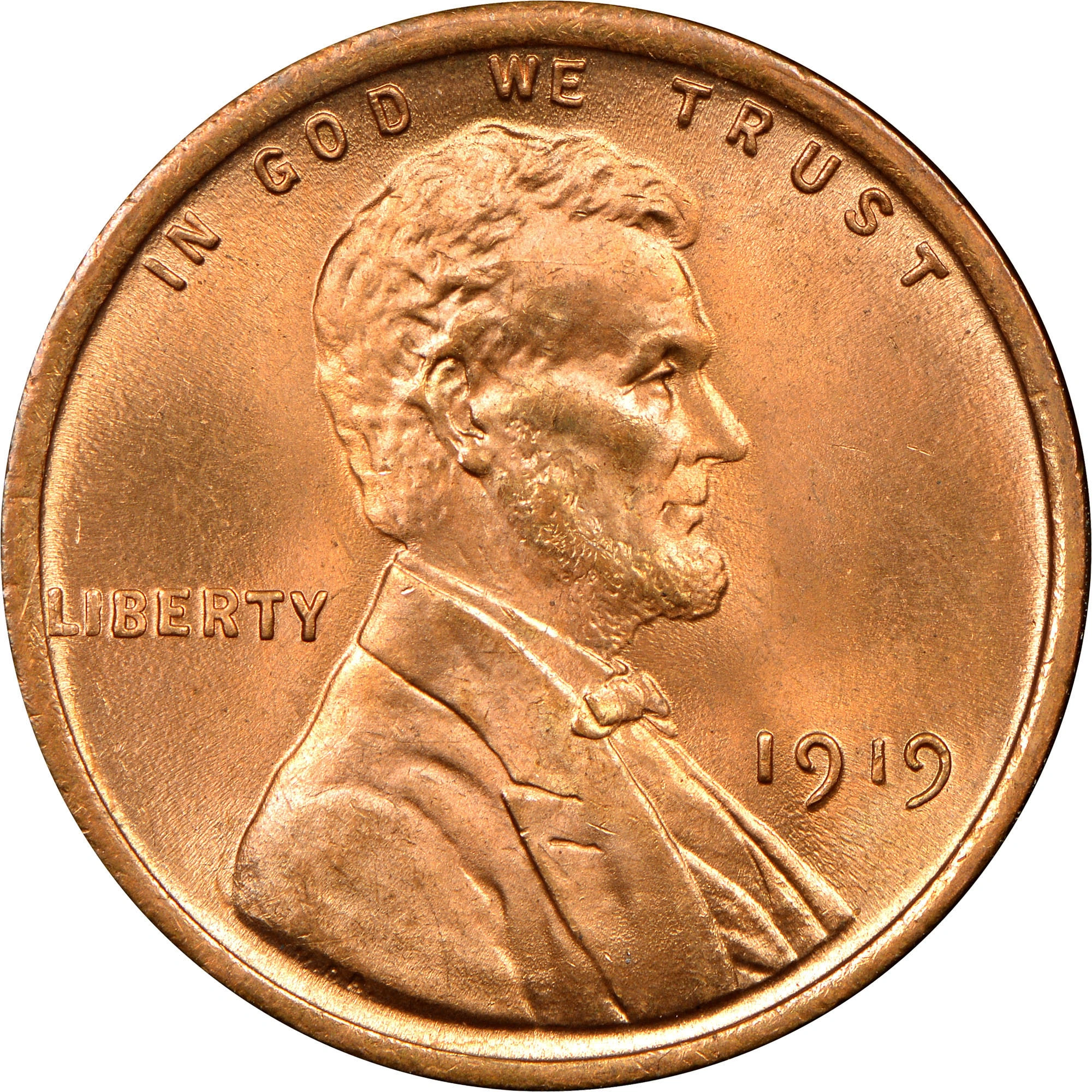
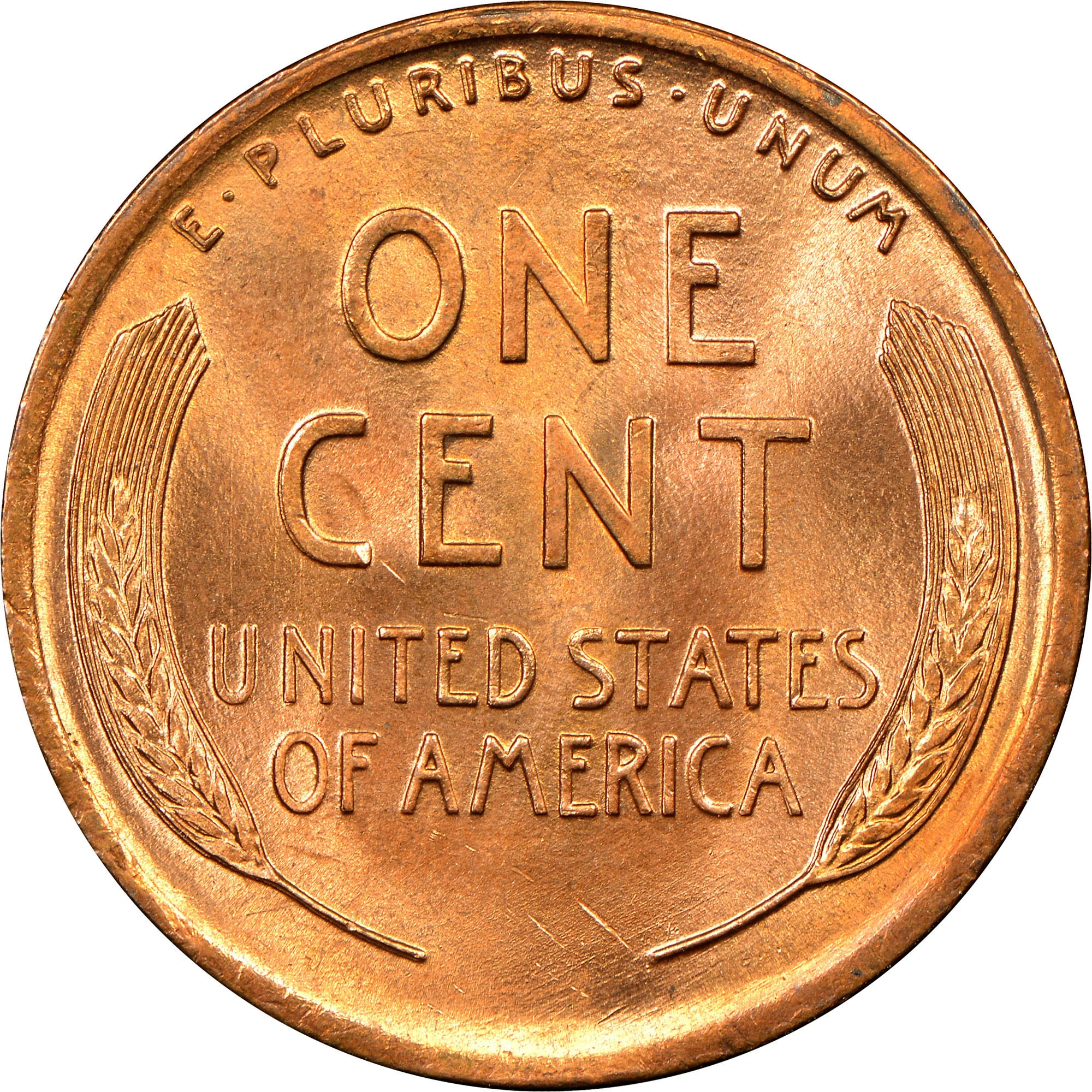
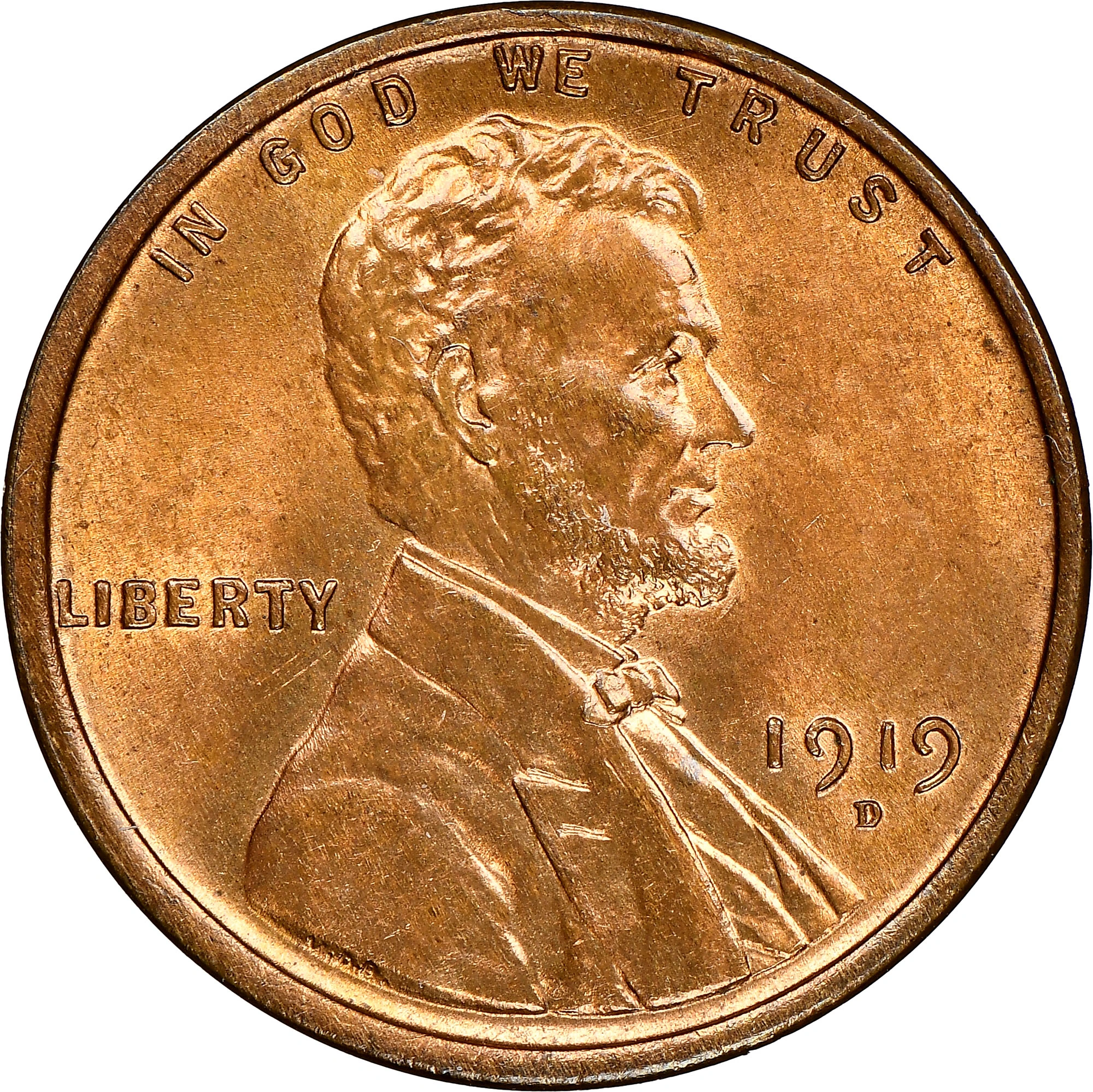
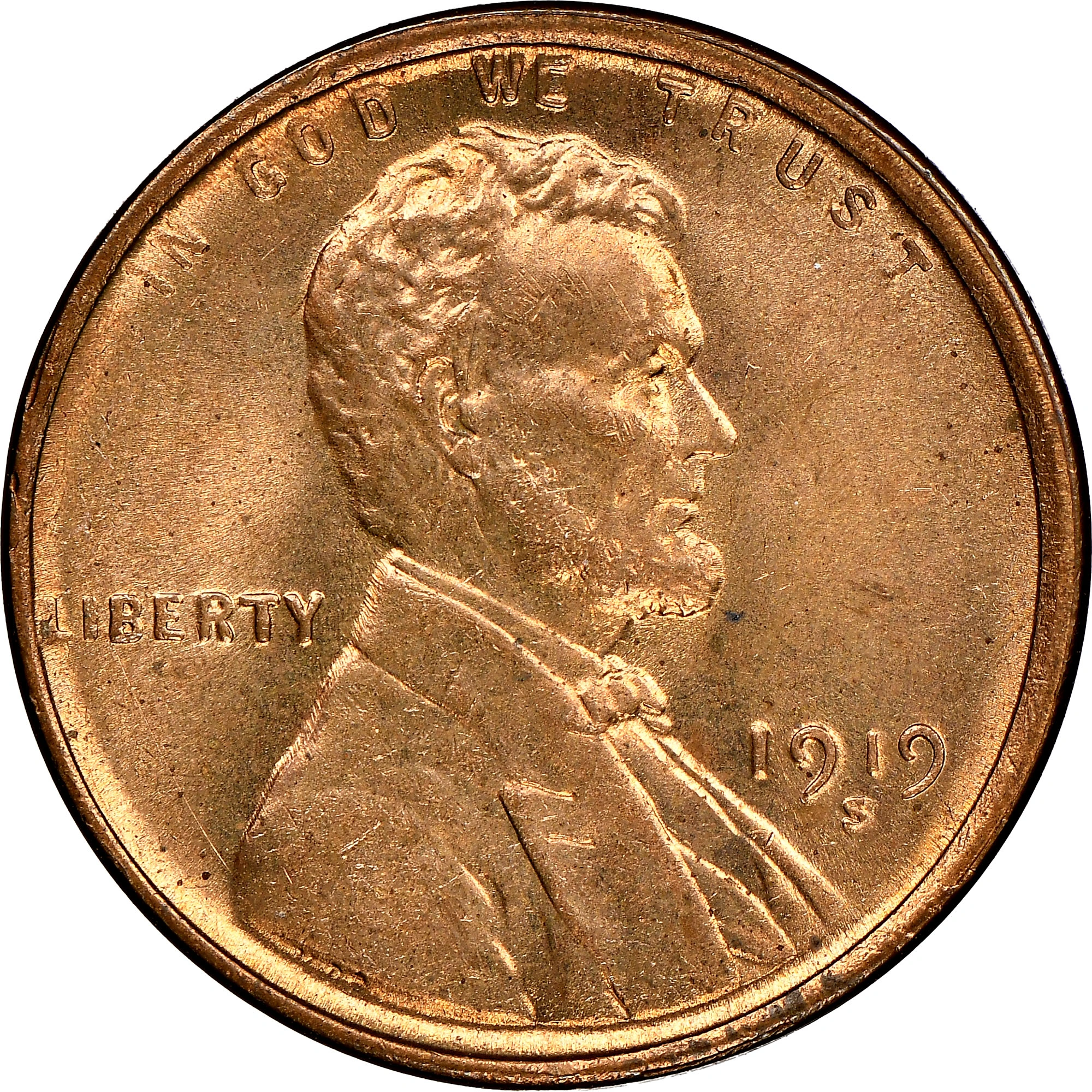
Basics & coin story
The 1919 cent followed the end of World War I, when the demand created by the wartime economy had not immediately disappeared. Philadelphia struck 392,021,000 cents, its record at the time, while Denver also reached a then-record output of 57,154,000. High production helps explain why an early date can remain accessible in a circulated collection.
Brenner’s Lincoln portrait and wheat ears had been in use since 1909. The coin carries its age visibly, but the collector market separates that history from actual scarcity in a grade and color. Use the Lincoln wheat penny series guide to place the date within the series, and the key-date guide before assuming that all early wheat cents are key dates.
| Feature | What to check |
|---|---|
| Issue | 1919 Lincoln wheat cent / one cent |
| Designer | Victor David Brenner |
| Standard alloy | 95% copper; 5% tin and zinc |
| Nominal weight / diameter | 3.11 g / 19 mm |
| Edge | Plain |
| Regular mints | No mark = Philadelphia; D = Denver; S = San Francisco |
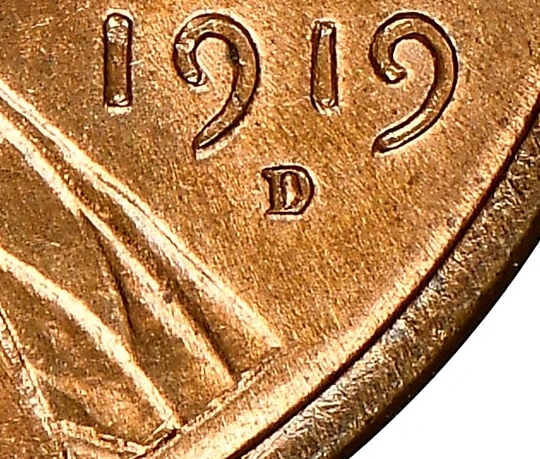
| Mint-mark location | Obverse below the date |
Identification
Read each digit and the letter below the date
Confirm 1919 and check directly beneath the date for D or S. A normal Philadelphia cent has no letter. Look at both sides together: the wheat reverse is part of the identification, while a later Memorial or shield reverse is not the normal matching reverse for 1919.
Dirt and worn detail can make a small letter ambiguous. Try a clear close-up under different light rather than scraping the surface. Do not assign Denver or San Francisco pricing until the mark is convincingly read.
Separate weak original striking from circulation wear
Examine Lincoln’s cheek, hair and jaw, then the wheat stalks, lettering and fields. Overused dies can soften the reverse or let details blend toward the rim. A soft wheat ear alone cannot distinguish a weakly struck uncirculated coin from a worn one.
Luster interruptions, high-point rubbing and the overall surface provide context. The large difference between a circulated and Mint State price is a reason to obtain an honest condition assessment, not a reason to choose the most profitable-looking column.
Keep original copper color and surface problems visible
Brown, Red-Brown and Red describe copper color separately from numerical grade. A fully red, high-grade S-mint coin can be far more difficult than an ordinary brown circulated example. That does not turn every S mark or reddish patch into exceptional preservation.
Check for corrosion, active-looking deposits, scratches and parallel cleaning lines. Avoid chemical brightening, rubbing and abrasive removal of spots. A coin described as cleaned or corroded should be compared with similarly impaired examples rather than the problem-free guide table.
Condition & value
Amounts are in U.S. dollars. The table reports published ordinary-strike guide references, not completed sales or guaranteed offers. The final column is the source row’s own update date (month/day/year); all rows were accessed November 13, 2026. Older guide dates are a limitation, so obtain recent matching sales or offers before a transaction.
MS means Mint State. The table uses Brown (BN) copper entries; it excludes RB, RD, Proofs and attributed doubled dies.
| Issue | Grade / condition | USD reference | Basis | Guide updated |
|---|---|---|---|---|
| 1919 1C BN | Good | $0.22 | NGC retail guide | 08/29/2019 |
| 1919 1C BN | Fine | $0.40 | NGC retail guide | 08/29/2019 |
| 1919 1C BN | Extremely Fine 40 | $3 | NGC retail guide | 08/29/2019 |
| 1919 1C BN | MS63 | $29 | NGC retail guide | 08/29/2019 |
| 1919 1C BN | MS65 | $85 | NGC retail guide | 08/29/2019 |
| 1919 D 1C BN | Good | $0.35 | NGC retail guide | 08/29/2019 |
| 1919 D 1C BN | Fine | $2.25 | NGC retail guide | 08/29/2019 |
| 1919 D 1C BN | Extremely Fine 40 | $18 | NGC retail guide | 08/29/2019 |
| 1919 D 1C BN | MS63 | $115 | NGC retail guide | 08/29/2019 |
| 1919 D 1C BN | MS65 | $425 | NGC retail guide | 08/29/2019 |
| 1919 S 1C BN | Good | $0.35 | NGC retail guide | 09/18/2020 |
| 1919 S 1C BN | Fine | $2 | NGC retail guide | 09/18/2020 |
| 1919 S 1C BN | Extremely Fine 40 | $10.50 | NGC retail guide | 09/18/2020 |
| 1919 S 1C BN | MS63 | $155 | NGC retail guide | 09/18/2020 |
| 1919 S 1C BN | MS65 | $540 | NGC retail guide | 09/18/2020 |
Use mint-specific grades rather than an age premium
The Brown table records the source’s dated ordinary entries. In MS63 the references are $29 for Philadelphia, $115 for Denver and $155 for San Francisco; in MS65 they are $85, $425 and $540. These are not ranges for any coin described as old or shiny, and they do not include a dealer’s purchase discount or selling expenses.
For a worn find, a modest collector value is more plausible than the price for a rare high-grade Red example. For an unusually original uncirculated coin, compare the correct color and grade with recent completed sales, not an unrelated auction headline.
A complete attribution comes before an error price
A clipped-looking edge, doubled-looking digit or off-center-looking rim needs a coherent production explanation. Wear, impact damage and photographic perspective can mimic fragments of those appearances. Start with both faces, a complete edge record and the specific observed feature; avoid inventing a variety name.
There was no regular U.S. Proof cent issue dated 1919. A reflective or unusually sharp coin is not a Proof for that reason. Consult the grading-scale guide and seek a specialist examination when a specific, plausible attribution would change the value materially.
For an initial identification, photograph both faces in even light and record the visible date and mint mark. HeriBase can help organize a photo-based identification; verify important mint, finish and variety details against the references before using a price. An app result is a starting point, not a certified grade, authentication or purchase offer.
Summary
Value a 1919 wheat penny by confirmed mint, condition and original surface. Philadelphia is common enough that age alone is not a large-premium argument; D and S need their own grade comparisons. Keep the coin uncleaned, document uncertain features and compare a matching condition category before seeking an offer.
FAQ
Is a 1919 penny with no mint mark rare?
No mark is normal for Philadelphia, which produced a large issue. Exceptional preservation can matter, but the blank position alone does not make the coin rare.
Where is the mint mark on a 1919 wheat penny?
It is below the obverse date. D means Denver, S San Francisco and no letter Philadelphia.
Why is a Red 1919-S comparison different from a brown worn coin?
The comparison includes mint, lack of circulation wear and retained copper color. A worn brown S-mint cent does not share the high-grade Red category.
Should I clean a 1919 penny before selling it?
Leave the surface unchanged. Cleaning can reduce collector appeal and move the coin outside problem-free guide comparisons. Photograph it clearly and obtain an assessment first.
References
References and further reading
- NGC: 1919 1C MS specifications, analysis and dated guide
- NGC: 1919 D 1C MS specifications, analysis and dated guide
- NGC: 1919 S 1C MS specifications, analysis and dated guide
- PCGS: 1919 Philadelphia specifications and production
- U.S. Mint: Lincoln cent design history
References accessed November 13, 2026. Guide update dates, access dates and historical sale dates are separate. No current dealer offer or independent examination of a reader’s coin is implied.