

 App Store

COIN VALUE GUIDES
Silver Half Dollar Value: Silver Years, Content and Melt Value
Compare U.S. Walking Liberty, Franklin and Kennedy half dollar silver years with a weight chart and an ounce-based melt value calculation.
 HeriBase Editorial TeamPublished
In this article
Quick answer
Walking Liberty and Franklin half dollars, plus 1964 Kennedy halves, contain 90% silver. Kennedy halves dated 1965–1970 contain 40%. Standard circulation Kennedy halves beginning in 1971 use copper-nickel clad, while certain later collector issues contain silver.
One standard 90% silver half contains about 0.3617 troy oz of silver when new. A 40% silver half contains about 0.1479 troy oz. Multiply the figure by the silver price per troy ounce to estimate melt value.
Specimen photos
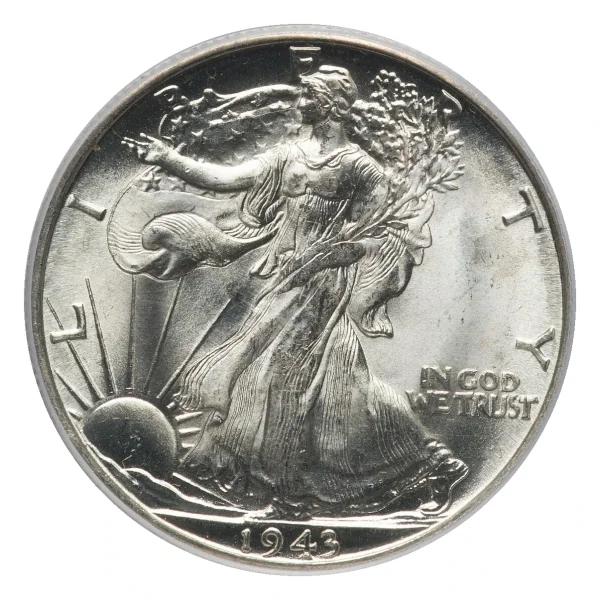
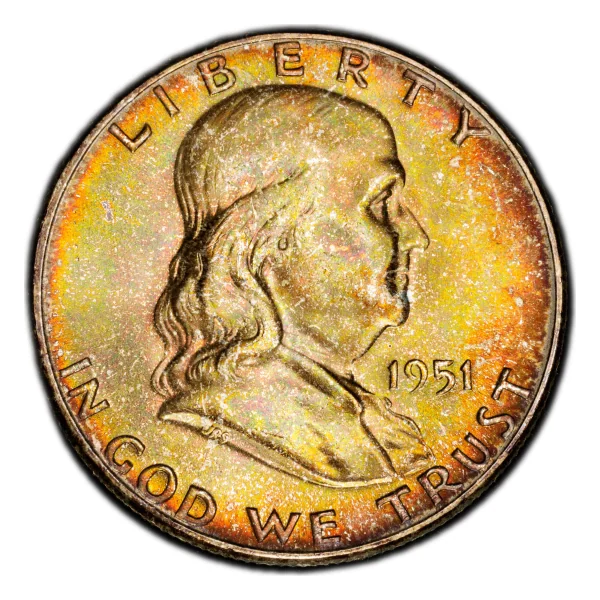
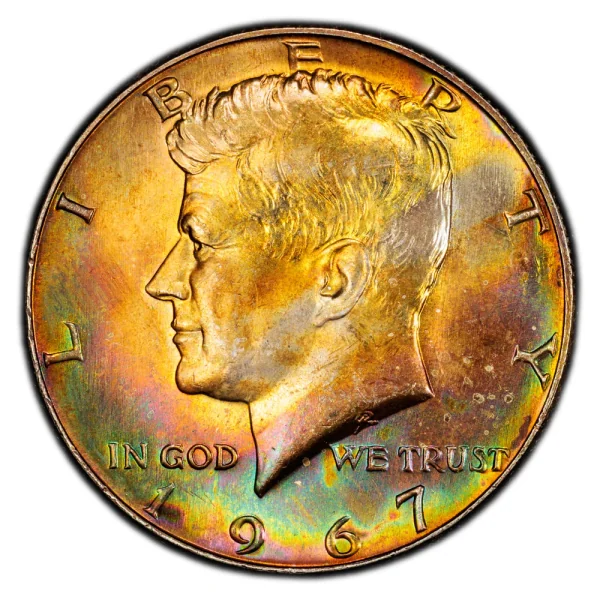
Silver years and composition
In 1965 the Mint began producing half dollars with 40% silver, following the transition authorized under the Coinage Act. The 1971 circulation return used the copper-nickel clad composition that followed the removal of silver from regular production. Collector issues complicate the timeline, so a date should be checked against mint mark, finish and exact issue.
The table focuses on the three widely collected series and selected Kennedy exceptions. Weights are nominal for unworn coins. Small losses from wear and differences in a buyer’s payout affect the amount someone actually receives.
| Series or issue | Dates | Silver by weight | Nominal mass | Silver per coin |
|---|---|---|---|---|
| Walking Liberty | 1916–1947 | 90% | 12.50 g | 0.3617 troy oz |
| Franklin | 1948–1963 | 90% | 12.50 g | 0.3617 troy oz |
| Kennedy | 1964 | 90% | 12.50 g | 0.3617 troy oz |
| Kennedy | 1965–1970 | 40% | 11.50 g | 0.1479 troy oz |
| Regular Kennedy circulation issues | 1971 onward | No silver | 11.34 g | 0 |
| Bicentennial S silver collector issue | 1776–1976 | 40% | 11.50 g | 0.1479 troy oz |
| Selected silver collector Proofs | Varies by year and set | 90% or .999 | Check exact issue | Use the product specification |
Three steps to calculate melt value
Identify the series and issue
Read both sides, including the date, mint mark and finish. A San Francisco mint mark by itself does not establish that a later Proof is silver.
Convert silver weight to troy ounces
Multiply the nominal mass by the silver fraction, then divide by 31.1034768 grams per troy ounce. For example, 12.50 × 0.90 ÷ 31.1034768 gives about 0.3617 troy oz.
Separate melt and collector value
Use the silver coin melt calculator for a spot-price estimate. Look up documented sales for comparable grades if the date, mint or variety carries a premium.
Melt value and collector value
At a hypothetical $30 per troy ounce, a standard unworn 90% silver half has about $10.85 in silver, while a 40% silver half has about $4.44. Those figures illustrate the formula and do not represent a live quote or dealer offer.
For identification and collector comparisons, see the Walking Liberty price chart, Franklin guide and Kennedy year guide.
Summary
Identify the issue, match its documented silver content and apply a troy-ounce spot price. Compare separate collector sales when date, finish, attribution or grade may matter.
Frequently asked questions
Which Kennedy half dollars contain 90% silver?
Regular 1964 Kennedy halves contain 90% silver. Certain later collector issues also contain silver, so verify the exact product and composition.
Are 1965–1970 half dollars solid silver?
They contain 40% silver by total weight. The composition is layered.
Is a 1976-S half dollar always silver?
No. Silver and clad collector issues exist. Identify the mint-set or Proof version and compare its specifications.
Is melt value the amount I will be paid?
Melt value estimates the silver component. Buyer fees, dealer spreads and collector premiums can all affect the final price.