

 App Store

COIN VALUE GUIDES · HALF DOLLARS
Walking Liberty Half Dollar Value:Dates, Mint Marks and Silver
Identify 1916–1947 Walking Liberty halves, understand changing mint-mark positions and compare common-date grades separately from scarce early issues.
 HeriBase TeamPublished
In this article
Quick answer
Walking Liberty half dollars are 1916–1947 U.S. 50-cent coins made of 90% silver, with approximately 0.3617 troy ounce of fine silver. Their value depends on the exact date and mint, condition and surface quality. A worn later date and an authenticated early scarcity need different evidence.
The PCGS guide consulted October 26, 2026 lists ordinary 1943 Philadelphia and 1943-D coins at $40 in Good 4, $120 in Mint State 63 and $180 in Mint State 65. Those are grade-specific retail references. They do not price every Walking Liberty half or establish an ungraded coin’s condition.
Coin photos
Basics & coin story
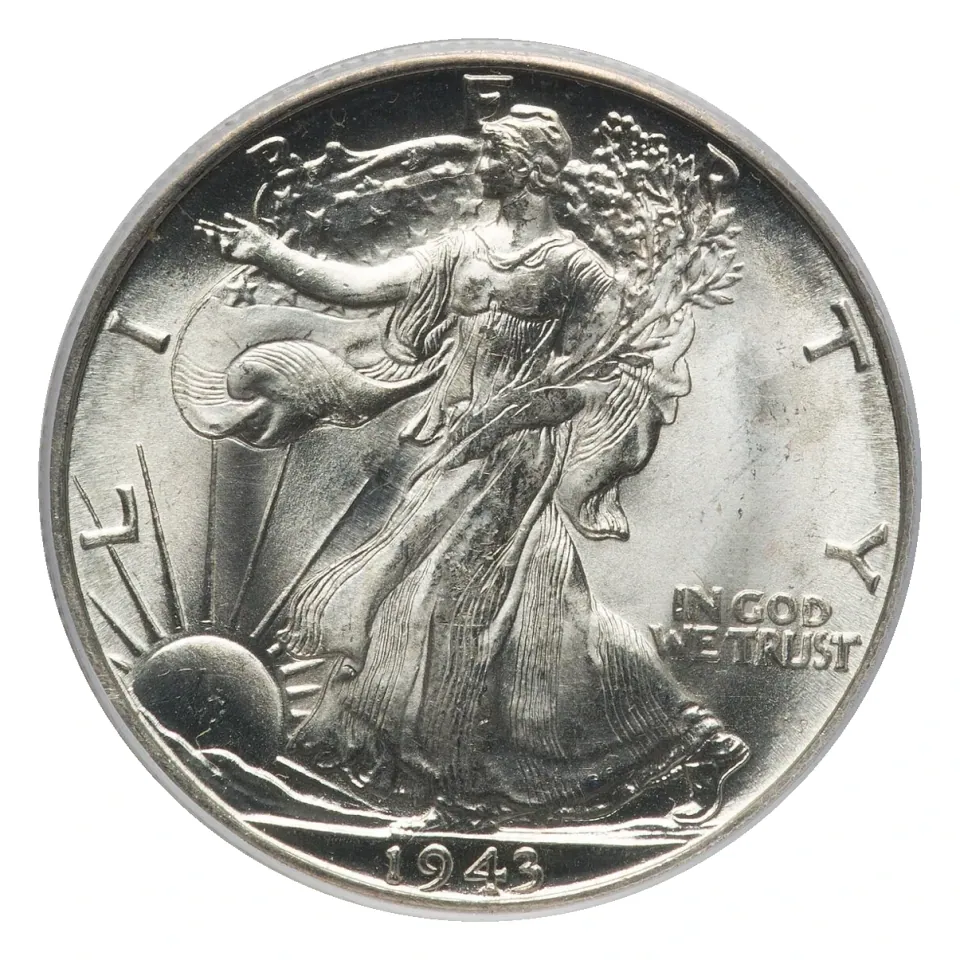
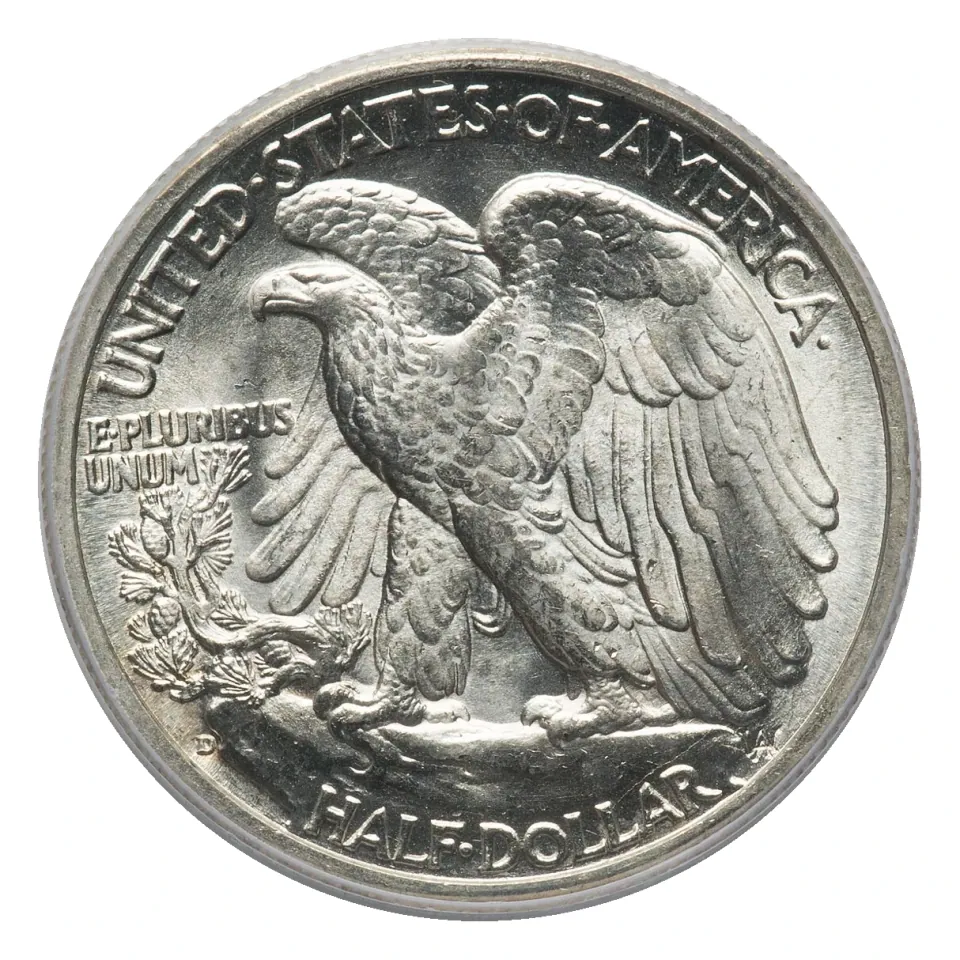
Adolph A. Weinman’s full-length Liberty walks toward a rising sun with branches in her arms. The reverse eagle stands on a rock. Introduced in 1916, the design accompanied the new Mercury dime and Standing Liberty quarter as American silver coinage changed.
The series ran through 1947, with gaps in dated production. Franklin replaced it in 1948. The walking figure later inspired the American Silver Eagle obverse, but the two coins have different denominations, dimensions and silver quantities. The first-year Silver Eagle guide covers the one-ounce bullion coin, not this half dollar.
Later dates can support a more manageable introductory collection. A complete date-and-mint set introduces scarcer early issues, including 1921 combinations and 1916-S. Choose the collecting scope before using one common-date quote as a budget for the whole series.
| Feature | What to check |
|---|---|
| Series / designer | 1916–1947 / Adolph A. Weinman |
| Denomination | 50 cents, not a one-ounce bullion dollar |
| Composition | 90% silver, 10% copper |
| Nominal mass / diameter | 12.50 g / approximately 30.6 mm |
| Fine silver | Approximately 0.3617 troy ounce |
| Mint marks | No mark, D and S where issued |
| Mint-mark change | Obverse on 1916 and some 1917 issues; reverse on later issues |
| Collector Proofs | 1936–1942; separate from regular strikes |
Identification
Check the correct mint-mark location
For 1916 and the relevant early 1917 issues, inspect the obverse beneath IN GOD WE TRUST. Later 1917 issues moved the mint mark to the lower-left reverse near the rock; that reverse location continued through the end of the series. The two 1917 positions are separate listings.
A blank obverse mint area on a 1943 coin is not a missing-mark error. Turn to the reverse before deciding that a D or S is absent. No letter normally identifies Philadelphia.
Do not confuse the half with a Silver Eagle
Read HALF DOLLAR beneath the standing eagle. A modern Silver Eagle carries a dollar denomination and a different reverse, and contains roughly one troy ounce of silver rather than 0.3617 ounce. A similar Liberty portrait does not make their prices interchangeable.
Separate strike softness from circulation wear
Inspect Liberty’s head, hand and gown and the eagle’s breast and leg, together with luster and the fields. A soft strike can retain uncirculated surfaces, while a shiny coin can have wear or cleaning. The pictured 1943-D is a documented graded example, not a grading template for every raw half.
Condition & value
Amounts are USD. The cited guide was consulted October 26, 2026; its displayed update date is stated below. Values apply only to the specified issue, grade and designation, and are not guaranteed purchase offers.
| Issue | Grade / condition | Value or reference | Basis | Important condition |
|---|---|---|---|---|
| 1943 Philadelphia or 1943-D regular | G4 | $40 | PCGS retail guide | Ordinary-date reference |
| 1943 Philadelphia or 1943-D regular | MS63 / MS65 | $120 / $180 | PCGS retail guide | Same grade and original surfaces |
| Contained silver | 0.3617 troy oz | 0.3617 × silver price per troy oz | Metal calculation | Not a guaranteed dealer offer |
| Early scarce date or mint | Exact issue | Separate date-specific comparison | Authentication and scarcity | Do not transfer 1943 prices |
| Proof or impaired coin | Exact manufacture and surfaces | Use matching records | Separate market | A standard MS row may not apply |
The reference guide displays an October 25 update. Common-date silver content gives a metal benchmark; higher grades and scarcer issues can carry additional premiums. Keep retail-guide figures distinct from historical auction totals and seller proceeds.
This guide’s photographs show a 1943-D PCGS MS66 coin from the existing grading case study. Its $159 historical Heritage result in April 2024 is discussed in that dated MS66 versus MS67 comparison. That old transaction and the current reference table concern different times and conditions, so they are not contradictory cash quotations.
For an actual sale, seek several recent examples with the same date, mint and surface status. Do not clean the coin to sharpen its photograph. If the identity or an unusual premium remains uncertain, use the appraisal workflow before deciding on certification costs.
Summary
Confirm HALF DOLLAR, find the mint mark in the location appropriate to the date, and compare condition. Silver is a starting reference. Keep early rarities, Proofs and damaged surfaces separate from ordinary later-date regular strikes.
FAQ
Are Walking Liberty halves silver?
Standard 1916–1947 Walking Liberty half dollars are 90% silver and contain approximately 0.3617 troy ounce of fine silver.
Where is the mint mark on a Walking Liberty half dollar?
It is on the obverse for 1916 and some 1917 issues; later issues use the lower-left reverse near the rock. Confirm the exact 1917 type.
Is a Walking Liberty half an American Silver Eagle?
No. The half dollar has a 50-cent denomination and about 0.3617 troy ounce of silver. The modern Silver Eagle is a different dollar-denominated bullion series.
Do common 1943 values apply to a 1921 half dollar?
No. A 1921 coin requires its own date, mint, grade and authenticity comparison.
References
References and further reading
- PCGS: Walking Liberty series
- PCGS: ordinary 1943 and 1943-D grade references
- NGC: Walking Liberty series and mint-mark changes
References consulted October 26, 2026. Price tables retain the update dates stated in the text; guide estimates, face values and completed transactions are different forms of evidence.