

 App Store

COIN VALUE GUIDES · SMALL CENTS
Flying Eagle Cent:1856–1858 Dates, Types and Value
Identify the copper-nickel Flying Eagle small cent, separate ordinary 1857–1858 coins from the scarce 1856 issue and compare grade-specific 1857 references.
 HeriBase TeamPublished
In this article
Quick answer
The Flying Eagle cent is the early U.S. small cent with a flying eagle on one side and ONE CENT within a wreath on the other. It uses 88% copper and 12% nickel, not the later copper-plated zinc construction. Ordinary circulating issues are dated 1857 and 1858; 1856 is a separate scarce introductory issue.
The PCGS guide checked October 26, 2026 lists ordinary 1857 regular strikes at $32 in G4, $215 in EF40 and $1,350 in MS63. An 1856 price, Proof price or attributed overdate cannot be applied to an ordinary 1857 cent.
Coin photos
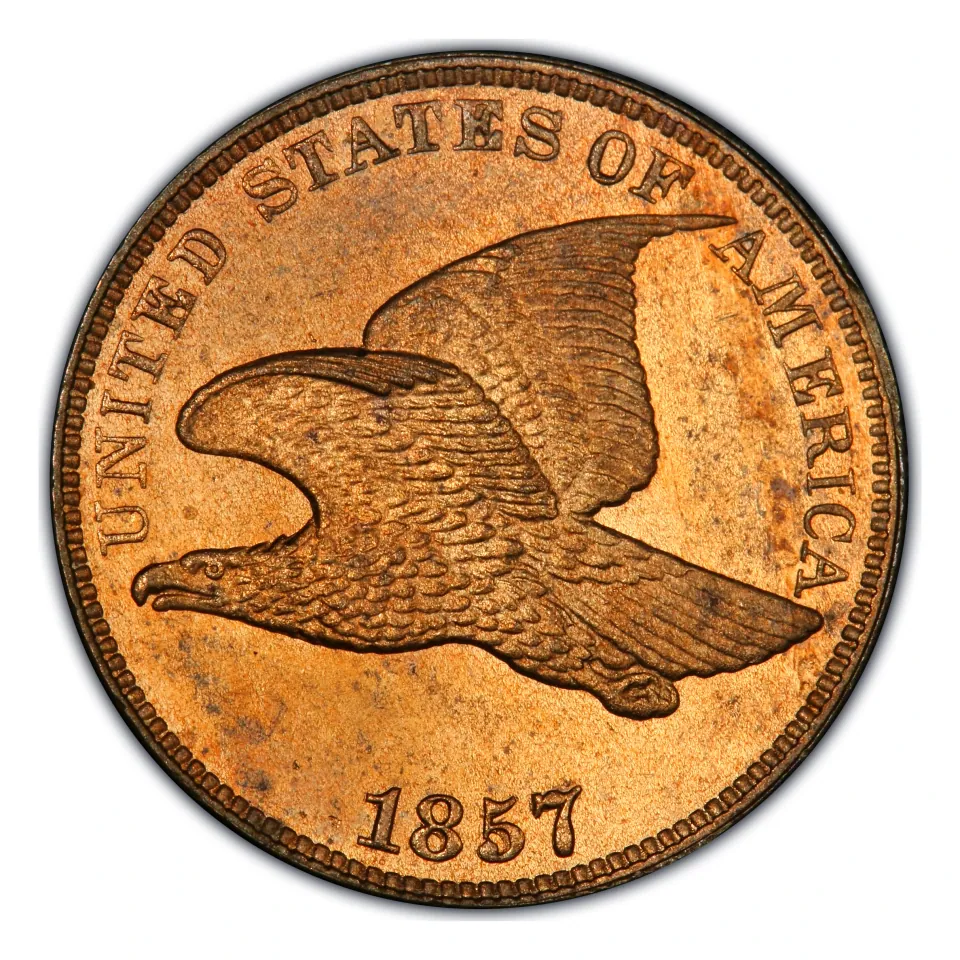
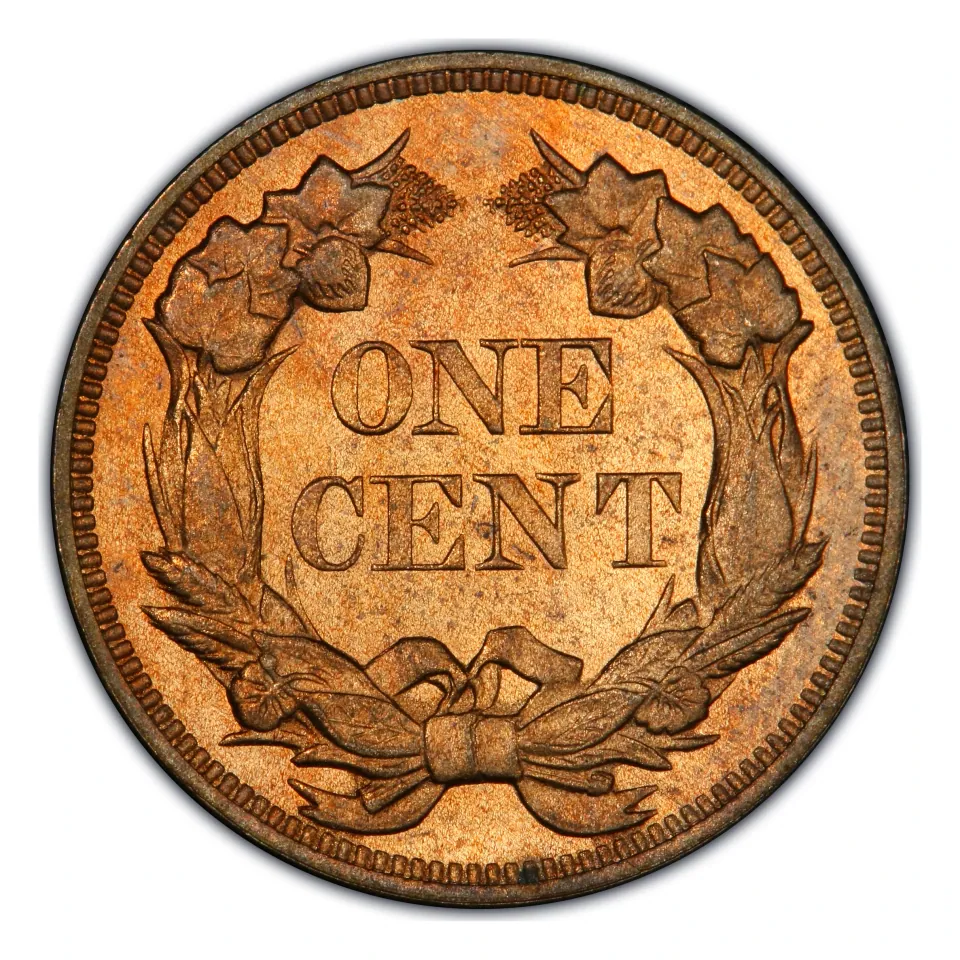
Basics & coin story
In 1857 the Mint replaced the old large cent with a smaller format. Reducing the amount of copper required for each cent addressed a practical production concern, while Longacre’s flying eagle offered a visibly different design. Philadelphia also made large cents dated 1857, so the date alone does not identify the format.
The 1857 regular issue had a recorded mintage of 17,450,000. Its size and copper-nickel alloy make it heavier and often paler than later bronze small cents. Those normal properties do not establish silver content or an off-metal error.
The design was short-lived: the Indian Head cent followed in 1859. Within 1858, Large Letters and Small Letters are separate major entries, with a recognized overdate another attribution question. The Indian Head penny guide covers the successor rather than treating all nineteenth-century small cents as one issue.
| Feature | What to check |
|---|---|
| Denomination | 1 cent |
| Designer | James B. Longacre |
| Principal dates | 1856 introductory issue; 1857–1858 circulating issues |
| Alloy | 88% copper, 12% nickel |
| Nominal weight / diameter | 4.70 g / approximately 19 mm |
| Mint / edge | Philadelphia, no mark / plain |
| Main 1858 distinction | Large Letters versus Small Letters |
| Following design | Indian Head cent, beginning in 1859 |
Identification
Start with the date and the flying eagle
A Flying Eagle cent is a small coin. A perched eagle on a silver half dime or an eagle on a gold denomination is a different design and metal context. The wreath-side ONE CENT confirms the denomination.
Do not borrow 1856 rarity for an ordinary date
The photographed example is an 1857 regular strike. An alleged 1856 needs authentication before a rarity valuation, including examination for altered dates and counterfeit characteristics. Age and a matching eagle outline are not enough.
Keep 1858 lettering and overdates distinct
An 1858 Large Letters or Small Letters attribution must match its actual lettering. A claimed 1858/7 also needs its catalog diagnostics; dirt near the final digit is not an overdate. These are different comparisons from the ordinary 1857 table.
Condition & value
Amounts are in U.S. dollars. PCGS retail-guide examples were checked October 26, 2026 and apply only to the stated issue, grade and designation. They are not guaranteed purchase offers; current market conditions and selling costs can change the amount received.
| Issue | Grade / condition | Value or reference | Basis | Important condition |
|---|---|---|---|---|
| 1857, regular non-PL | G4 | $32 | PCGS retail guide | Ordinary circulated issue |
| 1857, regular non-PL | EF40 | $215 | PCGS retail guide | Problem-free exact grade |
| 1857, regular non-PL | MS63 | $1,350 | PCGS retail guide | Uncirculated reference |
| 1856 / 1858 lettering / overdate / Proof | Exact entry | Compare separately | Other issues | No generic date-series price |
Inspect the eagle’s high points and the wreath for wear, then look for corrosion, porosity, rim damage and cleaning. Strike softness is not the same as circulation wear. An attractive color cannot establish a Mint State numerical grade.
The 1857 guide difference between circulated and uncirculated grades is substantial, but a high headline price does not establish the condition of an ungraded coin. Match regular strike, grade, surfaces and any Prooflike designation when comparing completed sales. See the appraisal guide for the distinction between a retail estimate and likely net proceeds.
Summary
Identify the date, small-cent format and exact variety before comparing condition. A normal 1857 or 1858 Flying Eagle cent must not inherit an 1856, Proof or overdate price.
FAQ
Is a Flying Eagle penny silver?
No. Its standard alloy is 88% copper and 12% nickel.
Which Flying Eagle cent dates were made for circulation?
The ordinary circulating issues are 1857 and 1858. The 1856 introductory issue is a separate scarce comparison.
Is no mint mark on a Flying Eagle cent normal?
Yes. The coins were made at Philadelphia without a mint mark.
Can an 1857 cent use an 1856 price?
No. Date, manufacture, variety, grade and surfaces must match the comparison coin.
References
References and further reading
- PCGS CoinFacts: exact issue, specifications and available guide evidence
- PCGS: Flying Eagle grade-specific price guide
- NGC: counterfeit Flying Eagle identification
Sources and quoted guide evidence checked October 26, 2026. Guide estimates, historical sales, face value and metal-content calculations are identified separately.