

 App Store

COIN VALUE GUIDES · KENNEDY HALVES
1997 Half Dollar Value:P, D, Proofs and Silver Versions
Identify a 1997 Kennedy half dollar, separate P and D clad coins from San Francisco Proofs and understand when condition can justify more than face value.
 HeriBase TeamPublished
In this article
Quick answer
A common circulated 1997-P or 1997-D Kennedy half dollar usually starts at its 50-cent face value. These regular strikes are copper-nickel clad, not silver. San Francisco made separate clad and 90% silver Proof versions for collectors.
For a defined high-condition comparison, the PCGS 1997-P guide consulted October 27, 2026 lists MS64 at $10, MS65 at $12 and MS66 at $35. An ordinary worn coin does not acquire those grades or prices just because half dollars are seldom seen in change.
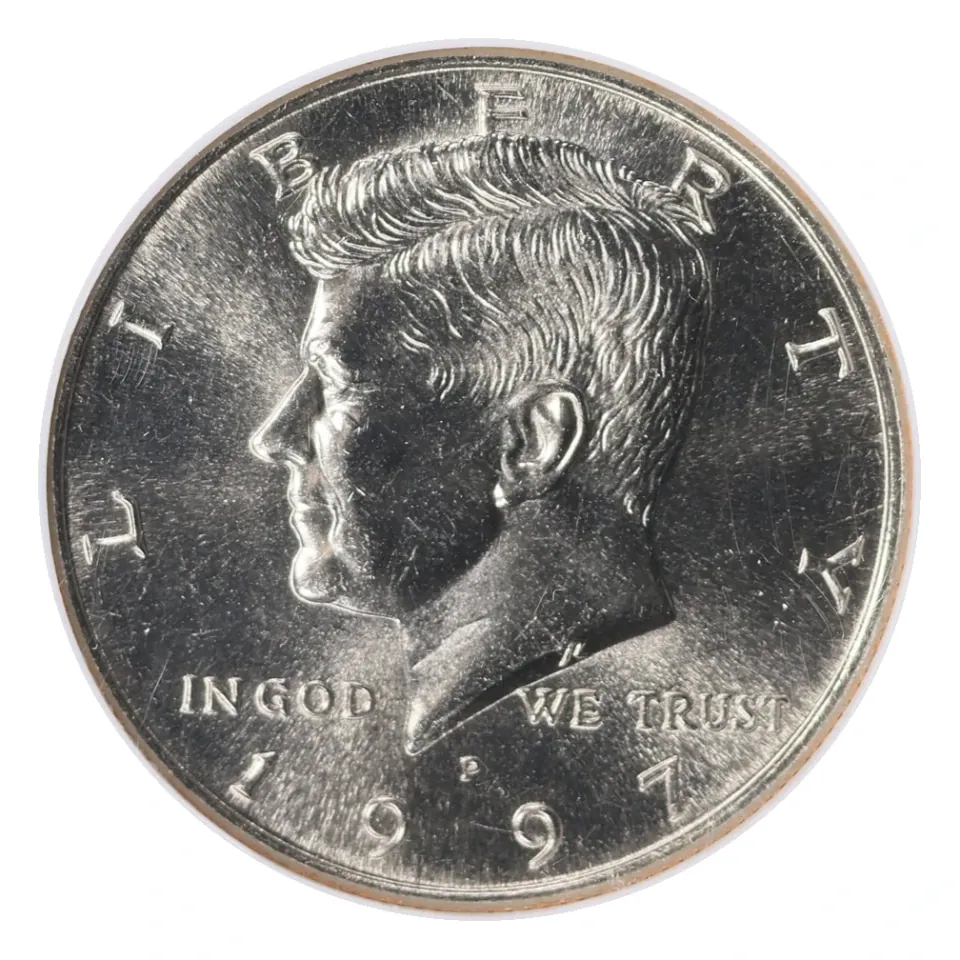
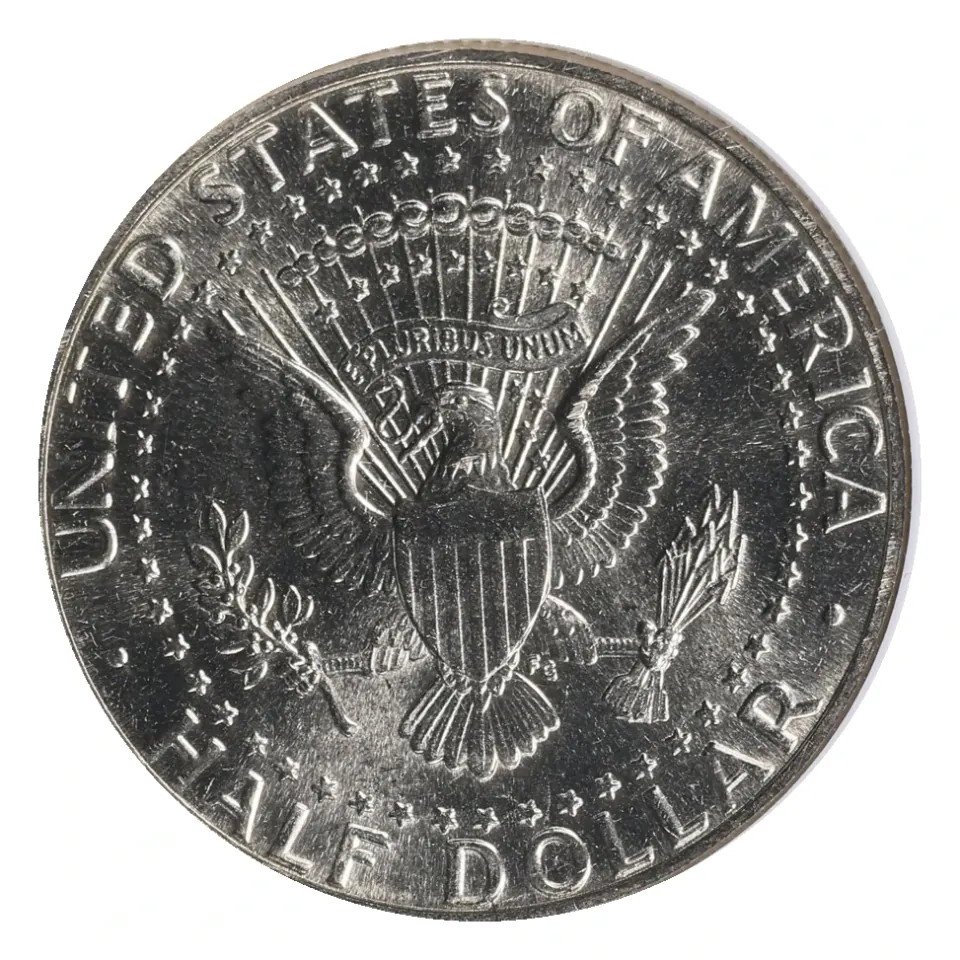
Coin photos
Basics & coin story
The Kennedy portrait entered U.S. coinage in 1964. Silver content changed during the series, and standard circulation-strike halves had become copper-nickel clad long before 1997. The date therefore matters when answering whether a Kennedy coin contains silver.
Philadelphia and Denver produced regular 1997 halves, with mintages of 20,882,000 and 19,876,000 respectively. That output does not make an ordinary worn example rare. Surviving coins in exceptional preservation form a different condition market from circulated pieces.
The obverse portrait is by Gilroy Roberts and the reverse presidential-seal design by Frank Gasparro. For the wider sequence of silver and clad years, use the Kennedy half-dollar series guide rather than borrowing the 1964 silver specification.
| Feature | What to check |
|---|---|
| Date / denomination | 1997 / 50 cents |
| Regular-strike mints | P Philadelphia; D Denver |
| Regular alloy | Copper-nickel outer layers bonded to a copper core |
| Regular nominal mass / diameter | 11.34 g / about 30.6 mm |
| San Francisco collector issues | S clad Proof and S 90% silver Proof |
| Silver Proof nominal mass | 12.50 g; approximately 0.3617 troy ounce fine silver |
| Mint mark location | Obverse below the portrait, above the date |
| Important boundary | The special 1998-S matte half is not a 1997 issue |
Identification
Find P, D or S above the date
Look below Kennedy’s portrait and above 1997. P and D identify the normal circulation-strike issues. S directs you to the Proof listings, but the mint mark alone does not determine whether that Proof is clad or silver.
The photographed 1997-P shows a regular strike. Its certified MS66 attribution belongs to that coin; it does not demonstrate the grade of another bright coin. A missing-looking mint letter on a worn or dirty piece needs examination before being called an error.
Separate the two S Proof compositions
A clad Proof and a silver Proof can look similar face-on. Original set identity, edge appearance, accurate weight and a matching grading label help resolve the metal. Standard clad halves weigh 11.34 grams, while the 90% silver Proof has a nominal 12.50-gram mass.
Mirror fields describe a finish, not an alloy. Do not use the word Proof to mean “silver,” and do not polish a circulation coin to imitate a Proof. The 1964 Kennedy guide covers the earlier 90% silver regular issue.
Check a proposed error against its production mechanism
Damage from impacts, plating or a coating can create unusual color and missing-looking detail after minting. A genuine off-center strike, wrong planchet or other error requires evidence consistent with the mechanism claimed.
Keep the whole coin, its edge and the affected area in the record. A raised rim or small contact mark alone does not establish a valuable error. For a proposed premium, compare an authenticated attribution rather than a seller’s keyword-filled title.
Condition & value
USD face value and PCGS 1997-P grade-specific retail references consulted October 27, 2026. The guide is not a purchase offer and does not assign a PCGS price or grade to the pictured NGC coin.
| Issue | Grade / condition | Value or reference | Basis | Important condition |
|---|---|---|---|---|
| 1997-P or 1997-D regular clad | Common circulated example | $0.50 starting point | Face value | No verified premium feature |
| 1997-P regular clad | MS64 | $10 | PCGS retail guide snapshot | Specific numerical grade |
| 1997-P regular clad | MS65 / MS66 | $12 / $35 | Same guide | Not automatically a raw-coin price |
| 1997-S clad Proof | Exact Proof grade and cameo status | Use its own Proof listing | Collector issue | Not a silver coin by default |
| 1997-S 90% silver Proof | Exact Proof grade and cameo status | Compare silver Proof sales | Separate composition | Metal reference: 0.3617 × silver spot |
The P references demonstrate a condition premium for specific grades. They do not establish a D-mint price, and they do not justify paying grading fees for every uncirculated-looking half. Fees, postage and uncertainty can exceed the possible premium on an ordinary coin.
For an S coin, confirm composition before selecting sold comparables. Compare the same Proof grade and cameo designation, and note whether the sale includes original packaging or a multi-coin set. A set price is not the price of one loose half.
Preserve luster and surfaces rather than trying to improve them. The cleaning guide helps identify hairlines that can undermine a high-grade claim. If no rarity, exceptional grade or authenticated error is established, face value remains the practical starting point for a worn P or D coin.
Summary
Read the mint mark, identify clad versus silver and then assess preservation. Ordinary circulated P/D halves start at fifty cents. Graded Mint State coins and the two S Proof compositions require their own comparisons.
FAQ
Is a 1997 half dollar silver?
Ordinary 1997-P and 1997-D halves are clad. A separate 1997-S 90% silver Proof exists alongside the S clad Proof.
What is a worn 1997 Kennedy half worth?
A common circulated P or D example usually starts at its $0.50 face value unless a specific premium feature is established.
Does S automatically mean a silver half dollar?
No. San Francisco issued both clad and silver Proof halves in 1997. Confirm the composition and exact issue.
Is there a 1997-S matte Kennedy half dollar?
The special matte-finish issue usually meant by that description is dated 1998-S, not 1997. Do not transfer its listing to a 1997 coin.
References
References and further reading
- PCGS: 1997-P Kennedy half dollar
- PCGS: 1997-P grade-specific value view
- PCGS: 1997-D Kennedy half dollar
- GreatCollections: photographed 1997-P NGC MS66
References consulted October 27, 2026. Price tables retain the update dates stated in the text; guide estimates, face values and completed transactions are different forms of evidence.