

 App Store

COIN VALUE GUIDES · DOLLARS
1977 Dollar Value:Eisenhower Clad Coins, D and S Proofs
Learn why a standard 1977 Eisenhower dollar contains no silver, identify Philadelphia, Denver and San Francisco issues and compare ordinary grade-specific values.
 HeriBase TeamPublished
In this article
Quick answer
A normal 1977 Eisenhower dollar is copper-nickel clad, not silver by composition. An ordinary worn regular strike has a $1 face-value baseline. Philadelphia has no mint mark, Denver has D, and San Francisco made a separate clad S Proof.
The PCGS retail guide checked October 23, 2026 lists Philadelphia regular strikes at $2 in VF20, $20 in MS63 and $28 in MS65. These are grade-specific retail references, not guaranteed offers. There was no standard 40% silver 1977 collector issue.
Coin photos
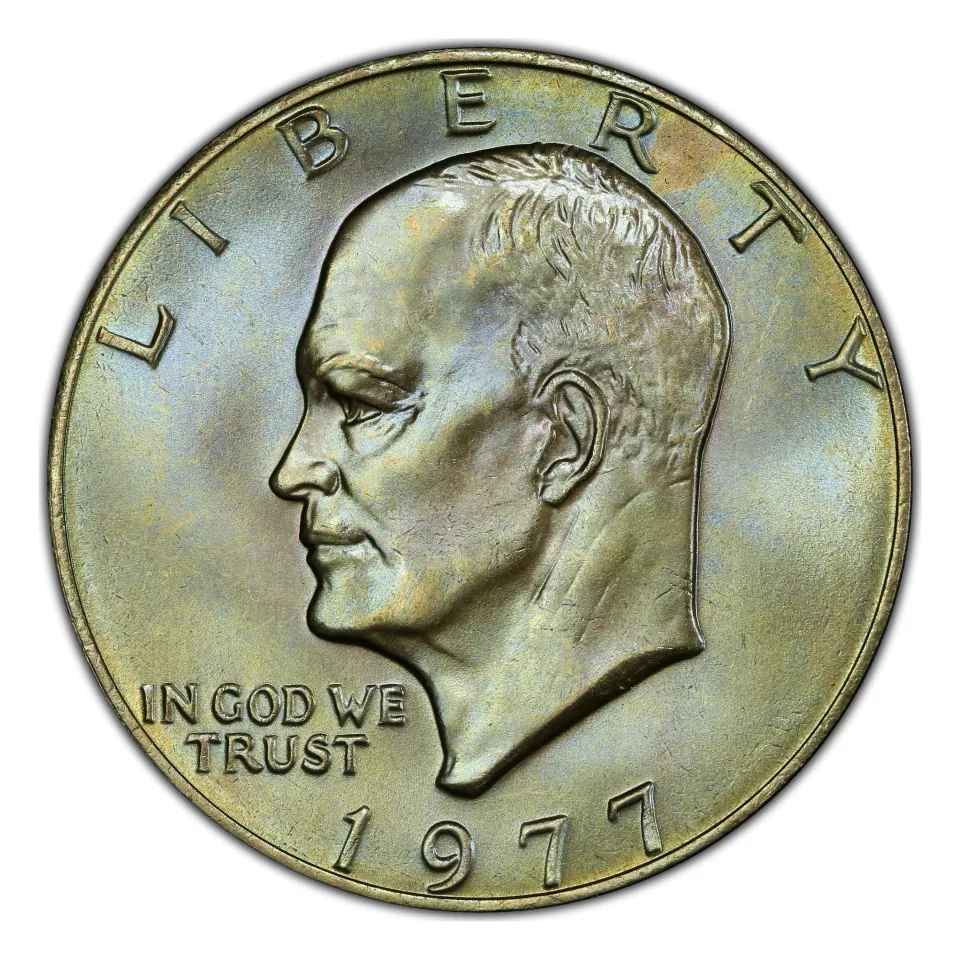
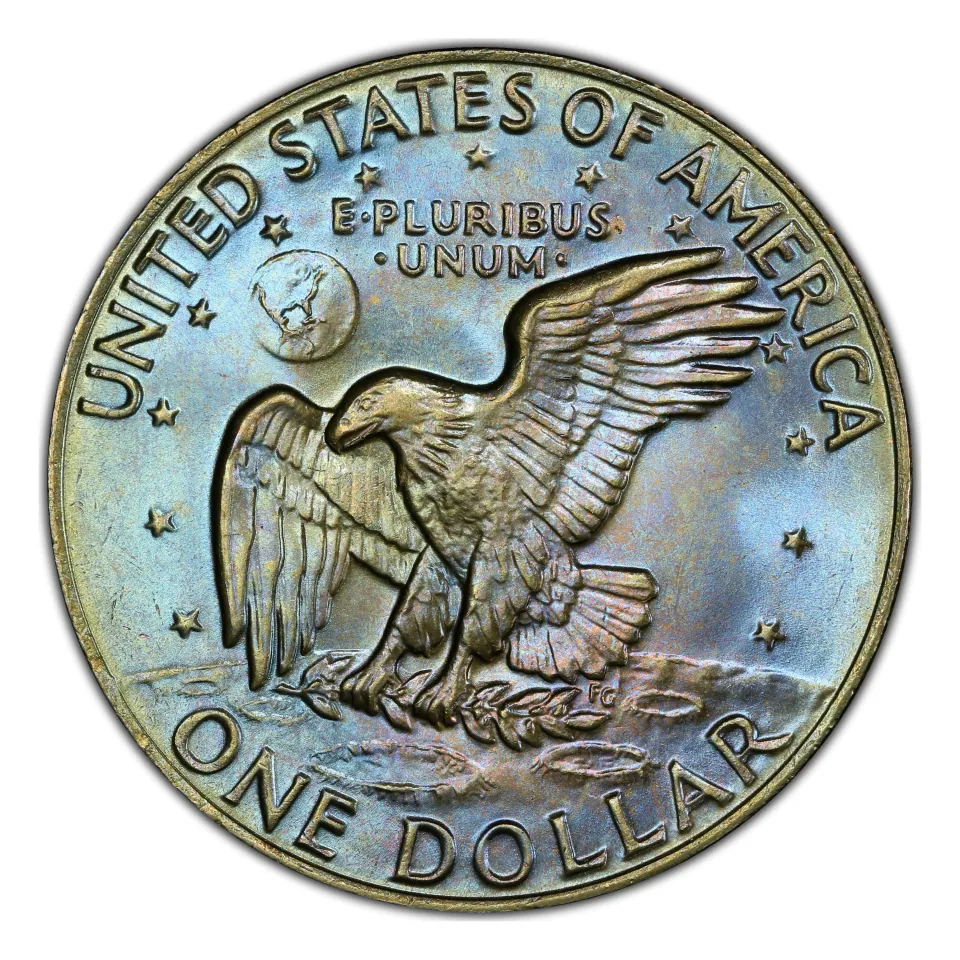
Basics & coin story
The Eisenhower dollar began in 1971, honoring the president on the obverse and the Apollo 11 Moon landing on the reverse. Frank Gasparro’s eagle carries an olive branch toward the lunar surface, with Earth above. The design makes this large dollar distinctive even when worn.
The original eagle returned in 1977 after the Bicentennial Liberty Bell-and-Moon reverse. A single 1977 date is normal. This was the next-to-last Eisenhower year: the series continued in 1978 before the smaller Susan B. Anthony dollar followed in 1979.
Earlier Eisenhower collector products included 40% silver coins, which helps explain the common search phrase “1977 silver dollar.” The Mint’s historical account explicitly separates the final two years as clad-only issues. For the final date, see the 1978 Eisenhower guide.
| Feature | What to check |
|---|---|
| Type / denomination | Eisenhower dollar / $1 |
| Designer | Frank Gasparro |
| Normal construction | Copper-nickel outer layers over a copper core |
| Silver in standard 1977 issues | None |
| Nominal weight / diameter | 22.68 g / 38.1 mm |
| Edge | Reeded |
| Regular mints | Philadelphia: no mark; Denver: D |
| Collector issue | 1977-S clad Proof |
Identification
Read the mint letter below the neck
The mark is on Eisenhower’s portrait side, above the date. No letter is normal for Philadelphia; D is Denver and S the separate Proof. A missing Philadelphia letter does not establish a production error.
Do not infer silver from appearance
The standard coin is clad, including the S Proof. Silver color, a reflective finish or an envelope marked SILVER cannot establish an off-metal example. A serious unusual-metal claim needs weight, edge examination and authentication, rather than a comparison with an earlier silver collector dollar.
Identify the normal eagle reverse
The Moon-landing scene is expected for 1977. The Bicentennial bell design belongs to the dual-dated 1776–1976 issue. A familiar eagle motif also appears on the later smaller Anthony dollar, but the portrait, date and dimensions identify a different series.
Condition & value
Amounts are in U.S. dollars. PCGS retail-guide examples were checked October 23, 2026 and apply only to the stated issue, grade and designation. They are not guaranteed purchase offers; current market conditions and selling costs can change the amount received.
| Issue | Grade / condition | Value or reference | Basis | Important condition |
|---|---|---|---|---|
| Ordinary worn regular strike | Circulated | $1 face-value baseline | Denomination | No normal silver premium |
| 1977 Philadelphia, regular | VF20 | $2 | PCGS retail guide | Retail estimate |
| 1977 Philadelphia, regular | MS63 | $20 | PCGS retail guide | Uncirculated |
| 1977 Philadelphia, regular | MS65 | $28 | PCGS retail guide | Correct grade and original surfaces |
| 1977-D / S Proof / authenticated error | Exact issue and grade | Compare separately | Different entries | No Philadelphia price transferred |
PCGS lists $100 at MS66 for the ordinary Philadelphia entry in this check, compared with $28 at MS65. A one-grade difference therefore matters, but it must be established by preservation rather than a sharp-looking portrait alone. Large fields readily show contact marks and friction.
For a modest-value example, retail references can exceed actual buying offers after costs. Match completed single-coin sales, the same mint and actual surface status. Proof grades and Cameo or Deep Cameo designations need separate comparisons.
The nominal dimensions above use the contemporary congressional description of the large dollar rather than rounded catalog fields. Keep measurements separate from a grade judgment. The grading guide explains wear and Mint State contact marks.
Summary
Identify the mint and use the normal clad specification. The 1977 eagle and missing Philadelphia letter are expected. Earlier silver collector dollars do not establish silver content for this date.
FAQ
Is a 1977 Eisenhower dollar silver?
The standard Philadelphia and Denver regular strikes and San Francisco Proof are clad. There was no standard 40% silver 1977 collector issue.
Is a 1977 dollar with no mint mark an error?
No. Philadelphia regular strikes normally have no mint letter below the neck.
Is 1977 the last Eisenhower dollar year?
No. Eisenhower dollars continued in 1978; the smaller Susan B. Anthony dollar followed in 1979.
Why does the 1977 dollar show an eagle on the Moon?
The normal reverse honors Apollo 11 and returned after the Bicentennial Liberty Bell-and-Moon design.
References
References and further reading
- PCGS CoinFacts: exact issue, specifications and available guide evidence
- U.S. Mint: 1977–1978 dollars were clad-only
- Congressional Record, May 3, 1978: large dollar specifications
- U.S. Mint: dollar design history
Sources and quoted guide evidence checked October 23, 2026. Guide estimates, historical sales, face value and metal-content calculations are identified separately.