

 App Store

COIN VALUE GUIDES · HALF DOLLARS
1974 Half Dollar Value:Kennedy Clad Coins, D and S Proofs
Understand the ordinary clad 1974 Kennedy half dollar, its normal missing Philadelphia mint mark and the separate Denver and San Francisco Proof comparisons.
 HeriBase TeamPublished
In this article
Quick answer
A normal 1974 Kennedy half dollar is copper-nickel clad and contains no silver. An ordinary worn example has a 50-cent face-value baseline. Philadelphia regular strikes have no mint mark; Denver has D, and San Francisco made a separate S Proof.
The PCGS retail guide checked October 23, 2026 lists Philadelphia regular strikes at $9 in MS63, $24 in MS65 and $65 in MS66. These are uncirculated collector references, not prices for every loose half dollar.
Coin photos
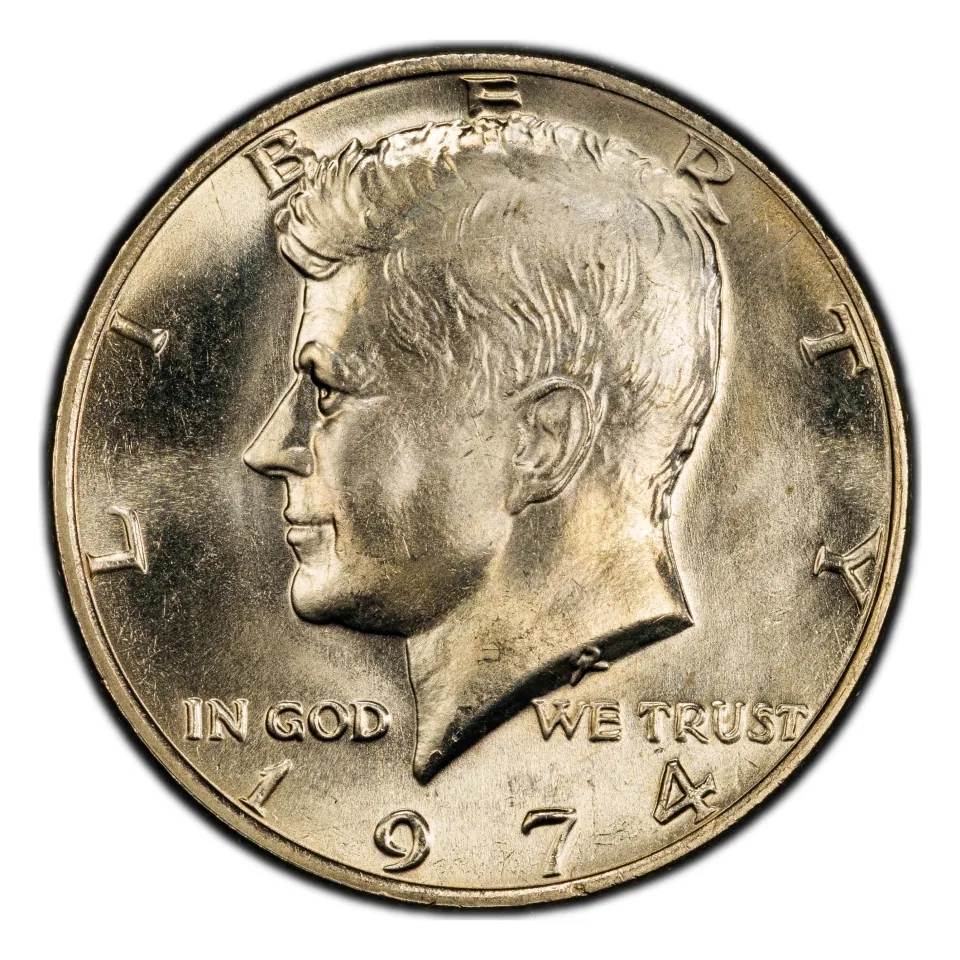
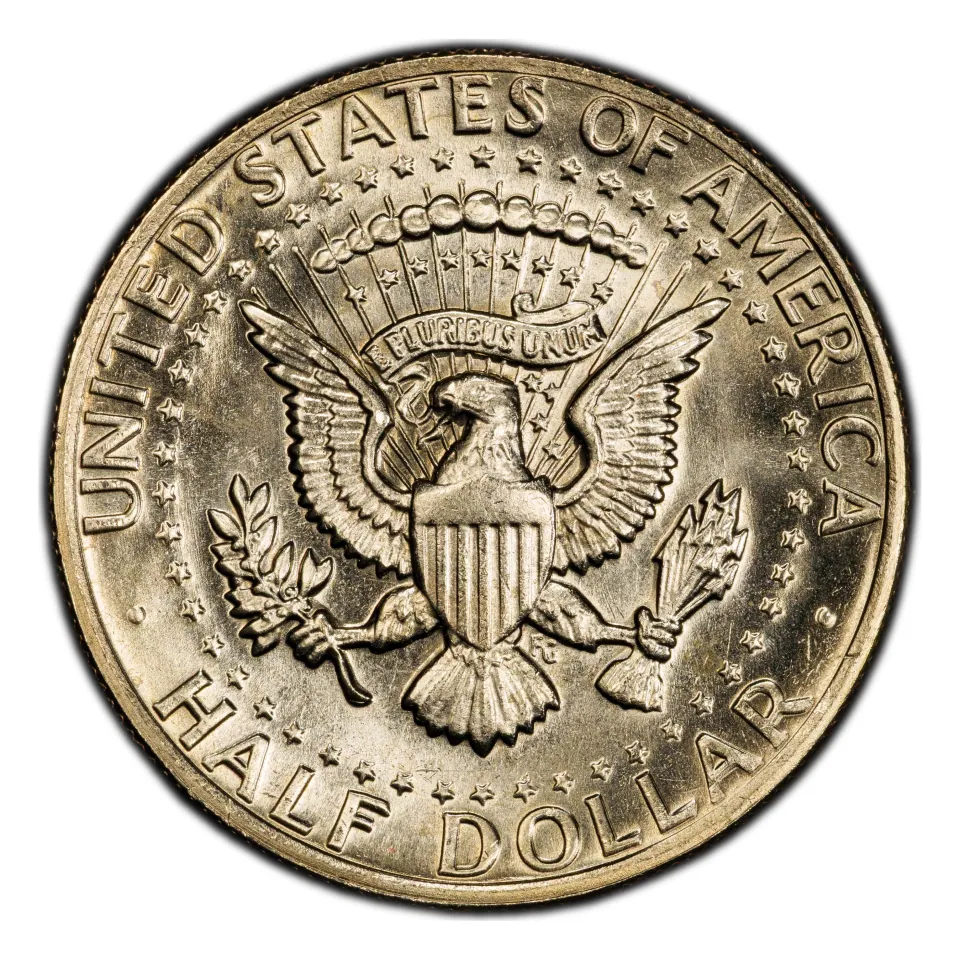
Basics & coin story
Kennedy appeared on the half dollar in 1964. Its composition changed from 90% silver in that first year to 40% silver for 1965–1970 and then to copper-nickel clad regular issues in 1971. The 1974 coin belongs to the clad period, even though the portrait resembles earlier silver halves.
The normal 1974 reverse shows Frank Gasparro’s presidential-seal eagle, paired with Gilroy Roberts’s portrait. The later Bicentennial issue used the dual date 1776–1976 and Independence Hall. An eagle on a single-dated 1974 half is therefore expected, not a missing Bicentennial design.
PCGS records 201,596,000 Philadelphia regular strikes. The large output helps explain why ordinary worn examples are common, while high-grade preservation is a separate collecting question. See the Kennedy half-dollar series guide for the composition chronology.
| Feature | What to check |
|---|---|
| Type / denomination | Kennedy half dollar / 50 cents |
| Designers | Gilroy Roberts / Frank Gasparro |
| Normal construction | Copper-nickel outer layers over a copper core |
| Silver in standard issues | None |
| Nominal weight / diameter | 11.34 g / approximately 30.61 mm |
| Edge | Reeded |
| Regular mints | Philadelphia: no mark; Denver: D |
| Collector issue | 1974-S clad Proof |
Identification
No P is normal on the Philadelphia issue
Inspect the portrait side below Kennedy’s neck and above the date. Philadelphia’s regular 1974 coin has no P. D selects Denver; S selects the separate collector Proof. The absence of a letter is not a missing-mint-mark error.
Use the correct metal specification
A silver color is not evidence of silver content. The standard 1974 half is clad, including the S Proof. Do not transfer composition rules from earlier Kennedy halves or from different denominations, such as silver collector Eisenhower dollars.
Keep Denver doubled-die claims issue-specific
A cataloged 1974-D doubled-die attribution is a separate question from an ordinary Philadelphia valuation. Match the mint and recognized design diagnostics before using a variety price. Reflection, damage or shelf-like doubling does not establish a doubled die.
Condition & value
Amounts are in U.S. dollars. PCGS retail-guide examples were checked October 23, 2026 and apply only to the stated issue, grade and designation. They are not guaranteed purchase offers; current market conditions and selling costs can change the amount received.
| Issue | Grade / condition | Value or reference | Basis | Important condition |
|---|---|---|---|---|
| Ordinary worn regular strike | Circulated | 50¢ face-value baseline | Denomination | No normal silver premium |
| 1974 Philadelphia, regular | MS63 | $9 | PCGS retail guide | Uncirculated |
| 1974 Philadelphia, regular | MS65 | $24 | PCGS retail guide | Problem-free stated grade |
| 1974 Philadelphia, regular | MS66 | $65 | PCGS retail guide | Preservation must match |
| 1974-D / S Proof / attributed error | Exact issue and grade | Compare separately | Different entries | No Philadelphia price transferred |
The guide’s $1 VF20 reference is a retail estimate rather than a promise that every worn coin will sell for twice face value. Handling, postage and dealer spreads matter for low-value individual coins. A high asking price on a marketplace is not evidence of a completed sale.
Inspect Kennedy’s cheek, hair and the open fields, then the eagle and shield. Mint State does not mean mark-free: large coins can acquire contact marks before circulation. The grading guide explains how those marks differ from friction.
Proofs require the correct PR grade and contrast designation, while an authenticated error needs its own comparison. Cleaning to produce shine can damage the original surface without improving manufacture or grade. Retain reliable original collector packaging where relevant.
Summary
Start with the normal clad specification and identify the mint. A 1974 half has no ordinary silver premium; uncirculated grade, Proof status or an authenticated variety must justify a collector comparison.
FAQ
Is a 1974 half dollar silver?
The standard Philadelphia and Denver regular strikes and San Francisco Proof are copper-nickel clad and contain no silver.
Is a no-mint-mark 1974 half an error?
No. Philadelphia regular strikes normally have no P mint mark for this date.
Is a 1974-S half dollar a silver Proof?
No. The standard 1974-S Kennedy Proof is clad; an S alone does not mean silver.
Why does a 1974 half have an eagle instead of Independence Hall?
The eagle is the normal reverse for 1974. Independence Hall belongs to the later Bicentennial issue dated 1776–1976.
References
References and further reading
- PCGS CoinFacts: exact issue, specifications and available guide evidence
- U.S. Mint: Kennedy design and composition history
Sources and quoted guide evidence checked October 23, 2026. Guide estimates, historical sales, face value and metal-content calculations are identified separately.