

 App Store

COIN ERRORS & VARIETIES · DIME
1970 No S Dime: Proof Identification, Pictures and Value
Compare a missing-S Proof with an ordinary 1970-S Proof and a normal no-mark circulation dime before using rare-coin prices.
 HeriBase TeamPublished
In this article
What is the variety, and what is the value reference?
A 1970 No S dime is a Proof issue missing the expected S mint mark; an ordinary Philadelphia circulation dime without a letter is not the same error. Confirm the Proof manufacture and undisturbed mint-mark area first. A cited PR69 example sold for $1,610 in May 2003; that historical result is not a price for every unmarked dime.
What do the real reference coins show?
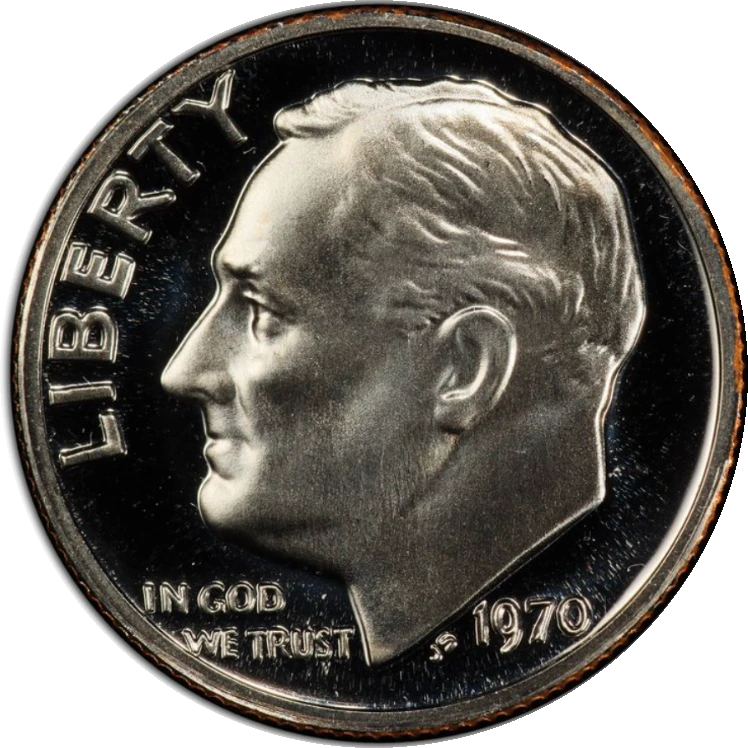
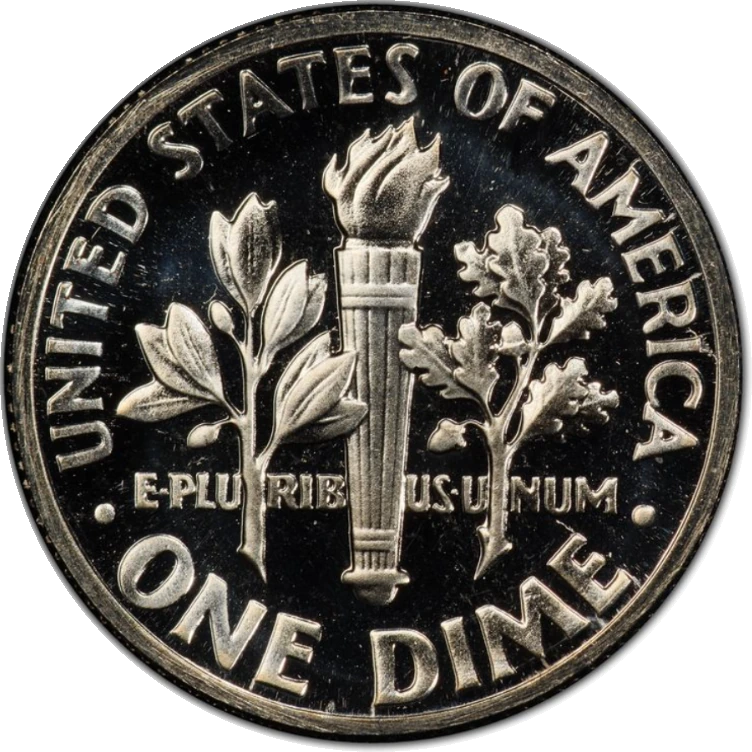
How do normal coins, the variety and damage differ?
| Coin / observation | Feature to check | Meaning | Common mistake | Before pricing |
|---|---|---|---|---|
| Ordinary 1970 circulation dime | No mint letter can be normal | No missing-S Proof attribution | A shiny field does not establish Proof manufacture | Start at the ordinary issue, not a No S sale |
| Normal 1970-S Proof | Expected S on the obverse | Normal collector strike | Do not mistake a small S for a surface spot | Check the date, mark and Proof finish together |
| Attributed 1970 No S Proof | Expected S absent on a Proof | Recognized missing-mark issue | Exclude removal, damage and wrong-date coins | Use matching Proof grades and surface designations |
| Polished or altered coin | Shine, scratches or disturbed field | Condition or authenticity concern | Photographs can hide removal work | No rare-variety price assigned here |
How do you identify it without mistaking damage for an error?
The useful comparison is not simply “letter versus no letter.” The same date occurs on coins made for circulation and on collector Proofs. A missing feature is meaningful only when the particular manufacturing category was supposed to have it. Looking at the blank patch alone leaves that essential question unanswered.
Proof describes manufacture; it is not a numerical grade and does not mean “perfect.” Later handling can leave fingerprints, hairlines or spots on a genuine Proof. Conversely, polishing a circulation coin cannot turn it into the missing-S Proof issue. PCGS catalogs the No S Proof separately from the normal 1970-S Proof, which is why an ordinary unmarked coin should not inherit its auction history.
Where should you inspect the missing S?
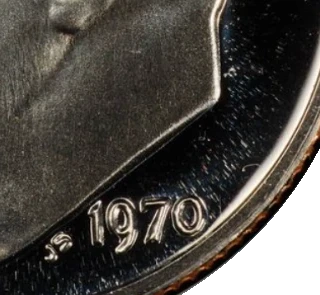
Read 1970 before judging the blank space. Check the mint-mark area on the obverse near the date, using a full-coin photograph to keep your location consistent. Dirt, glare and a blurred letter can all make a mark difficult to see.
Keep the surrounding surface in view. Photograph the patch with low-angle light from more than one direction. Scraping, smoothing or an unusually disturbed texture needs expert examination. Do not test the area by rubbing it.
How does the normal S Proof help?
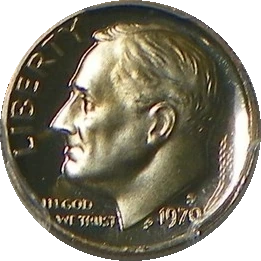
The ordinary S Proof provides a better manufacturing comparison than a random bright circulation dime. Compare the portrait, rim and field together rather than assigning Proof status from one reflection.
The illustration is a reference coin, not the PR69 auction specimen below. A photograph and a holder description are research evidence; neither substitutes for checking the coin and its certification when buying.
What should you exclude before naming the variety?
Keep glare, weak focus, scratches and displaced metal out of the attribution. Take one full-face photograph and one close-up under steady light, then repeat with the light coming from another angle. A feature that vanishes with a reflection is different from a raised part of the design. Do not clean, scrape or press the area to make a suspected feature clearer.
When the match remains uncertain, describe the observation rather than assigning a rare name. The appraisal and authentication guide explains which questions can be explored with photographs and when the physical coin needs examination.
What are the three practical checks?
- Establish the year and manufacture: photograph both sides, date and rim; compare with a normal 1970-S Proof.
- Record the missing-mark area without cleaning; keep angled-light photos and any original documentation.
- Confirm attribution and condition, then compare the same Proof grade and designation with dated sold records.
Which price belongs to your exact coin and condition?
| Coin / attribution | Condition | Reference | Basis and date | Limits |
|---|---|---|---|---|
| Ordinary unmarked 1970 circulation coin | Circulated; no special attribution | 10-cent face value | Face-value baseline, not an error premium | Verify the ordinary issue first |
| 1970 No S Proof | PCGS PR69 | $1,610 | Reported historical sale, Heritage, May 2003, lot 5934 | Not a current offer; fee basis not restated here |
| Unknown Proof grade or altered surfaces | Unverified | Not quoted | No defensible grade-specific price supplied | Obtain identification and surface assessment |
The pictured PR69CAM reference coin is not identified as Heritage lot 5934. Plain Proof, Cameo and Deep Cameo are separate comparisons. Do not borrow the grade, certification number or price of one specimen for another.
A seller’s listing is not a completed sale, and a large historical result does not establish an ordinary coin’s value. Match the full attribution, manufacture, grade and surface condition first. Fees, shipping and selling costs can also change what a buyer pays or a seller receives. Use the grading and surface-condition guide when deciding which comparison is relevant.
What should you conclude before pricing it?
A missing S becomes relevant only after a 1970 dime is established as the appropriate Proof issue. Keep ordinary no-mark circulation coins out of that comparison. Match surfaces, numerical Proof grade and any Cameo designation before pricing; an old auction result is evidence about one coin, not a guaranteed value for yours.
Continue with the Coin Errors & Varieties directory and Dime error identification guide, 1968 No S Proof comparison, 1982 No P circulation variety.
Frequently asked questions
Is every 1970 dime without a mint mark valuable?
No. An ordinary Philadelphia circulation dime can normally have no mint letter. The rare comparison here is a Proof issue missing its expected S.
Where is the mint mark on the 1970 Proof dime?
Inspect the obverse near the date and the base of Roosevelt’s portrait. Confirm the full date and manufacture before interpreting a blank area.
Does a mirror-like surface prove my dime is a Proof?
No. Lighting and polishing can create misleading reflections. Compare the whole manufacture and surface condition; seek an examination if uncertain.
What does the $1,610 figure mean?
It is the reported price of a PCGS PR69 No S dime in a May 2003 Heritage sale, lot 5934, as indexed by PCGS. It is not a current universal value.
Are the photographs the $1,610 auction coin?
No. They illustrate reference specimens and the observation area. The historical sale is identified separately.
Should I clean the mint-mark area?
No. Do not scrape, polish or chemically clean the patch. Photograph it as found and preserve the surfaces for examination.
How is this different from a 1968 No S dime?
They are different date-specific Proof issues. Use the matching year’s diagnostics and records; do not transfer one year’s rarity or prices to another.
References and dated evidence
Open factual and price references
- PCGS: 1970 No S Proof catalog
- PCGS: normal 1970-S Proof comparison
- PCGS auction record: Heritage May 2003, lot 5934
Editorial review: November 16, 2026. Historical source and sale dates are retained in the tables; reviewing them does not make those figures live quotations.