

 App Store

COIN VALUE GUIDES · HALF DOLLARS
1970 Half Dollar Value:1970-D Mint Set Coins versus 1970-S Proofs
Identify the two normal 1970 Kennedy half-dollar issues, compare their manufacturing types and understand the final 40% silver date.
 HeriBase TeamPublished
In this article
Quick answer
Normal 1970 Kennedy half dollars contain 40% silver. The 1970-D is a regular strike distributed in Uncirculated Mint Sets; the 1970-S is a collector Proof. There is no ordinary no-mint-mark Philadelphia issue to price alongside them. Both standard versions contain approximately 0.1479 troy ounce of fine silver.
For one specific condition reference, a PCGS certificate for a 1970-D MS65 coin shows a $46 guide value when consulted October 26, 2026. That is a retail estimate for that grade, not a sale result, not a price for every 1970-D and not a value for a 1970-S Proof.
Coin photos
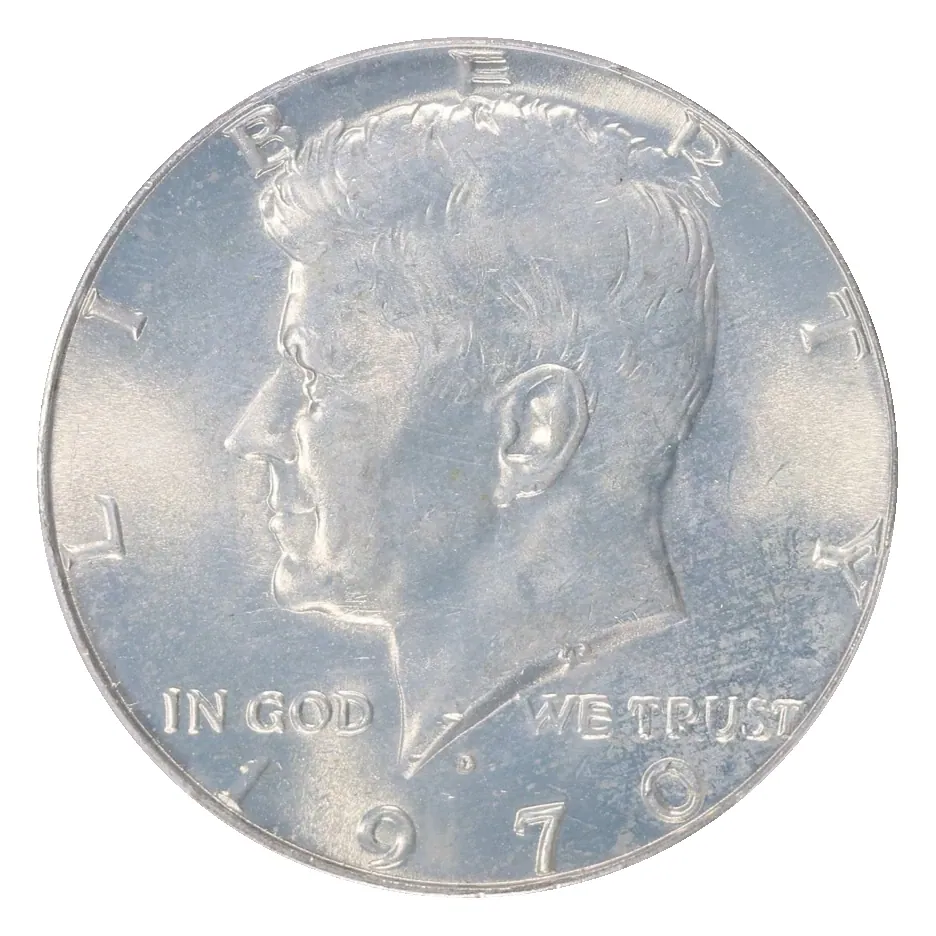
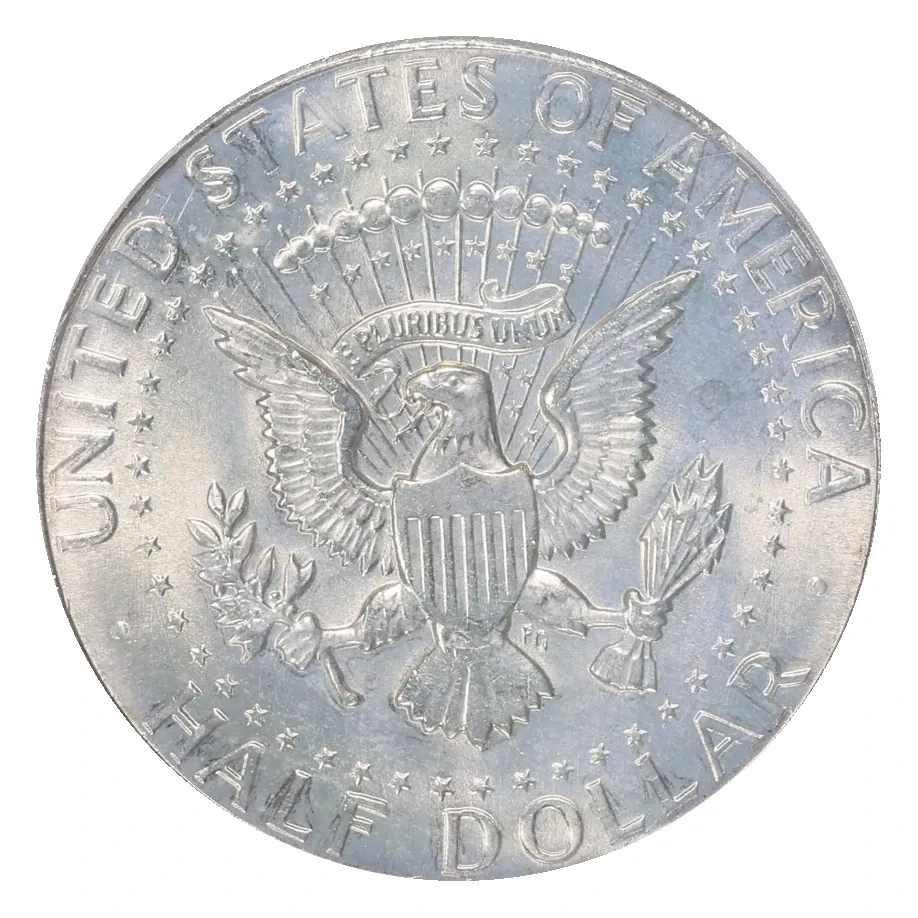
Basics & coin story
The half dollar changed from 90% silver in 1964 to a 40% silver-clad construction in 1965. Legislation approved at the end of 1970 paved the way for regular copper-nickel clad halves in 1971. The 1970 date therefore closes the original silver-based Kennedy regular-strike period.
Denver’s 1970 halves were not released in ordinary circulation distribution; they were sold in Mint Sets. Some were later removed from sets and can turn up loose. Their present location does not change their original manufacture or make a worn example automatically high grade.
PCGS records 2,150,000 Denver pieces. A limited mintage is useful context, but surviving supply, preservation and demand determine the market. For adjacent issues, compare 1969-D and S Proof identification and the Kennedy silver-year overview.
| Feature | What to check |
|---|---|
| Design / denomination | Kennedy half dollar / 50 cents |
| Standard alloy | 40% silver, 60% copper overall |
| Nominal mass / diameter | 11.50 g / approximately 30.6 mm |
| Fine silver | Approximately 0.1479 troy ounce |
| 1970-D | Denver regular strike; distributed in Uncirculated Mint Sets |
| 1970-S | San Francisco Proof; collector manufacture |
| Mint-mark location | Obverse beneath the portrait and above the date |
| Philadelphia regular strike | No normal 1970 no-mark issue |
Identification
Read D or S above the date
The mark sits beneath Kennedy’s portrait. D sends you to the Denver regular-strike entry; S to the San Francisco Proof entry. The FG initials on the eagle side identify designer Frank Gasparro rather than a mint.
Identify manufacture before pricing
Proof is a production method, not a synonym for an unworn coin or for silver. An S Proof may have mirrored fields and contrast, but lighting or polishing can imitate shine. Preserve original packaging and consult the exact catalog record. PR/PF grades and cameo designations do not belong in a Denver MS table.
Investigate an apparent missing mint mark
If a 1970 half seems unmarked, photograph the small area under the portrait in diffuse light. Wear, obstruction or an unreadable image must be excluded before an error claim. Do not silently classify it as an ordinary Philadelphia coin or assign an error premium from the absent-looking letter.
Condition & value
Amounts are USD. The certificate-guide field was consulted October 26, 2026; it is not a completed sale or a universal current quote.
| Issue | Grade / condition | Value or reference | Basis | Important condition |
|---|---|---|---|---|
| Ordinary 1970-D | MS65 | $46 | PCGS certificate guide field | Cert. 45772060; retail reference, not a sale |
| 1970-D in another grade | Exact grade and surfaces | Compare the matching D entry | Regular-strike evidence | Do not assume MS65 from brightness |
| 1970-S Proof | Exact PR/PF and cameo status | Compare matching Proofs | Separate manufacture | Denver prices do not apply |
| Contained silver | 0.1479 troy oz | 0.1479 × silver price per troy oz | Metal calculation | Not a fixed resale amount |
| Suspected error | Authenticated attribution | Case-specific | Specialist examination | An unclear mark alone is insufficient |
The certificate quote identifies a grade and guide value; the page does not record a sale for that coin. It is useful as a conditional reference, not a claim that any raw half will sell for $46. The photographs here show another documented 1970-D specimen.
Keep silver content separate from collector premium. A complete original Mint Set includes other coins and packaging, so its whole sale price cannot be assigned to the half alone. A damaged or circulated coin also needs different comparisons from a problem-free certified MS65.
When researching a Proof, match the numerical grade and cameo category and note any haze or hairlines. For either version, use recent completed sales with a clear fee basis. The grading guide explains why a year and a shiny surface are not a complete valuation.
Summary
Separate D regular strikes from S Proofs before choosing a price. The standard silver content is expected, while the Mint Set origin is historical context. Compare the actual grade, manufacture and surfaces; an apparent missing mark needs examination rather than an automatic premium.
FAQ
Is a 1970 half dollar silver?
The normal 1970-D regular strike and 1970-S Proof are 40% silver, with approximately 0.1479 troy ounce of fine silver each.
Was the 1970-D released for ordinary circulation?
It was distributed in Uncirculated Mint Sets. Coins removed from sets may later appear loose or in circulation.
Is there a normal 1970 half dollar without a mint mark?
There is no ordinary Philadelphia regular-strike issue for 1970. Recheck an unclear mint area before making an error claim.
Can a 1970-S Proof use 1970-D prices?
No. Proof manufacture, numerical grade and cameo designation require a separate comparison from Denver regular strikes.
References
References and further reading
- PCGS: 1970-D specifications and distribution
- PCGS: 1970 silver transition and S Proof issue
- PCGS: MS65 certificate guide reference
- U.S. Mint: 1970 coinage law
References consulted October 26, 2026. Price tables retain the update dates stated in the text; guide estimates, face values and completed transactions are different forms of evidence.