

 App Store

COIN VALUE GUIDES · HALF DOLLARS
1969 Half Dollar Value:D Regular Strikes, S Proofs and 40% Silver
Check the D or S on a 1969 Kennedy half dollar, compare Denver values by grade, and separate silver content from Proof and condition premiums.
 HeriBase TeamPublished
In this article
Quick answer
A standard 1969 Kennedy half dollar is either a Denver D regular strike or a San Francisco S Proof; both contain 40% silver overall. The nominal weight is 11.50 grams, with approximately 0.1479 troy ounce of fine silver. The standard circulation issue is 1969-D, not a no-mark Philadelphia issue.
The PCGS retail guide checked October 22, 2026 lists the 1969-D at $11 in Very Fine 20, $16 in Mint State 63 and $28 in Mint State 65. These are issue-specific estimates for problem-free regular strikes. An S Proof, a contrast designation or a damaged coin requires a different comparison.
Coin photos
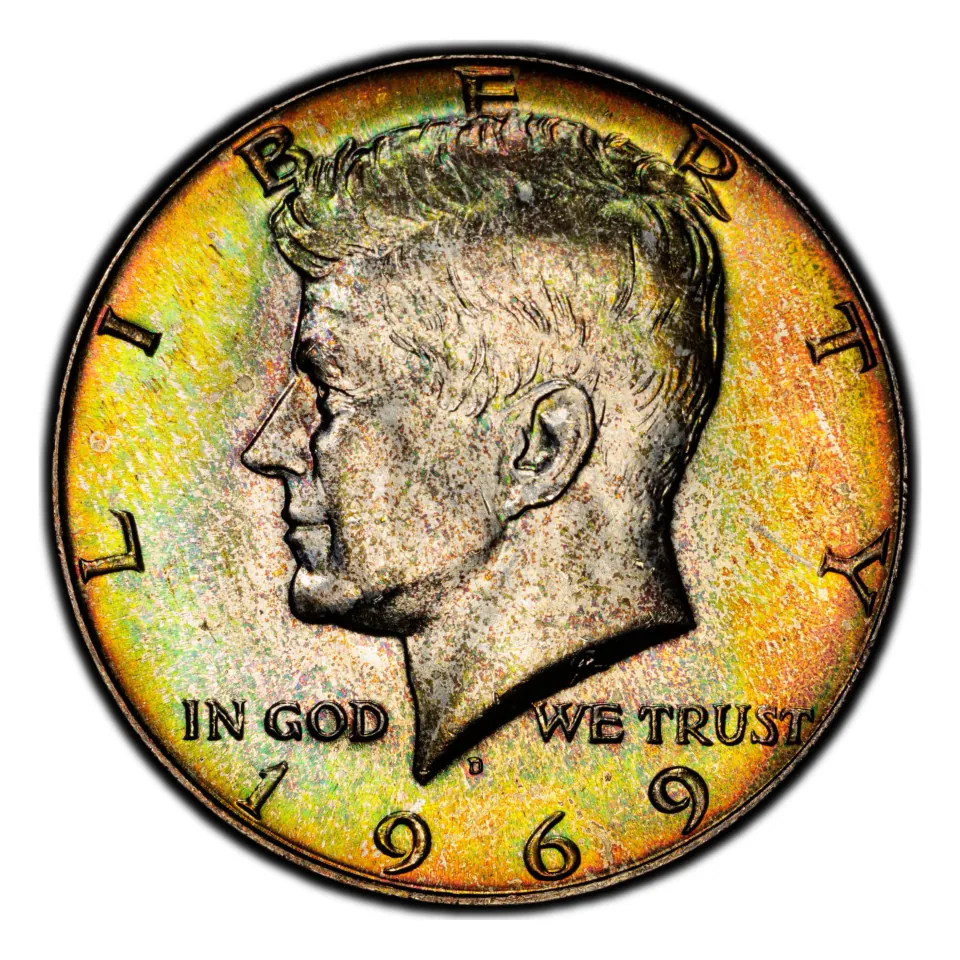
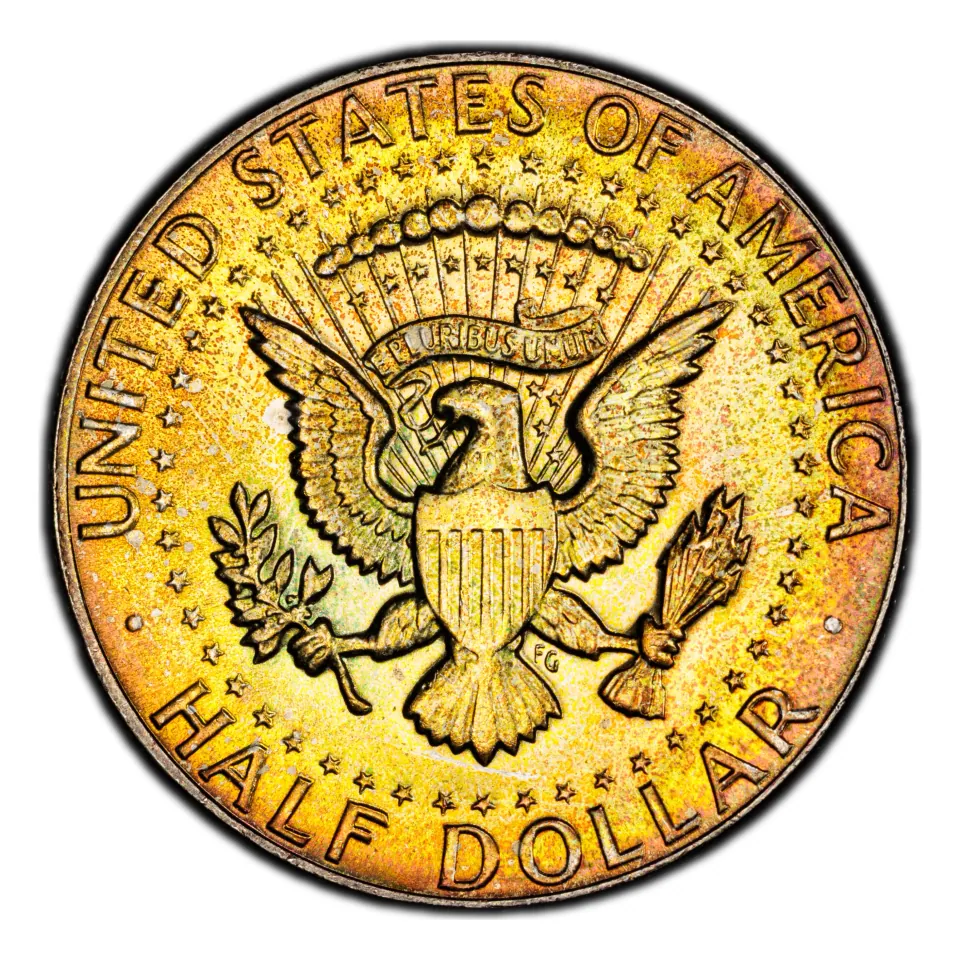
Basics & coin story
The 1969 date falls after the return of mint marks and annual Proof sets in 1968, but before the end of the ordinary silver-clad Kennedy era. That combination makes both the letter and the composition important. Applying the no-mark rule from 1965–1967 would misidentify the issue.
PCGS records 129,881,800 Denver regular strikes. Original output is not the surviving supply at a particular grade: storage and handling can leave many ordinary coins but relatively fewer examples with exceptional surfaces. The Roberts portrait and Gasparro eagle continued unchanged in basic type. The 1968 half-dollar guide covers the preceding year’s D and S system; its grade prices should stay with that date.
| Feature | What to check |
|---|---|
| Regular issue | 1969-D, Denver |
| Proof issue | 1969-S, San Francisco |
| Overall metal | 40% silver, 60% copper |
| Nominal weight / diameter | 11.50 g / 30.61 mm |
| Fine silver | Approximately 0.1479 troy ounce |
| Mint mark location | Obverse, below the neck and above 1969 |
| Edge | Reeded |
Identification
Read the letter above the date
Inspect the small space below Kennedy’s neck for D or S. A D selects the regular circulation issue; an S selects the Proof issue. An apparently absent mark needs better lighting and a clear close-up. Wear, dirt, an unclear photograph or alteration can obscure a letter, and none should be converted directly into a missing-mark rarity claim.
A Proof is not simply a shiny D coin
The S issue was produced for collectors as a Proof. Proof grading commonly uses PR; it is a manufacturing category separate from Mint State (MS). Cameo and Deep Cameo describe contrast and add another distinction. Hairlines or haze can reduce appeal on a Proof, while a polished circulation strike remains a circulation strike.
Use the 40% silver specification for both standard issues
Do not apply the 90% silver specification of 1964 or the base-metal composition of later regular circulation halves. Silver-clad means a layered coin with silver in its overall alloy, not a silver-colored coating on a normal later half. Edge appearance can support identification, but the date, issue and physical measurements should agree.
Condition & value
Amounts are in U.S. dollars. PCGS retail-guide examples were checked October 22, 2026 and apply only to the stated issue, grade and designation. They are not guaranteed purchase offers; current market conditions and selling costs can change the amount received.
| Issue | Grade / condition | Value or reference | Basis | Important condition |
|---|---|---|---|---|
| 1969-D regular | VF20 | $11 | PCGS retail guide | Problem-free circulated comparison |
| 1969-D regular | MS63 | $16 | PCGS retail guide | No circulation wear |
| 1969-D regular | MS65 | $28 | PCGS retail guide | Correct date, mint and grade |
| Contained silver | Approximately 0.1479 troy oz | 0.1479 × silver spot per oz | Metal-content calculation | Not a fixed collector retail price |
| 1969-S Proof / Cameo / Deep Cameo | Exact PR grade and designation | Use the matching Proof entry | Separate collector market | Do not transfer Denver MS values |
A worn Denver half should first be evaluated as an authenticated 40% silver coin with an appropriate condition assessment. The contained-metal formula is approximately 0.1479 multiplied by the silver price per troy ounce. Dealer spreads, fees and the form of sale can change the amount received; a retail guide is not a binding purchase offer.
For a promising uncirculated coin, inspect the cheek, neck and fields for contact marks and the high points for rub. Toning does not determine the numerical grade by itself. Attractive color, dark patches and impaired surfaces need to be distinguished, and the photograph of a toned example is not a guarantee that another coin’s color adds a premium.
For a Proof, compare the same grade and contrast designation, then assess hairlines, haze and handling. A high-grade sale of an exceptional coin should not price an ordinary loose half. Use the grading guide and the Kennedy silver-year overview before deciding whether certification or an individual sale is justified.
Summary
Find D or S, identify regular strike versus Proof, and keep the 40% silver calculation separate from collector premiums. A standard 1969-D can be compared with the Denver grade rows; an S coin needs Proof evidence. Photograph an uncertain mint mark and preserve the surfaces before seeking an offer.
FAQ
Does a 1969 half dollar contain silver?
Yes. Standard 1969-D regular strikes and 1969-S Proofs contain 40% silver overall, approximately 0.1479 troy ounce of fine silver.
Where is the mint mark on a 1969 half dollar?
It is on the obverse below Kennedy’s neck and above the date. D identifies Denver regular strikes and S identifies San Francisco Proofs.
Is a no-mint-mark 1969 half dollar a normal issue?
The standard regular issue is 1969-D and the Proof issue is 1969-S. An unclear or apparently absent mark needs examination and does not automatically establish a valuable error.
Can I use a 1969-D price for a 1969-S Proof?
No. Proofs are a separate issue and must be compared by Proof grade and any Cameo or Deep Cameo designation, not Denver Mint State prices.
References
References and further reading
- PCGS CoinFacts: exact issue, specifications and available guide evidence
- PCGS: separate 1969-S Proof issue
- U.S. Mint: restored mint marks and their position
- U.S. Mint: silver-clad half-dollar composition
Sources and quoted guide evidence checked October 22, 2026. Guide estimates, historical sales, face value and metal-content calculations are identified separately.