

 App Store

COIN VALUE GUIDES · HALF DOLLARS
1966 Half Dollar Value:40% Silver, No Mint Mark and SMS
Compare ordinary 1966 Kennedy half dollars with Special Mint Set issues, calculate silver content, and understand normal missing mint marks and grade premiums.
 HeriBase TeamPublished
In this article
Quick answer
A standard 1966 Kennedy half dollar contains 40% silver and approximately 0.1479 troy ounce of fine silver. No mint mark is normal for the date. The PCGS retail guide checked October 21, 2026 lists regular strikes at $11 in Very Fine 20, $12 in Extremely Fine 40, $16 in Mint State 63 and $22 in Mint State 65.
Special Mint Set (SMS) coins are a separate collector issue, not ordinary 1966 Proofs. The regular-strike prices above do not cover SMS, Cameo designations or attributed doubled dies. Actual offers also depend on current silver prices, condition and selling costs.
Coin photos
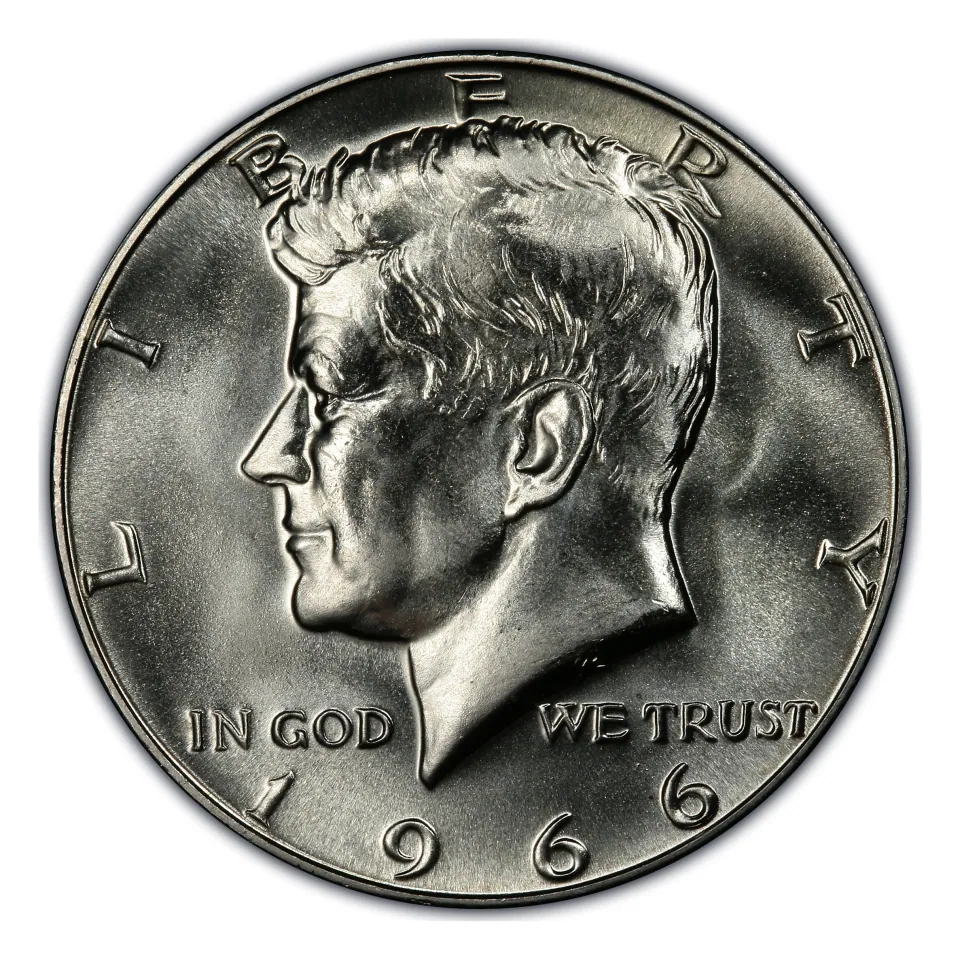
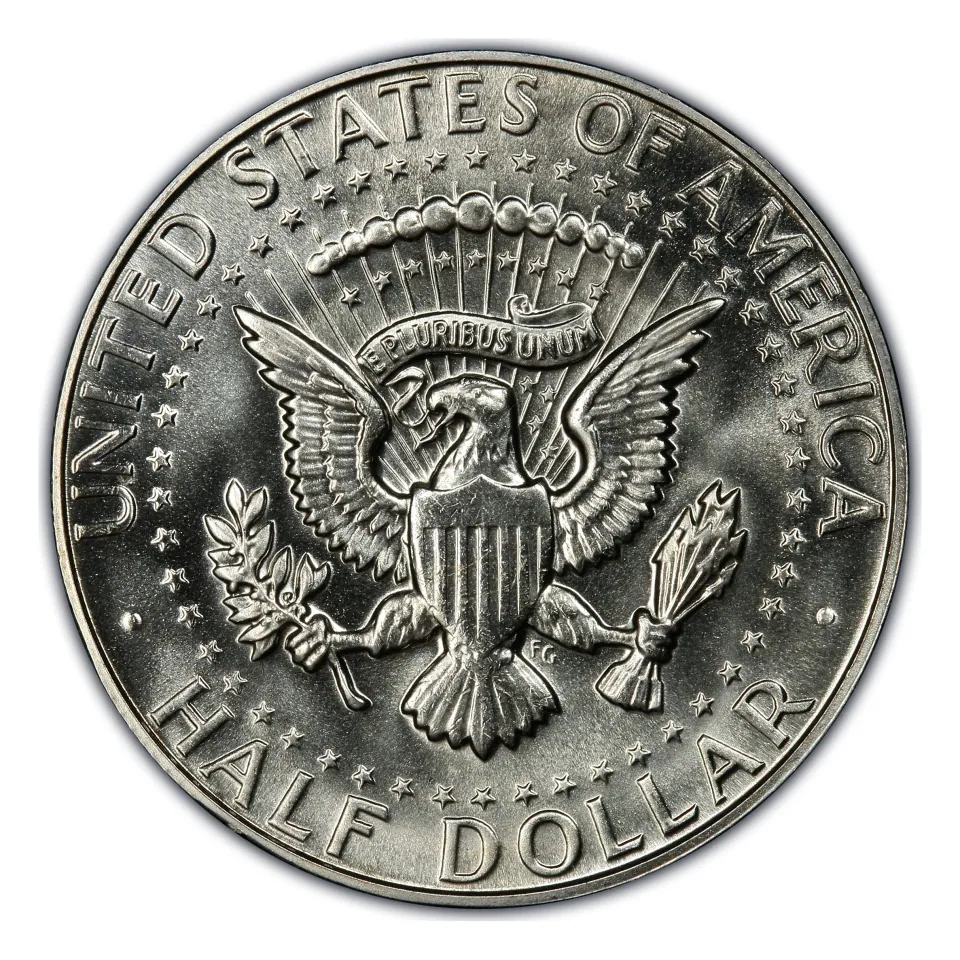
Basics & coin story
The Kennedy half dollar began in 1964 with a 90% silver composition. In the next phase of the coinage transition, halves dated 1965–1970 retained silver in a clad construction but reduced its overall share to 40%. The 1966 coin therefore differs from both a first-year Kennedy half and later base-metal issues.
During 1965–1967, mint marks were omitted and Special Mint Sets replaced the usual annual Proof sets. The result is a date with no normal mint letter and more than one manufacturing finish. The PCGS entry records 108,984,932 regular strikes. For the surrounding series, consult Kennedy silver years and issue types.
| Feature | What to check |
|---|---|
| Designers | Gilroy Roberts / Frank Gasparro |
| Composition | 40% silver, 60% copper overall |
| Nominal weight / diameter | 11.50 g / 30.61 mm |
| Fine silver | Approximately 0.1479 troy ounce |
| Edge | Reeded |
| Mint mark | None expected |
| Collector alternative | Special Mint Set issue; compare separately |
Identification
No mint mark is the normal starting point
Do not interpret the missing letter as a rare Philadelphia-only error. The omission was part of the period’s coinage policy. A catalog may group the regular coin under Philadelphia, but an absent letter alone cannot distinguish every production circumstance or collector finish.
SMS and regular strikes need different comparisons
SMS means Special Mint Set. These coins received a different collector preparation and are cataloged separately, often using Special Strike grades at PCGS. Strong detail and unusual surfaces may prompt a closer look, but shine alone cannot establish SMS origin or a Cameo designation.
Check wear before chasing an error
Look at Kennedy’s cheek and hair and the eagle’s high points. Rubbed luster indicates handling or wear even if other areas remain bright. PCGS lists a 1966 doubled-die obverse variety, but blurry, shelf-like doubling or a reflection does not identify it. The alleged feature must match the recognized attribution. Use surface checks before treating a polished coin as premium quality.
Condition & value
Amounts are in U.S. dollars. PCGS retail-guide examples were checked October 21, 2026 and apply only to the stated issue, grade and designation. They are not guaranteed purchase offers; current market conditions and selling costs can change the amount received.
| Issue | Grade / condition | Value or reference | Basis | Important condition |
|---|---|---|---|---|
| Regular strike | VF20 | $11 | PCGS retail guide | Problem-free circulated coin |
| Regular strike | XF40 | $12 | PCGS retail guide | Current offers may differ |
| Regular strike | MS63 | $16 | PCGS retail guide | Uncirculated, ordinary issue |
| Regular strike | MS65 | $22 | PCGS retail guide | Grade-specific; not SMS |
| SMS / Cameo / attributed variety | Exact issue and grade | Use separate entry | Collector market | Finish and attribution must be confirmed |
Contained-silver value is approximately 0.1479 times the silver price per troy ounce. That arithmetic is a metal reference, not a guaranteed offer: dealers account for spreads, refining economics and transaction size. A retail guide may move differently from the metal market, so check both when deciding how to sell.
At higher grades, original luster and contact marks can outweigh a small difference in bullion content. Do not transfer 1964 values to this 40% silver issue. The 1967 guide provides a neighboring-year comparison, and the 1968 guide explains the return of mint marks and Proofs.
Summary
A 1966 half dollar is a 40% silver Kennedy issue with no normal mint mark. Identify regular strike versus SMS before assigning a price. Check current metal value for circulated pieces and exact grade, finish and surface quality for collector examples; avoid cleaning or assuming every reflective coin is a Proof.
FAQ
Does a 1966 half dollar contain silver?
Yes. The standard issue contains 40% silver overall, approximately 0.1479 troy ounce, and has a nominal weight of 11.50 grams.
Is a 1966 half dollar with no mint mark an error?
No. No mint mark is normal for the 1965–1967 period. Its absence alone does not create an error premium.
Is a 1966 SMS half dollar a Proof?
It is a separate Special Mint Set issue. It should not be described or priced as an ordinary annual Proof.
What is an ordinary circulated 1966 half dollar worth?
The PCGS guide checked October 21, 2026 lists $11 at VF20 and $12 at XF40 for regular strikes. These are retail estimates, not live bullion quotes or guaranteed offers.
References
References and further reading
Sources and quoted guide evidence checked October 21, 2026. Guide estimates, historical sales, face value and metal-content calculations are identified separately.