

 App Store
COIN VALUE GUIDES · PENNIES
1964 Penny Value:No Mint Mark, D, Proofs and SMS Claims
Compare 1964 and 1964-D Lincoln Memorial cents, dated Red Mint State prices, and the differences between ordinary coins, Proofs and SMS specimens.
 HeriBase TeamPublished
In this article
How much is a 1964 penny worth?
Most worn 1964 pennies are common Lincoln Memorial cents with little collector premium. They are copper-alloy cents, not silver coins. For uncirculated Red coins, the PCGS guide checked October 20, 2026 lists MS65 at $18 for Philadelphia and $16 for Denver; those figures do not describe an ordinary brown coin from change.
Proofs and rare Special Mint Set (SMS) specimens need separate identification. No mint mark is normal for Philadelphia regular strikes and Proofs, so the missing letter cannot identify SMS. At MS67 RD the regular-strike guide rises to $1,000 for Philadelphia and $650 for D, illustrating a grade premium rather than general rarity.
1964 Lincoln Memorial cent: date and reverse
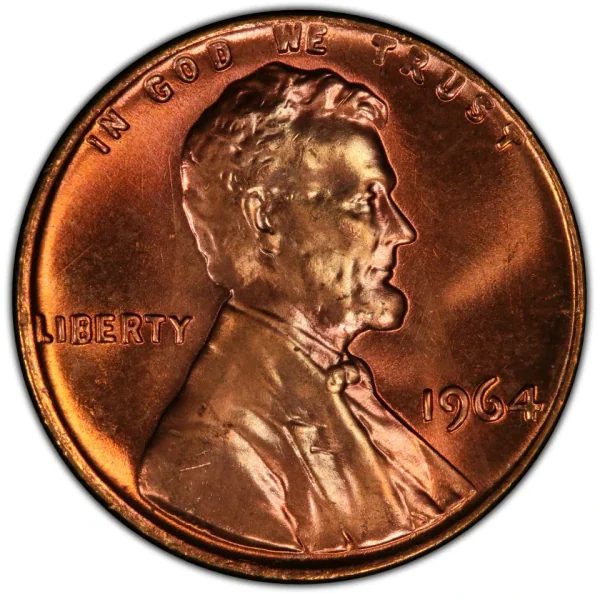
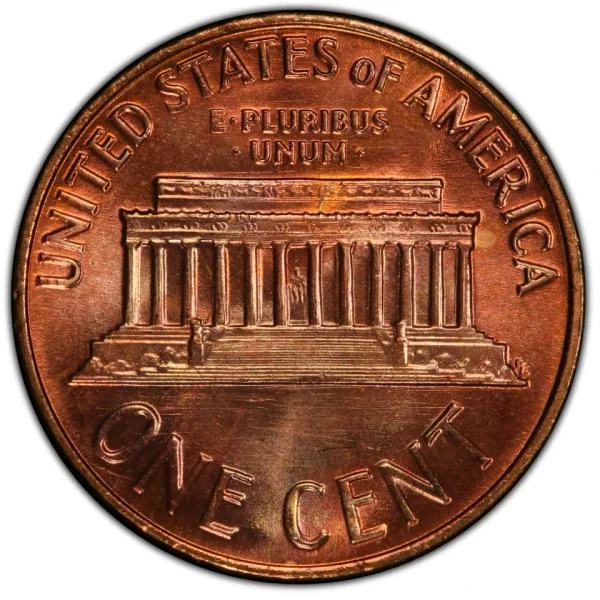
A copper cent during a coin-shortage era
| Feature | What to check |
|---|---|
| Design | Lincoln portrait; Lincoln Memorial reverse |
| Regular issues | Philadelphia, no mark; Denver, D |
| Metal | 95% copper, 5% zinc |
| Standard | 3.11 g; approximately 19 mm; plain edge |
| Philadelphia regular mintage | 2,648,575,000 |
The 1964 date appears on an enormous regular-cent issue. The coin-shortage era that followed brought changes to several U.S. denominations, but a 1964 penny did not share the silver composition of a 1964 quarter. Its familiar Memorial reverse commemorated Lincoln in architectural form, replacing the wheat-ear design used through 1958.
Collector Proofs were also made in Philadelphia. The rare coins cataloged as 1964 SMS are a separate specialist category; they should not be confused with the widely issued 1965–1967 Special Mint Sets. A connection to the same transitional period does not give an ordinary 1964 cent their identity.
Regular strike, Proof or a credible SMS candidate?
| Category | Mint clue | Surface clue | What it means | Next check |
|---|---|---|---|---|
| Regular strike | No mark or D | Normal circulation-strike texture | Most coins encountered | Wear, grade and original color |
| Proof | No mark | Specially prepared collector finish | Different manufacturing method | Confirm Proof characteristics and preservation |
| SMS specimen | No mark | Specialist striking characteristics | Rare attributed issue | Expert examination and provenance |
| Polished or altered | Any ordinary mark | Unnatural shine or lines | Post-mint treatment | Do not price as Proof or SMS |
A missing mint mark is not a rarity test
Look below the date for D. Philadelphia regular coins have no letter, as do Philadelphia Proofs. A no-mark coin is not automatically SMS, and a D coin should not be promoted as that Philadelphia specialty.
Color is not the same as grade
Red refers to retained original copper color; Mint State concerns the absence of circulation wear. Spots, hairlines and contact marks still affect grade. A bright coin may have been cleaned or recolored. Compare original luster and surface texture, not just a photograph’s orange tone.
Evaluate an error separately
An off-center strike or wrong-planchet claim requires visible production evidence. A small scratch, worn letter or unusual color is not enough. Record weight and diameter if genuinely abnormal, but preserve the coin and seek attribution before assigning an error premium.
1964 penny value chart
PCGS retail guide estimates in US dollars, checked October 20, 2026. These are references for genuine, problem-free coins in the stated grade, not auction results or guaranteed offers. Cleaned, damaged and incorrectly graded coins need different comparisons.
| Mint | MS63 RD | MS65 RD | MS66 RD | MS67 RD |
|---|---|---|---|---|
| No mark | $6 | $18 | $22 | $1,000 |
| D | $6 | $16 | $22 | $650 |
The jump at MS67 reflects the difficulty of meeting that grade, not a promise that every uncirculated coin is worth hundreds. Proofs and SMS coins are excluded from this table because their production method and attribution change the comparison.
Preserve the surface before comparing
Do not polish a brown cent to make it look red. Original color, luster, spots, scratches and cleaning affect marketability independently of sharp detail. A raw coin is not automatically the grade shown in a seller’s description.
Use the coin grading scale to separate wear from Mint State marks. For a possible important variety, photograph the date, mint mark and both complete sides, then use the appraisal checklist before paying certification costs.
The penny value checklist helps record the date and mint before selecting a guide. For the older reverse, compare the 1944 wheat cent guide; the date, design and metal context are different.
The practical conclusion for a 1964 cent
Start with a common copper Memorial cent unless evidence establishes something more. Read no mark or D, separate wear from genuine Mint State preservation, and keep Proof and SMS claims out of the ordinary table. Brightness and a missing letter alone do not establish a rare coin.
Frequently asked questions
Is a 1964 penny silver?
No. Normal 1964 cents are 95% copper and 5% zinc. The silver composition of some other 1964 denominations does not apply to cents.
Is a no-mint-mark 1964 penny rare?
No. Philadelphia regular strikes have no mint mark, as do Philadelphia Proofs. The missing letter alone is not evidence of SMS.
What is a 1964 SMS penny?
It is a rare specialist-attributed Special Mint Set specimen, separate from ordinary strikes and Proofs. Surface appearance alone is insufficient for identification.
What is a 1964-D penny worth?
Most worn examples have little collector premium. The PCGS Red regular-strike guide checked October 20, 2026 lists $16 at MS65, conditional on that grade and color.
References
Sources
Research checked October 20, 2026. Any price example retains its stated source date and scope.
- PCGS CoinFacts: 1964PIssue specifications, collecting history and grade-specific retail estimates.
- PCGS CoinFacts: 1964DIssue specifications, collecting history and grade-specific retail estimates.
- PCGS: 1964 cent ProofSeparate collector production.
- PCGS: 1964 SMS centSpecialist SMS attribution.