

 App Store

COIN VALUE GUIDES · PENNIES
1944 Wheat Penny Errors & Value: Steel Planchet and Mint Marks
Compare 1944 wheat penny values for no-mark, D and S coins, and distinguish ordinary copper cents from genuine steel errors.
 HeriBase TeamPublished Updated
In this article
How much is a 1944 wheat penny worth?
Most 1944 wheat pennies are common copper cents, not rare steel errors. Worn brown examples belong to the inexpensive common-date market; the PCGS narrative describes bulk rolls below $10 and individual circulated examples around $1, not a guaranteed offer for every coin. For Red Mint State coins, the guide checked October 20, 2026 lists $18–$24 at MS65 across Philadelphia, Denver and San Francisco.
A genuine 1944 steel penny is a separate, rare off-metal error. Normal copper cents weigh about 3.11 g and are not strongly attracted to a magnet; a steel candidate is about 2.70 g and magnetic. Plating and altered dates can mislead, so these tests screen a candidate rather than authenticate it.
1944 wheat penny: both sides
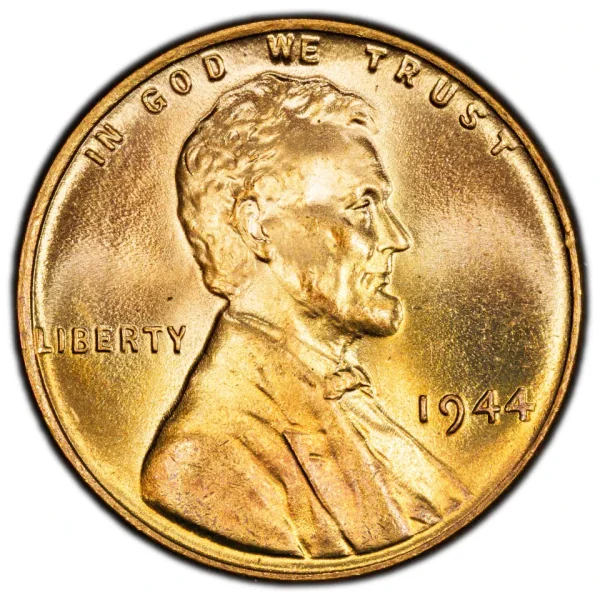
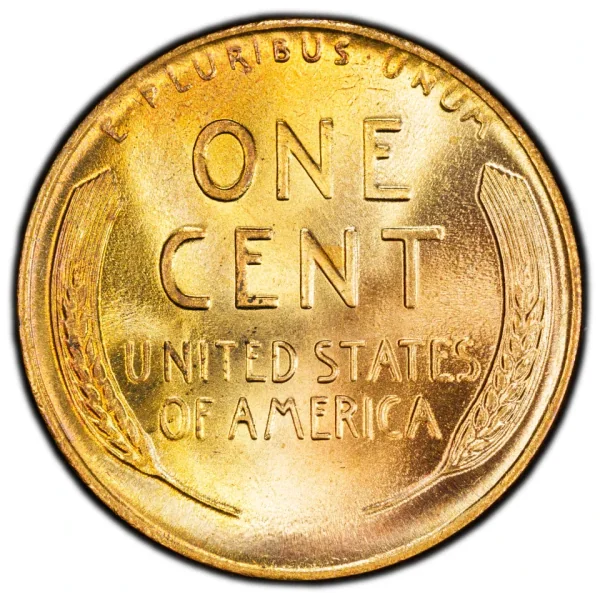
Copper returned after the steel-cent experiment
| Feature | What to check |
|---|---|
| Design | Victor D. Brenner: Lincoln portrait and wheat ears |
| Normal standard | 3.11 g; 19 mm; plain edge |
| Alloy | Approximately 95% copper; not a silver coin |
| Regular mints | Philadelphia (no mark), Denver (D), San Francisco (S) |
In 1943 the Mint used zinc-coated steel cents to conserve copper during World War II. Copper-alloy cent production resumed in 1944, using recovered wartime metal including cartridge cases. That reversal explains the two famous opposite errors: a copper cent is unusual in 1943, while a steel cent is unusual in 1944. It does not prove that any individual coin came from a particular battlefield or cartridge.
| Mint | Coins struck |
|---|---|
| Philadelphia | 1,435,400,000 |
| Denver | 430,578,000 |
| San Francisco | 282,760,000 |
Mintage counts production, not the number surviving in each grade. A large issue can still be difficult in exceptional condition; a smaller issue is not automatically expensive when worn.
Identify the mint and separate exceptional claims
1944 steel penny: what would support the claim?
Read all four date digits, then record weight on a suitable scale and test magnetic attraction gently. A silver-colored copper cent can be plated. A 1943 date can also be altered. Genuine steel composition alone does not establish a genuine 1944 date; specialists must examine both.
Compare the normal metal in the 1943 steel penny guide. Do not use a headline auction result for an authenticated 1944 steel cent to price an ordinary 1944 copper cent.
1944-D/S is a mint-mark variety
The recognized D-over-S variety concerns overlapping mint-mark punches, not a steel planchet. A blurred D, a stain or a random scratch is insufficient. Attribution needs the correct diagnostic pattern; an ordinary D coin remains in the regular-strike row.
1944 wheat penny value chart
PCGS retail guide estimates in US dollars, checked October 20, 2026. These are references for genuine, problem-free coins in the stated grade, not auction results or guaranteed offers. Cleaned, damaged and incorrectly graded coins need different comparisons.
RD means the Red color designation; MS means Mint State, without circulation wear. These figures apply to coins meeting both conditions. They are not prices for ordinary brown coins from change. BN (Brown) and RB (Red-Brown) have separate markets.
| Mint | MS63 RD | MS65 RD | MS66 RD | MS67 RD |
|---|---|---|---|---|
| No mark | $8 | $18 | $32 | $200 |
| D | $10 | $24 | $38 | $200 |
| S | $10 | $18 | $26 | $135 |
Preserve the surface before comparing
Do not polish a brown cent to make it look red. Original color, luster, spots, scratches and cleaning affect marketability independently of sharp detail. A raw coin is not automatically the grade shown in a seller’s description.
Use the coin grading scale to separate wear from Mint State marks. For a possible important variety, photograph the date, mint mark and both complete sides, then use the appraisal checklist before paying certification costs.
The Top 10 U.S. error coin comparison keeps the 1944-S steel issue separate from 1943 bronze cents and ordinary date-and-mint examples.
The key points before assigning a price
Confirm copper versus a credible steel candidate before comparing grade. Most 1944 cents are common; original Red Mint State preservation and authenticated varieties create separate premiums. Keep the coin uncleaned and authenticate a suspected off-metal piece before assigning an exceptional price.
Frequently asked questions
Is a 1944 penny with no mint mark rare?
No. Philadelphia made more than 1.4 billion regular copper cents without a mint mark. Exceptional grade or an authenticated error is a separate question.
How do I test a 1944 steel penny?
A genuine steel candidate should be magnetic and near 2.70 g, but an altered date or plated coin can mislead. Weight and magnetism do not replace authentication.
Is every 1944 penny worth $1?
No. Individual retail prices, bulk-roll prices and dealer buying offers differ. Grade, damage and the way a coin is sold matter.
What is a 1944-D/S penny?
It is an attributed mint-mark variety with a D punched over an S. It is not the same thing as a steel error.
Should I compare a suspected 1944 steel cent with ordinary bronze-cent prices?
No. Keep the ordinary issue and the alleged wrong-planchet error separate. Establish the metal and authenticity first, then compare the same mint, attribution, grade and surface condition with dated evidence.
Can a photograph alone distinguish an altered coin from a genuine steel-planchet error?
No. Photographs can reveal warning signs, but color and an unusual date are insufficient. Record weight and magnetic response, preserve the surfaces, and obtain a specialist examination when the claim has substantial value.
References
Sources
Research checked October 20, 2026. Any price example retains its stated source date and scope.
- PCGS CoinFacts: 1944PIssue specifications, collecting history and grade-specific retail estimates.
- PCGS CoinFacts: 1944DIssue specifications, collecting history and grade-specific retail estimates.
- PCGS CoinFacts: 1944SIssue specifications, collecting history and grade-specific retail estimates.
- PCGS: 1943–1944 off-metal centsTransition errors and authentication context.