

 App Store

COIN VALUE GUIDES · PENNIES
1958 Penny Value:No Mint Mark, D, Proofs and Doubled Dies
Compare ordinary 1958 wheat pennies by mint, grade and copper color, and distinguish the scarce doubled-die obverse from Proofs, damage and photographic blur.
 HeriBase TeamPublished
In this article
Quick answer
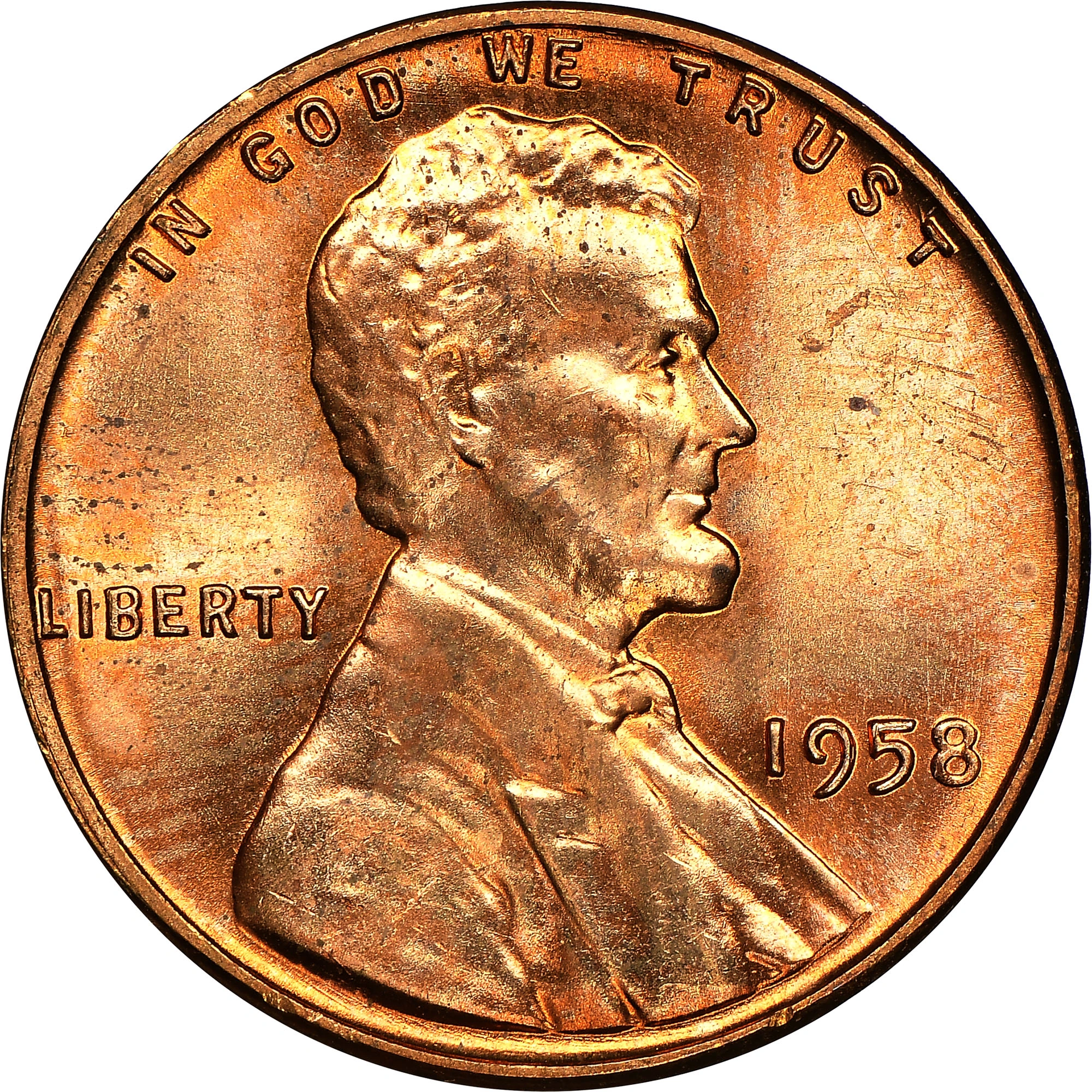
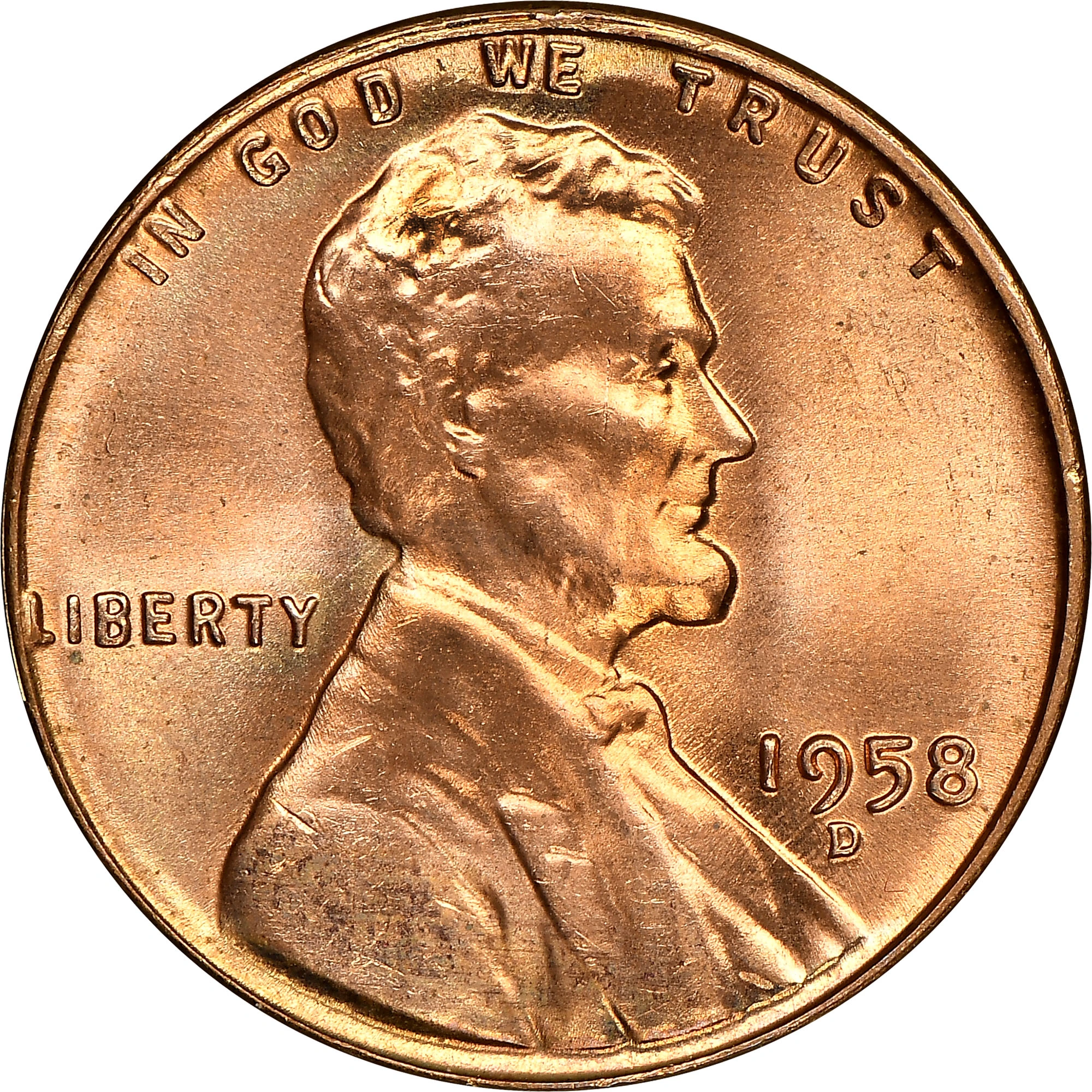
A normal worn 1958 penny is a common bronze Lincoln wheat cent, even though it is the last year of the wheat reverse. No mint mark identifies Philadelphia and D identifies Denver. NGC’s dated Brown guide lists Good and Fine examples at 5 cents and Extremely Fine 40 examples at 10 cents for either mint.
NGC’s ordinary MS65 Red references are $14 for Philadelphia and $17.50 for Denver, versus $5 in Brown at the same numerical grade. These rows were updated November 7, 2022 and accessed November 13, 2026. Philadelphia Proofs and the exceptionally scarce 1958 Philadelphia doubled-die obverse require separate attribution; their prices do not describe ordinary worn pennies.
Coin photos
Basics & coin story
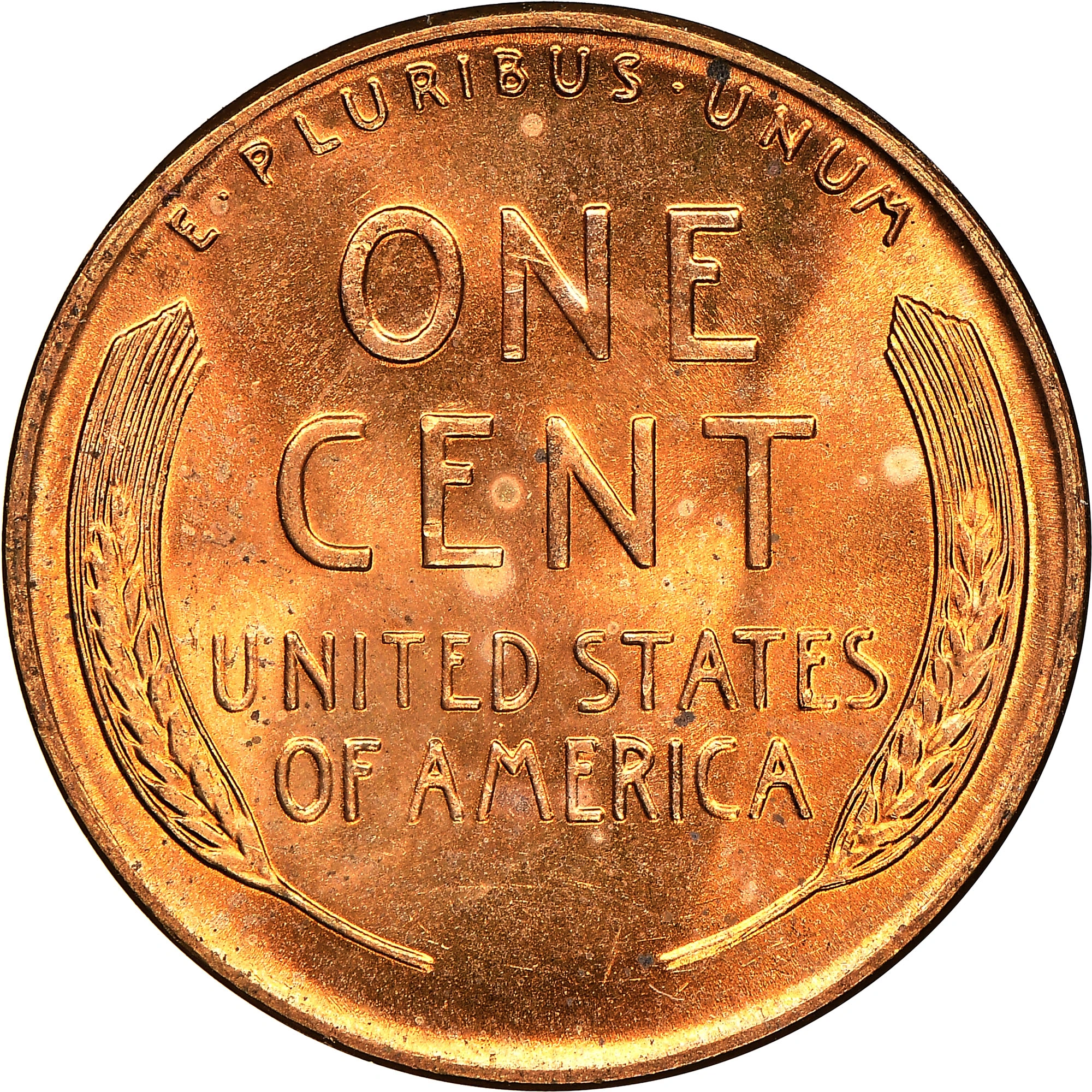
The wheat-ear reverse introduced in 1909 reached its final regular year in 1958. The Lincoln Memorial reverse followed in 1959 for the 150th anniversary of Lincoln’s birth. A last-year design can interest collectors without making every specimen scarce. The portrait remained Lincoln, so the reverse is essential to recognizing the transition.
NGC links the lower 1958 production to the recession of that period, yet describes ordinary P and D coins as readily available in most grades. Saved uncirculated coins and surviving surface quality matter more than a last-year label alone. The wheat penny series guide places this date in the full design chronology.
| Feature | What to check |
|---|---|
| Type / denomination | 1958 Lincoln wheat cent / one cent |
| Designer | Victor David Brenner |
| Standard alloy | 95% copper; 5% tin and zinc (bronze) |
| Nominal weight / diameter | 3.11 g / 19 mm |
| Edge | Plain |
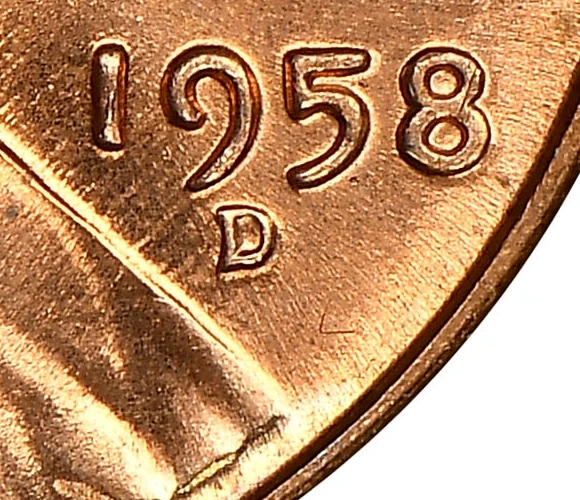
| Mint-mark position | Obverse below the date |
Identification
Read the date, the letter and the wheat reverse
Check all four digits and the small D, if present, below the date. No letter is normal for Philadelphia. Confirm two wheat ears around ONE CENT. A Memorial or shield reverse is not the normal matching reverse for a 1958 cent, and there is no regular 1958-S circulation issue in the checklist.
Do not confuse ordinary color with a grade
Brown, Red-Brown and Red describe retained copper color. Mint State describes no circulation wear; polishing does not restore original Red status. Examine the cheek, jaw, fields and wheat stalks for rubbing, marks, spots and altered surfaces before comparing an uncirculated price.
The important doubled die is not any doubled-looking date
PCGS catalogs the rare Philadelphia doubled-die obverse with strong diagnostic doubling, notably in LIBERTY and IN GOD WE TRUST. Match the whole attribution and supporting die markers. Mechanical displacement, reflection or a blurred image is not equivalent, and an odd digit alone does not establish the variety.
Condition & value
Amounts are in U.S. dollars. The final column gives each source row’s update date (month/day/year), separate from the access date of November 13, 2026. Published guides are reference estimates, not guaranteed buying offers or seller net proceeds. Obtain recent like-for-like completed comparisons for an actual transaction.
MS means Mint State. The ordinary table uses Brown (BN) copper entries; Red-Brown (RB), Red (RD), Proofs and attributed varieties are separate.
| Issue | Grade / condition | USD reference | Basis | Source updated |
|---|---|---|---|---|
| 1958 no mark BN | Good | $0.05 | NGC retail guide | 11/07/2022 |
| 1958 no mark BN | Fine | $0.05 | NGC retail guide | 11/07/2022 |
| 1958 no mark BN | Extremely Fine 40 | $0.10 | NGC retail guide | 11/07/2022 |
| 1958 no mark BN | MS63 | $1.50 | NGC retail guide | 11/07/2022 |
| 1958 no mark BN | MS65 | $5 | NGC retail guide | 11/07/2022 |
| 1958-D BN | Good | $0.05 | NGC retail guide | 11/07/2022 |
| 1958-D BN | Fine | $0.05 | NGC retail guide | 11/07/2022 |
| 1958-D BN | Extremely Fine 40 | $0.10 | NGC retail guide | 11/07/2022 |
| 1958-D BN | MS63 | $1.50 | NGC retail guide | 11/07/2022 |
| 1958-D BN | MS65 | $5 | NGC retail guide | 11/07/2022 |
Use the ordinary table before a headline result
The Brown MS63 references are $1.50 for either mint and MS65 references $5. Original Red coins have different rows, and exceptional-grade demand is a distinct market. Do not average a rare-variety auction result and a common-cent guide figure into one apparent range.
Proof manufacture is separate from the empty mint-mark position
Both Philadelphia circulation coins and Proofs have no letter. NGC’s ordinary Red Proof guide, updated May 19, 2025, lists Proof 65 at $25 and Proof 66 at $35. These exclude special contrast designations and are guide references rather than new sales. Shine alone cannot prove manufacture.
Leave overdate and error claims unassigned until supported
NGC notes that what was once described as a 1958/7 overdate is now regarded as a die flaw. Do not promote an unclear numeral into an overdate premium. Check surface alterations, preserve the coin and seek an attribution when specific diagnostics warrant one.
Photograph both faces under even light and record the visible date and mint mark. HeriBase can help organize an initial photo-based identification; verify important mint, finish and variety details against the references before using a price. An app result is not a certified grade, authentication or purchase offer.
Summary
Identify a normal P or D wheat cent first, then assess wear and original copper color. Most circulated 1958 pennies are modest-premium coins. Keep Proof manufacture and the rare Philadelphia doubled die separate, and do not let an unfamiliar digit or shiny surface substitute for attribution.
FAQ
Is every 1958 wheat penny rare because it is the last year?
No. The final wheat-reverse date is historically interesting, but ordinary circulated coins remain common.
Was a regular 1958-S penny issued?
No regular 1958-S circulation issue belongs in the checklist. Recheck the date, mark and authenticity of a coin described that way.
How is the rare 1958 doubled die identified?
It requires the documented Philadelphia obverse doubling and supporting diagnostics, not simply a doubled-looking digit or blurry lettering.
Is no mint mark proof that a 1958 penny is a Proof?
No. Ordinary Philadelphia cents also have no mint mark. Establish manufacture separately.
References
References and further reading
- NGC: 1958 1C MS specifications, issue analysis and dated guide
- NGC: 1958 D 1C MS specifications, issue analysis and dated guide
- NGC: separate collector Proof issue and dated guide
- U.S. Mint: wheat-to-Memorial design history
- PCGS: 1958 doubled-die obverse diagnostics, separate from the ordinary issue
References accessed November 13, 2026. Guide update dates, source publication dates and sale dates are distinct. No independent examination or current buying offer for a reader’s coin is implied.