

 App Store

COIN VALUE GUIDES · HALF DOLLARS
1954 Half Dollar Value:Franklin, D/S Mint Marks and Bell Lines
Identify a 1954 Franklin half dollar, distinguish its regular and Proof issues, and compare ordinary Philadelphia grades separately from Full Bell Lines and commemoratives.
 HeriBase TeamPublished
In this article
Quick answer
A standard 1954 Franklin half dollar is 90% silver and contains approximately 0.3617 troy ounce of fine silver. Philadelphia has no mint letter; D and S appear above the Liberty Bell on the reverse. The ordinary issue depicts Franklin, not Washington and Carver.
The PCGS retail guide checked October 23, 2026 lists Philadelphia non-FBL regular strikes at $37 in VF20, $44 in MS63 and $50 in MS65. Full Bell Lines, other mints and Proofs use separate entries.
Coin photos
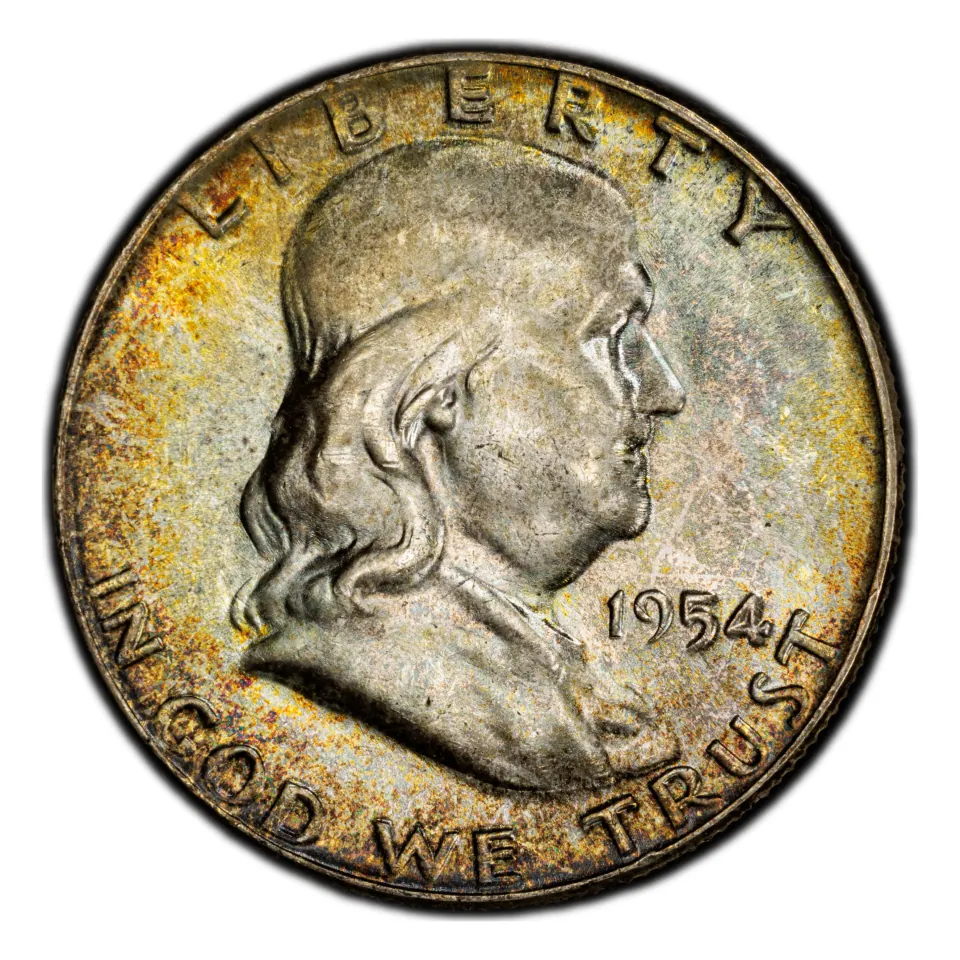
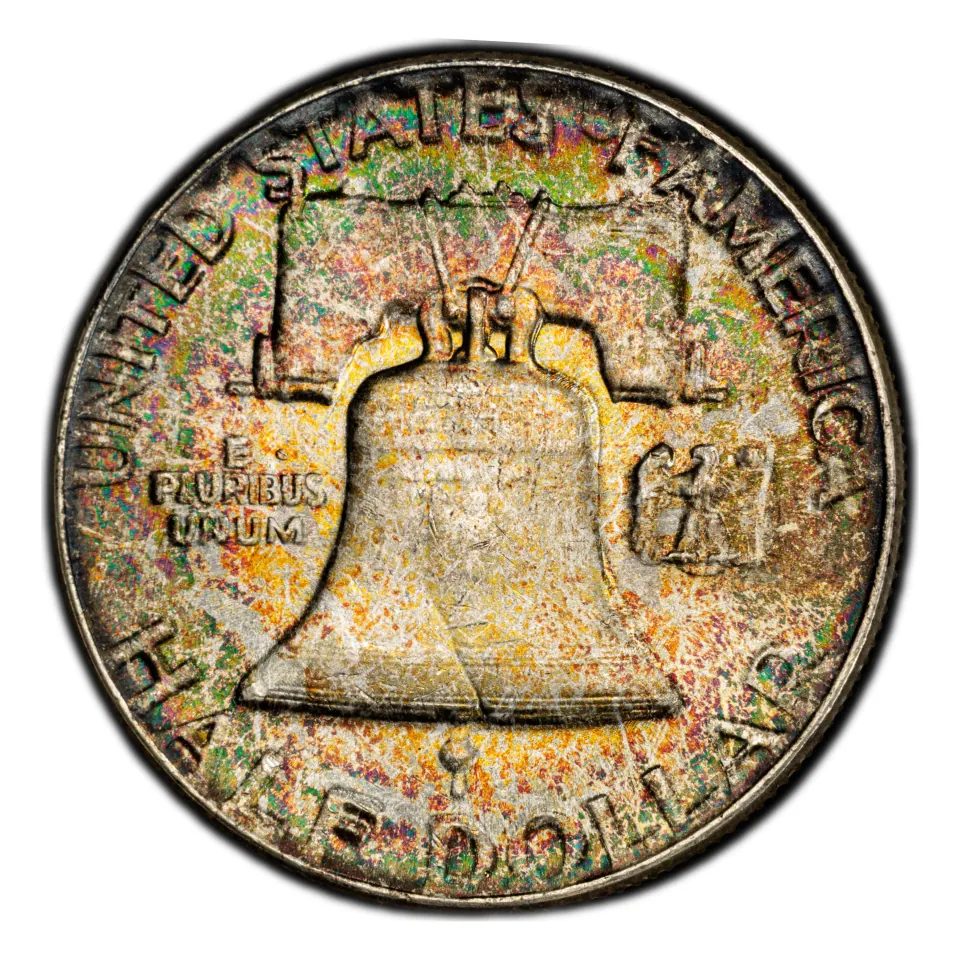
Basics & coin story
The Franklin half dollar paired Benjamin Franklin’s portrait with the Liberty Bell from 1948 through 1963. John R. Sinnock’s design includes a small eagle on the reverse. In 1954 this was the circulating half-dollar design, a decade before Kennedy appeared.
The bell’s lower horizontal lines became an important strike-detail distinction for collectors. Full Bell Lines, abbreviated FBL, is a designation in addition to a numerical grade. A high numerical grade does not automatically establish it, and a label reading MS65 without FBL should not borrow an FBL value.
The year alone can also cause a design mix-up: a separate 1954 Washington–Carver commemorative half dollar exists. Its portraits and collector issue are different. Identify the design first, then compare the 1952 Franklin guide for mint-mark and date context.
| Feature | What to check |
|---|---|
| Type / denomination | Franklin half dollar / 50 cents |
| Designer | John R. Sinnock |
| Composition | 90% silver, 10% copper |
| Nominal weight / diameter | 12.50 g / approximately 30.6 mm |
| Fine silver | Approximately 0.3617 troy ounce |
| Edge | Reeded |
| Regular mints | Philadelphia: none; Denver: D; San Francisco: S |
| Other comparisons | Philadelphia Proof; Full Bell Lines; separate commemorative design |
Identification
Confirm Franklin and the Liberty Bell
The portrait and bell identify the circulating series. A coin with Washington and Carver is not a Franklin half despite sharing the year and denomination. Do not choose a price using the date alone.
Look above the bell for D or S
The mint-letter area is near the top of the reverse, above the bell. No letter is normal for Philadelphia. A Philadelphia Proof also has no letter, so the mint-mark check cannot establish the finish by itself.
Assess bell lines separately from overall grade
FBL requires the appropriate detail and preservation of the bell’s lower lines under the grading service’s standard. A clear photograph of the whole coin is not always enough to judge that detail. Surface marks, weak strike and wear must be distinguished; no FBL claim is made for an unlabeled coin merely because it looks sharp.
Condition & value
Amounts are in U.S. dollars. PCGS retail-guide examples were checked October 23, 2026 and apply only to the stated issue, grade and designation. They are not guaranteed purchase offers; current market conditions and selling costs can change the amount received.
| Issue | Grade / condition | Value or reference | Basis | Important condition |
|---|---|---|---|---|
| 1954 Philadelphia, non-FBL regular | VF20 | $37 | PCGS retail guide | Circulated reference |
| 1954 Philadelphia, non-FBL regular | MS63 | $44 | PCGS retail guide | Ordinary uncirculated entry |
| 1954 Philadelphia, non-FBL regular | MS65 | $50 | PCGS retail guide | No FBL premium assumed |
| Contained silver | Approximately 0.3617 troy oz | 0.3617 × silver spot per oz | Metal reference | Not a fixed retail quote |
| D / S / FBL / Proof / commemorative | Exact issue and grade | Compare separately | Different entries | Design and designation must match |
The ordinary Philadelphia guide rises much more sharply by MS66, where PCGS lists $275 in this check. That does not justify rounding an uncertain MS65 coin upward: a single numerical step can change the comparison substantially. FBL is another independent distinction.
For a worn example, silver content is a useful reference. Multiply 0.3617 by the current silver price per troy ounce, keeping that changing metal figure separate from dated guide estimates and a dealer’s actual offer.
Inspect Franklin’s cheek and hair and the bell for wear, then the fields for marks and cleaning. Use the grading scale for general checks. Completed sales should match the mint, grade, finish and FBL status; a sale of a Proof set or commemorative cannot price an ordinary Franklin.
Summary
Confirm the Franklin design, read the reverse mint mark and keep FBL separate from grade. The normal coin is silver, but mint, finish and strike-detail designation determine which collector evidence applies.
FAQ
Is a 1954 half dollar silver?
A standard 1954 Franklin half dollar is 90% silver and contains approximately 0.3617 troy ounce of fine silver at nominal weight.
Where is the mint mark on a 1954 Franklin half?
Above the Liberty Bell on the reverse. D is Denver, S San Francisco, and no letter Philadelphia.
Does MS65 automatically mean Full Bell Lines?
No. Full Bell Lines is an additional strike-detail designation; a non-FBL numerical grade does not establish it.
Is every 1954 half dollar a Franklin?
No. A separate Washington–Carver commemorative half dollar also bears the date. Identify the design before choosing a value guide.
References
References and further reading
- PCGS CoinFacts: exact issue, specifications and available guide evidence
- U.S. Mint: half-dollar design history
- PCGS: separate 1954 Washington–Carver commemorative
Sources and quoted guide evidence checked October 23, 2026. Guide estimates, historical sales, face value and metal-content calculations are identified separately.