

 App Store

COIN VALUE GUIDES · PENNIES
1953 Wheat Penny Value:No Mint Mark, D, S and Original Copper Color
Compare 1953 wheat pennies by mint, grade and copper color, distinguish D/S marks from varieties, and keep Philadelphia Proof prices separate.
 HeriBase TeamPublished
In this article
Quick answer
A normal worn 1953 wheat penny is a common bronze Lincoln cent with a small collector premium. No mark, D and S identify Philadelphia, Denver and San Francisco. NGC’s Brown guide lists Good and Fine examples at 5 cents and Extremely Fine 40 examples at 10 cents for each mint. Those rows were updated November 7, 2022 and accessed November 13, 2026.
Better original color and preservation change the comparison. The dated MS65 Red references are $27 for Philadelphia, $20 for Denver and $14 for San Francisco, versus $5 in Brown for each. The P Red row was updated November 13, 2023; D/S Red rows November 7, 2022. These are retail guide references, not cash offers.
Coin photos
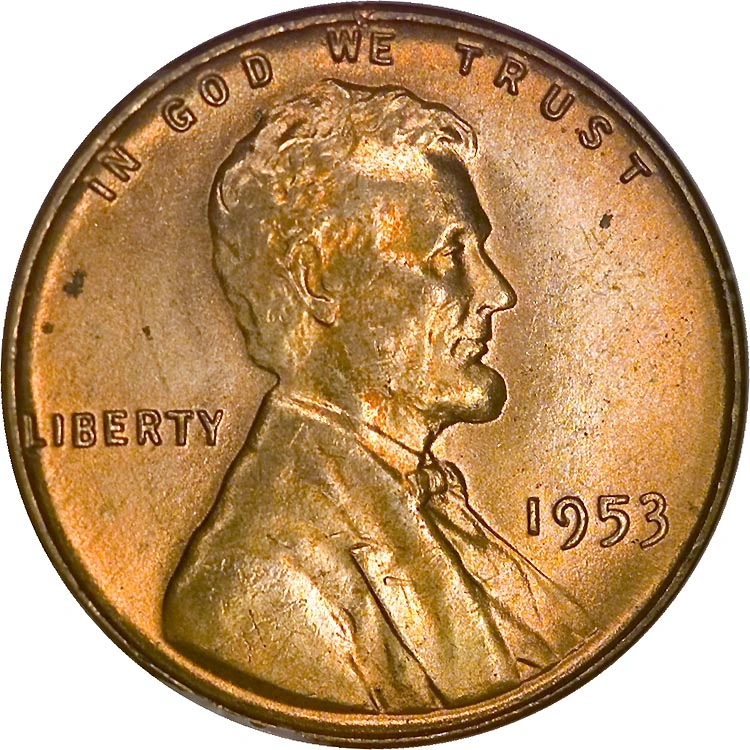
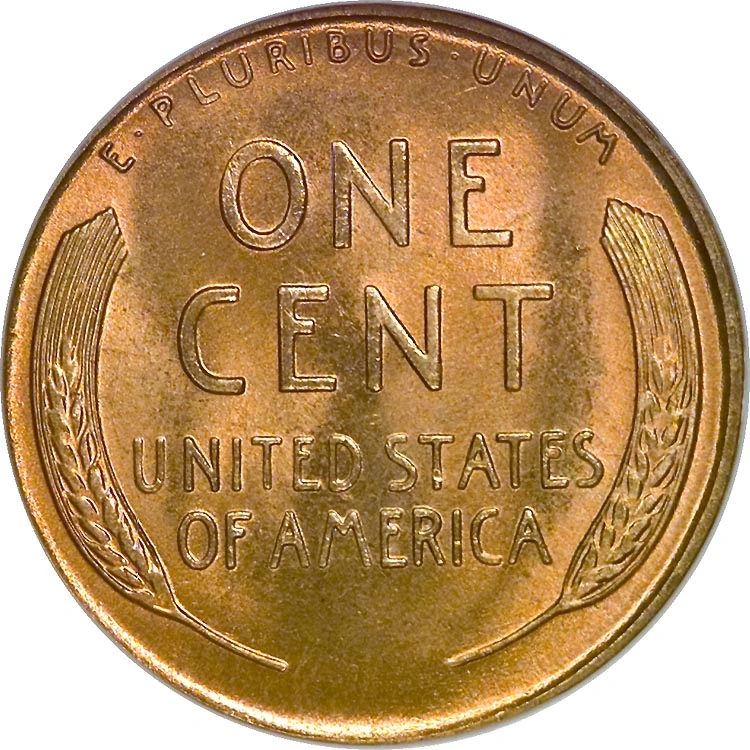
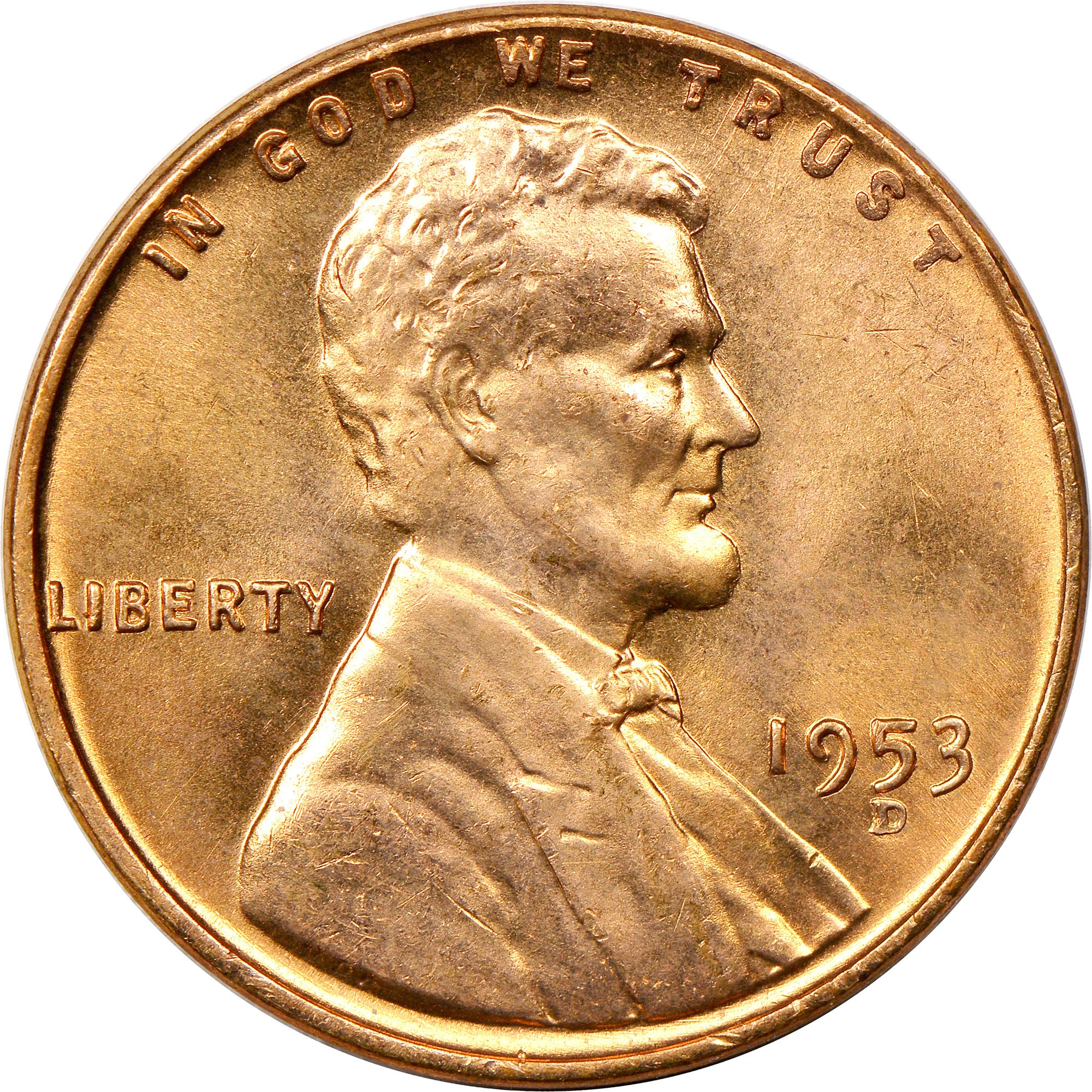
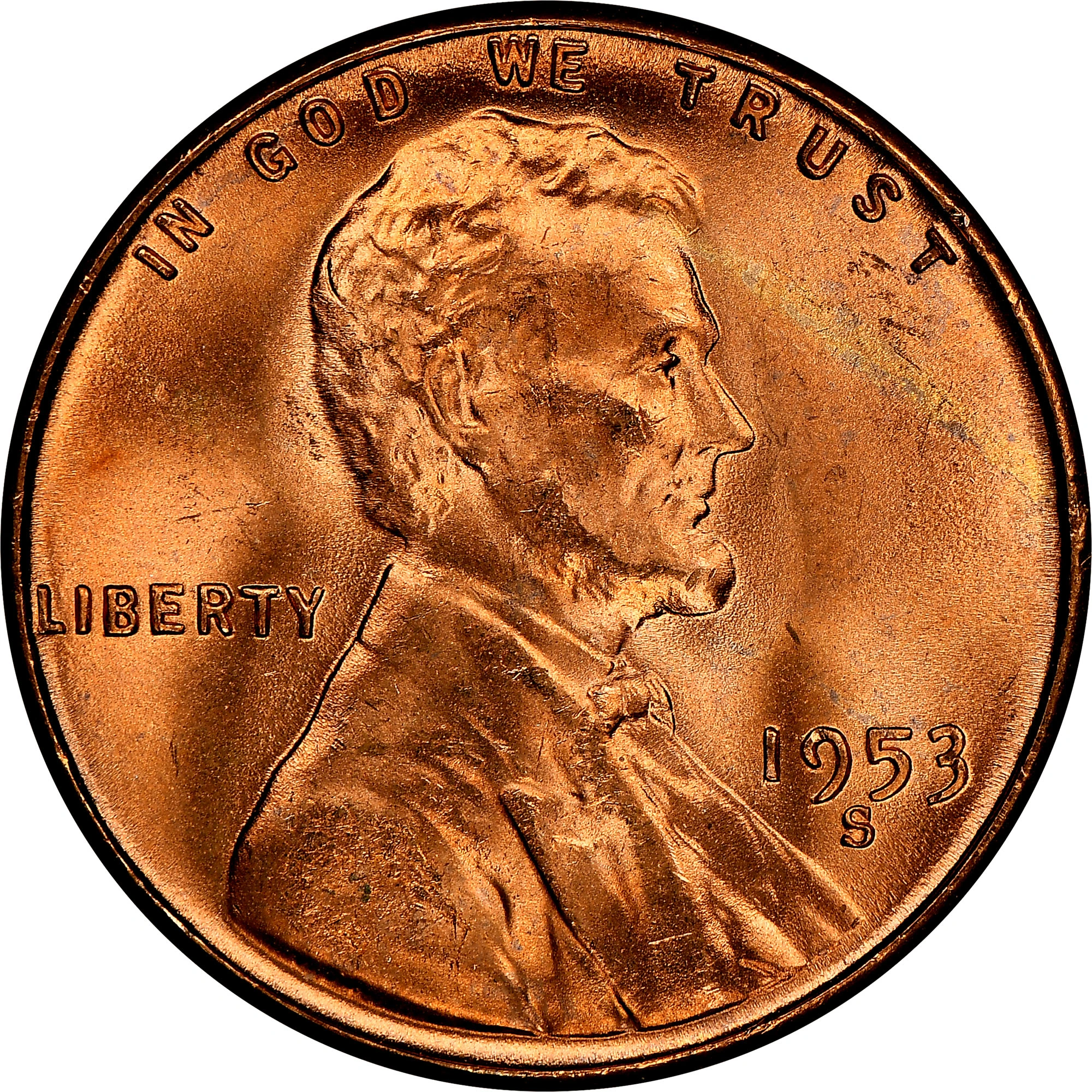
Basics & coin story
The 1953 cent retains Brenner’s Lincoln portrait and wheat-ear reverse, six years before the Memorial redesign. Collectors saved many coins, so ordinary uncirculated examples can be available even when truly exceptional grades are difficult. NGC describes plentiful Denver gems, Philadelphia spotting problems and frequent streaking or staining on San Francisco pieces.
Those differences make original surface quality a useful collecting target. A streaked coin is not automatically a scarce alloy error, and a bright coin is not automatically original Red. The series guide supplies the full wheat-cent framework; this page keeps the year, mint and condition comparisons together.
| Feature | What to check |
|---|---|
| Type / denomination | 1953 Lincoln wheat cent / one cent |
| Designer | Victor David Brenner |
| Standard alloy | 95% copper; 5% tin and zinc (bronze) |
| Nominal weight / diameter | 3.11 g / 19 mm |
| Edge | Plain |
| Mint-mark position | Obverse below the date |
Identification
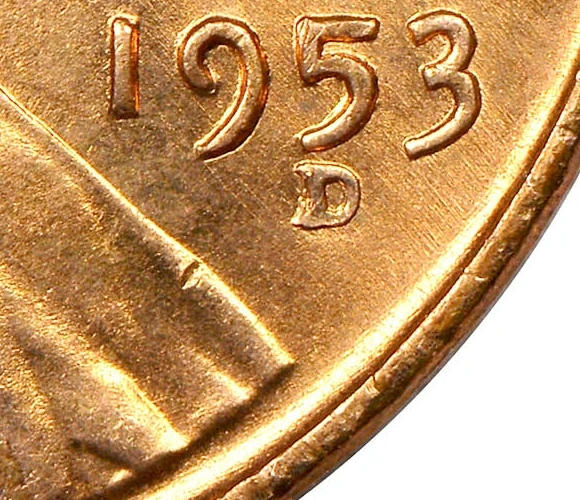
Read the small D or S beneath 1953
No letter is the normal Philadelphia arrangement. D and S are mint letters, not error designations, and the wheat reverse should surround ONE CENT. Confirm both sides before attaching a price to a coin with an uncertain date or obscured mark.
Keep original color separate from cleaning
Brown, Red-Brown and Red are color categories, not numerical grades. Inspect Lincoln’s cheek, fields and wheat stalks for wear, marks, stains and altered surfaces. A chemical treatment that makes copper brighter does not restore an original Red designation.
A repunched mark needs a die match
NGC records numerous generally minor D and S repunched-mint-mark varieties. A thick-looking letter, corrosion outline or image shadow is not a complete attribution. Match the repeated impression and supporting diagnostics rather than assuming every unusual D or S carries a premium.
Condition & value
Amounts are in U.S. dollars. The final column gives each source row’s update date (month/day/year), separate from the access date of November 13, 2026. Published guides are reference estimates, not guaranteed buying offers or seller net proceeds. Obtain recent like-for-like completed comparisons for an actual transaction.
MS means Mint State. The ordinary table uses Brown (BN) copper entries; Red-Brown (RB), Red (RD), Proofs and attributed varieties are separate.
| Issue | Grade / condition | USD reference | Basis | Source updated |
|---|---|---|---|---|
| 1953 no mark BN | Good | $0.05 | NGC retail guide | 11/07/2022 |
| 1953 no mark BN | Fine | $0.05 | NGC retail guide | 11/07/2022 |
| 1953 no mark BN | Extremely Fine 40 | $0.10 | NGC retail guide | 11/07/2022 |
| 1953 no mark BN | MS63 | $1.50 | NGC retail guide | 11/07/2022 |
| 1953 no mark BN | MS65 | $5 | NGC retail guide | 11/07/2022 |
| 1953-D BN | Good | $0.05 | NGC retail guide | 11/07/2022 |
| 1953-D BN | Fine | $0.05 | NGC retail guide | 11/07/2022 |
| 1953-D BN | Extremely Fine 40 | $0.10 | NGC retail guide | 11/07/2022 |
| 1953-D BN | MS63 | $1.50 | NGC retail guide | 11/07/2022 |
| 1953-D BN | MS65 | $5 | NGC retail guide | 11/07/2022 |
| 1953-S BN | Good | $0.05 | NGC retail guide | 11/07/2022 |
| 1953-S BN | Fine | $0.05 | NGC retail guide | 11/07/2022 |
| 1953-S BN | Extremely Fine 40 | $0.10 | NGC retail guide | 11/07/2022 |
| 1953-S BN | MS63 | $1.50 | NGC retail guide | 11/07/2022 |
| 1953-S BN | MS65 | $5 | NGC retail guide | 11/07/2022 |
The Denver opportunity still belongs in the full-year article
A 1953-D should be compared with the correct Denver row, but its ordinary date and letter do not establish rarity. The Brown MS63 reference is $1.50 and MS65 $5 for each mint. The substantially different Red rows show why the numerical grade alone is not a complete price description.
Proofs are a separate Philadelphia product
The no-letter position is shared by ordinary Philadelphia cents and collector Proofs. NGC’s older Red Proof guide, updated October 31, 2014, lists Proof 65 at $44 and Proof 66 at $60. These are explicitly old collector-manufacture references, not current offers or prices for ordinary shiny cents.
Do not turn every stain into an error
Streaking and surface discoloration can reflect manufacturing history, storage or later exposure. A photo alone cannot establish unusual composition. Preserve the coin and use surface-alteration checks before paying for an attribution or assigning a premium from an unrelated example.
Photograph both faces under even light and record the visible date and mint mark. HeriBase can help organize an initial photo-based identification; verify important mint, finish and variety details against the references before using a price. An app result is not a certified grade, authentication or purchase offer.
Summary
Identify the 1953 date and mint letter, then compare wear, original copper color and surface quality. Ordinary circulated coins have modest premiums. Keep Denver within the same year guide, Proof manufacture separate, and repunched-mark claims dependent on actual diagnostics.
FAQ
Is a normal 1953-D wheat penny rare?
The ordinary issue is common in many grades. A D alone does not create a rarity; exceptional preservation or an attributed variety changes the comparison.
What does no mint mark mean?
It normally identifies Philadelphia, which made ordinary cents and separate Proofs.
Does Red mean the coin has no wear?
Color and condition are separate observations. A bright surface can be altered; assess wear and original color independently.
Is every unusual D or S a valuable repunched mark?
No. A recognized variety needs the correct repeated impression and supporting die markers. Damage and staining can imitate part of the appearance.
References
References and further reading
- NGC: 1953 1C MS specifications, issue analysis and dated guide
- NGC: 1953 D 1C MS specifications, issue analysis and dated guide
- NGC: 1953 S 1C MS specifications, issue analysis and dated guide
- NGC: separate collector Proof issue and dated guide
References accessed November 13, 2026. Guide update dates, source publication dates and sale dates are distinct. No independent examination or current buying offer for a reader’s coin is implied.