

 App Store

COIN VALUE GUIDES · NICKELS
1947 Nickel Value:No Mint Mark, D, S and Full Steps
Identify a 1947 Jefferson nickel, compare ordinary mint-and-grade values, and distinguish Full Steps from shine, wear and a weak strike.
 HeriBase TeamPublished
In this article
Quick answer
A normal worn 1947 nickel is a common copper-nickel five-cent coin, not a silver war nickel. No mint mark is expected for Philadelphia; a small D or S appears beside Monticello. NGC’s dated ordinary guide lists Fine examples at 20 cents for Philadelphia and Denver and 10 cents for San Francisco. Those are older retail references, not current dealer offers.
Better preservation can create a premium, but use the correct category. NGC’s ordinary MS65 references are $30 for Philadelphia and $25 for either D or S. The P and D rows were updated August 6, 2020 and the S row July 12, 2023; all were accessed November 13, 2026. Mint State (MS) means no circulation wear. Full Steps and attributed varieties require separate comparisons.
Coin photos
Basics & coin story
The 1947 issue belongs to the second year after the normal copper-nickel alloy returned in 1946. The wartime large letter above Monticello had given way to the small D or S beside the building, with no letter for Philadelphia. The same Jefferson and Monticello designs can therefore cover different metals and mint-mark systems across nearby dates.
NGC records 95,000,000 Philadelphia coins, 37,822,000 Denver coins and 24,720,000 San Francisco coins. Saved rolls contributed to surviving uncirculated supplies, so those production totals should not be mistaken for counts of rare high-grade survivors. Use the early Jefferson nickel guide for the basic design and grading framework.
| Feature | What to check |
|---|---|
| Type / denomination | 1947 Jefferson nickel / five cents |
| Designer | Felix Schlag |
| Standard alloy | 75% copper; 25% nickel |
| Nominal weight / diameter | 5.00 g / 21.2 mm |
| Edge | Plain |
| Mint-mark position | Small D or S to the right of Monticello; Philadelphia blank |
Identification
Read the date and the small reverse letter
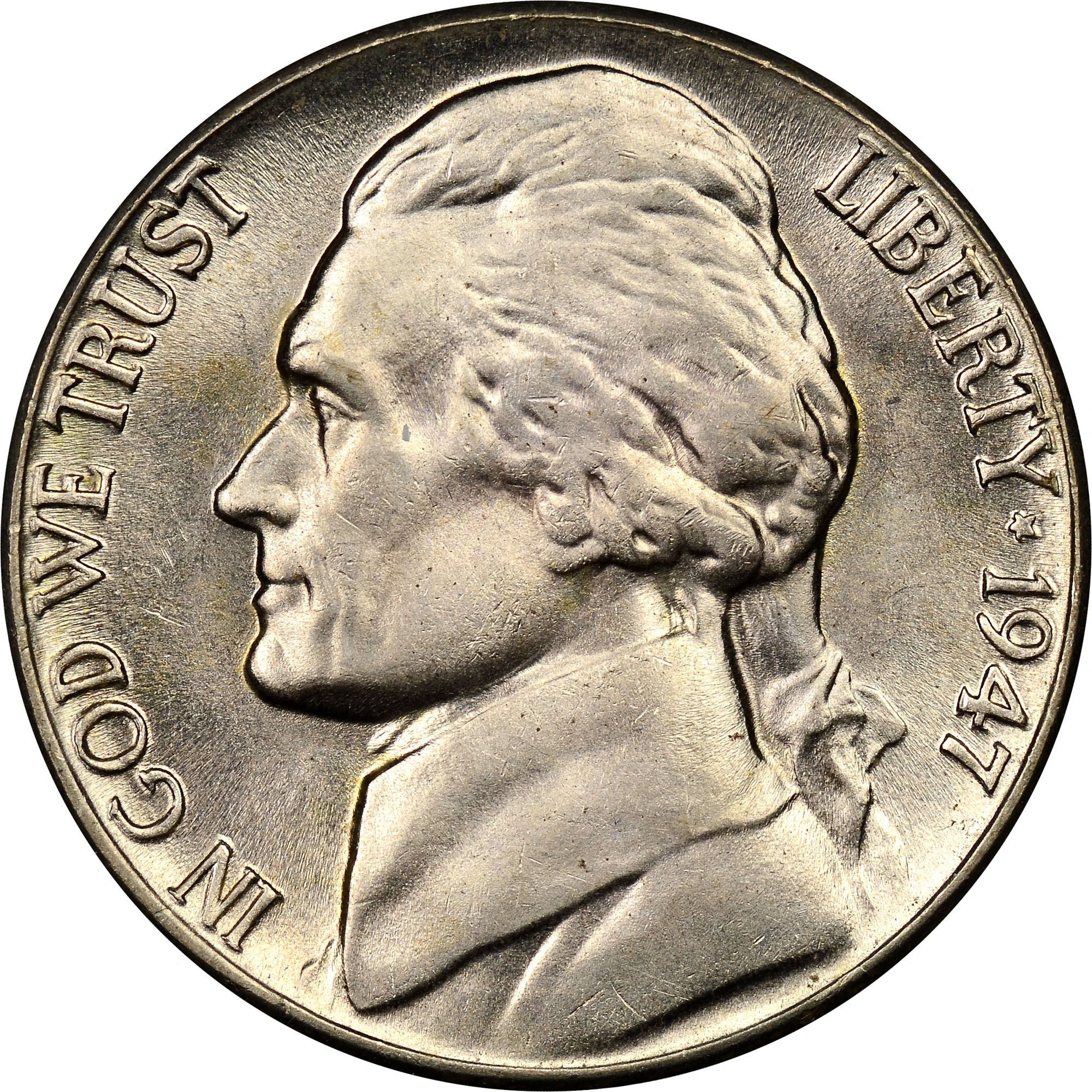
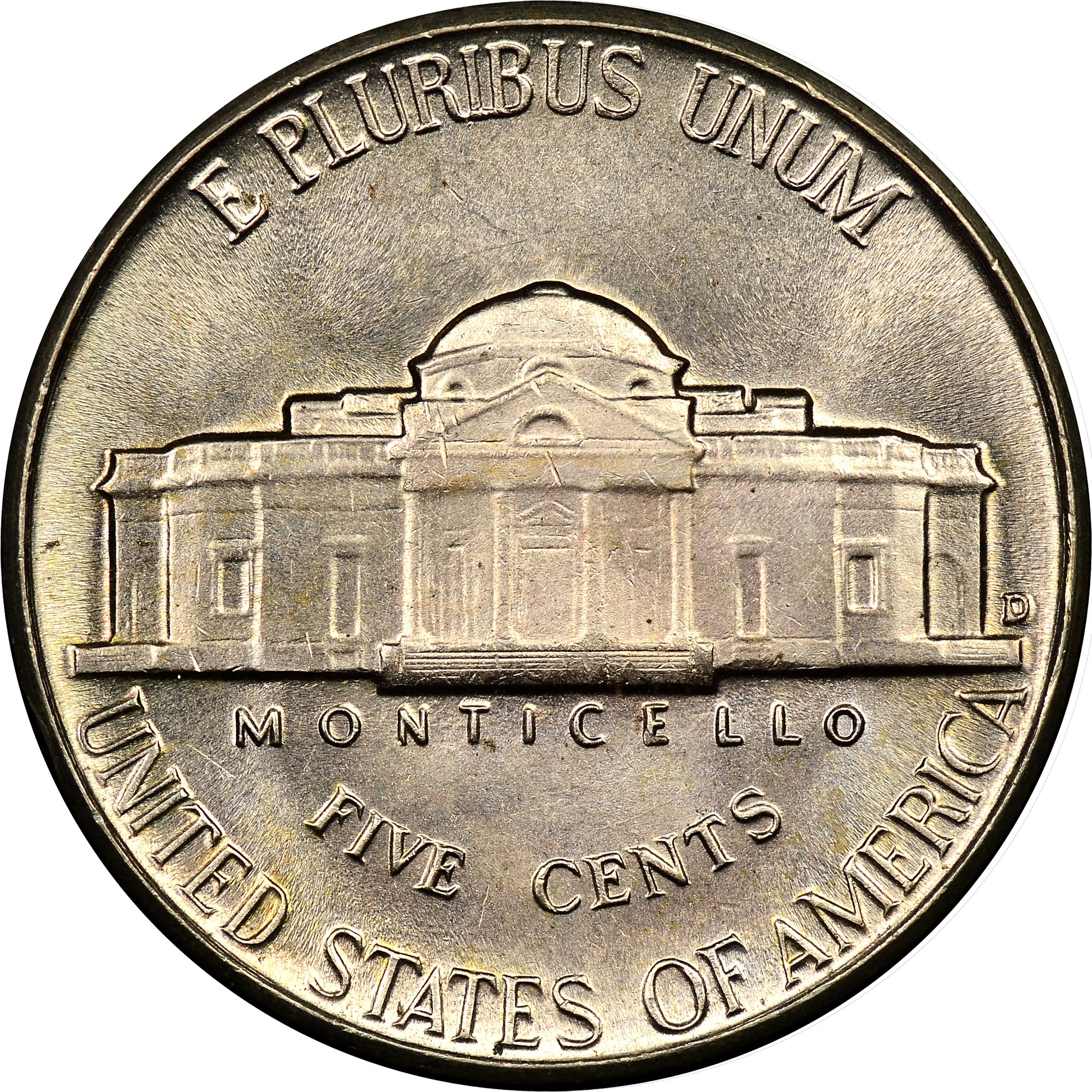
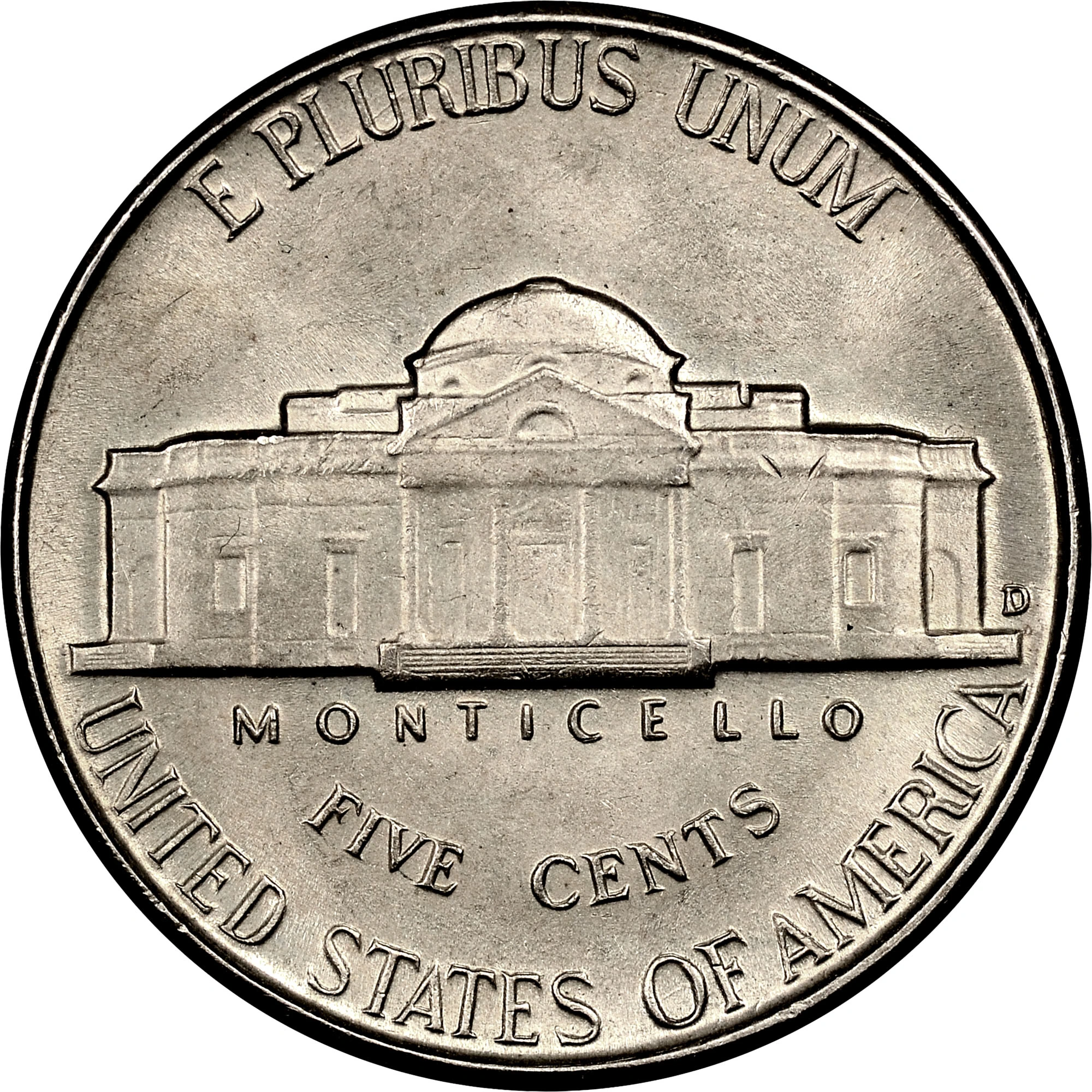
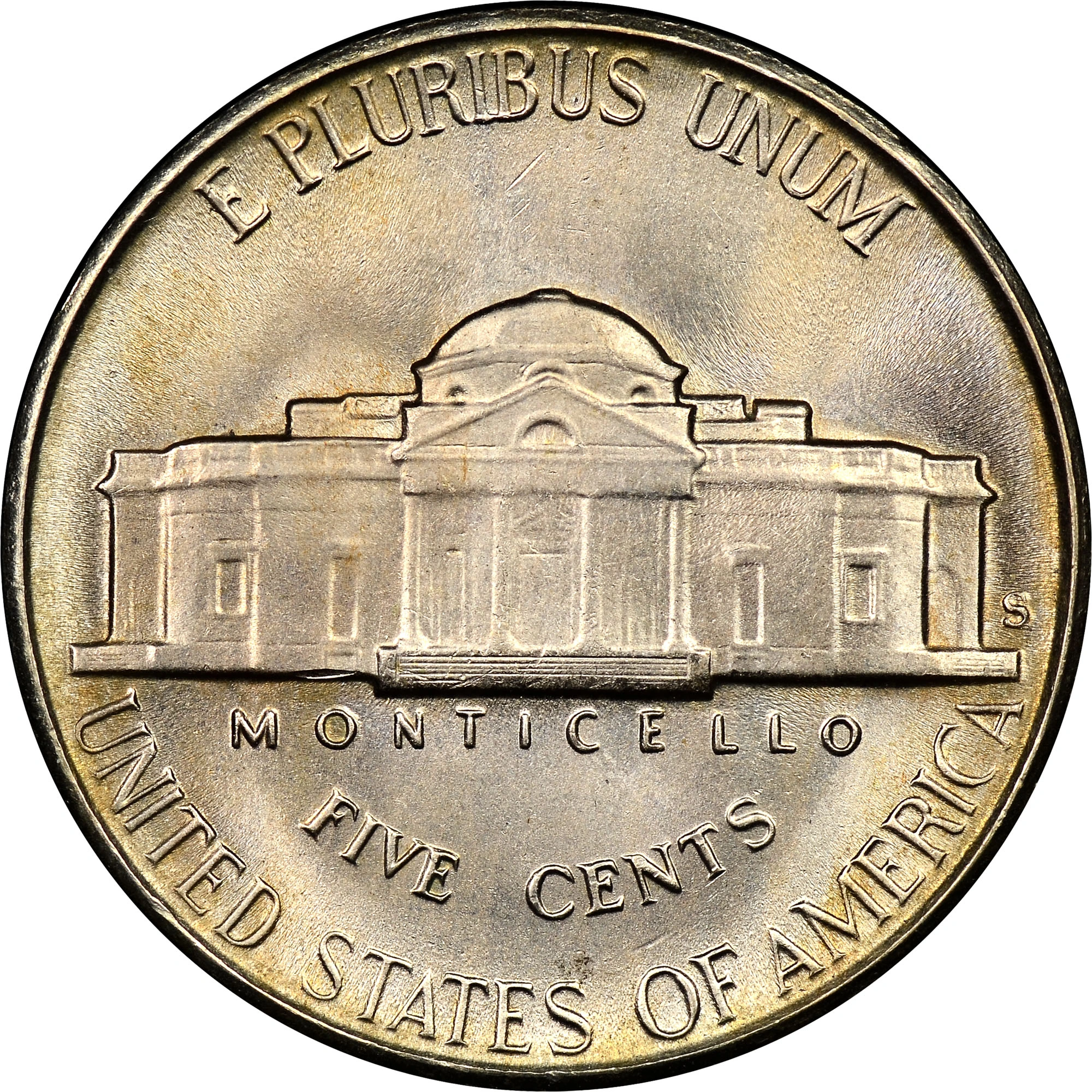
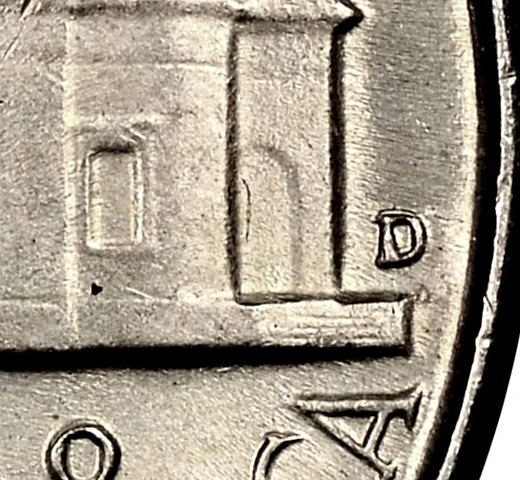
Confirm 1947 on the obverse, then look to the right of Monticello. A blank position means the normal Philadelphia arrangement, not a missing-letter error. D and S identify different mint issues. Do not use a modern obverse mint-mark position or the wartime position over the dome.
Luster and a complete strike are different observations
NGC describes the Philadelphia issue as generally lustrous but seldom fully struck. Denver is more often encountered with strong step detail, while San Francisco quality varies widely. A brighter S coin is not automatically sharper, and a D is not automatically Full Steps. Examine Jefferson’s high points, fields and the building together.
Do not name a variety from an irregular letter
Several minor repunched mint marks and Philadelphia reverse doubled dies are reported. An attribution needs its correct diagnostics, not a dark outline, scratch or doubled-looking photograph. The close-up here shows an ordinary mint-mark location and is not labeled as a premium variety.
Condition & value
Amounts are in U.S. dollars. The final column gives each source row’s update date (month/day/year), separate from the access date of November 13, 2026. Published guides are reference estimates, not guaranteed buying offers or seller net proceeds. Obtain recent like-for-like completed comparisons for an actual transaction.
MS means Mint State. Full Steps, Proofs and attributed varieties are excluded from the ordinary entries.
| Issue | Grade / condition | USD reference | Basis | Source updated |
|---|---|---|---|---|
| 1947 no mark | Good | $0.10 | NGC retail guide | 08/06/2020 |
| 1947 no mark | Fine | $0.20 | NGC retail guide | 08/06/2020 |
| 1947 no mark | Extremely Fine 40 | $0.30 | NGC retail guide | 08/06/2020 |
| 1947 no mark | MS63 | $2.50 | NGC retail guide | 08/06/2020 |
| 1947 no mark | MS65 | $30 | NGC retail guide | 08/06/2020 |
| 1947-D | Good | $0.10 | NGC retail guide | 08/06/2020 |
| 1947-D | Fine | $0.20 | NGC retail guide | 08/06/2020 |
| 1947-D | Extremely Fine 40 | $0.30 | NGC retail guide | 08/06/2020 |
| 1947-D | MS63 | $5.50 | NGC retail guide | 08/06/2020 |
| 1947-D | MS65 | $25 | NGC retail guide | 08/06/2020 |
| 1947-S | Good | $0.10 | NGC retail guide | 07/12/2023 |
| 1947-S | Fine | $0.10 | NGC retail guide | 07/12/2023 |
| 1947-S | Extremely Fine 40 | $0.25 | NGC retail guide | 07/12/2023 |
| 1947-S | MS63 | $5 | NGC retail guide | 07/12/2023 |
| 1947-S | MS65 | $25 | NGC retail guide | 07/12/2023 |
Use ordinary prices before a step premium
The table’s MS63 ordinary references are $2.50 for Philadelphia, $5.50 for Denver and $5 for San Francisco. Those are grade-specific guide figures, not offers for any shiny raw coin. A worn or cleaned coin should not be compared with a problem-free Mint State entry.
Full Steps is an additional designation
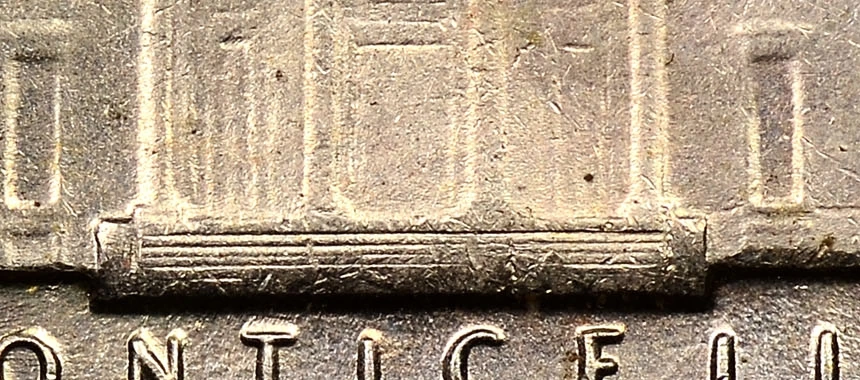
NGC separates Five Full Steps (5FS) and Six Full Steps (6FS). The required horizontal lines must meet the designation criteria; a visible stairway or a high numerical grade alone is insufficient. Compare the same service and designation before using a premium, and do not combine a Full Steps sale with an ordinary guide row.
A reflective 1947 coin is not a regular Proof issue
There was no regular U.S. Proof nickel issue dated 1947. Reflectivity can come from a regular strike, lighting or polishing. Preserve the surface and check cleaning and alteration signs before assigning a collector-finish label. For most worn ordinary pieces, certification costs would consume the likely premium.
Photograph both faces under even light and record the visible date and mint mark. HeriBase can help organize an initial photo-based identification; verify important mint, finish and variety details against the references before using a price. An app result is not a certified grade, authentication or purchase offer.
Summary
Confirm 1947 and the small reverse mint mark, then assess wear and strike separately. Ordinary worn examples carry modest premiums; strong original preservation, properly designated Full Steps or a recognized variety needs its own evidence. Keep the coin uncleaned before seeking a matching offer.
FAQ
Is a 1947 nickel silver?
The normal issue is 75% copper and 25% nickel. It is outside the wartime silver-alloy issues.
Is no mint mark on a 1947 nickel an error?
No. Philadelphia normally used no letter. D and S are small reverse marks beside Monticello.
Does a 1947-D automatically have Full Steps?
No. Denver production often offers better detail, but each coin must meet the separate step-designation requirements.
Can a shiny 1947 nickel be called a Proof?
There was no regular 1947 U.S. Proof nickel issue. Shine alone does not establish manufacture or a premium.
References
References and further reading
- NGC: 1947 5C MS specifications, issue analysis and dated guide
- NGC: 1947 D 5C MS specifications, issue analysis and dated guide
- NGC: 1947 S 5C MS specifications, issue analysis and dated guide
- NGC: Five Full Steps and Six Full Steps criteria
References accessed November 13, 2026. Guide update dates, source publication dates and sale dates are distinct. No independent examination or current buying offer for a reader’s coin is implied.