

 App Store

COIN VALUE GUIDES · NICKELS
1945 Nickel Value:P, D, S, Silver Content and Full Steps
Identify a 1945 silver war nickel by the large reverse mint mark, calculate its contained-silver reference, and separate ordinary coins from Full Steps and doubled dies.
 HeriBase TeamPublished
In this article
Quick answer
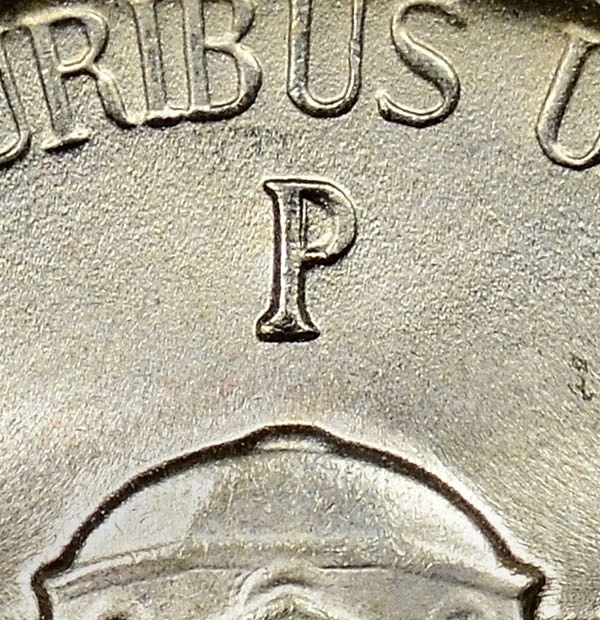
A normal 1945 nickel is a wartime alloy containing 35% silver, unlike the standard copper-nickel nickels of 1946 onward. Look for a large P, D or S above Monticello’s dome. At the nominal five-gram weight, it contains about 0.05626 troy ounce of fine silver. Its metal reference is that amount multiplied by the current silver price per troy ounce, not merely its five-cent denomination.
Ordinary uncirculated coins can add a collector premium: NGC’s dated MS65 ordinary guide lists $25 for each mint. The P row was updated April 18, 2024 and the D/S rows August 6, 2020; all were accessed November 13, 2026. Older circulated guide figures may lag today’s silver price, so the table uses an explicit metal formula for worn coins rather than treating stale dollar amounts as a current floor.
Coin photos
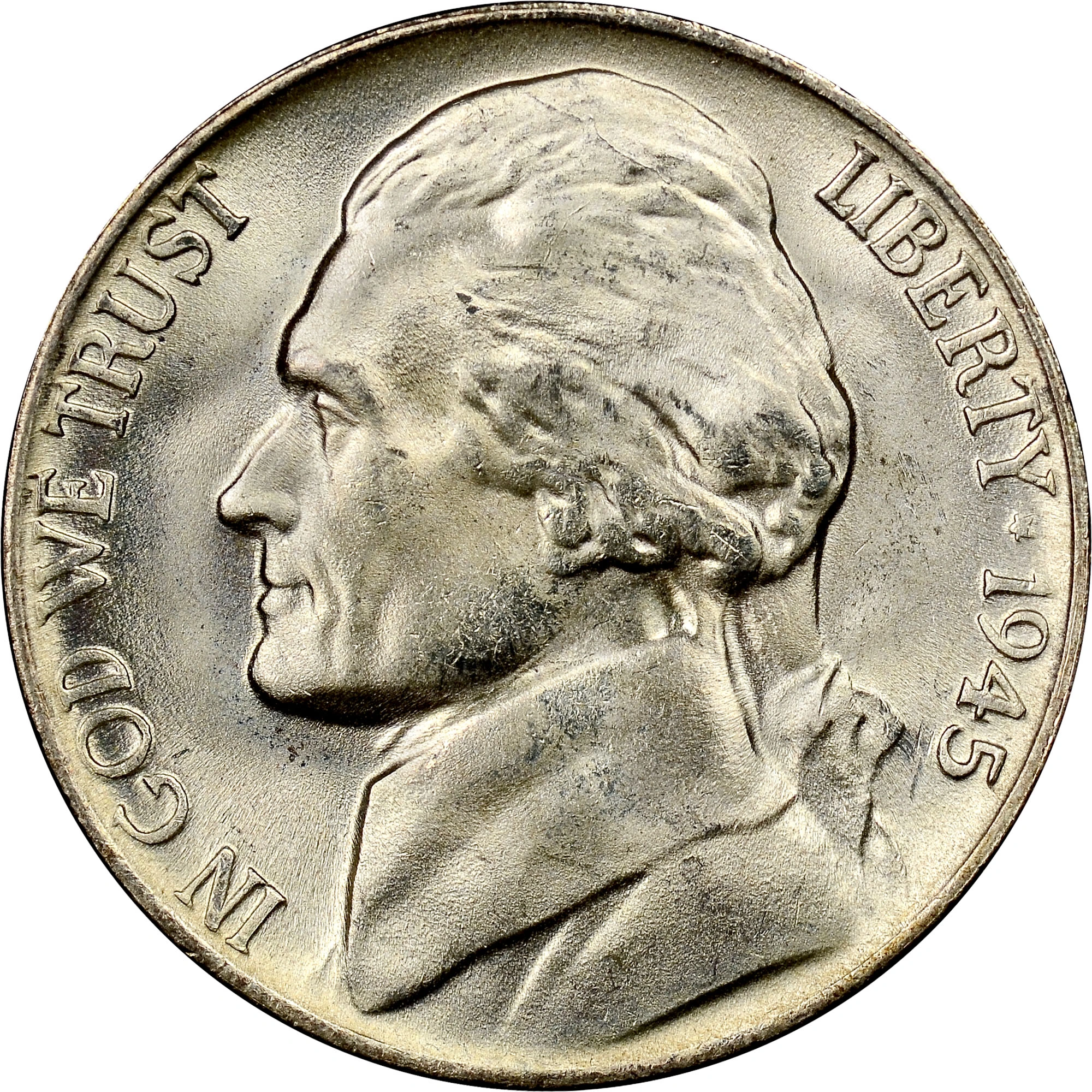
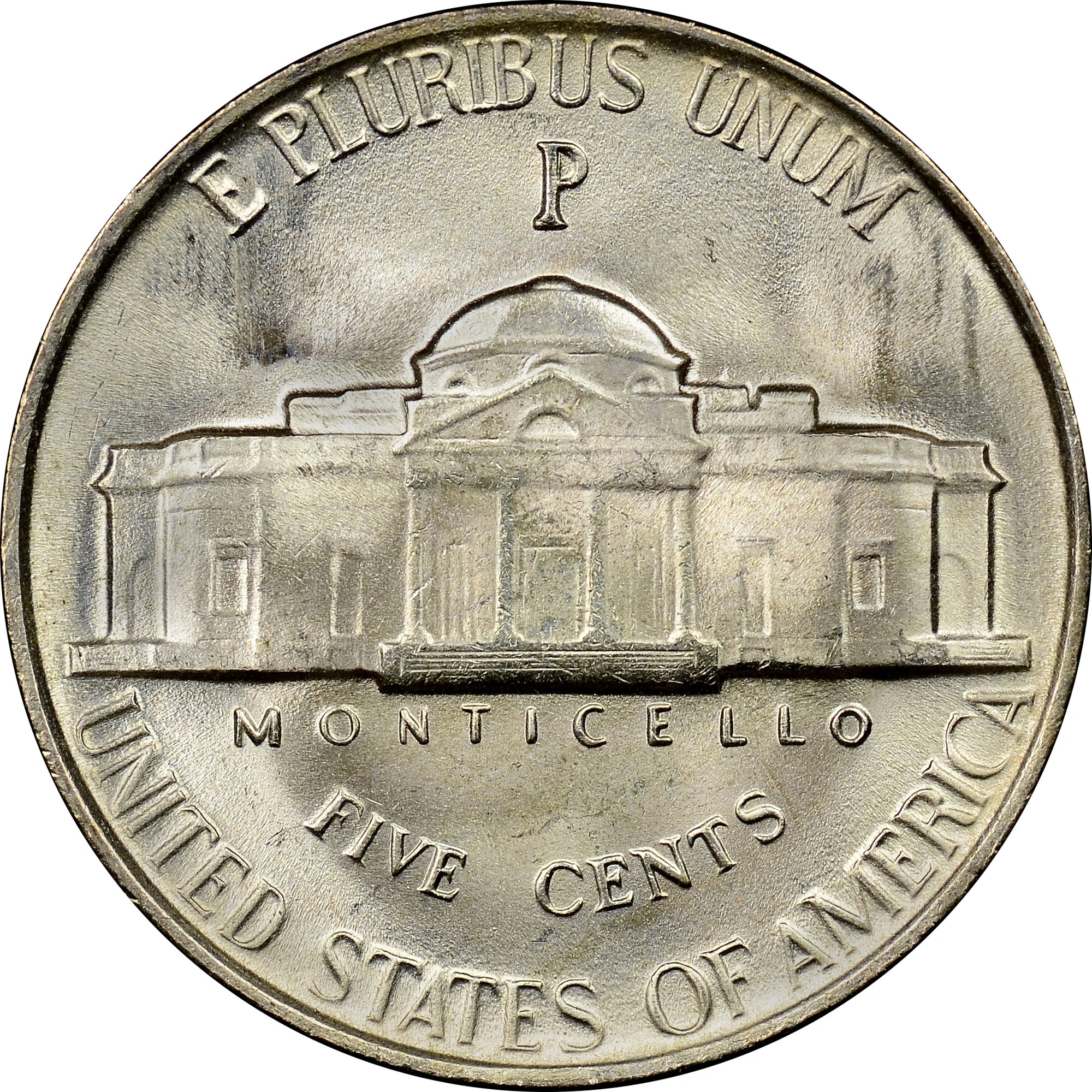
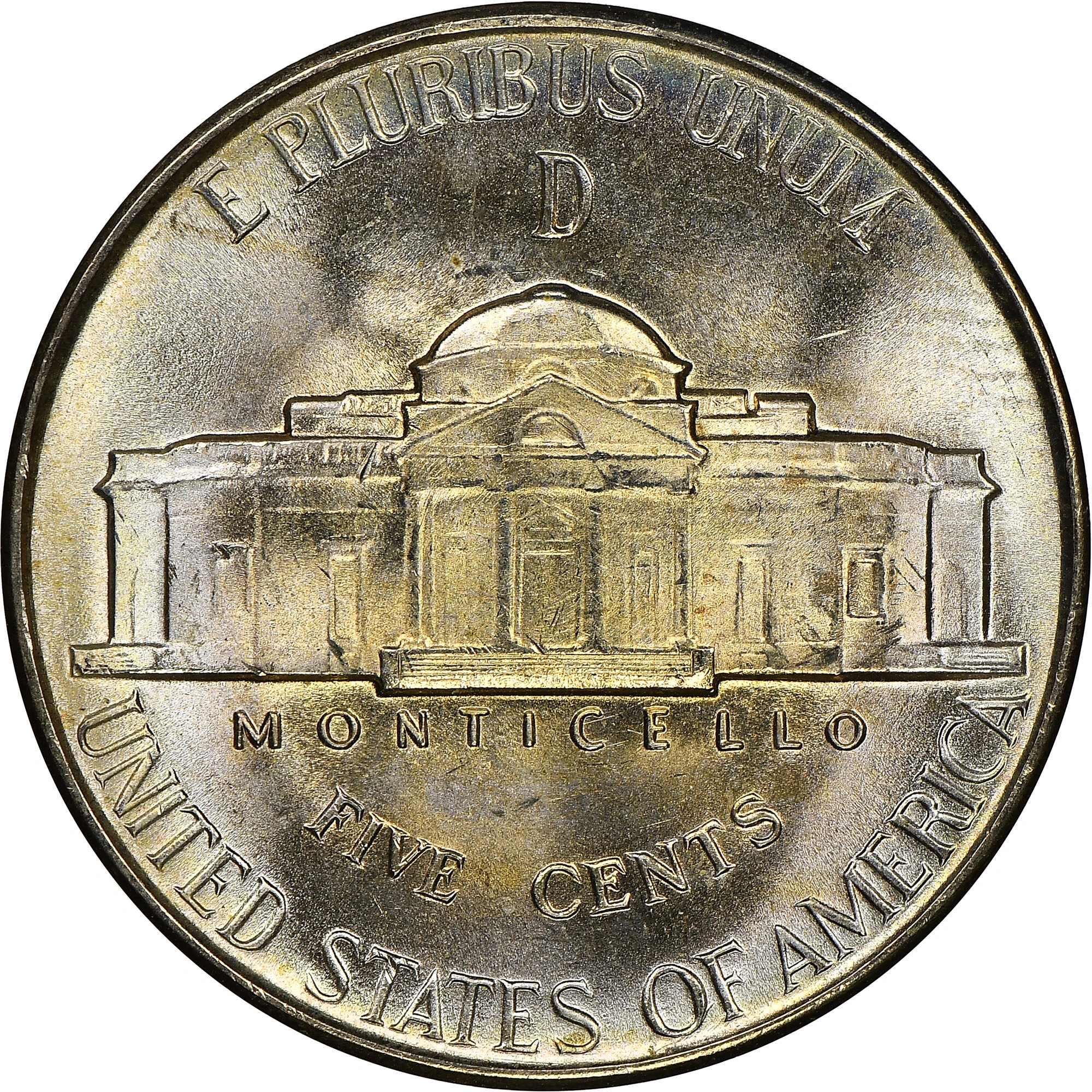
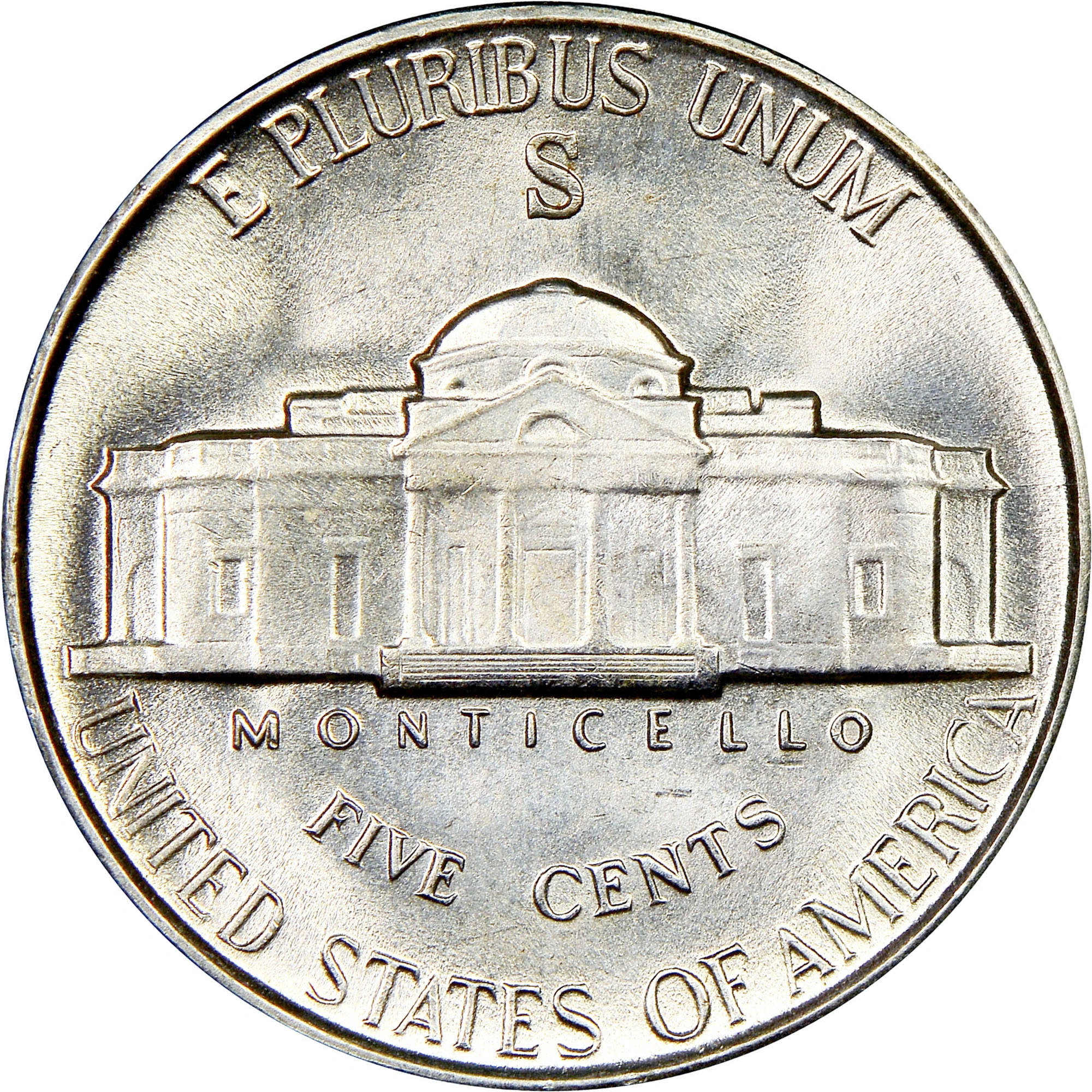
Basics & coin story
Nickel was important to wartime industry, and the Mint used a copper-silver-manganese alloy on the wartime five-cent pieces. A conspicuous mint letter above Monticello helped distinguish them, including P for Philadelphia. The 1945 date was the last normal year of that wartime alloy before copper-nickel returned in 1946.
The design still shows Schlag’s Jefferson and Monticello, so the broad appearance alone is not enough to separate metals in a mixed group. The war nickel guide explains the broader 1942–1945 group. This page focuses on 1945 mint identification, the silver calculation and the differences among ordinary and attributed coins.
| Feature | What to check |
|---|---|
| Type / denomination | 1945 Jefferson nickel / five cents |
| Designer | Felix Schlag |
| Standard alloy | 56% copper; 35% silver; 9% manganese |
| Nominal weight / diameter | 5.00 g / 21.2 mm |
| Edge | Plain |
| Mint-mark position | Large P, D or S above Monticello |
Identification
Find the large P, D or S above the dome
Read 1945 on the obverse, then inspect the reverse above Monticello. All normal 1945 U.S. nickels use the large wartime mint-mark arrangement, including Philadelphia P. A claimed no-mark example needs the date, surface and authenticity checked; do not treat it as an ordinary Philadelphia no-mark entry.
Do not identify silver from darkness alone
War nickels can tone darkly, but color does not authenticate composition. The standard alloy is 56% copper, 35% silver and 9% manganese. Nominal weight, full design, mint mark and a suitable physical examination belong together. An ordinary weight alone cannot verify a claimed unusual alloy.
Keep doubled-die and repunched-letter claims specific
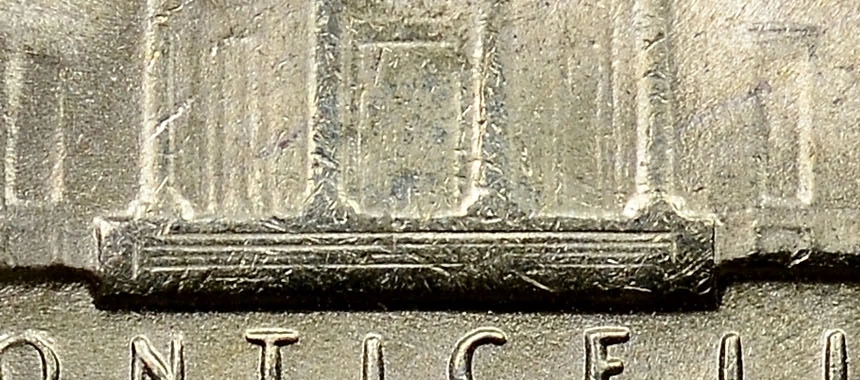
PCGS catalogs a 1945-P doubled-die reverse, including FS-801, while NGC records other varieties. A repeated letter impression, a doubled design and a scratch are different observations. Match the exact die diagnostics and mint rather than assigning a premium to any irregular wartime mark.
Condition & value
Amounts are in U.S. dollars. The final column gives each source row’s update date (month/day/year), separate from the access date of November 13, 2026. Published guides are reference estimates, not guaranteed buying offers or seller net proceeds. Obtain recent like-for-like completed comparisons for an actual transaction.
MS means Mint State. Full Steps, Proofs and attributed varieties are excluded from the ordinary entries.
The circulated rows use the nominal contained-silver formula rather than a stale dollar quote. The formula does not establish a guaranteed bid, and a collector guide price must not be added to it as though two independent sale values were available.
| Issue | Grade / condition | USD reference | Basis | Source updated |
|---|---|---|---|---|
| 1945-P | Ordinary worn coin | 0.05626 × S | Contained silver; S = current USD/troy oz | Current spot input needed |
| 1945-P | MS63 | $10 | NGC retail guide | 04/18/2024 |
| 1945-P | MS65 | $25 | NGC retail guide | 04/18/2024 |
| 1945-P | MS66 | $45 | NGC retail guide | 04/18/2024 |
| 1945-D | Ordinary worn coin | 0.05626 × S | Contained silver; S = current USD/troy oz | Current spot input needed |
| 1945-D | MS63 | $10 | NGC retail guide | 08/06/2020 |
| 1945-D | MS65 | $25 | NGC retail guide | 08/06/2020 |
| 1945-D | MS66 | $40 | NGC retail guide | 08/06/2020 |
| 1945-S | Ordinary worn coin | 0.05626 × S | Contained silver; S = current USD/troy oz | Current spot input needed |
| 1945-S | MS63 | $7.50 | NGC retail guide | 08/06/2020 |
| 1945-S | MS65 | $25 | NGC retail guide | 08/06/2020 |
| 1945-S | MS66 | $35 | NGC retail guide | 08/06/2020 |
Compute contained silver without inventing a spot quote
Let S be the silver price in U.S. dollars per troy ounce. The nominal contained-silver reference is 0.05626 × S, calculated from 5 grams × 35% divided by 31.1034768 grams per troy ounce. This is metal content, not a guaranteed bid, a net sale amount or a quote captured by this article. Dealer spreads and transaction costs still matter.
A collector premium needs the matching grade
NGC’s ordinary MS63 references are $10 for P and D and $7.50 for S; MS65 is $25 for each. Full Steps, an attributed die variety and exceptional preservation use different comparisons. Do not add a full collector retail figure to a full melt value as though they were independent prices.
Full Steps is not guaranteed by an uncirculated surface
NGC distinguishes Five Full Steps and Six Full Steps. Many 1945 coins were struck with incomplete details or worn dies, even when unworn. Inspect continuity and interruptions separately from marks and numerical grade. There was no regular 1945 Proof nickel issue; reflectivity is not proof of one.
Photograph both faces under even light and record the visible date and mint mark. HeriBase can help organize an initial photo-based identification; verify important mint, finish and variety details against the references before using a price. An app result is not a certified grade, authentication or purchase offer.
Summary
Confirm 1945 and the large reverse P, D or S, then separate metal content from a collector premium. Use the current silver price in the stated formula and match any grade or variety exactly. Preserve surfaces and investigate a doubled die or Full Steps claim only when its diagnostics are supported.
FAQ
How much silver is in a normal 1945 nickel?
The standard alloy is 35% silver. At five grams nominal weight it contains about 0.05626 troy ounce of fine silver.
Where is the mint mark?
The large P, D or S is above Monticello’s dome on the reverse. Philadelphia uses P on these wartime issues.
Is an old circulated guide price a current silver floor?
Not necessarily. A dated guide may lag the metal market. Calculate the contained-silver reference using a current spot quote and distinguish it from an actual buying offer.
Does every 1945-P nickel have a doubled reverse?
No. The recognized doubled dies need matching diagnostics. The normal P mint mark or a blurred letter does not establish a variety.
References
References and further reading
- NGC: 1945 P 5C MS specifications, issue analysis and dated guide
- NGC: 1945 D 5C MS specifications, issue analysis and dated guide
- NGC: 1945 S 5C MS specifications, issue analysis and dated guide
- PCGS: 1945-P FS-801 and standard wartime alloy
- U.S. Mint: nickel history and wartime mint-mark context
- NGC: Five Full Steps and Six Full Steps criteria
References accessed November 13, 2026. Guide update dates, source publication dates and sale dates are distinct. No independent examination or current buying offer for a reader’s coin is implied.