

 App Store

COIN VALUE GUIDES · NICKELS
1940 Nickel Value:No Mint Mark, D, S and Full Steps
Identify a 1940 Jefferson nickel, compare circulated and Mint State guide values by mint, and separate Full Steps and Proof coins from weak strikes and damage.
 HeriBase TeamPublished
In this article
Quick answer
A normal 1940 nickel is a common copper-nickel Jefferson coin with a five-cent denomination and no silver content. No mint mark means Philadelphia; D and S are on the reverse beside Monticello. NGC’s older guide puts Good examples at 10 cents for each mint and Extremely Fine 40 examples at 25 cents, 50 cents and 60 cents respectively. Those rows were last updated August 5, 2020, so they are dated comparison points rather than current buying offers.
Preservation matters much more than the age alone. The PCGS ordinary-strike table accessed November 13, 2026 lists MS65 at $18 for Philadelphia, $14 for Denver and $25 for San Francisco. Full Steps designations and Philadelphia Proofs are separate entries. Do not apply those prices to a polished, worn or damaged coin.
Coin photos
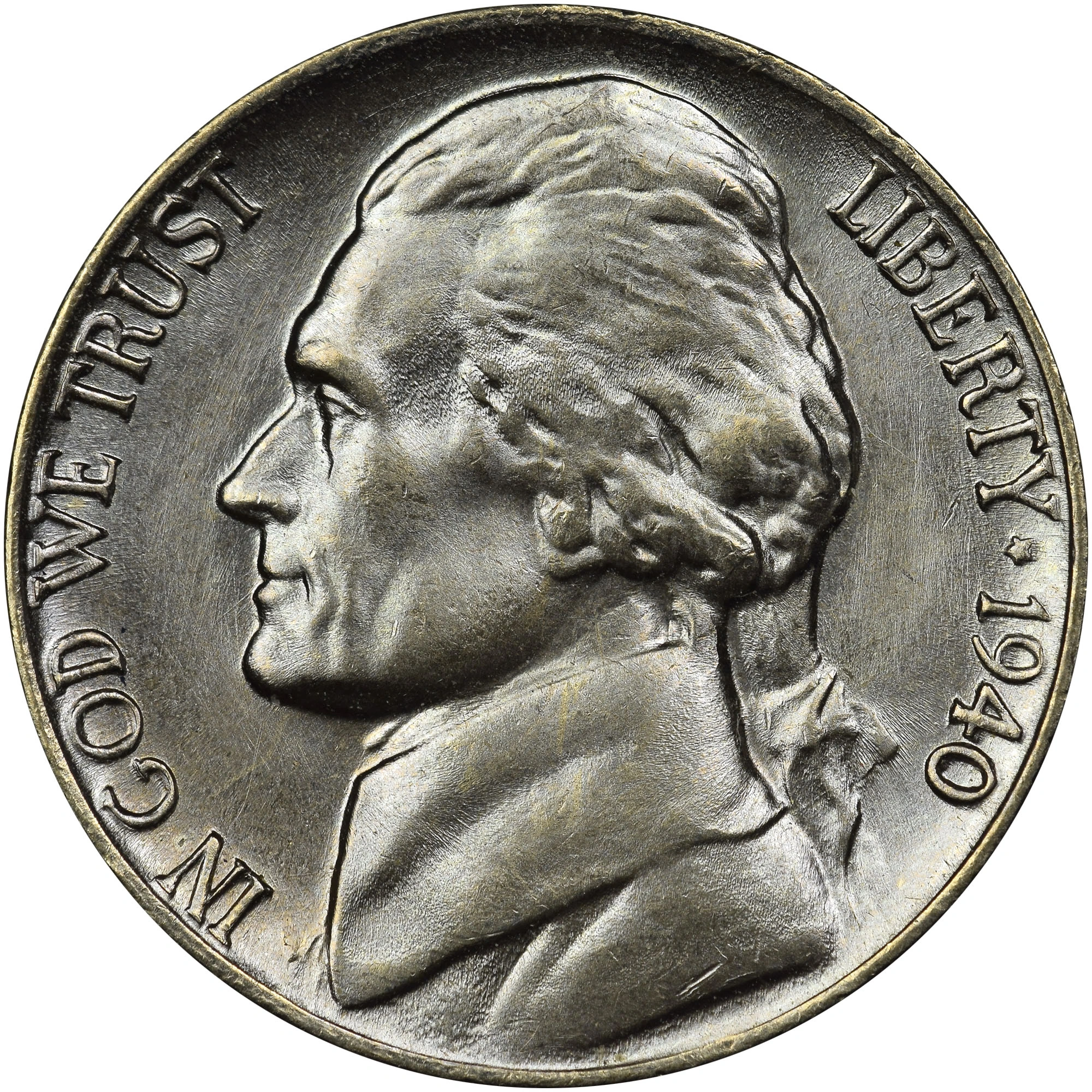
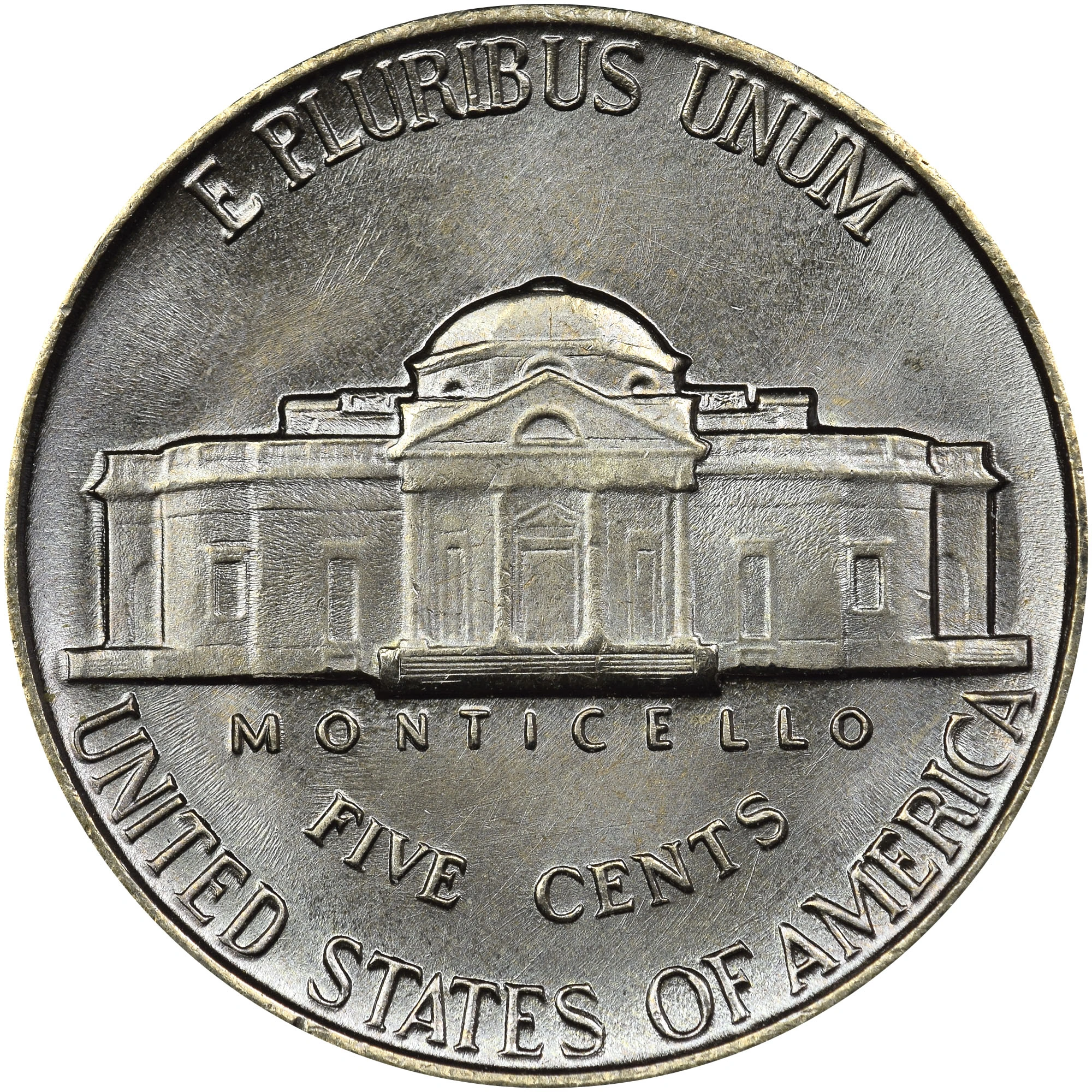
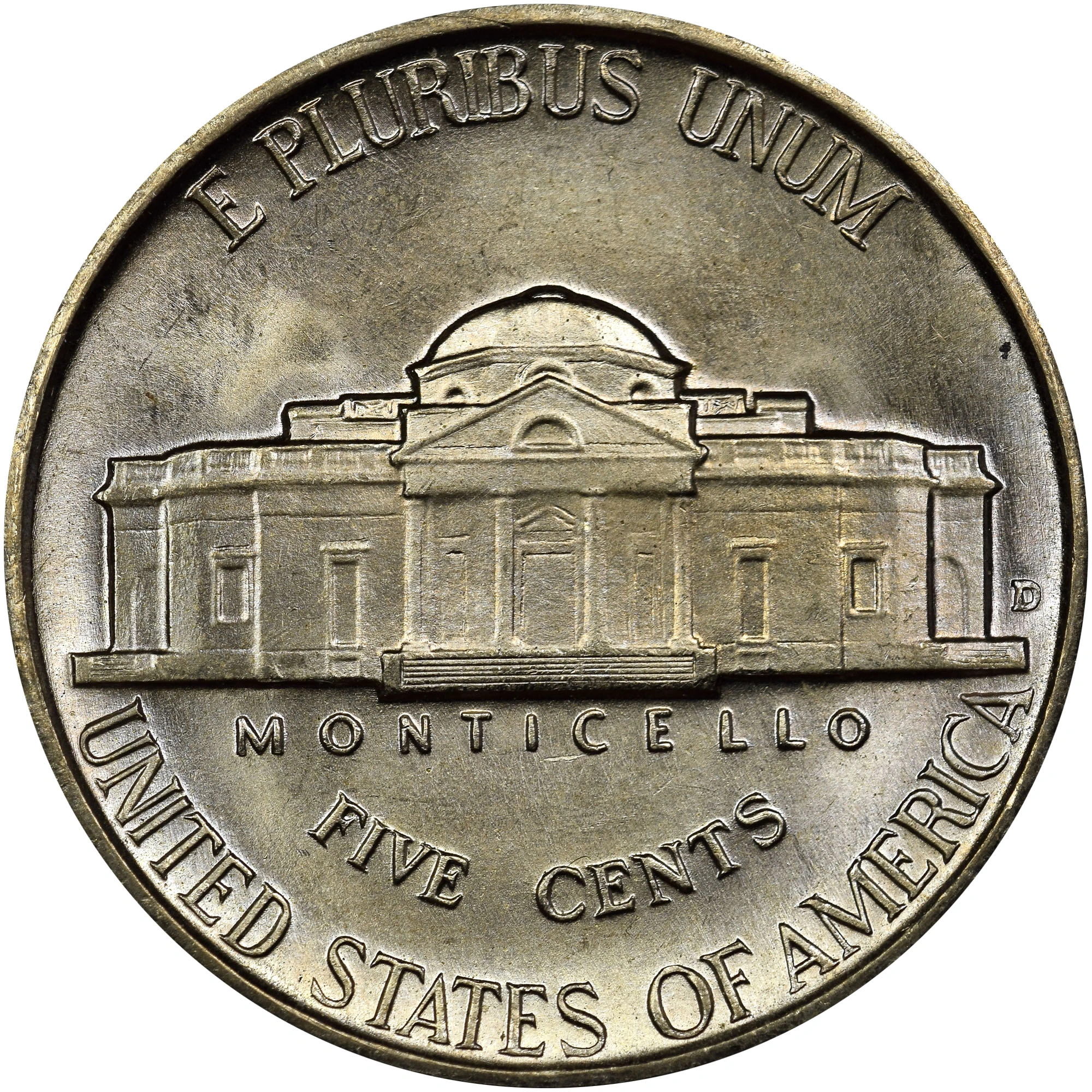
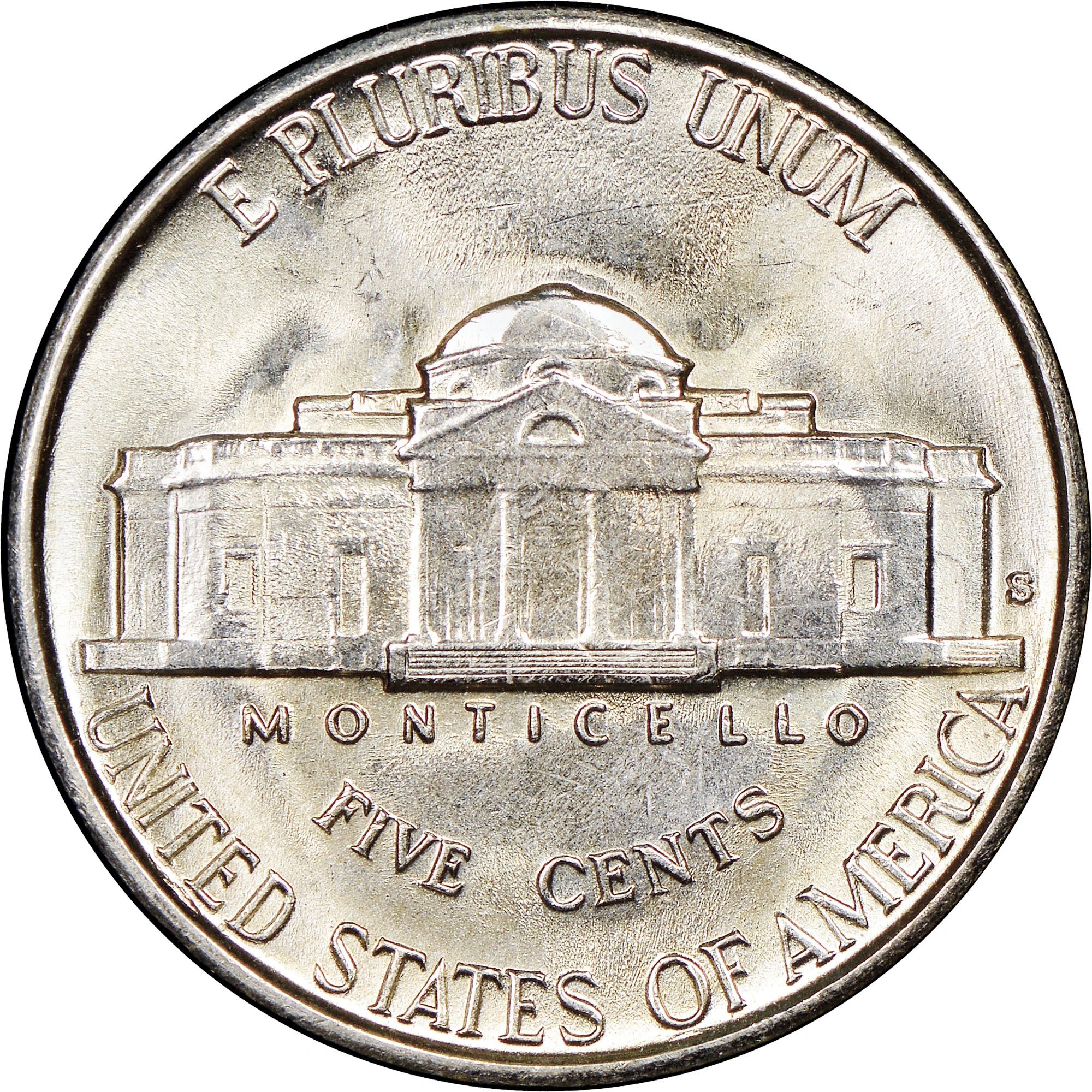
Basics & coin story
The Jefferson nickel had replaced the Buffalo design in 1938. Felix Schlag’s left-facing Jefferson and Monticello were still relatively new in 1940, giving this date a place early in a long-running design. Unlike the later wartime silver-alloy nickels, these coins use the normal copper-nickel alloy and the small mint mark beside the building.
Philadelphia struck 176,485,000 regular coins, Denver 43,540,000 and San Francisco 36,690,000. Substantial surviving Mint State supplies mean that mintage alone is a poor shortcut to value. For the neighboring issue and the overall early layout, compare the early Jefferson nickel guide; a 1941 price is not a substitute for a 1940 price.
| Feature | What to check |
|---|---|
| Issue | 1940 Jefferson nickel / five cents |
| Designer | Felix Schlag |
| Standard alloy | 75% copper; 25% nickel |
| Nominal weight / diameter | 5.00 g / 21.2 mm |
| Edge | Plain |
| Regular mints | No mark = Philadelphia; D = Denver; S = San Francisco |
| Mint-mark location | Reverse to the right of Monticello |
Identification
Read the obverse date, then the reverse mint
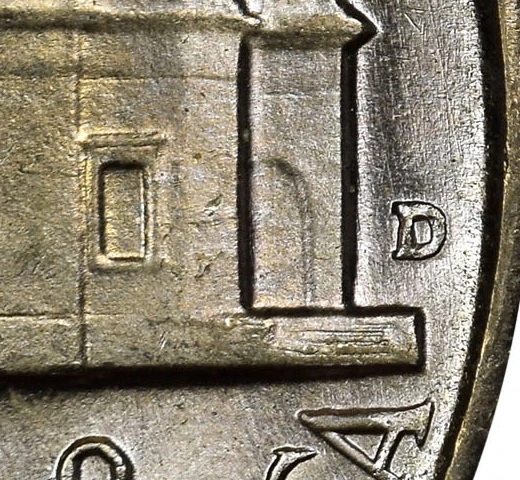
Confirm that the date reads 1940, with Jefferson facing left and Monticello on the other side. Look to the right of the building for a small D or S. Philadelphia coins normally leave that position blank. Do not look above the dome for the large wartime P, D or S arrangement.
A 1940-S is a San Francisco regular strike, not automatically a Proof. The Proof issues for this year came from Philadelphia and carry no mint mark. Treat date, mint and manufacture as three observations rather than one assumption.
Look at the whole coin before concentrating on the steps
Examine Jefferson’s cheek and hair for rub, then the open fields for contact marks. Inspect Monticello’s central detail and steps separately. A coin with uninterrupted luster can still have a weak strike, while a worn coin may retain some sharp protected detail. Shine is not a substitute for an uncirculated surface.
NGC’s issue analysis notes generally strong Denver production, whereas many San Francisco pieces show worn-die effects. This is a reason to compare actual strike quality, not a guarantee that every D is superior to every S.
Do not turn die wear into an error premium
Die erosion can blur lettering and building detail. It is different from a scarce doubled die, and circulation scratches are different again. A suspected variety needs repeatable features at the correct locations, compared with a recognized listing. A random raised line or an unclear photograph is insufficient.
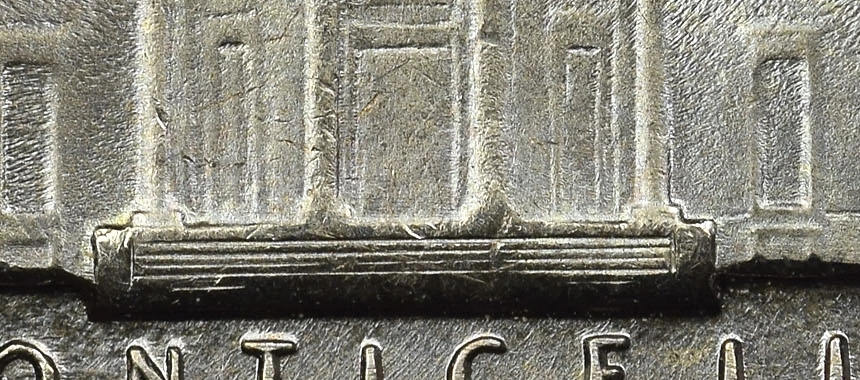
The detail photograph below is a crop of the pictured coin, intended to show the observation area. It is not a grading-service certification of Full Steps and does not establish a doubled die.
Condition & value
Amounts are in U.S. dollars. The table reports published ordinary-strike guide references, not completed sales or guaranteed offers. The final column is the source row’s own update date (month/day/year); all rows were accessed November 13, 2026. Older guide dates are a limitation, so obtain recent matching sales or offers before a transaction.
MS means Mint State. Full Steps, Proofs, special strikes and attributed varieties are excluded.
| Issue | Grade / condition | USD reference | Basis | Guide updated |
|---|---|---|---|---|
| 1940 5C | Good | $0.10 | NGC retail guide | 08/05/2020 |
| 1940 5C | Fine | $0.10 | NGC retail guide | 08/05/2020 |
| 1940 5C | Extremely Fine 40 | $0.25 | NGC retail guide | 08/05/2020 |
| 1940 5C | MS63 | $5 | NGC retail guide | 08/05/2020 |
| 1940 5C | MS65 | $15 | NGC retail guide | 08/05/2020 |
| 1940 D 5C | Good | $0.10 | NGC retail guide | 08/05/2020 |
| 1940 D 5C | Fine | $0.20 | NGC retail guide | 08/05/2020 |
| 1940 D 5C | Extremely Fine 40 | $0.50 | NGC retail guide | 08/05/2020 |
| 1940 D 5C | MS63 | $5.25 | NGC retail guide | 08/05/2020 |
| 1940 D 5C | MS65 | $25 | NGC retail guide | 08/05/2020 |
| 1940 S 5C | Good | $0.10 | NGC retail guide | 08/05/2020 |
| 1940 S 5C | Fine | $0.20 | NGC retail guide | 08/05/2020 |
| 1940 S 5C | Extremely Fine 40 | $0.60 | NGC retail guide | 08/05/2020 |
| 1940 S 5C | MS63 | $7 | NGC retail guide | 08/05/2020 |
| 1940 S 5C | MS65 | $35 | NGC retail guide | 08/05/2020 |
Why circulated and uncirculated prices differ
The five-column comparison separates grades and sources. The NGC values for Fine are 10 cents for Philadelphia and 20 cents for D or S; its dates are shown so that the figures cannot be mistaken for newly measured market prices. PCGS’s MS66 ordinary references are $28, $24 and $34 respectively, a different grade and a different source.
Small premiums are especially sensitive to transaction size. An individual retail sale includes the seller’s overhead; an offer for a handful of raw coins may be lower. Neither guide automatically accounts for cleaning, corrosion, shipping or selling fees.
Full Steps and the 1940 Proof reverse varieties
Full Steps describes continuous qualifying step detail on an otherwise eligible uncirculated coin. NGC’s 5FS and 6FS distinctions should remain visible in any price comparison; an ordinary MS65 figure cannot be silently replaced with a Full Steps result. Read the grading guide before assigning a number yourself.
The 1940 Proof category also includes Reverse of 1938 and Reverse of 1940 attributions. Those are die-design distinctions within the collector issue, not a reason to call an ordinary soft-struck coin a rare reverse. Confirm Proof manufacture and the correct reverse diagnostics before selecting a Proof price.
For an initial identification, photograph both faces in even light and record the visible date and mint mark. HeriBase can help organize a photo-based identification; verify important mint, finish and variety details against the references before using a price. An app result is a starting point, not a certified grade, authentication or purchase offer.
Summary
For a 1940 nickel, identify Philadelphia, D or S and distinguish wear from weak striking. Most ordinary circulated pieces carry only small premiums. Use a matching grade and source, preserve the surface, and investigate Full Steps or Proof reverse attribution only when the coin supports it.
FAQ
Does a 1940 nickel contain silver?
The normal issue is 75% copper and 25% nickel, with no silver. The wartime silver-alloy Jefferson nickels began later.
Is no mint mark on a 1940 nickel an error?
No. It is the normal Philadelphia arrangement. Denver and San Francisco use a small D or S to the right of Monticello.
Are 1940-S nickels Proofs?
No. The S identifies a San Francisco regular strike. The 1940 Proof issues were made at Philadelphia without a mint mark.
Does MS65 mean Full Steps?
No. Numerical grade and step designation are separate. Match the stated grading service and 5FS, 6FS or FS designation before comparing a premium.
References
References and further reading
- NGC: 1940 5C MS specifications, analysis and dated guide
- NGC: 1940 D 5C MS specifications, analysis and dated guide
- NGC: 1940 S 5C MS specifications, analysis and dated guide
- PCGS: ordinary Jefferson nickel retail table; accessed November 13, 2026
- NGC: 1940 Proof and separate reverse attributions
- NGC: Five Full Steps and Six Full Steps requirements
References accessed November 13, 2026. Guide update dates, access dates and historical sale dates are separate. No current dealer offer or independent examination of a reader’s coin is implied.