

 App Store

COIN VALUE GUIDES · PENNIES
1939 Penny Value:No Mint Mark, D, S, Copper Color and Proofs
Read a 1939 Lincoln wheat cent’s mint mark, compare circulated and Mint State references, and distinguish ordinary Philadelphia coins from collector Proofs.
 HeriBase TeamPublished
In this article
Quick answer
A normal 1939 penny is a bronze Lincoln wheat cent, with no mint mark for Philadelphia or a D/S below the date. NGC’s Brown guide lists Fine references of 20 cents, 55 cents and 30 cents for P, D and S respectively. The source rows have older update dates shown in the table and were accessed November 13, 2026; they are not newly measured sale prices.
The dated MS65 Brown references are $12.50 for Philadelphia, $13 for Denver and $8.50 for San Francisco. Original Red coins, Philadelphia Proofs and properly attributed varieties belong to separate comparisons. A lower mintage or empty mint-mark position alone does not establish a rare coin.
Coin photos
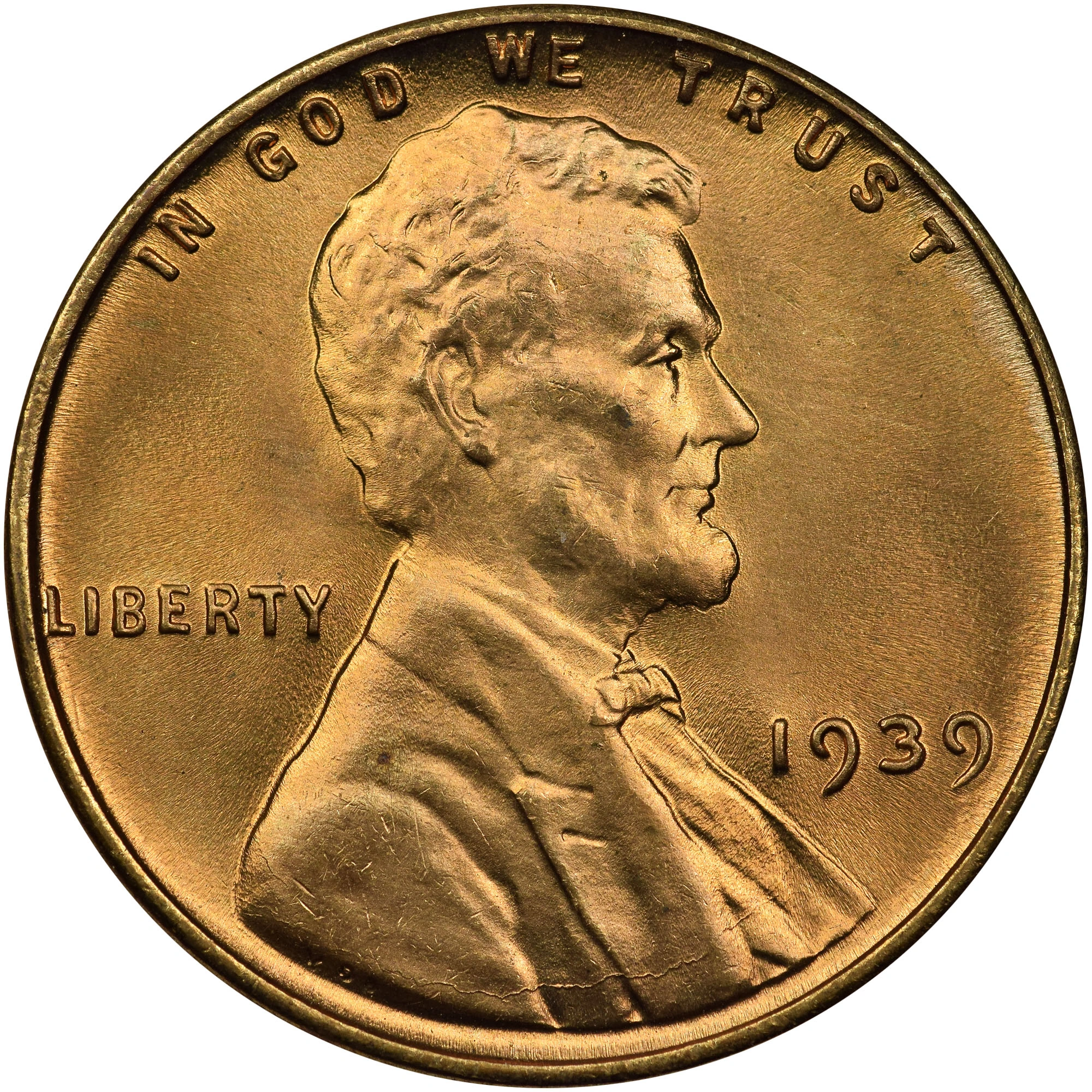
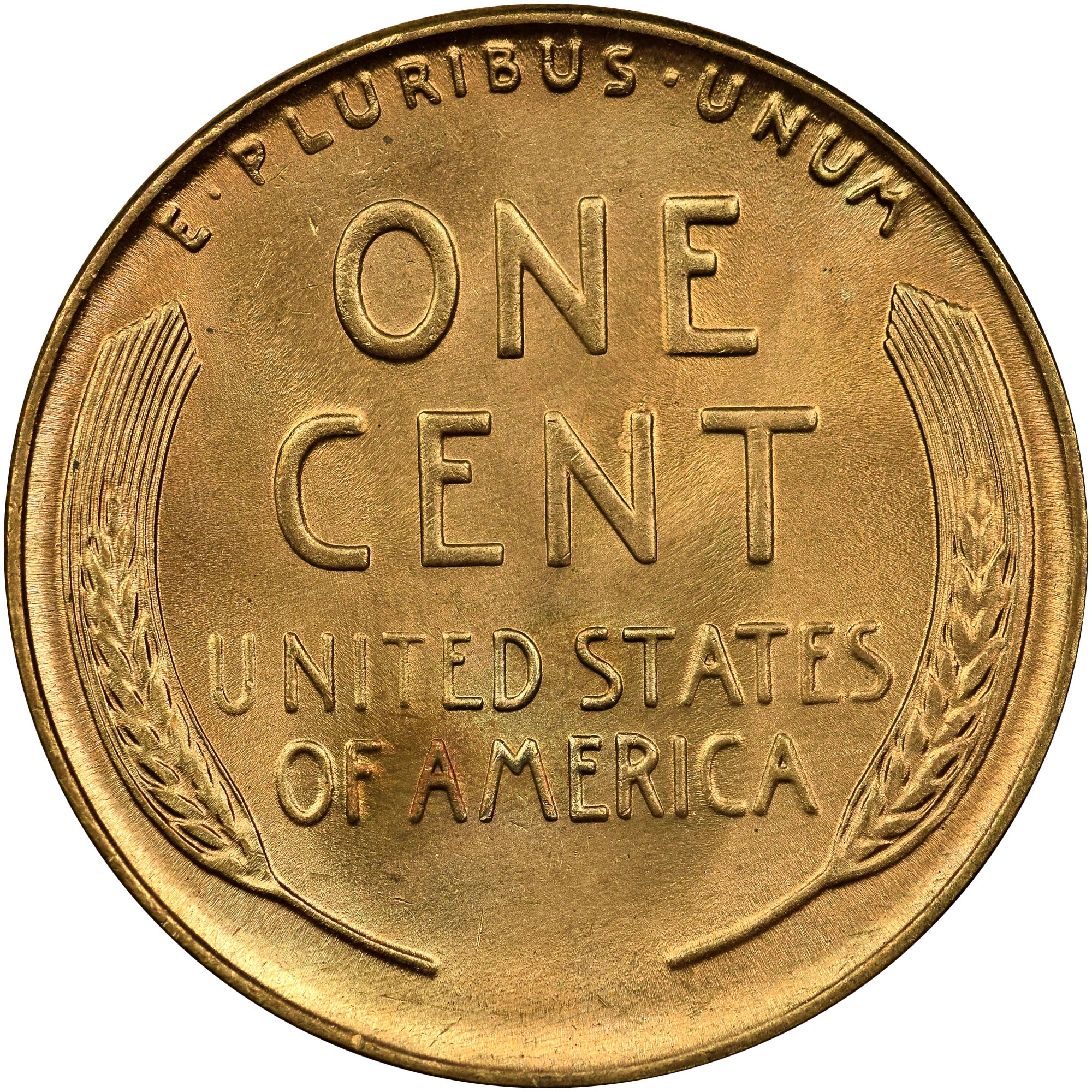
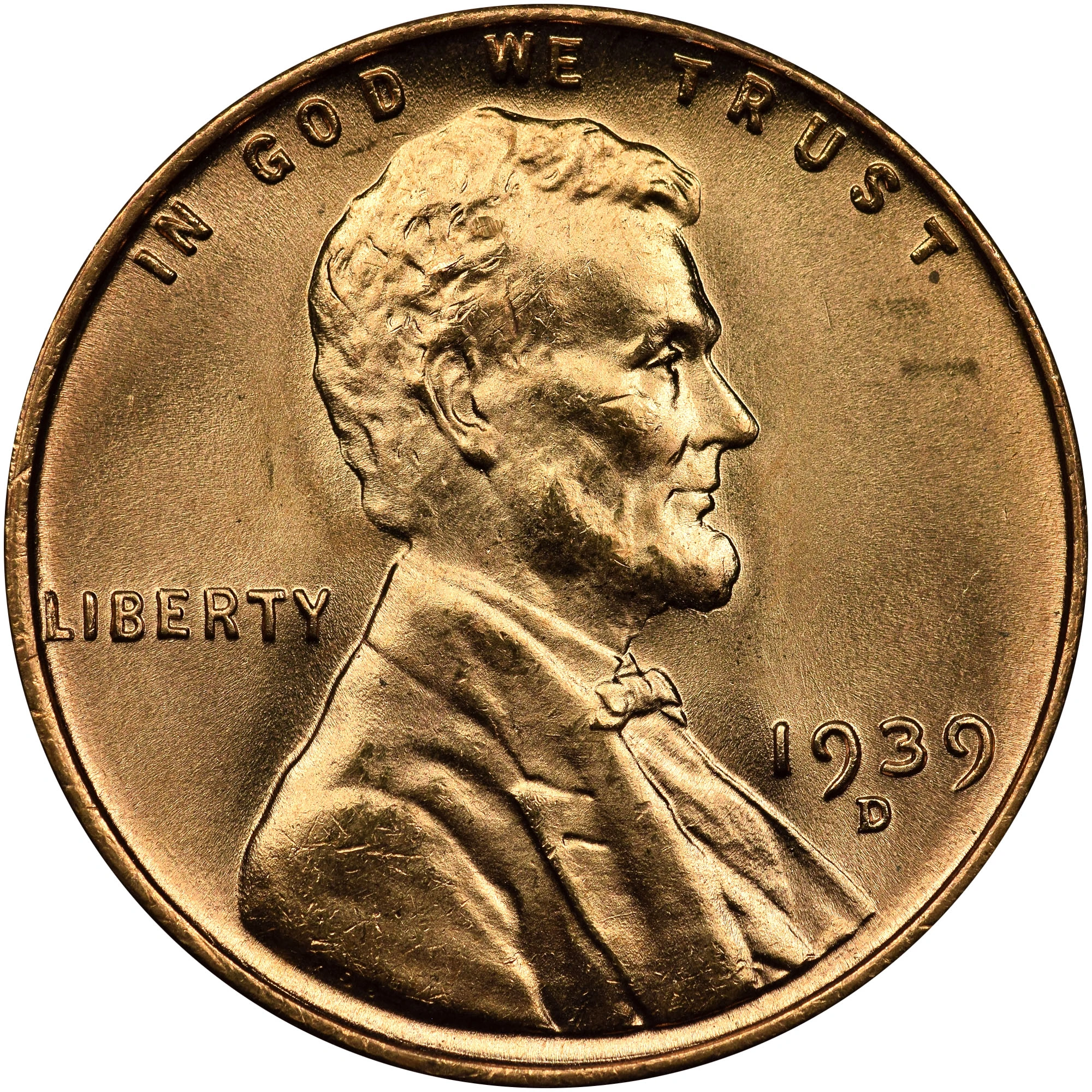
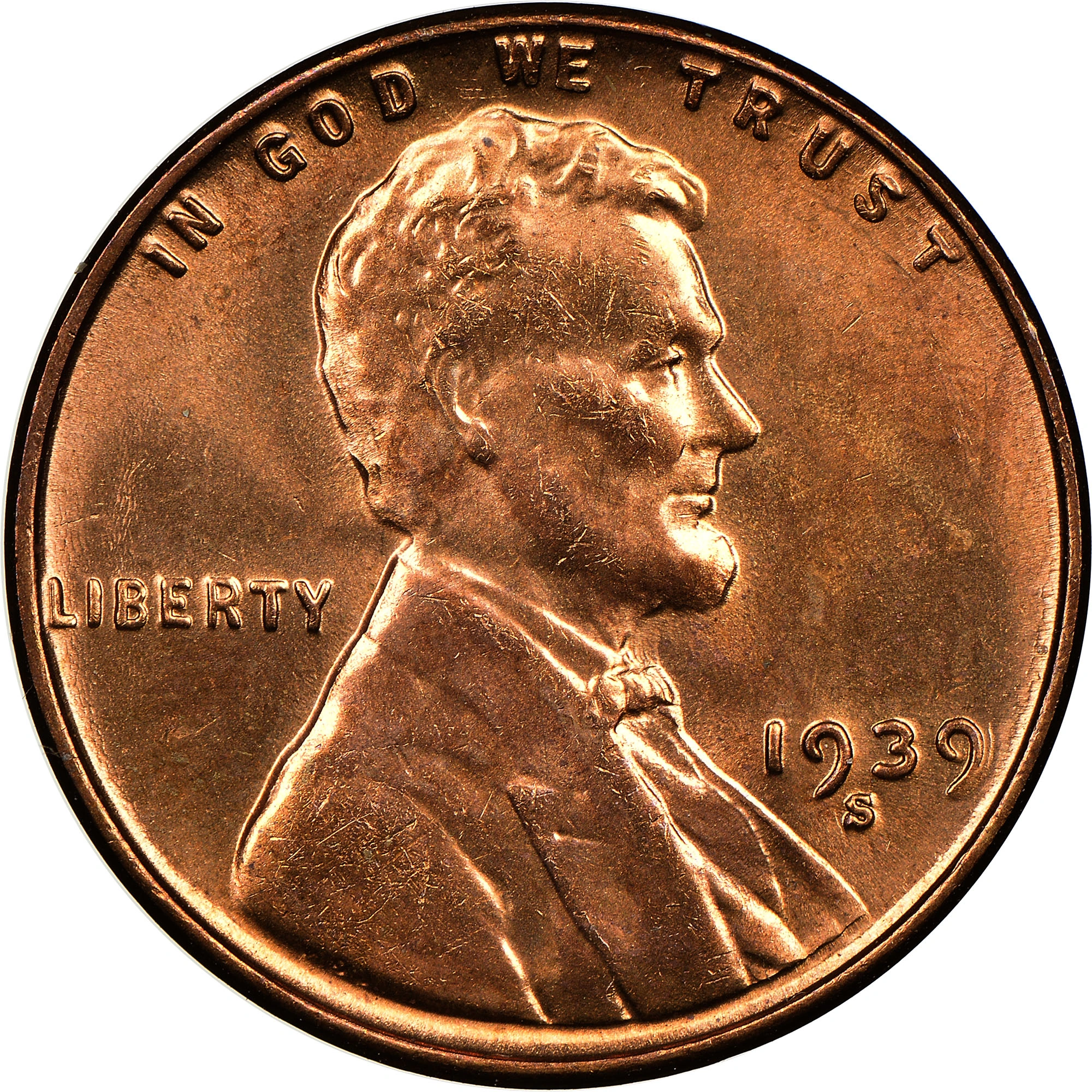
Basics & coin story
By 1939, the Lincoln wheat design had been circulating for three decades. The three mints did not leave identical supplies of sharply struck survivors. NGC describes particularly good Denver striking, a generally accessible Philadelphia issue and many San Francisco coins showing the effects of overused dies.
NGC also explains that much San Francisco output fell in a fiscal year that began in July 1939. A fiscal-year label is not the same as the date on the coin; it does not make the visible 1939 date an error. The series guide provides the broader design history, while this article keeps the year and mint comparisons specific.
| Feature | What to check |
|---|---|
| Type / denomination | 1939 Lincoln wheat cent / one cent |
| Designer | Victor David Brenner |
| Standard alloy | 95% copper; 5% tin and zinc (bronze) |
| Nominal weight / diameter | 3.11 g / 19 mm |
| Edge | Plain |
| Mint-mark position | Obverse below the date |
Identification
Do not confuse the penny with the 1939 nickel
Look for Lincoln, the 1939 date and wheat ears surrounding ONE CENT. The Jefferson nickel’s Reverse of 1938/1940 and Doubled Monticello terminology does not apply to this cent. Identify denomination and design before importing a variety name from a search result.
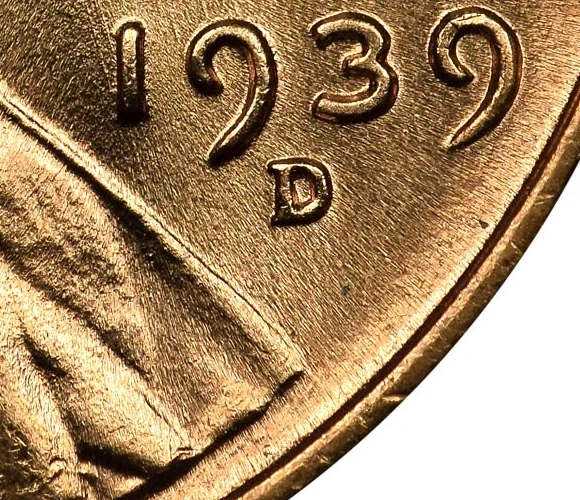
Read D or S below the date
A small D means Denver and S San Francisco. No letter is normal for Philadelphia, which made both ordinary cents and separate collector Proofs. A stain or scratch beneath the date should not be read as a mint mark without a clear image.
Color, grade and strike are separate
Brown, Red-Brown and Red describe copper color, not numerical grade. A sharply struck D can still be worn, while a softly struck S can retain original luster. Inspect the cheek, fields and wheat stalks together, and keep cleaning or corrosion visible in the condition description.
Condition & value
Amounts are in U.S. dollars. The final column gives each source row’s update date (month/day/year), separate from the access date of November 13, 2026. Published guides are reference estimates, not guaranteed buying offers or seller net proceeds. Obtain recent like-for-like completed comparisons for an actual transaction.
MS means Mint State. The ordinary table uses Brown (BN) copper entries; Red-Brown (RB), Red (RD), Proofs and attributed varieties are separate.
| Issue | Grade / condition | USD reference | Basis | Source updated |
|---|---|---|---|---|
| 1939 no mark BN | Good | $0.10 | NGC retail guide | 05/19/2023 |
| 1939 no mark BN | Fine | $0.20 | NGC retail guide | 05/19/2023 |
| 1939 no mark BN | Extremely Fine 40 | $0.75 | NGC retail guide | 05/19/2023 |
| 1939 no mark BN | MS63 | $6.50 | NGC retail guide | 05/19/2023 |
| 1939 no mark BN | MS65 | $12.50 | NGC retail guide | 05/19/2023 |
| 1939-D BN | Good | $0.35 | NGC retail guide | 07/12/2020 |
| 1939-D BN | Fine | $0.55 | NGC retail guide | 07/12/2020 |
| 1939-D BN | Extremely Fine 40 | $1.25 | NGC retail guide | 07/12/2020 |
| 1939-D BN | MS63 | $5 | NGC retail guide | 07/12/2020 |
| 1939-D BN | MS65 | $13 | NGC retail guide | 07/12/2020 |
| 1939-S BN | Good | $0.15 | NGC retail guide | 07/12/2020 |
| 1939-S BN | Fine | $0.30 | NGC retail guide | 07/12/2020 |
| 1939-S BN | Extremely Fine 40 | $1 | NGC retail guide | 07/12/2020 |
| 1939-S BN | MS63 | $4.50 | NGC retail guide | 07/12/2020 |
| 1939-S BN | MS65 | $8.50 | NGC retail guide | 07/12/2020 |
Use a date-and-mint comparison before a general range
The ordinary Brown Extremely Fine 40 references are 75 cents for Philadelphia, $1.25 for Denver and $1 for San Francisco. Philadelphia’s row was updated May 19, 2023; the D and S Brown rows July 12, 2020. They are dated retail references, not guarantees of net proceeds.
Proofs and copper color change the entry
NGC’s ordinary Red MS65 references are $20 for P, $20 for D and $17 for S, with different source update dates. A Philadelphia Red Proof 65 appears in an older February 28, 2017 guide row at $190. That is a separate collector-manufacture reference, not a price for any no-mint-mark penny.
An attribution needs more than doubled-looking text
NGC records a minor Philadelphia doubled-die obverse, but a thick edge or blurry image is not a complete attribution. Match a documented die and supporting markers before using a variety price. Leave surfaces unchanged; grade terminology and alteration checks are useful before a specialist assessment.
Photograph both faces under even light and record the visible date and mint mark. HeriBase can help organize an initial photo-based identification; verify important mint, finish and variety details against the references before using a price. An app result is not a certified grade, authentication or purchase offer.
Summary
Identify the 1939 wheat cent and its mint letter, then match grade, original color and manufacture. Ordinary circulated coins have modest premiums. No mint mark does not prove a Proof, and nickel-specific variety names do not belong on this penny.
FAQ
Is a 1939 penny without a mint mark an error?
No. It is the normal Philadelphia arrangement, shared by ordinary cents and the separate Proof issue.
Does the 1939 nickel’s reverse terminology apply to the penny?
No. Reverse of 1938/1940 and Doubled Monticello concern Jefferson nickels, not Lincoln wheat cents.
Is a shiny 1939 penny a Proof?
Not automatically. Establish collector manufacture, grade and copper color rather than relying on shine or no mint mark.
Does a lower Denver mintage set every grade’s price?
No. Survival, strike quality, preservation and demand also matter, so compare the actual grade and color.
References
References and further reading
- NGC: 1939 1C MS specifications, issue analysis and dated guide
- NGC: 1939 D 1C MS specifications, issue analysis and dated guide
- NGC: 1939 S 1C MS specifications, issue analysis and dated guide
- NGC: separate collector Proof issue and dated guide
References accessed November 13, 2026. Guide update dates, source publication dates and sale dates are distinct. No independent examination or current buying offer for a reader’s coin is implied.