

 App Store

COIN VALUE GUIDES · SILVER DOLLARS
1926 Silver Dollar Value:Peace Design, D, S and No Mint Mark
Identify a 1926 Peace dollar, find its reverse mint mark, compare Philadelphia values and calculate silver content without confusing normal TRVST lettering with an error.
 HeriBase TeamPublished
In this article
Quick answer
A normal 1926 U.S. silver dollar is a Peace dollar containing 90% silver, not a Morgan dollar. Its nominal weight is 26.73 grams and its fine-silver content is approximately 0.7734 troy ounce. No mint mark identifies Philadelphia; D and S identify Denver and San Francisco.
The PCGS retail guide checked October 22, 2026 lists Philadelphia regular strikes at $90 in Very Fine 20, $150 in Mint State 63 and $525 in Mint State 65. These estimates apply to the stated mint and grade. A worn D or S coin, a cleaned example or an attributed die variety requires a different comparison.
Coin photos
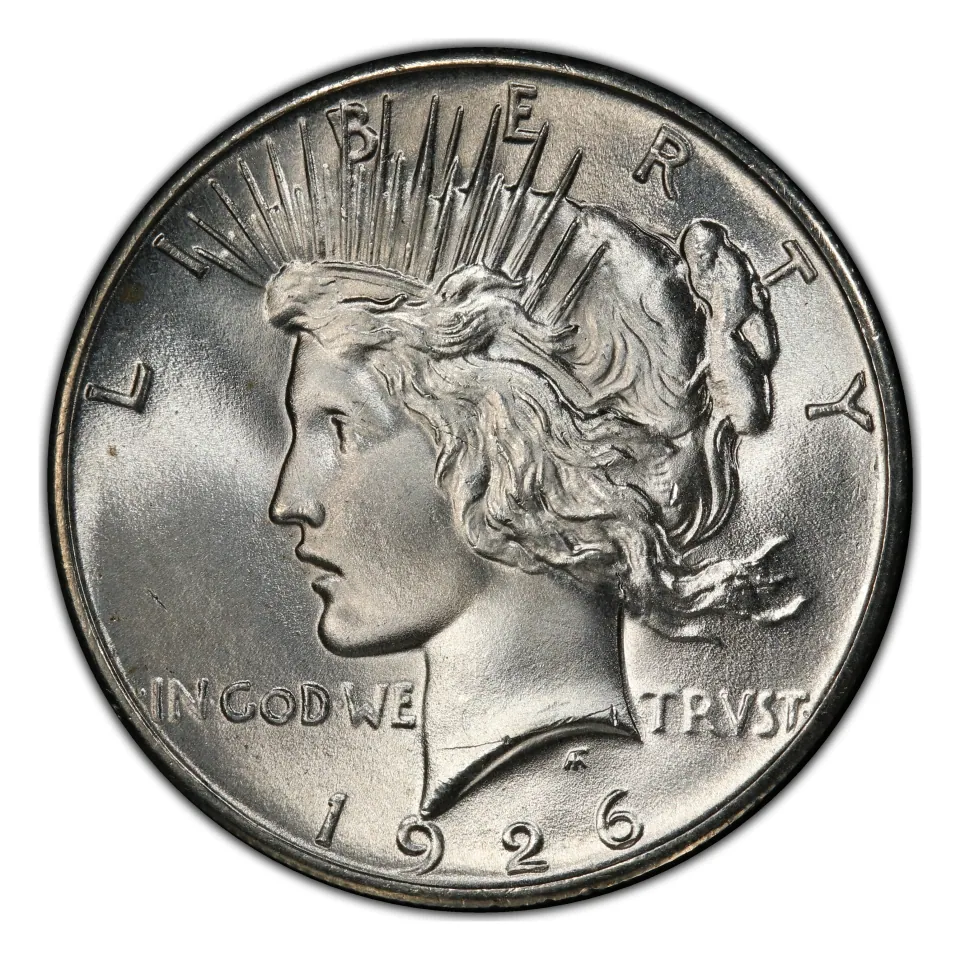
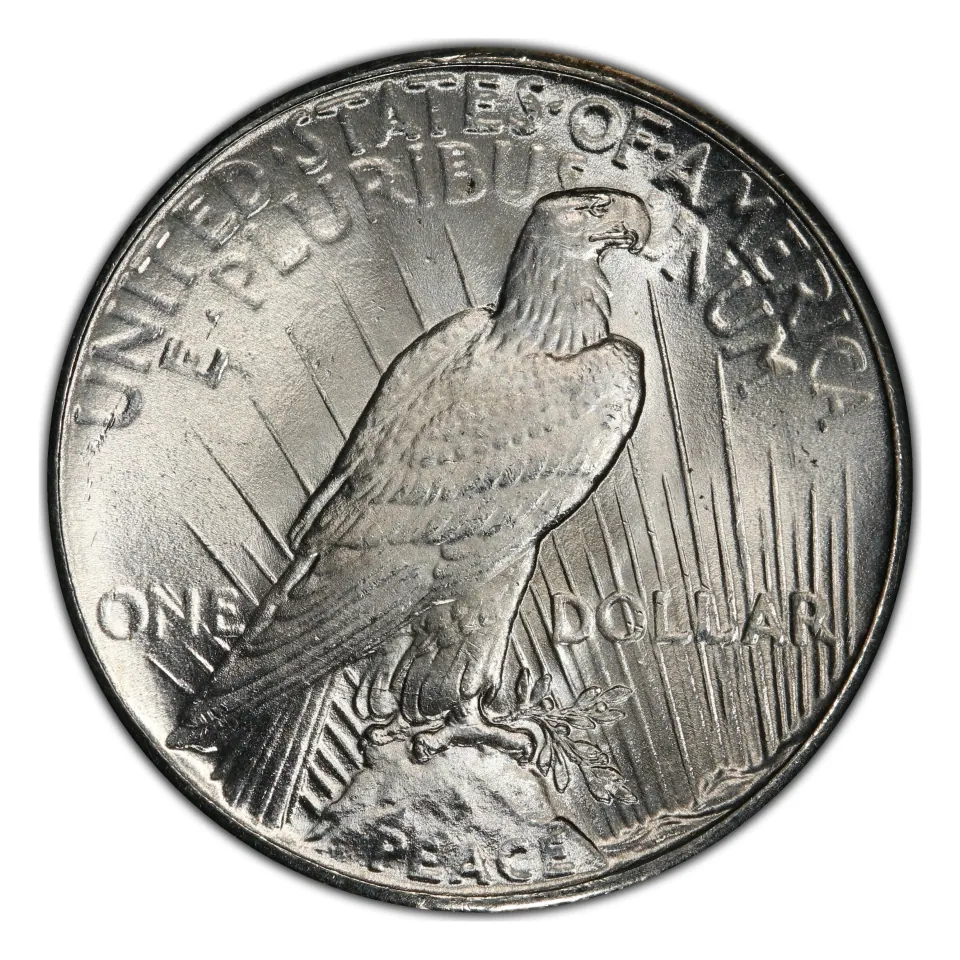
Basics & coin story
Anthony de Francisci’s Peace design succeeded the Morgan dollar in 1921. The Liberty portrait and resting eagle provide a different visual language from Morgan’s portrait and spread-winged eagle. The Mint describes the Peace dollar as marking the peace following World War I, making identification of the type part of understanding the coin’s purpose.
PCGS lists a Philadelphia mintage of 1,939,000 for 1926. Production totals are not surviving population counts or automatic measures of rarity at a particular grade. The year continued the lower-relief design used after the first-year high-relief issue. Use the Peace-dollar series guide for the broader chronology and the 1925 guide for the preceding date.
| Feature | What to check |
|---|---|
| Type / denomination | Peace dollar / $1 |
| Designer | Anthony de Francisci |
| Metal | 90% silver, 10% copper |
| Nominal weight / diameter | 26.73 g / 38.10 mm |
| Fine silver | Approximately 0.7734 troy ounce |
| Edge | Reeded |
| Regular issues | Philadelphia: no letter; Denver: D; San Francisco: S |
| Mint-mark location | Reverse, below ONE near the eagle’s tail |
Identification
Read the Peace design before the price chart
Liberty faces left on the front, while the reverse eagle rests above the word PEACE. A normal 1926 dollar is not a Morgan issue. A listing that pairs an 1890s Morgan image with a 1926 title is not a useful identification reference.
Find D or S on the reverse
Inspect the small area below ONE near the eagle’s tail. A clear D or S selects a different catalog entry; no mark is normal for Philadelphia. Do not use the Morgan mint-mark location above DOLLAR when searching this design. Photograph an uncertain letter under changing light before deciding it is absent.
TRVST is intentional lettering
The design uses a classical V in place of U in TRUST. That spelling is not an error, does not indicate an unusual alloy and does not create a premium by itself. Scratches, raised die features and worn letters should also be separated from normal design choices before any variety claim is made.
Condition & value
Amounts are in U.S. dollars. PCGS retail-guide examples were checked October 22, 2026 and apply only to the stated issue, grade and designation. They are not guaranteed purchase offers; current market conditions and selling costs can change the amount received.
| Issue | Grade / condition | Value or reference | Basis | Important condition |
|---|---|---|---|---|
| 1926 Philadelphia regular | VF20 | $90 | PCGS retail guide | Problem-free circulated example |
| 1926 Philadelphia regular | MS63 | $150 | PCGS retail guide | Uncirculated, correct mint |
| 1926 Philadelphia regular | MS65 | $525 | PCGS retail guide | High-grade surface quality must match |
| Contained silver | Approximately 0.7734 troy oz | 0.7734 × silver spot per oz | Metal-content calculation | Not the full collector value or guaranteed offer |
| 1926-D / 1926-S / attributed variety | Exact mint, grade and attribution | Use matching evidence | Separate comparisons | No Philadelphia price transferred |
Look for friction in Liberty’s hair and on the eagle’s high points, then examine the fields for contact marks and hairlines. Soft central detail may reflect strike quality rather than circulation, so the design’s sharpness alone should not assign a grade. Mint State (MS) means uncirculated, not merely attractive or bright.
A contained-metal reference is approximately 0.7734 multiplied by the silver price per troy ounce. Collector demand can add a premium, while cleaning or damage can affect appeal. Compare completed sales of the same mint and grade, and distinguish a dealer’s asking price from a completed transaction. The grading guide and surface-alteration guide help make that comparison consistent.
Summary
Identify the Peace design, find no mark, D or S, and assess grade and surfaces before using a price. TRVST is normal. Keep the 90% silver calculation separate from collector premiums and use matching mint evidence rather than treating all 1926 dollars as one issue.
FAQ
Is a 1926 silver dollar a Morgan or Peace dollar?
A normal 1926 U.S. silver dollar is a Peace dollar. Morgan dollars were not issued with the 1926 date.
Where is the mint mark on a 1926 Peace dollar?
It is on the reverse below ONE near the eagle’s tail. D identifies Denver and S San Francisco; no mark is normal for Philadelphia.
Why does a 1926 dollar say TRVST?
The design uses a classical V in place of U. It is intentional lettering, not a mint error.
How much silver is in a 1926 dollar?
A standard example contains 90% silver and approximately 0.7734 troy ounce of fine silver at the nominal 26.73-gram weight.
References
References and further reading
- PCGS CoinFacts: exact issue, specifications and available guide evidence
- PCGS: Denver issue identification
- PCGS: San Francisco issue identification
- U.S. Mint: Peace-dollar background
Sources and quoted guide evidence checked October 22, 2026. Guide estimates, historical sales, face value and metal-content calculations are identified separately.