

 App Store

COIN VALUE GUIDES · COMMEMORATIVE HALVES
1893 Columbian Half Dollar Value:Silver, Design and Condition
Identify the 1893 Chicago World’s Columbian Exposition half dollar, distinguish its dates and compare grade-specific values with documented silver content.
 HeriBase TeamPublished
In this article
Quick answer
The 1893 Columbian half dollar is a 90% silver commemorative 50-cent coin, containing approximately 0.3617 troy ounce of fine silver. It is not a silver dollar, and the 1492 in its design is not the coin’s production date.
The NumisMedia snapshot available for this guide, updated July 11, 2026, lists 1893 at $48 in MS61, $100 in MS63 and $150 in MS64. These are dated retail references for uncirculated coins, not a current guaranteed offer or the value of every worn souvenir.
Coin photos
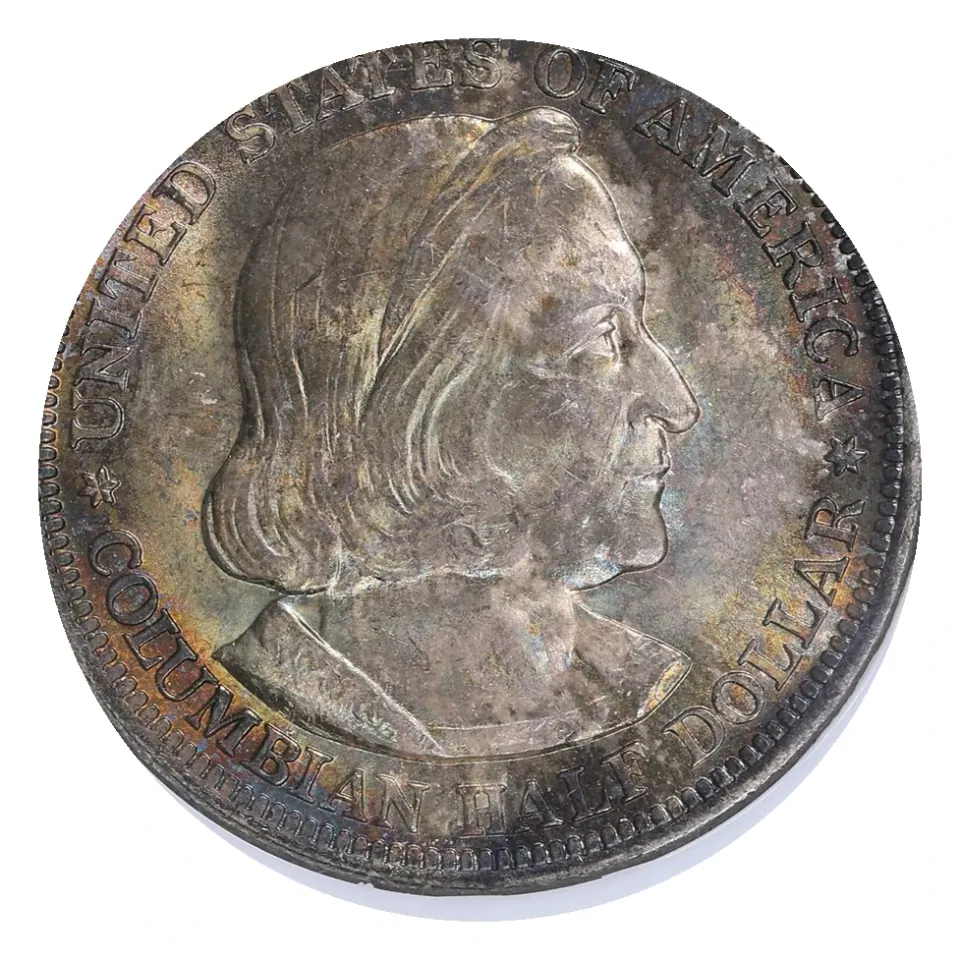
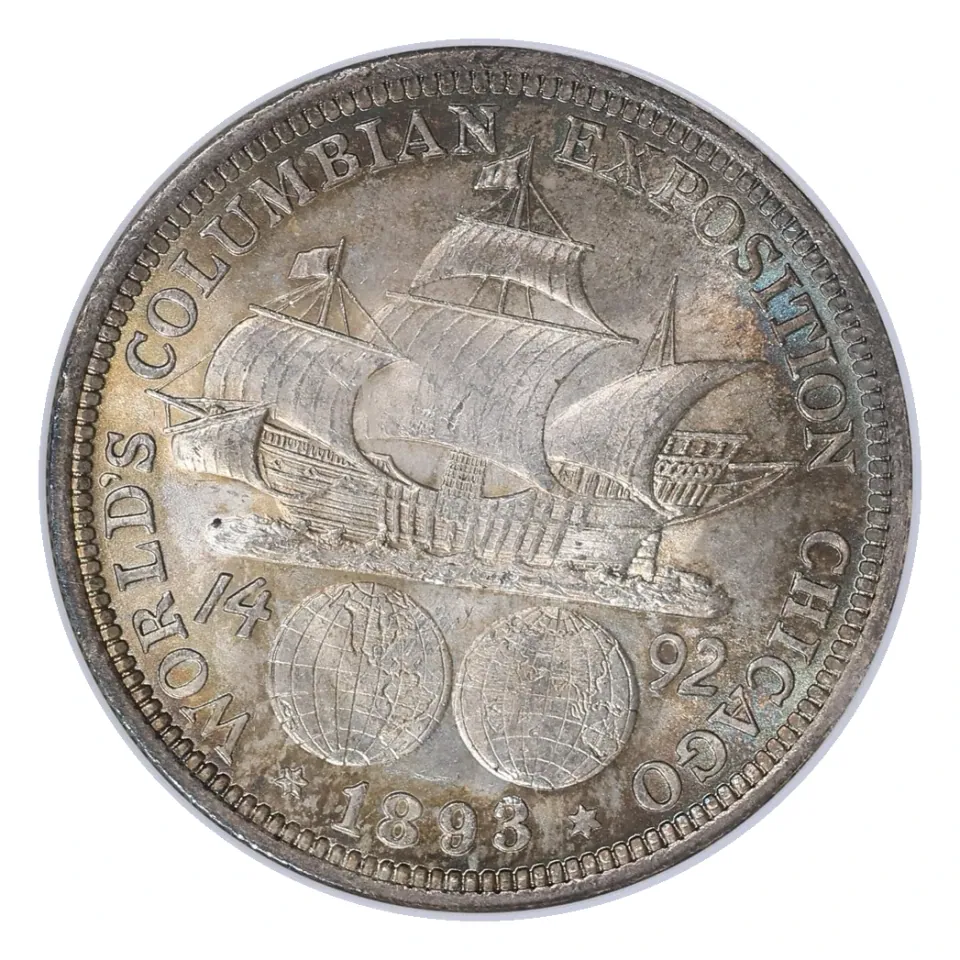
Basics & coin story
The World’s Columbian Exposition in Chicago commemorated four centuries since Columbus’s 1492 voyage. Its half dollar began in 1892 and continued with an 1893 date. The 1892 issue starts the U.S. commemorative coinage program; an 1893 example belongs to the following year of the same design.
Charles E. Barber’s Columbus portrait occupies the obverse. George T. Morgan’s reverse combines the Santa Maria with two globes. WORLD’S COLUMBIAN EXPOSITION and CHICAGO connect the imagery to the fair. The design records what the exposition chose to commemorate; it does not establish that each surviving coin is rare.
These were official U.S. coins promoted as commemorative souvenirs rather than a new everyday half-dollar design. The regular Barber half also circulated in the same period. Our Barber half-dollar guide covers that separate series and its mint marks.
| Feature | What to check |
|---|---|
| Date / denomination | 1893 / 50 cents |
| Program | World’s Columbian Exposition; design also issued in 1892 |
| Obverse / reverse artists | Charles E. Barber / George T. Morgan |
| Normal alloy | 90% silver, 10% copper |
| Nominal mass / diameter | 12.50 g / about 30.6 mm |
| Fine silver | Approximately 0.3617 troy ounce |
| Mint | Philadelphia; no mint mark |
| Date locations | 1492 within the reverse design; 1893 at the bottom of the reverse |
Identification
Find 1893 rather than stopping at 1492
The lower reverse carries the issue year. The split 14 and 92 around the globes refer to the commemorated voyage. A seller calling the piece a 1492 coin has confused a design inscription with its production date.
Read COLUMBIAN HALF DOLLAR on the portrait side. The denomination is fifty cents even if a souvenir was originally sold above face value. An issue price, a face value, a silver calculation and today’s collector price are four different amounts.
Inspect the portrait and ship for wear
Look for friction on Columbus’s high facial and hair details and on the raised ship design. A coin with no circulation wear can still have substantial contact marks. A certified MS63 reference describes preservation, not merely a shiny appearance.
Toning can range widely. The photographed NGC MS63 coin has visible toning, retained as part of the real photograph. Color alone neither proves originality nor guarantees an added premium. Cleaning lines and unnatural polish need separate assessment.
Keep souvenirs and alterations in the right category
A hole, mount, engraving or later stamp should be recorded as an alteration unless a documented specialist attribution establishes its context. An exposition-related story is a research lead, not proof that a damaged piece qualifies for an ordinary unaltered price.
Boxes, envelopes and provenance can help identify an original presentation, but packaging must be checked independently. Do not infer a rare finish from a reflective photograph. Use the grading scale and comparable certified examples to investigate a proposed high grade.
Condition & value
USD NumisMedia collector FMV snapshot updated July 11, 2026, consulted October 27. This older snapshot is explicitly dated and should be checked against recent completed sales before a transaction.
| Issue | Grade / condition | Value or reference | Basis | Important condition |
|---|---|---|---|---|
| 1893, ordinary commemorative issue | MS61 / MS62 | $48 / $64 | NumisMedia, July 11, 2026 snapshot | Uncirculated references; not worn-coin prices |
| 1893, ordinary commemorative issue | MS63 | $100 | Same dated guide | Numerical grade and surfaces matter |
| 1893, ordinary commemorative issue | MS64 / MS65 | $150 / $338 | Same dated guide | Do not assume a raw coin meets these grades |
| Circulated or altered example | Actual wear and problems | Use matching completed sales | Condition-specific | No unsupported circulated range asserted |
| Contained silver | 0.3617 troy oz | 0.3617 × silver spot per troy oz | Metal reference | Not the complete collector value |
The retrieved commemorative price table carries a July update, so these values are presented as a historical guide snapshot rather than a newly refreshed market quotation. Check more recent completed sales if making a transaction.
The progression from MS61 to MS65 concerns specific uncirculated preservation levels. It does not mean that any 1893 coin is worth at least $48 or that attractive toning automatically earns $338. A circulated coin, a cleaned example and a numerically graded Mint State coin need different comparisons.
Calculate silver separately and preserve the surfaces. The cleaning guide explains why polishing can lower collector appeal. If you are comparing other historical souvenirs, the Stone Mountain half-dollar guide covers another commemorative with a different story and market.
Summary
Confirm HALF DOLLAR and the reverse 1893 issue date. Then separate circulated wear, Mint State grade, alterations and silver content. Use the dated price snapshot as a reference and verify current comparable sales before setting an offer.
FAQ
Is an 1893 Columbian half dollar silver?
Yes. Standard examples are 90% silver with approximately 0.3617 troy ounce of fine silver.
Why does the coin show 1492 and 1893?
1492 refers to the voyage commemorated by the exposition. The 1893 at the bottom of the reverse is the coin’s issue date.
Is the Columbian coin a silver dollar?
No. Its denomination is a half dollar, or fifty cents, as stated on the portrait side.
Was 1893 the first U.S. commemorative coin date?
The Columbian half-dollar program began with the 1892 issue. The 1893 coin is a subsequent year of the same design.
References
References and further reading
- U.S. Mint: Columbian Exposition half-dollar design
- PCGS: 1893 commemorative history
- NumisMedia: silver commemorative price snapshot
- GreatCollections: photographed 1893 NGC MS63
References consulted October 27, 2026. Price tables retain the update dates stated in the text; guide estimates, face values and completed transactions are different forms of evidence.