

 App Store

COIN VALUE GUIDES · COMMEMORATIVE HALVES
Stone Mountain Half Dollar Value:1925 Silver and Condition
Identify the 1925 Stone Mountain commemorative half dollar, understand its historical design and compare unaltered coins separately from counterstamped examples.
 HeriBase TeamPublished
In this article
Quick answer
The Stone Mountain half dollar is a 1925 Philadelphia commemorative containing 90% silver, approximately 0.3617 troy ounce per standard coin. It has no mint mark. Condition, original surfaces and any added counterstamp determine the relevant comparison.
NumisMedia’s retrieved July 11, 2026 snapshot lists MS63 at $90, MS64 at $150 and MS65 at $250 for ordinary examples. These are dated guide references, not prices for every circulated, cleaned or counterstamped coin.
Coin photos
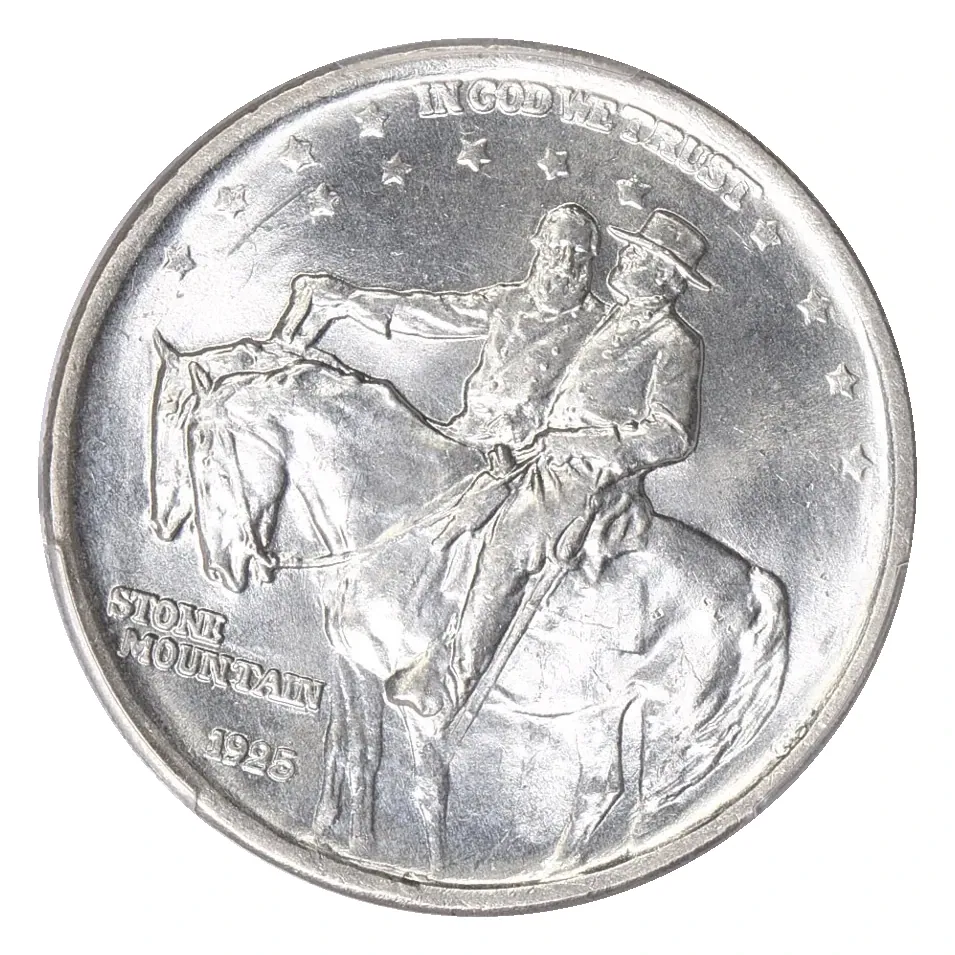
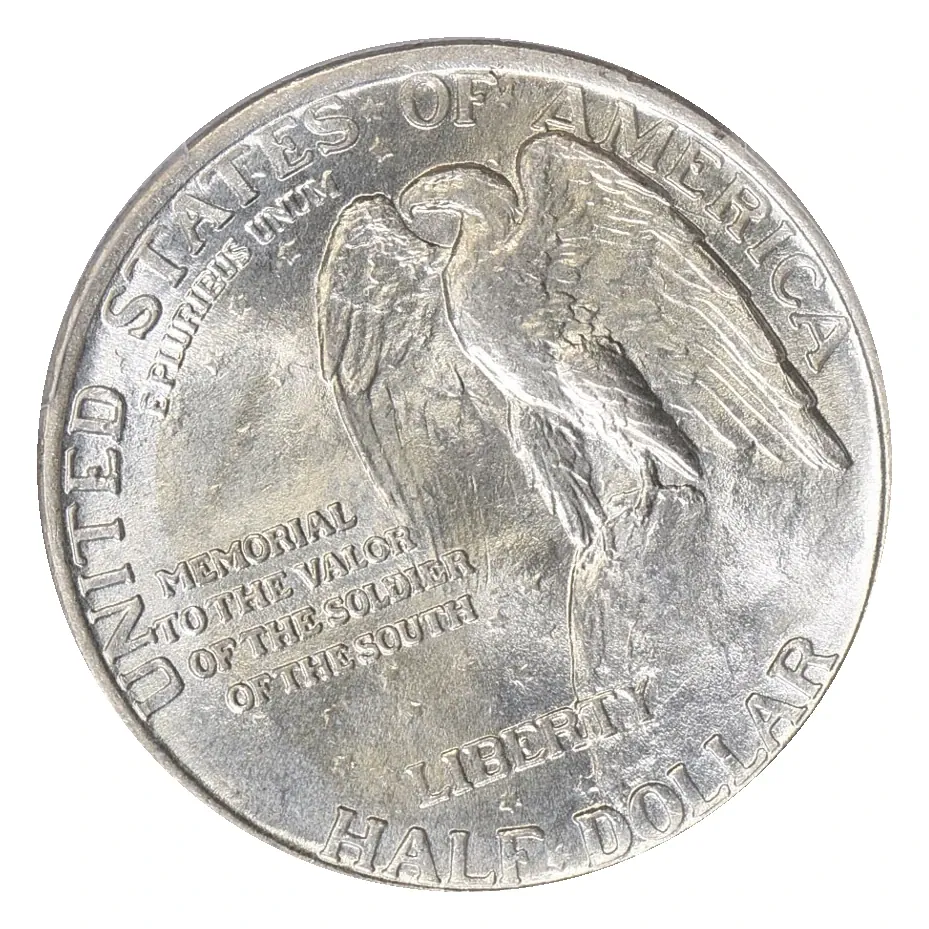
Basics & coin story
Congress authorized the coin in 1924 as part of fundraising associated with the Stone Mountain memorial project in Georgia. The issue belongs to the historical commemorative series rather than the regular half-dollar design then in circulation.
Gutzon Borglum’s obverse depicts Confederate generals Robert E. Lee and Thomas J. “Stonewall” Jackson on horseback. The reverse eagle rests on a rocky prominence. Its inscriptions memorialize Confederate soldiers. This Confederate memorial context is central to the coin’s history and to modern discussion of the monument.
The coin can be studied as an artifact of its time without treating its imagery as a statement of present-day values. Identification starts with the actual 1925 design and inscriptions, then proceeds to condition and provenance. The half-dollar overview helps distinguish it from Walking Liberty or other contemporary designs.
| Feature | What to check |
|---|---|
| Date / face value | 1925 / 50 cents |
| Program | Stone Mountain Memorial commemorative |
| Designer | Gutzon Borglum |
| Obverse | Lee and Jackson on horseback |
| Reverse | Eagle on a mountain crag; memorial inscription |
| Nominal alloy / mass | 90% silver, 10% copper / 12.50 g |
| Diameter / fine silver | About 30.6 mm / approximately 0.3617 troy ounce |
| Mint | Philadelphia; no mint mark |
Identification
Read the 1925 date and both designs
The date appears beneath STONE MOUNTAIN on the mounted-figures side. The reverse carries the eagle, denomination and memorial wording. A normal example does not have a D or S mint mark to find.
Look at the entire coin, not just the riders. Medals, reproductions and privately altered coins can share historical themes without being the same U.S. issue. Weight, diameter, edge and verified design details provide additional checks.
Inspect raised detail and the open fields
The figures, horses and eagle have raised areas where friction can first appear. Broad fields can show contact marks or hairlines even when a coin has little apparent wear. The numerical grade cannot be inferred from age, brightness or one well-preserved detail.
The photographed PCGS MS64 example shows the design of a certified uncirculated coin. Its appearance does not certify a reader’s coin. Compare the high points and surfaces under angled light using the grading guide.
Research a counterstamp before attaching a premium
Some Stone Mountain coins received added stamps in connection with fundraising or later activity. An added state abbreviation, number or punch needs its own attribution and provenance. It is not a mint mark and should not automatically be described as a Mint error.
An ordinary unaltered-coin price and a specialist counterstamp result answer different questions. Record the exact letters, location, punch shape and any accompanying documentation. A modern added mark does not acquire a historical fundraising connection merely because it resembles one.
Condition & value
USD NumisMedia collector FMV snapshot dated July 11, 2026, consulted October 27. These older grade-specific references concern ordinary unaltered examples and should be checked against recent sales.
| Issue | Grade / condition | Value or reference | Basis | Important condition |
|---|---|---|---|---|
| 1925, ordinary unaltered issue | MS61 / MS62 | $67 / $83 | NumisMedia, July 11, 2026 snapshot | Mint State references |
| 1925, ordinary unaltered issue | MS63 | $90 | Same dated guide | Grade and original surfaces required |
| 1925, ordinary unaltered issue | MS64 / MS65 | $150 / $250 | Same dated guide | Not a universal range for raw coins |
| Counterstamped, mounted or damaged coin | Attributed form and condition | Use comparable specialist sales | Separate market | An added stamp is not a mint mark |
| Contained silver | 0.3617 troy oz | 0.3617 × silver spot per troy oz | Metal calculation | Separate from collector premium |
The snapshot date is retained because a cached guide is not a live offer. A recent transaction should use more recent sold lots with the same numerical grade and comparable surfaces. Record the sale date and whether fees are included.
A circulated coin does not qualify for the MS61 starting row merely because the details remain readable. Conversely, a strong certified coin may deserve a comparison beyond the rows shown. The table is a set of defined examples, not a blanket minimum and maximum.
Preserve any old envelope or documentation, particularly when researching a stamp. Avoid cleaning, removing toning or trying to flatten a mount. The appraisal guide explains what to provide for a more precise assessment. For another early commemorative, see the 1893 Columbian half-dollar guide.
Summary
Identify the 1925 commemorative and record any added marks separately. Silver content gives a transparent metal reference; grade, surfaces and documented counterstamp attribution supply the appropriate collector comparison.
FAQ
Is the Stone Mountain half dollar silver?
Yes. Standard 1925 examples are 90% silver and contain approximately 0.3617 troy ounce of fine silver.
Where is its mint mark?
Normal Stone Mountain half dollars were struck at Philadelphia and have no mint mark.
Who is pictured on the Stone Mountain coin?
The obverse depicts Confederate generals Robert E. Lee and Thomas J. “Stonewall” Jackson on horseback. The reverse shows an eagle on a rocky prominence.
Is an added state stamp a Mint error?
No. An added counterstamp is separate from the original Mint strike. Its attribution, provenance and value require specialist evidence.
References
References and further reading
- U.S. Mint: Stone Mountain commemorative history and design
- NumisMedia: silver commemorative price snapshot
- GreatCollections: photographed 1925 PCGS MS64
References consulted October 27, 2026. Price tables retain the update dates stated in the text; guide estimates, face values and completed transactions are different forms of evidence.