

 App Store

COIN VALUE GUIDES
1854-S Half Eagle: Five-Dollar Gold Rarity and Discovery History
Identify the 1854-S Liberty Head five-dollar coin, distinguish its documented 2018 discovery from older survivor counts, and read provenance and dated auction evidence.
 HeriBase TeamPublished
In this article
What is the 1854-S Half Eagle?
The 1854-S Half Eagle is a five-dollar Liberty Head gold coin from San Francisco’s first operating year. Mint records cited by NGC give 268 struck; NGC announced a fourth-known example in 2018. Those historical figures are not a freshly audited census. Confirm denomination, date, genuine S, preservation and provenance before applying any exceptional sale result.
Reviewed November 13, 2026. Historical figures retain their stated dates, currency and comparison limits.
Which real features should I compare?
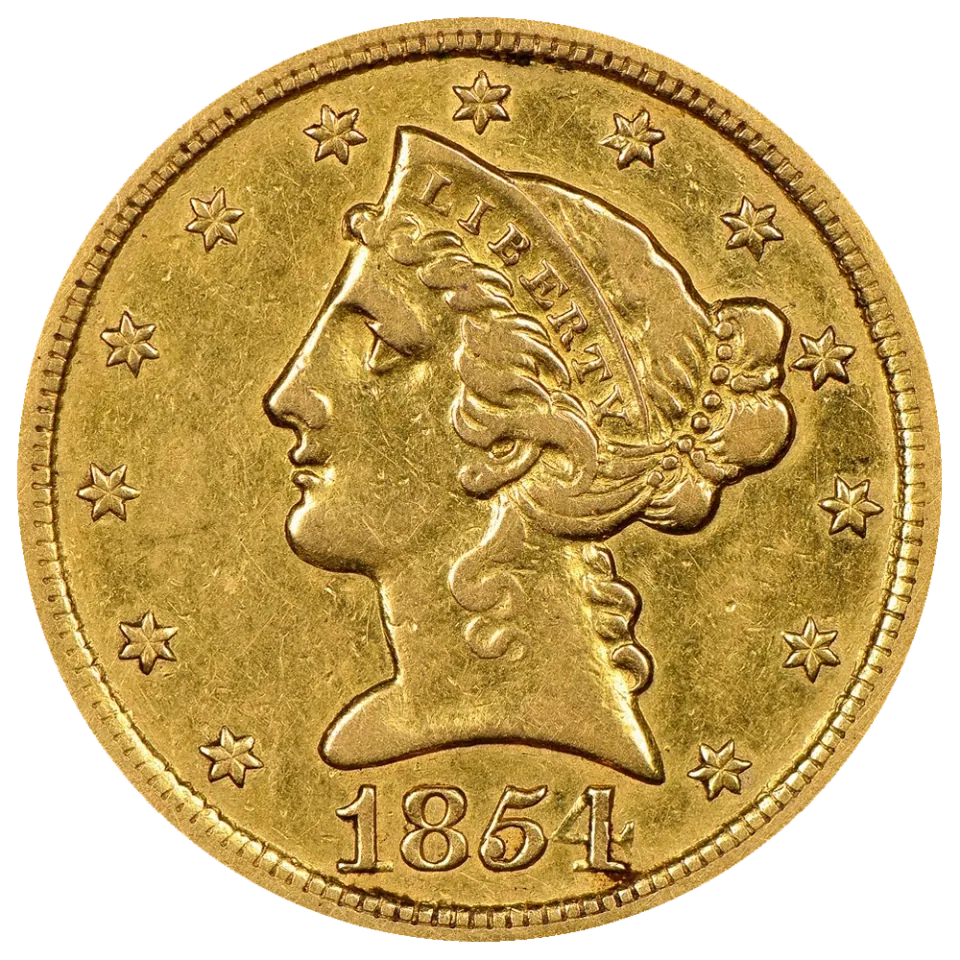
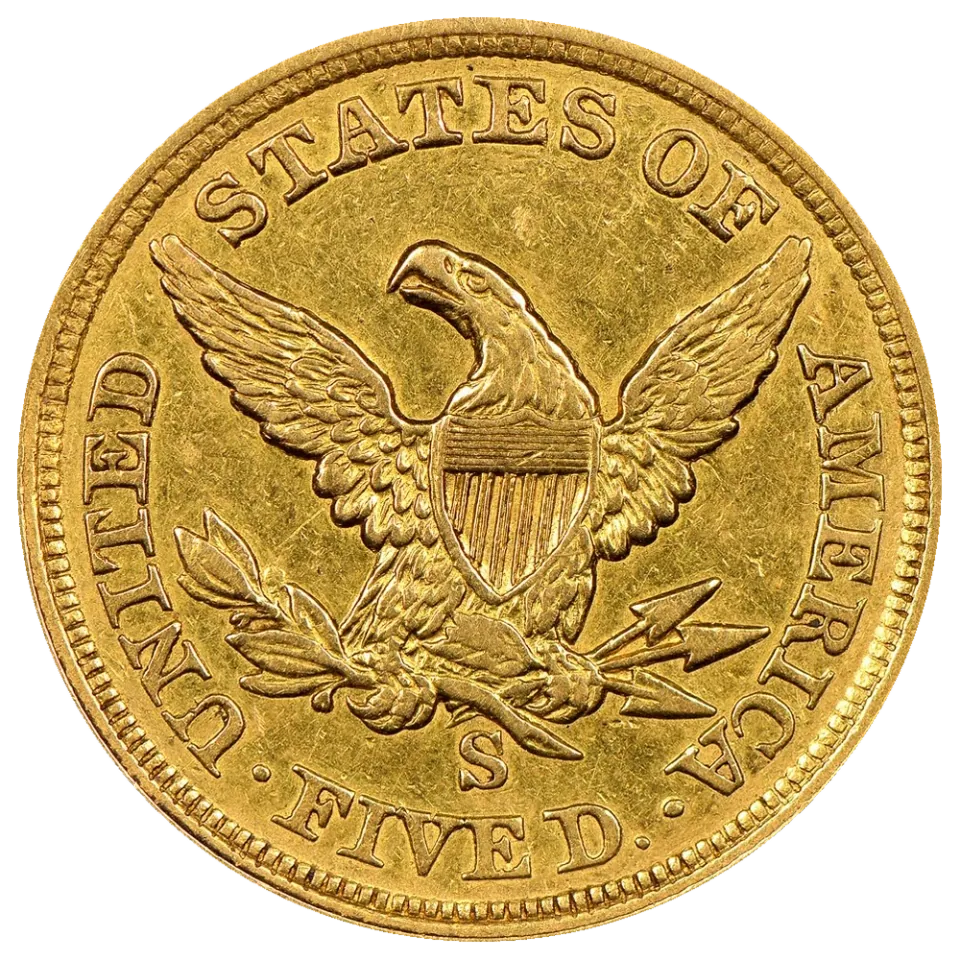
What background helps identify the object?
Why did San Francisco strike gold coins in 1854?
California’s gold economy created a need for local federal coinage. The new San Francisco Mint began operating in 1854, and the Half Eagle was one of its gold denominations. Half Eagle means five dollars; it is not half of a silver dollar, a one-dollar gold coin or a twenty-dollar Double Eagle.
The Liberty Head design belongs to a long-running denomination, but the 1854-S issue is exceptional within it. A familiar portrait therefore does not establish availability. Compare the gold-dollar guide and Double Eagle guide only to distinguish denominations, not to price this Half Eagle.
How do the issues and evidence compare?
What changed when the 2018 example was authenticated?
NGC’s April 2018 report described a newly authenticated XF45 coin as the fourth known example, replacing older accounts that discussed only three. The report compared it with documented specimens and distinguished it from a coin reported stolen in 1967. That makes a bare “three survivors” headline an incomplete historical summary.
The report did not disclose an unbroken earlier pedigree for the new owner’s coin. Unreported ownership is not evidence that the coin was recently manufactured, and a discovery date is not a minting date. Record what the documents actually establish and leave the unknown interval open.
| Evidence item | What is established | Date / source context | What is not established | Collector use |
|---|---|---|---|---|
| 268 recorded struck | Mint-record figure cited by NGC | 2018 discovery report | A count of coins available today | Production context |
| Fourth-known discovery | A distinct coin authenticated XF45 | NGC, April 2018 | A permanently fixed future census | Correct older three-coin summaries |
| Museum / private / stolen histories | Separate documented specimen records | Dated reports and pedigrees | One pedigree shared by all examples | Trace each coin independently |
| Later certification changes | A coin can move between holders | Retain the date of each record | Different holders always mean different coins | Avoid double counting |
How should I read its auction history?
| Issue | Condition at sale | Published amount | Sale / record | Limit |
|---|---|---|---|---|
| 1854-S Half Eagle discovery specimen | NGC XF45 | $2,160,000 | Heritage, August 2018, lot 5248; later Heritage pedigree | Dated individual result, not current universal value |
| A claimed new example | Not authenticated here | No amount assigned | Direct specialist examination required | Do not value by resemblance alone |
A later sale may describe the same coin in a different holder. Follow stable photographs and the lot’s pedigree rather than counting each certification appearance as another survivor. Likewise, a higher later price does not establish an annual rate of return; the transaction dates, fees and individual circumstances need to stay attached to the records.
Where should I look before seeking expert review?
Read 1854 on the front, FIVE D. on the back, and the small S below the eagle. Photograph the complete edge and both sides without altering them. The visible design is a screening step, not proof of alloy or authenticity. Added mint marks, altered dates, casts and modern replicas require specialist examination, particularly when a proposed identification is extraordinary.
Do not acid-test or polish a candidate. Keep any holder, invoices and older photographs together and explain which documents actually accompany the coin. The appraisal guide helps organize that submission. A compelling discovery story should follow the examination, not replace it.
What should I check in three steps?
- 01Confirm the five-dollar Liberty Head denomination, 1854 date and reverse S. Exclude similar gold-dollar and Double Eagle designs.
- 02Preserve the coin and record documents, surface features and holder history. Treat the 2018 discovery report as dated evidence rather than a live census.
- 03Seek recognized authentication and trace the specific specimen through original sales. Match its grade and provenance before comparing a published amount.
What should I remember?
Use Half Eagle correctly: this is a five-dollar gold issue. The 2018 fourth-known discovery corrects older three-example accounts, but does not justify a permanent count today. Authenticate the physical coin and trace its own history before using a million-dollar sale as a comparison.
What else do collectors ask?
What denomination is a Half Eagle?
Five dollars. It is not a half dollar, gold dollar or twenty-dollar Double Eagle.
How many 1854-S Half Eagles were struck?
NGC’s 2018 discovery report cites mint records of 268. Production is different from surviving examples.
Are only three examples known?
That wording omits NGC’s 2018 announcement of a fourth-known specimen. This guide does not claim a newly audited present census.
What grade did NGC assign the discovery coin?
NGC announced XF45 in 2018. Later holder history should be recorded separately, not mistaken for a separate coin.
What was the 2018 sale result?
The discovery specimen realized $2,160,000 at Heritage in August 2018, lot 5248. It is an individual historical transaction.
Can the mint mark alone prove authenticity?
No. The date, mint, design, metal, surfaces and specimen history require specialist examination.
Which references support this guide?
References and further readingExpand
- NGC: fourth-known discoveryApril 18, 2018; XF45 authentication, 268 recorded struck and distinct specimen histories.
- PCGS: later holder historyOctober 30, 2018; follow the same coin rather than double counting holders.
- Heritage: subsequent specimen pedigreeRecords the August 2018 lot 5248 sale at $2,160,000.