

 App Store

COIN VALUE GUIDES · DOLLAR GUIDES
Double Eagle Coin:Liberty Head vs. Saint-Gaudens $20 Gold
Recognize the two historic double-eagle designs, calculate their gold content, and distinguish a $20 coin from the modern one-ounce American Gold Eagle.
 HeriBase TeamPublished
In this article
Quick answer
A historic U.S. double eagle is a twenty-dollar gold coin, not a coin showing two eagles. The main types are Liberty Head, with regular production from 1850–1907, and Saint-Gaudens, dated 1907–1933. Both standard types contain 90% gold and about 0.9675 troy ounce of fine gold.
For ordinary-date comparisons, the PCGS guide checked October 21, 2026 lists a 1904 Liberty Head at $4,375 in MS63 and a 1924 Saint-Gaudens at $4,310 in MS63. These retail estimates concern those issues and grades. They do not price rare dates, special relief types, damaged coins or the exceptional 1933 issue.
Compare the designs
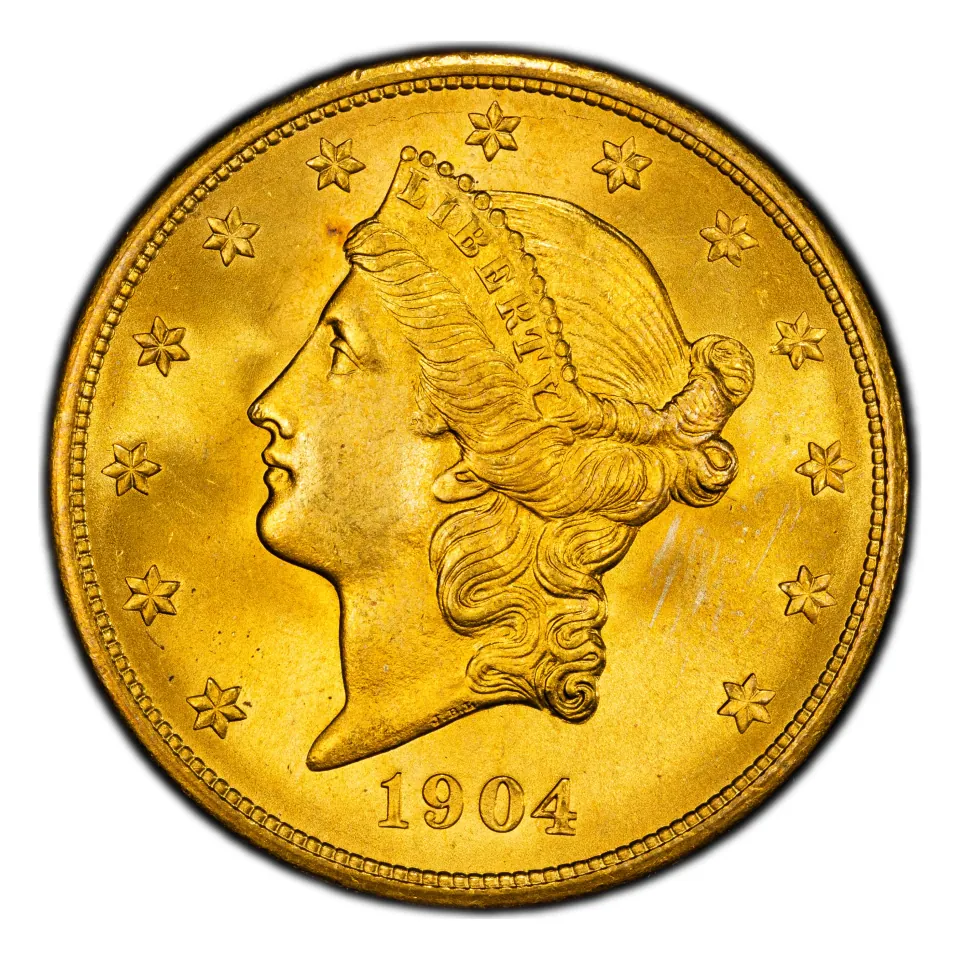
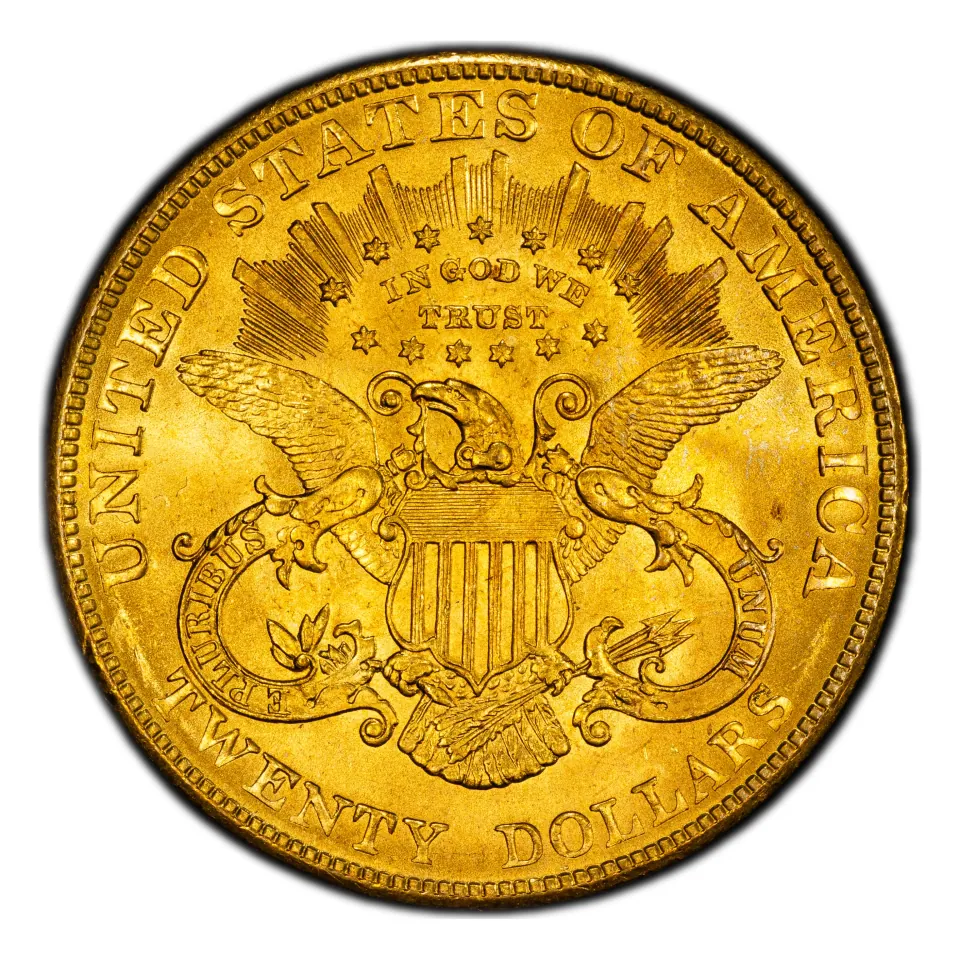
Liberty Head · 1904 example
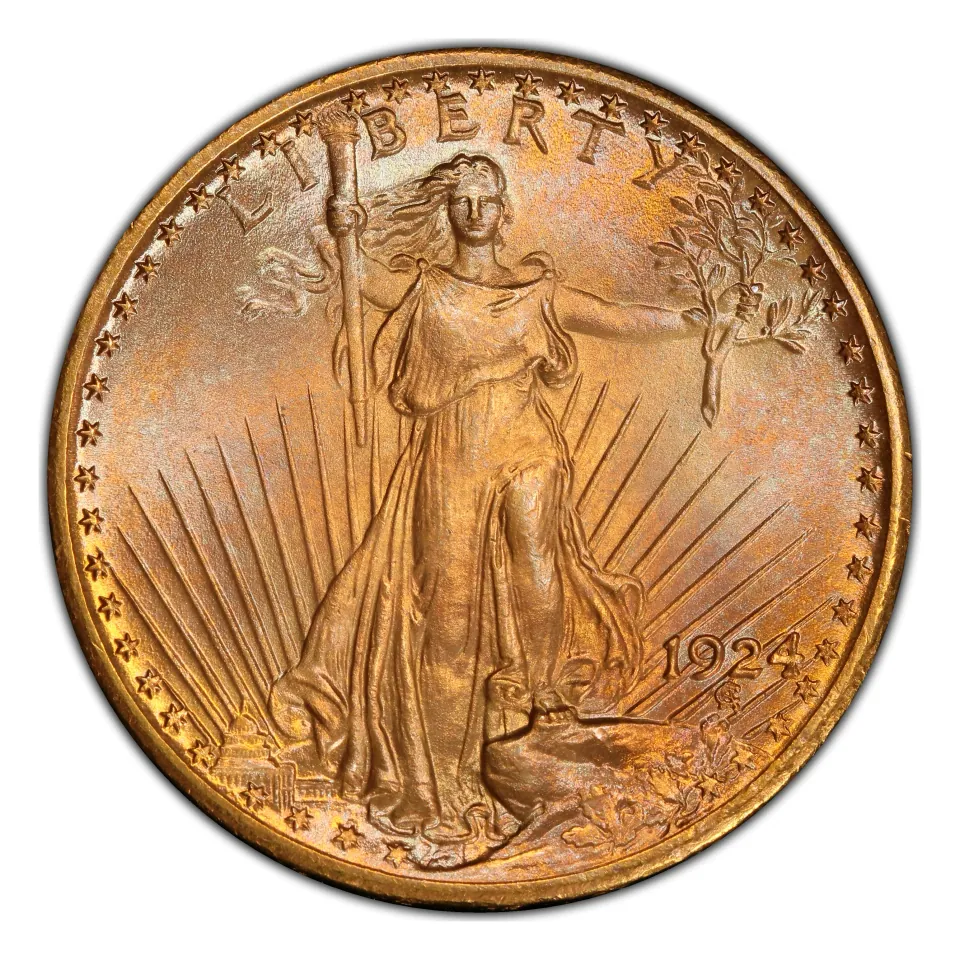
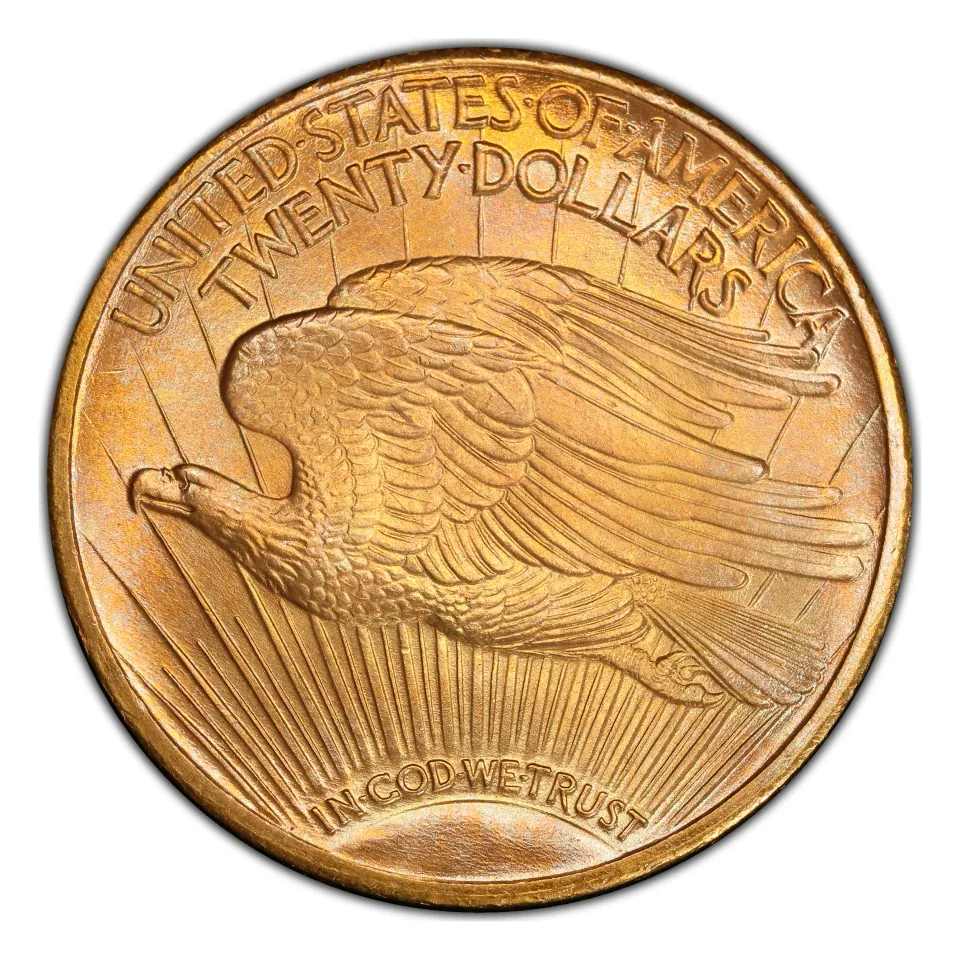
Saint-Gaudens · 1924 example
Types, history & value
The California Gold Rush supplied the setting for a new $20 denomination. James B. Longacre’s Liberty Head design first appeared in 1849; regular commercial production followed in 1850. Its reverse evolved: the motto appeared in 1866, and the denomination changed from TWENTY D. to TWENTY DOLLARS in 1877.
Augustus Saint-Gaudens created the later striding Liberty and flying eagle. The 1907 transition includes special relief and design variants, so a date alone does not establish the exact type. The same year can belong to different catalog comparisons. The historic design later inspired modern gold issues, but resemblance does not make their weights or denominations interchangeable.
Amounts are U.S. dollars. These PCGS retail-guide examples were checked October 21, 2026 for the stated issue and designation. A raw coin needs its own condition assessment; guide figures are not guaranteed sale proceeds and can lag metal prices.
| Type / issue | Identification | Metal / specification | Value evidence | Comparison limit |
|---|---|---|---|---|
| Liberty Head, regular 1850–1907 | Crowned Liberty; heraldic eagle | 90% gold; approx. 0.9675 oz fine | 1904 MS63: $4,375; MS65: $5,500 | Guide for 1904, not the full series |
| Saint-Gaudens, 1907–1933 | Standing Liberty; flying eagle | 90% gold; approx. 0.9675 oz fine | 1924 MS63: $4,310; MS65: $4,600 | Guide for ordinary 1924 issue |
| 1907 relief / motto variants | Identify the exact catalog type | Design and relief must match | Use exact variant evidence | No generic 1907 quote |
| Modern one-ounce Gold Eagle | Related Liberty obverse; $50 face value | One troy ounce fine gold; 22-karat alloy | Separate bullion/collector market | Not a historic $20 double eagle |
| Exceptional date or altered coin | Authenticate first | Measurements alone insufficient | Specimen-specific | Common-date prices may be unsuitable |
A
Liberty Head: identify the reverse type
Read the denomination. TWENTY DOLLARS identifies the value on this later reverse. Earlier Liberty Head types use TWENTY D., so different wording can be normal.
Check the motto. Its presence helps distinguish later types from the earlier No Motto design. A 1904 coin belongs to the later design, not an 1850s issue.
Then inspect the mint. Look below the eagle for a branch letter. The illustrated Philadelphia example has none; use an exact date-and-mint listing.
B
Saint-Gaudens: a flying eagle and edge lettering
Match the eagle. The flying bird differs from the heraldic Liberty Head eagle. The ordinary 1924 issue should be compared with this later design family.
Check both faces and the edge. E PLURIBUS UNUM appears on the edge of the standard Saint-Gaudens type. An edge photograph adds evidence but cannot authenticate a gold coin alone.
Keep special relief separate. The ordinary 1924 example does not represent the exceptional 1907 relief types. Their different manufacture requires a separate catalog comparison.
Identification & collecting
Identify the design before the mint
Read the denomination on the reverse. A $10 eagle, a $20 double eagle and a modern $50 one-ounce Gold Eagle belong to different issues. Liberty Head coins show a bust rather than a full-length figure. On the Saint-Gaudens coin, look for the flying eagle and rays.
For Liberty Head double eagles, a branch-mint letter appears on the reverse below the eagle. On Saint-Gaudens double eagles, it is on the obverse near the date. No letter normally identifies Philadelphia. Not every mint operated in every date; use an exact issue listing.
Use fine gold content rather than total weight
The standard total weight is about 33.436 grams. Only 90% is gold, giving about 0.9675 troy ounce. The transparent metal reference is 0.9675 multiplied by gold’s price per troy ounce; it is not a guaranteed cash offer. Current metal moves can overtake a static retail guide.
A common-date coin can carry a premium for preservation, while a scarce date can be worth substantially more than metal. Compare luster breaks, cheek or leg marks, rim damage and evidence of mounting. Jewelry removal and polishing can materially affect the collector comparison.
Choose a comparison with matching preservation
Do not use the famous 1933 auction story to value an ordinary Saint-Gaudens coin. Exceptional pieces require their own documented provenance and issue-specific assessment. For an unfamiliar gold coin, retain both faces, edge photographs and any certificate before seeking a specialist opinion.
Use the grade guide to interpret Mint State numbers, and the appraisal guide to distinguish a retail figure from expected sale proceeds. Avoid abrasive cleaning before authentication or sale.
Summary
Double eagle means a historic $20 gold denomination. Identify Liberty Head or Saint-Gaudens, read the mint and date, and compare the exact issue and grade. Use approximately 0.9675 ounce for contained-gold calculations; keep modern Gold Eagles and exceptional historic rarities in separate markets.
FAQ
Why is a double eagle worth twenty dollars in denomination?
An eagle was the historic ten-dollar gold denomination; a double eagle was twice that, or twenty dollars.
Does a double eagle contain two ounces of gold?
No. Standard historic double eagles contain approximately 0.9675 troy ounce of fine gold in a 90% gold alloy.
Is a modern American Gold Eagle the same coin?
No. The modern one-ounce Gold Eagle has a $50 denomination, contains one troy ounce of fine gold and uses a different alloy and specifications.
Can I apply a 1933 auction price to my 1924 coin?
No. The 1933 issue is exceptional. A 1924 coin needs comparison with its own issue, grade, surfaces and current market.
References
References and further reading
- U.S. Mint: gold denomination and design history
- PCGS: 1904 Liberty Head specifications and guide
- PCGS: 1924 Saint-Gaudens specifications and guide
- U.S. Mint: modern American Eagle bullion specifications
Sources checked October 21, 2026. Retail guides and historical sales are identified separately; neither guarantees a buying offer.