

 App Store

COIN VALUE GUIDES · SEATED LIBERTY DIMES
Seated Liberty Dime Value:Types, Arrows and Mint Marks
Identify 1837–1891 Seated Liberty dimes, distinguish major design changes and use date-specific values without applying one silver weight to the entire series.
 HeriBase TeamPublished
In this article
Quick answer
The Seated Liberty dime is a ten-cent silver series dated 1837–1891, with several obverse, reverse and weight changes. Read ONE DIME, the date, mint mark and type before using a value or silver-content calculation.
For a defined later common-date reference, NumisMedia’s October 24, 2026 guide lists 1876 Philadelphia at $15 in G4, $17 in F12 and $28 in XF40. Early No Stars issues, scarce mints, Proofs and recognized varieties need their own comparisons.
Coin photos
Basics & coin story
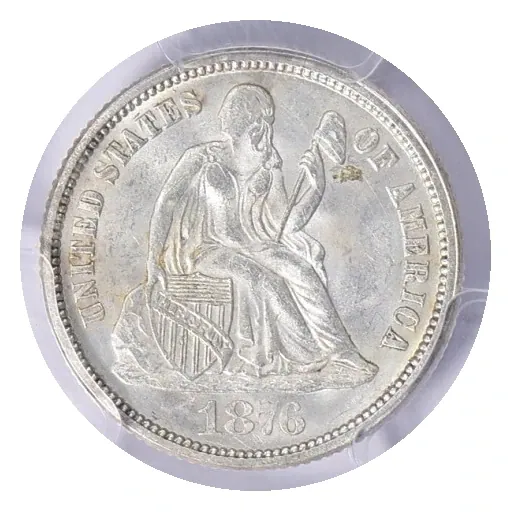
Christian Gobrecht’s seated Liberty became a major nineteenth-century design, appearing on several silver denominations. On the dime, the familiar figure holds a shield and a liberty pole. The reverse identifies the denomination, which is essential when sorting it from a smaller half dime.
The first dimes have a plain field around Liberty. Stars and later drapery details changed the front; the country name moved to the obverse with the later design, while the reverse wreath also changed. These are intentional types rather than missing-letter errors.
Arrows beside the date marked weight-standard changes in the 1850s and 1870s. They are not mint marks. A later coin without arrows can still belong to the newer weight standard. The half-dime guide covers the separate five-cent silver denomination.
| Feature | What to check |
|---|---|
| Series / denomination | 1837–1891 / ten cents |
| Principal design | Christian Gobrecht’s seated Liberty |
| Normal alloy | 90% silver, 10% copper |
| Major type clues | No Stars, Stars, drapery, legend placement and arrows |
| Mint identities across series | No mark Philadelphia; O, S and CC where issued |
| Mint mark location | Reverse; exact position depends on reverse type |
| 1876 nominal mass / diameter | 2.50 g / about 17.9 mm |
| 1876 fine silver | Approximately 0.07234 troy ounce; not every early issue uses this weight |
Identification
Read ONE DIME and inspect both sides
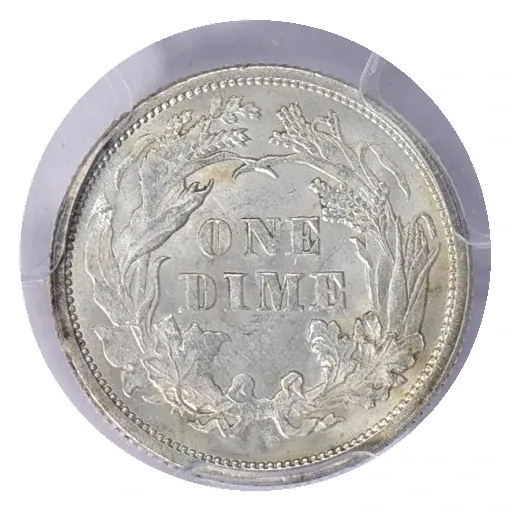
The seated portrait alone cannot distinguish a dime from every other Seated Liberty denomination. Read the denomination and compare dimensions with the exact issue. A photograph without scale can make a half dime appear deceptively similar.
The pictured 1876 Philadelphia dime has the later obverse country legend and reverse wreath. Earlier stars or missing surrounding words can be normal for their type. Do not describe a genuine early design as an incomplete strike merely because it differs from this example.
Treat arrows as a date-and-type clue
Look on both sides of the date for arrows. The 1853–1855 and 1873–1874 arrow issues belong to different changes, so arrows alone do not identify one universal weight or price. Some transition years have distinct with-arrow and without-arrow listings.
Weighing a worn coin can support the identification, but the catalog type comes first. Do not use a 2.50-gram late-series standard to reject every earlier coin. The older standards differ, and circulation can also reduce actual mass.
Find the mint letter and preserve the fields
O identifies New Orleans, S San Francisco and CC Carson City where issued. The reverse arrangement changed during the series, so compare the mark location to the proper design. An empty normal Philadelphia location does not prove a missing-mark error.
Check Liberty’s head, breast and knees and the open fields for wear, scratches and cleaning. The grading scale helps organize that assessment. A sharp date does not prove the rest of the coin is uncirculated.
Condition & value
USD NumisMedia collector FMV snapshot updated October 24, 2026. The 1876 circulated rows are issue-specific and do not value the photographed MS63 specimen or earlier types.
| Issue | Grade / condition | Value or reference | Basis | Important condition |
|---|---|---|---|---|
| 1876 Philadelphia | G4 / VG8 | $15 / $16 | NumisMedia FMV, Oct 24, 2026 | Later common-date circulated example |
| 1876 Philadelphia | F12 / VF20 | $17 / $18 | Same dated guide | Correct wear grade and acceptable surfaces |
| 1876 Philadelphia | XF40 | $28 | Same dated guide | Not the value of the photographed MS63 coin |
| 1876-CC | G4 / XF40 | $22 / $132 | Same dated guide | Different mint from the Philadelphia example |
| 1876 nominal silver component | 0.07234 troy oz | 0.07234 × silver spot per troy oz | Metal calculation | Earlier weight standards need their own calculation |
The table compares one date and two mints, not the entire fifty-five-year design span. A scarce early date, an overdate or a Proof should not inherit the ordinary 1876 values. Coins with a hole, heavy cleaning or corrosion need separately described comparisons.
The pictured Philadelphia coin was cataloged as PCGS MS63. Its remaining detail illustrates a late type; the circulated rows are not a valuation of that specimen. For any premium, find completed transactions at the same grade and surface status.
Record the exact date, mint, arrows or other type, grading service, transaction date and fees. If the denomination or attribution remains uncertain, use the coin identification guide before treating the piece as a scarce dime. Preserve the surface rather than trying to make old silver shine.
Summary
Identify ONE DIME, its design type, date and reverse mint mark. Apply the weight standard and value listing for that exact issue. Arrows and design changes are useful identifiers, while condition and authenticity determine the appropriate market comparison.
FAQ
Are Seated Liberty dimes silver?
Standard Seated Liberty dimes are 90% silver, but their nominal weight changed during the series. Use the exact date and type for a silver calculation.
What do arrows beside the date mean?
They identify particular issues associated with weight-standard changes. They are not mint marks or automatic striking errors.
Where is the mint mark?
On the reverse. O, S and CC identify branch mints where issued; the exact position depends on the reverse type.
Can a Seated half dime use a Seated dime price?
No. The half dime is a separate five-cent denomination. Read HALF DIME or ONE DIME before choosing a guide.
References
References and further reading
- NumisMedia: Seated dime circulated values
- PCGS: 1876 Seated Liberty dime
- NGC: Seated Liberty dime types
References consulted October 27, 2026. Price tables retain the update dates stated in the text; guide estimates, face values and completed transactions are different forms of evidence.