

 App Store

COIN ERRORS & VARIETIES
Off-Center vs Broadstrike Coins:How to Read the Rim
Compare off-center strikes, broadstrikes, shifted dies and rim damage using the complete design, the unstruck area and the edge.
 HeriBase Editorial TeamPublished
In this article
Quick answer
An off-center strike loses part of the intended design because the blank was out of position. A centered broadstrike spreads beyond the usual diameter while keeping the complete design. Both can have an unstruck border, so follow the design around the whole coin.
Check both faces before calling a wide rim an error. If the displacement is mainly on one face, compare a misaligned die. A rolled or flattened edge can come from damage after minting.
Specimen photos
How it happens
The collar constrains the blank during a normal strike and helps form the edge. When the collar is missing or fails to confine the strike, metal can spread outward. Positioning is a separate problem: a blank can sit too far to one side when the dies meet. Coin collectors use both the design and the shape to tell these situations apart.
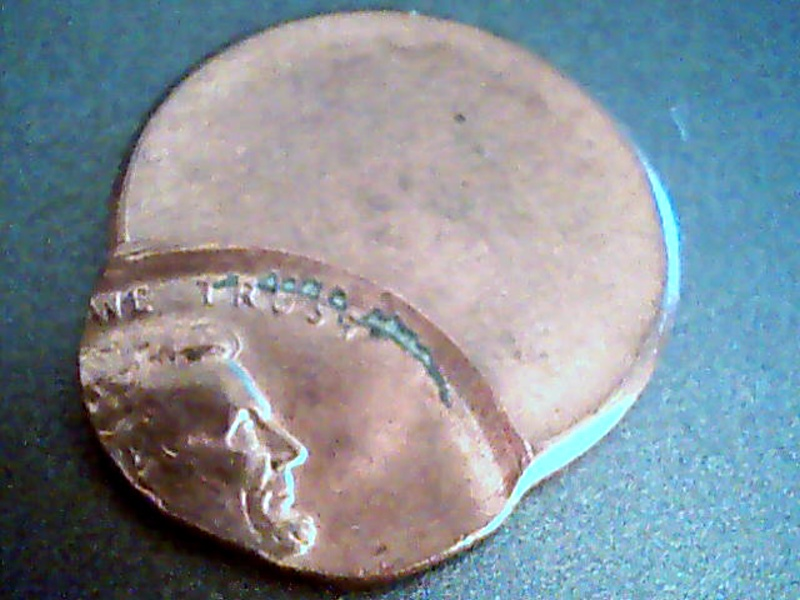
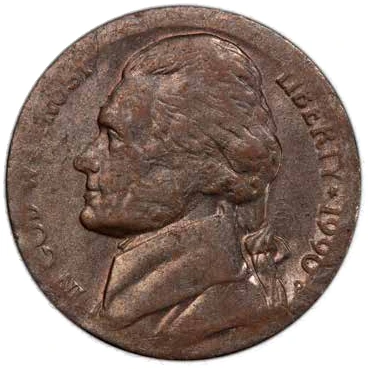
The off-center Lincoln cent and 1990-P nickel show different profiles. The nickel combines an unusual planchet with broad metal spread, so it is useful for studying the edge but is a poor price comparison for an ordinary broadstruck nickel.
| Type | Location or shape | What to check | Comparison |
|---|---|---|---|
| Off-center strike | Part of the design falls beyond the edge | Often a crescent of blank metal | Compare both faces and report whether the date and mint mark remain readable |
| Centered broadstrike | Design fits on both faces | Expanded diameter with a mostly even border | Compare the diameter and edge with a normal coin of the same type |
| Misaligned die | One face can be visibly shifted | The opposite face may be centered | Align the two faces before comparing the displacement |
| Post-mint rim damage | Detail can be flattened along the edge | Rolled lip, dents or scrape marks | Look for displaced metal and abrasion on the sidewall |
Identification
Read the design all the way around
Check the lettering, date and border elements on each face. A blank crescent together with a truncated design is stronger evidence than a wide band alone.
Turn the coin over in the same orientation
Photograph both faces straight on. An off-center placement affects the blank relative to the strike, while a single misaligned die can leave the other face centered.
Compare width and edge
Use a known normal example of the same denomination. Note whether the larger diameter is broadly uniform and whether the edge shows abnormal spread, a seam or obvious abrasion.
Documented cases and value
Our state quarter case guide records a 1999-D Delaware quarter graded PCGS MS63 and attributed 35% off-center at $161 in September 2010. That is a dated result for a specific coin. Recent comparables should match denomination, design displacement, readable date and grade. The 1990 nickel guide documents the 3.6 g combination example separately.
A more dramatic blank area can make a piece visually appealing, but a missing date makes attribution harder. Compare complete images and published results before using a price, especially when multiple errors appear on the same coin.
Summary
Start with the complete design, then check both faces and the edge. Use the labels “off-center,” “broadstrike” and “misaligned die” only after the physical evidence fits.
Frequently asked questions
Can a broadstrike be uneven?
Yes. Metal can spread unevenly. If both sides still retain the intended design, compare an uncentered broadstrike rather than relying on the shape alone.
Is a wide rim an off-center error?
Inspect both faces for design elements cropped by the edge. A wide rim with intact design can have another cause.
Does the off-center percentage determine value?
It is one factor. A readable date, the denomination, visual appearance, grade and additional errors also affect comparisons.
Can a damaged coin be wider than normal?
Yes. Compression and edge work can widen or flatten a coin. Check whether the edge and surrounding design show abrasion or displaced metal.
References
References and further reading
- PCGS distinction between mint errors and die varieties
- PCGS guide to off-center strikes
- Error-Ref centered broadstrikes
- U.S. Mint coin production terminology
- Specimen photo by Contactsmc. CC BY-SA 3.0. Converted to WebP and resized.
