

 App Store

COIN VALUE GUIDES · NICKEL GUIDES
Liberty Nickel:V Nickel Types, Mint Marks and Value Checks
Distinguish 1883 No Cents and With Cents nickels, locate later branch-mint marks, and separate ordinary V nickels from the exceptional 1913 issue.
 HeriBase TeamPublished
In this article
Quick answer
The Liberty Head nickel, also called the V nickel, is a five-cent copper-nickel coin dated 1883–1913. Regular production ended in 1912; the five known 1913 coins are exceptional pieces, not an ordinary final-year issue. The Roman numeral V means five.
For the 1883 With Cents issue, the PCGS guide checked October 21, 2026 lists $32 in G4, $85 in VF20 and $285 in MS63. An 1883 No Cents coin, a later branch-mint issue and a 1913 specimen need different comparisons. Gold coloring on a No Cents coin does not turn it into a gold coin.
Coin photos
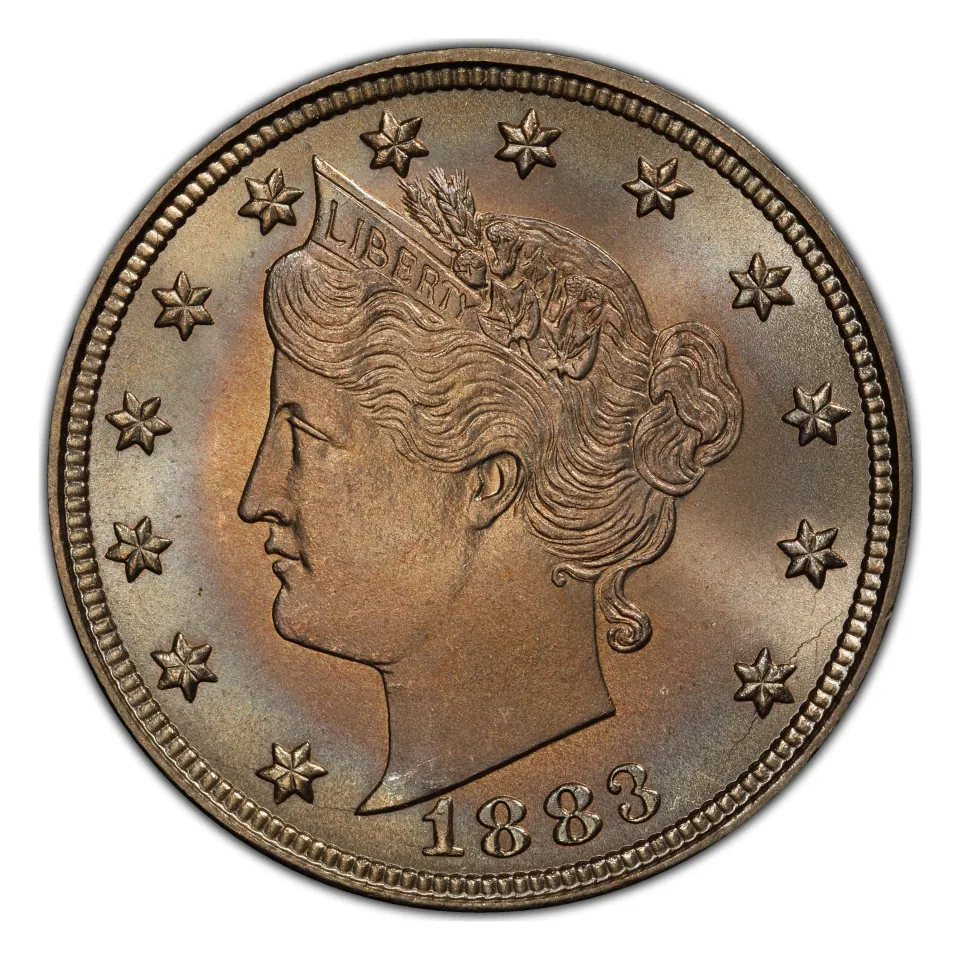
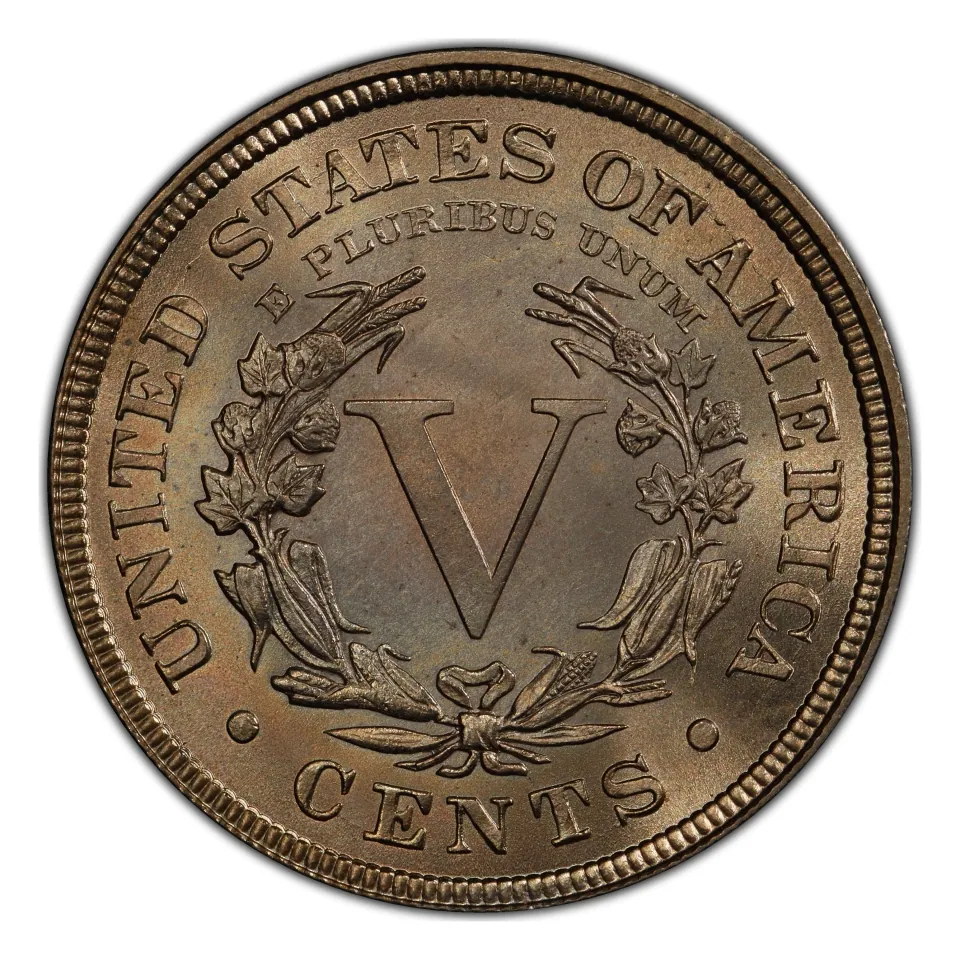
Basics & coin story
Charles E. Barber’s new nickel initially carried a large V without the word CENTS. The lack of a written unit helped gold-plated nickels pass deceptively as five-dollar coins. The Mint added CENTS during 1883. Both reverses are genuine designs, so the first type is not simply a coin with missing lettering.
This change makes 1883 a useful introduction to type collecting: two coins with the same date can represent different catalog issues. The illustrated With Cents reverse makes the correction easy to see. The earlier Shield nickel and later Buffalo nickel help place the V nickel in the five-cent design sequence.
| Feature | What to check |
|---|---|
| Regular production | 1883–1912; exceptional 1913 specimens separately |
| Designer | Charles E. Barber |
| Metal | 75% copper, 25% nickel; no silver |
| Nominal size / weight | 21.2 mm / 5.00 g |
| Edge | Plain |
| Reverse types in 1883 | No Cents and With Cents |
| Branch mint marks | D and S occur on 1912 issues |
Identification
Read the bottom of the reverse
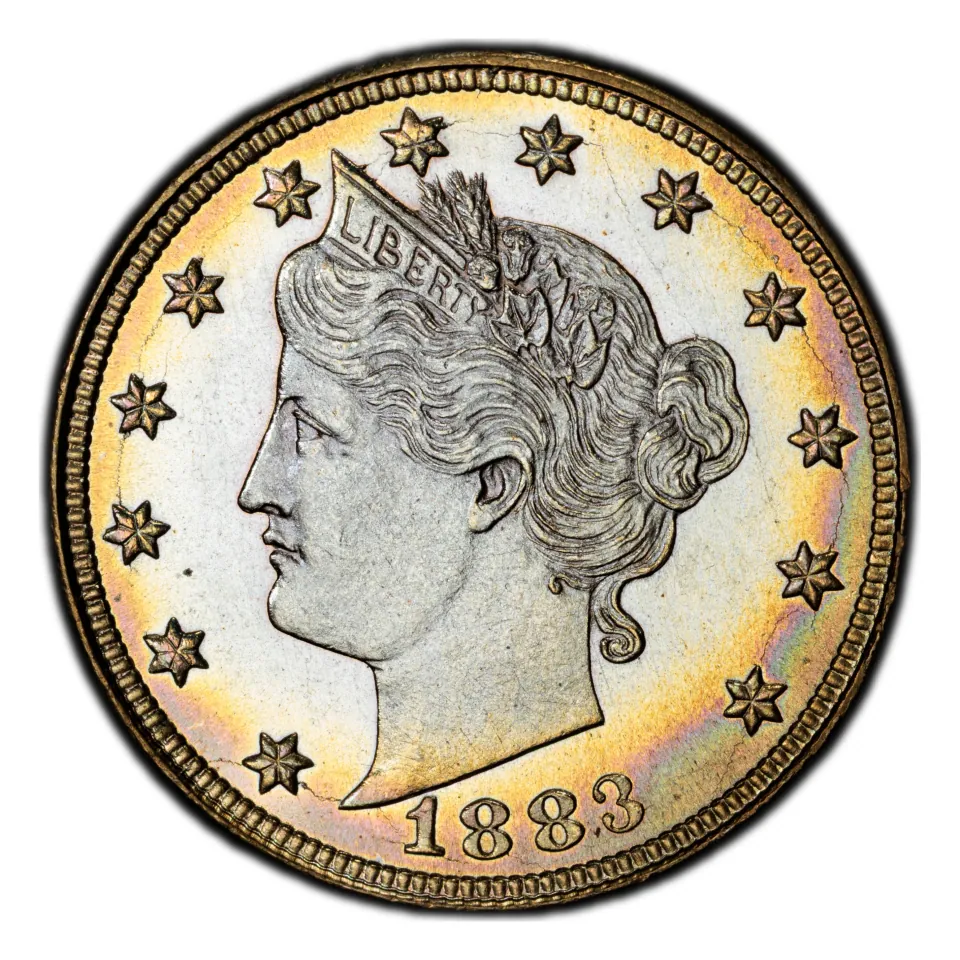
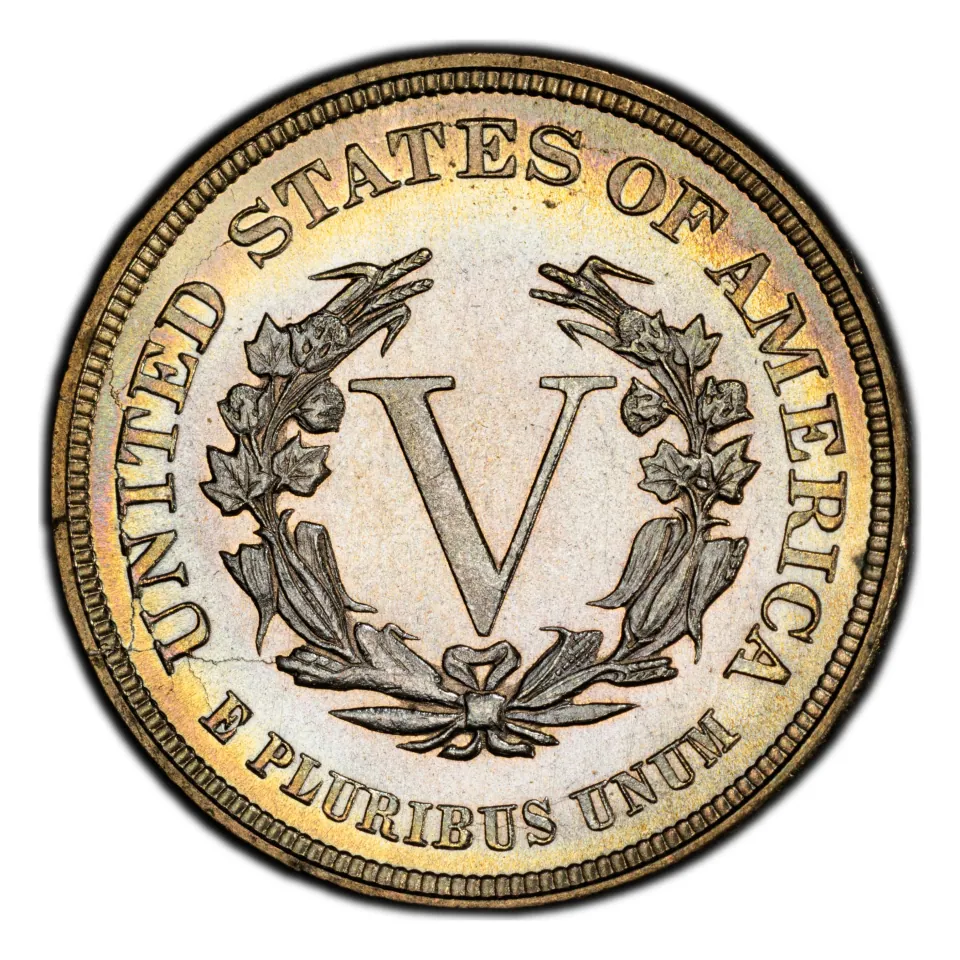
Compare the word beneath the wreath. With Cents coins explicitly state the unit; the No Cents type does not. Ordinary abrasion or weak lettering on a With Cents coin does not establish the earlier type. Match the complete reverse arrangement.
A plated No Cents coin is an altered nickel, even if the alteration is old. Its history can interest collectors, but authenticity, surface condition and evidence matter. Do not describe every plated coin as a documented nineteenth-century fraud specimen.
Separate Philadelphia, 1912-D and 1912-S
Philadelphia circulation coins normally have no letter. On 1912 branch-mint issues, look on the reverse near the lower left of the wreath, below the dot beside CENTS. D and S identify separate entries. A faint or suspicious mark needs a close photograph; it cannot be inferred from the date alone.
The 1913 rarity should not be priced from a general V-nickel chart. An altered date or replica can resemble a famous coin in a small photograph. Preserve any candidate and seek specialist authentication rather than using a headline sale as its value.
Condition & value
Amounts are U.S. dollars. These PCGS retail-guide examples were checked October 21, 2026 for the stated issue and designation. A raw coin needs its own condition assessment; guide figures are not guaranteed sale proceeds and can lag metal prices.
| Issue | Grade / condition | Value or reference | Basis | Important distinction |
|---|---|---|---|---|
| 1883 With Cents | G4 / VF20 | $32 / $85 | PCGS retail guide | Not the No Cents issue |
| 1883 With Cents | XF40 | $105 | PCGS retail guide | Problem-free coin |
| 1883 With Cents | MS63 / MS65 | $285 / $650 | PCGS retail guide | Uncirculated examples |
| 1883 No Cents / 1912-D / 1912-S | Exact issue and grade | Separate guide entry | Issue-specific | Do not transfer With Cents prices |
| 1913 / plated or altered coin | Authentication required | Specimen-specific | Separate assessment | No headline-price assumption |
Wear often weakens Liberty’s hair and the headband lettering. Look at the entire surface as well as the number of visible letters; a single feature cannot certify a grade. Corrosion, rim damage or abrasive cleaning may make a numerical retail guide unsuitable.
An inexpensive date can be a sensible starting point for a type collection. For more expensive dates or claimed varieties, compare recent sales with the same mint, grade and surface description. Use the appraisal guide to prepare clear photographs and a realistic question for a specialist.
Summary
Identify the 1883 reverse type first, then the date, mint and condition. A large V is normal; No Cents is a genuine type and gold plating is an alteration. Keep 1912 branch issues and the exceptional 1913 specimens out of ordinary common-date comparisons.
FAQ
Why is it called a V nickel?
The reverse uses the Roman numeral V for five. It is a five-cent denomination, not five dollars.
Is an 1883 No Cents nickel an error?
No. No Cents is the initial intentional reverse type. CENTS was added later in 1883.
Are Liberty nickels silver?
Regular Liberty Head nickels are 75% copper and 25% nickel, with no silver.
Are all 1913 Liberty nickels valuable?
Only five genuine 1913 specimens are known. Replicas and altered dates require authentication; a date resembling 1913 does not establish one of those coins.
References
References and further reading
- PCGS: photographed issue, specifications and guide
- PCGS: 1883 No Cents design and history
- PCGS: Liberty Head nickel series
Sources checked October 21, 2026. Retail guides and historical sales are identified separately; neither guarantees a buying offer.