A dollar that separates history from its issue date
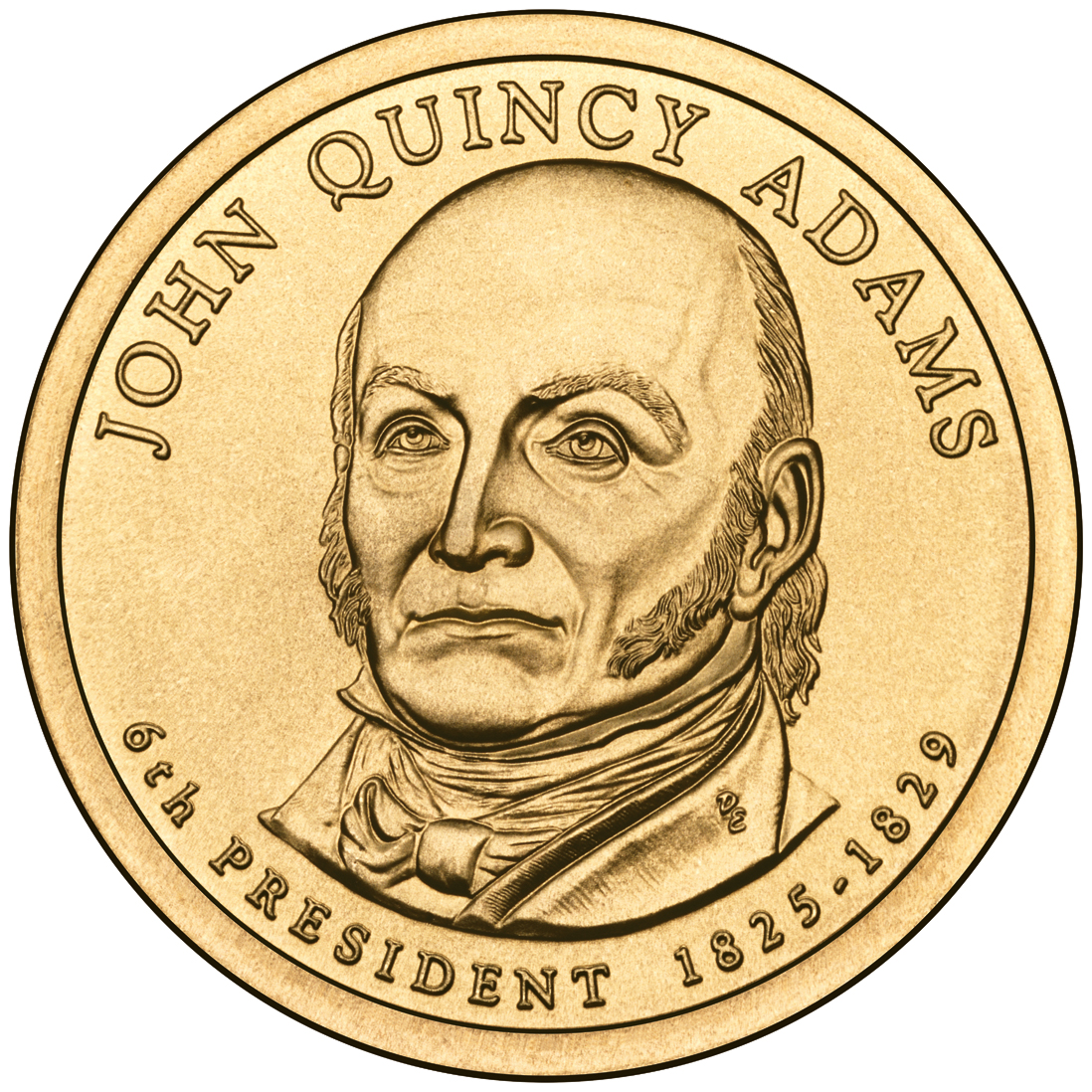
The Presidential dollar program honored Presidents in order of service. John Quincy Adams, the sixth President, appeared on the sixth coin, released into circulation on May 15, 2008. The portrait’s 1825–1829 inscription is a short historical label, not a claim that this modern dollar circulated in the nineteenth century.
This explains a common identification mistake. John Adams and John Quincy Adams are different Presidents and different issues. Read the whole name and ordinal number before looking up a price. The earlier John Adams dollar belongs to 2007; this coin belongs to 2008.
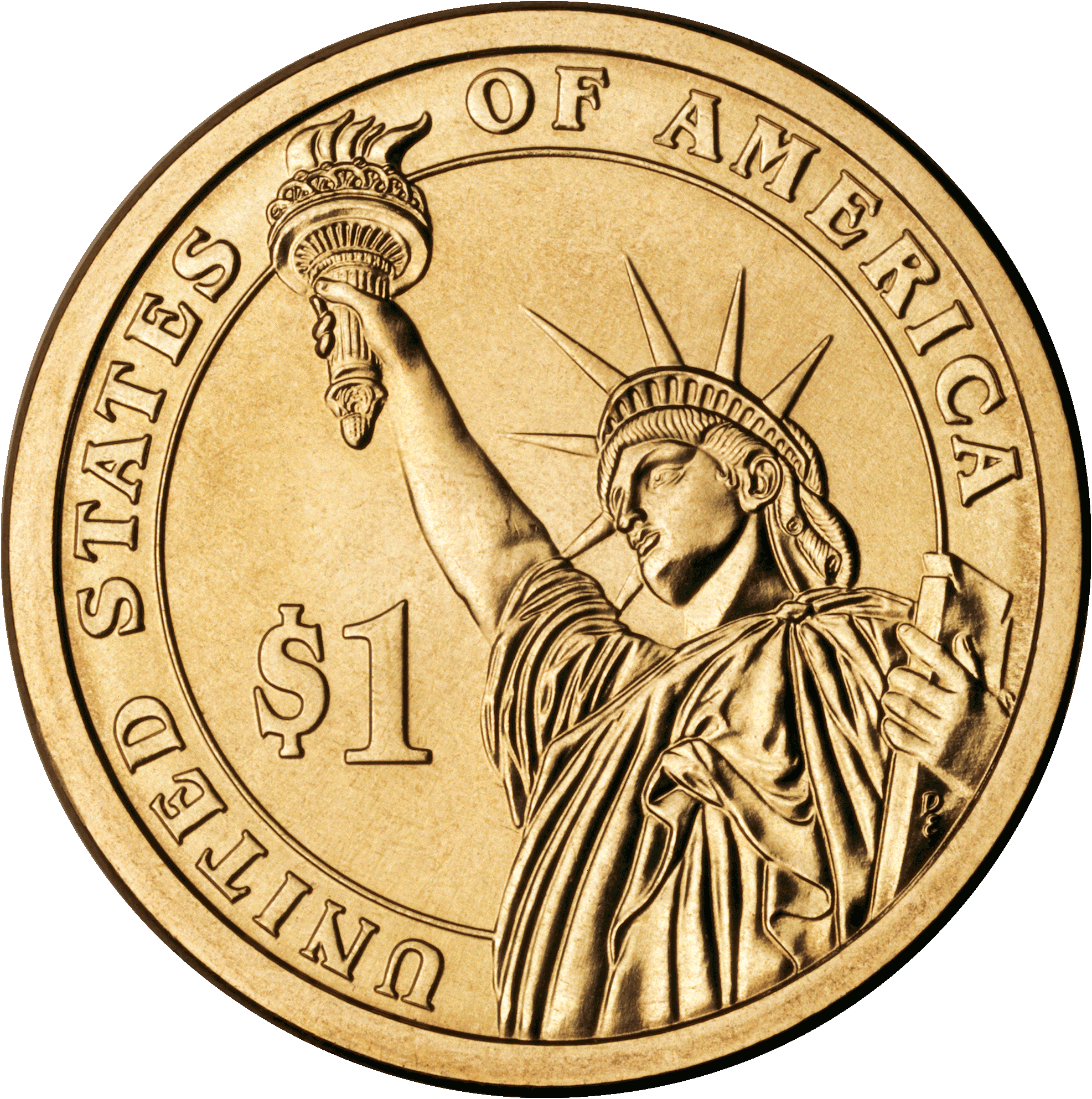
The shared Statue of Liberty reverse makes the series recognizable, but the portrait and edge distinguish an individual issue. For other golden-colored dollars, see the gold dollar identification guide and the Sacagawea dollar guide.
How to read the edge and recognize normal variations
Find 2008 and the mint mark
Hold the coin by its rim over a soft surface and rotate it under even light. Read the complete edge rather than one visible segment. On this issue the edge includes the year, mint mark, E PLURIBUS UNUM and IN GOD WE TRUST. Their absence from the main portrait does not mean they are missing from the coin.
Position A and Position B are not automatic errors
On regular coins the edge lettering can face either direction relative to the portrait. PCGS labels lettering upside down with the portrait face up as Position A; Position B is the opposite orientation. A seller’s “upside-down lettering” description is therefore not enough to justify an error premium.
Missing lettering needs a full-edge examination
A genuinely omitted edge-lettering operation is different from shallow letters, wear or an edge that has been altered. Check the entire circumference. If lettering appears absent, preserve the surfaces and obtain an attribution before applying prices from certified missing-edge examples. The appraisal guide explains how to prepare photographs and compare like-for-like records.
Value by version and condition
Value checkpoints · reviewed October 16, 2026| Coin / version | Condition | Value basis | What supports a premium | Comparison limit |
|---|
| Regular P / D | Circulated | $1 face-value baseline | A verified error or other specific collector feature | Normal edge orientation is not an error. |
|---|
| Regular P / D | Uncirculated | Use same-mint completed sales | Grade, luster and fewer marks | Raw coins are not equivalent to certified top grades. |
|---|
| P / D satin finish | Collector-set coin | Compare satin-finish examples | Correct attribution and preservation | Do not price as an ordinary circulation strike. |
|---|
| S Proof | Collector strike | Compare Proof sales of the same grade | Contrast and undamaged surfaces | Gold color does not imply gold value. |
|---|
No current retail range is asserted for the collector rows because a matched set of recent sold records has not been established here. A high asking price for a raw dollar is not a transaction. A professional grading label also needs its certification and exact issue checked.
When building an affordable set, choose a clear portrait and undisturbed surfaces first. The grading guide explains the difference between circulation wear, a weak strike and handling marks.


 App Store