

 App Store

COIN VALUE GUIDES · PRESIDENTIAL DOLLARS
John Adams Dollar Coin:2007 Value, Edge Lettering and Error Checks
Identify the John Adams Presidential dollar, read the 2007 date and mint mark on its edge, compare ordinary values and separate normal lettering orientation from genuine edge errors.
 HeriBase TeamPublished
In this article
Quick answer
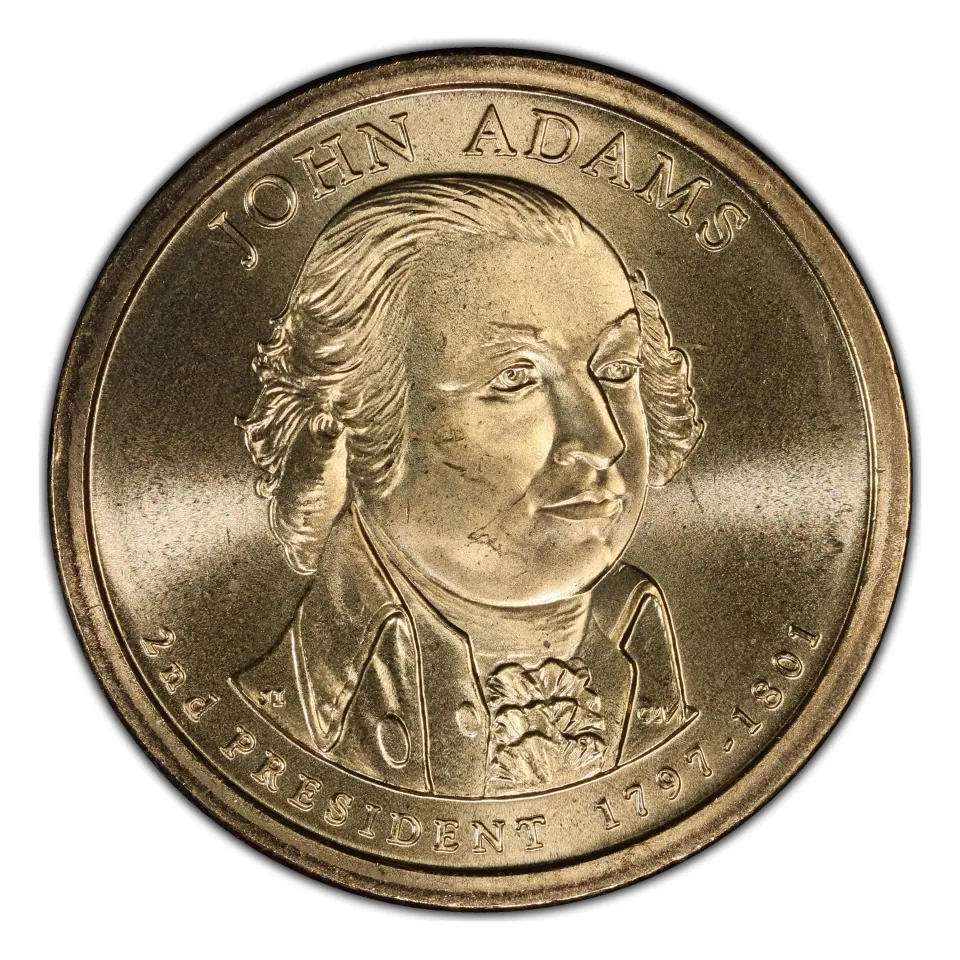
The John Adams Presidential dollar was issued in 2007, and a normal worn P- or D-mint example has a $1 face-value baseline. Its gold-colored appearance does not mean it contains gold. The 2007 date and mint mark are on the edge; 1797–1801 on the portrait side records Adams’s term in office.
The PCGS guide checked October 22, 2026 lists the 2007-P regular strike, Position A, at $6 in Mint State 63, $10 in Mint State 65 and $18 in Mint State 66. These are grade-specific retail estimates for uncirculated coins. Proofs, satin-finish coins and authenticated missing or doubled edge lettering require separate comparisons.
Coin photos
Basics & coin story
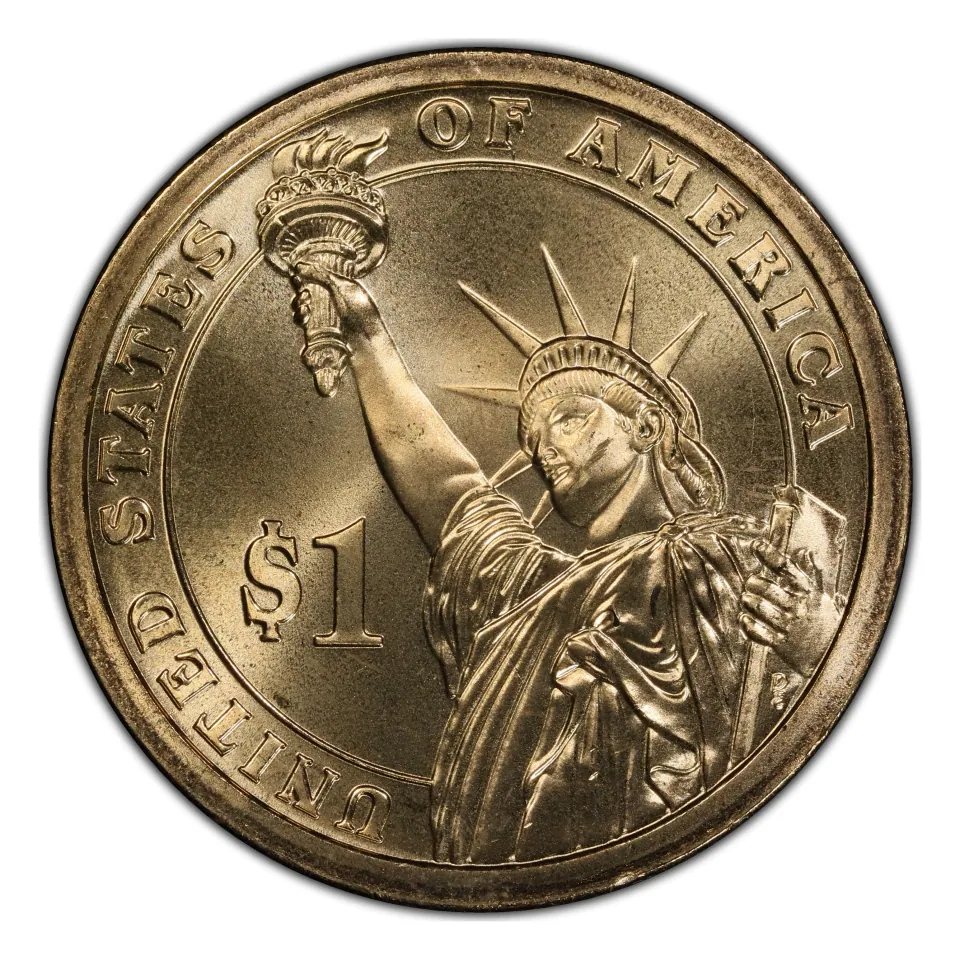
The Mint released the John Adams dollar into circulation on May 17, 2007, as the second Presidential $1 Coin after George Washington. Adams served as the second U.S. president, from 1797 to 1801. Joel Iskowitz designed the portrait, Charles L. Vickers sculpted it, and Don Everhart designed and sculpted the common Statue of Liberty reverse.
Moving inscriptions to the edge left room for larger portraits and a common reverse. It also created a practical identification trap: a collector examining only the two faces can miss both the production year and mint. The coin is distinct from the John Quincy Adams dollar honoring the sixth president, even though both portraits share the Adams surname.
| Feature | What to check |
|---|---|
| Issue year / denomination | 2007 / $1 |
| Honoree | John Adams, second president, 1797–1801 |
| Metal | Copper core with manganese-brass cladding; no gold |
| Nominal weight / diameter | 8.10 g / 26.50 mm |
| Normal edge inscriptions | 2007, mint mark, E PLURIBUS UNUM and IN GOD WE TRUST |
| Regular issues | Philadelphia P and Denver D |
| Collector alternatives | San Francisco Proof and separate satin-finish issues |
| Reverse | Statue of Liberty, UNITED STATES OF AMERICA and $1 |
Identification
Read the entire edge
Rotate the coin under clear light and look for 2007 plus P, D or S. On this issue, IN GOD WE TRUST belongs on the edge, so its absence from the portrait and Liberty faces is normal. Examine all the way around before claiming that an inscription is missing.
Position A and Position B are normal orientations
PCGS uses Position A when the edge lettering reads upside down with the president’s portrait facing up; Position B reads normally in that position. Either orientation can occur on regular strikes. An upside-down inscription is therefore not, by itself, an edge-lettering error or a promise of a premium.
Separate edge errors from wear or alteration
Recognized missing-edge-lettering and doubled-edge-lettering errors exist. A second pass can produce overlapping or inverted lettering, which is different from the normal A/B orientation. Worn, scraped or mechanically removed lettering also needs to be excluded. Record clear photographs around the whole edge, both faces and the coin’s weight before seeking authentication.
Do not mix regular, satin and Proof finishes
Collector satin-finish coins and S Proofs are separate issues, not regular strikes made more valuable by a holder label. Proof edge lettering uses a different production method from the later lettering step on regular coins. Match the finish and exact catalog entry before comparing a price.
Condition & value
Amounts are in U.S. dollars. PCGS retail-guide examples were checked October 22, 2026 and apply only to the stated issue, grade and designation. They are not guaranteed purchase offers; current market conditions and selling costs can change the amount received.
| Issue | Grade / condition | Value or reference | Basis | Important condition |
|---|---|---|---|---|
| Ordinary worn P or D | Circulated | $1 baseline | Face value | Normal edge lettering and orientation |
| 2007-P regular, Position A | MS63 | $6 | PCGS retail guide | Problem-free uncirculated example |
| 2007-P regular, Position A | MS65 | $10 | PCGS retail guide | No satin or Proof finish |
| 2007-P regular, Position A | MS66 | $18 | PCGS retail guide | Correct grade and issue required |
| D / Position B / satin / Proof | Exact issue and grade | Use matching entry | Separate comparisons | Do not transfer Position A P prices |
| Missing or doubled edge lettering | Authenticated error | Case-specific | Specific error evidence | Wear and altered edges excluded |
Mint State (MS) means uncirculated. Inspect the portrait and open fields for contact marks and rub rather than grading from gold-colored brightness. An ordinary circulated dollar should not inherit the price of a certified MS66 coin, and a set or roll asking price does not equal the value of one loose example.
For a claimed edge error, determine the error first and its condition second, then look for comparable sales. A dramatic high-grade error record is not a baseline for every Adams dollar. Use the grading scale and the Martin Van Buren dollar guide for comparison with another Presidential issue while keeping dates and edge inscriptions separate.
Summary
Identify John Adams, read 2007 and the mint mark on the edge, then separate normal orientation from a genuine lettering error. Start a worn regular coin at $1. Match grade and finish for a collector comparison, and preserve the complete edge when documenting a suspected error.
FAQ
Is the John Adams dollar dated 1797–1801?
Those years describe Adams’s presidential term. The coin’s issue date is 2007 and appears on its edge.
Is a John Adams dollar made of gold?
No. It has a copper core with manganese-brass cladding. Its gold-colored surface does not indicate gold content.
Is upside-down edge lettering an error?
Not by itself. Position A and Position B are normal edge-lettering orientations on regular strikes.
Where is IN GOD WE TRUST on a 2007 John Adams dollar?
It is on the edge along with the date, mint mark and E PLURIBUS UNUM. Inspect the entire edge before claiming it is missing.
References
References and further reading
- PCGS CoinFacts: exact issue, specifications and available guide evidence
- U.S. Mint: John Adams design, edge inscriptions and artist credits
- U.S. Mint: May 17, 2007 circulation release
- PCGS: Position B orientation and manufacturing differences
- PCGS: confirmed missing and doubled edge lettering
Sources and quoted guide evidence checked October 22, 2026. Guide estimates, historical sales, face value and metal-content calculations are identified separately.