

 App Store

COIN ERRORS & VARIETIES
Bugs Bunny Half Dollar: 1955 and 1951 Franklin Die Clashes
Check the Franklin half dollar’s mouth for the Bugs Bunny die clash and compare 1955 and 1951 FS-401 with ordinary marks.
 HeriBase Editorial TeamPublished
In this article
Quick answer
The Bugs Bunny nickname refers to die-clash marks near Franklin’s mouth. On the 1955 FS-401 they resemble teeth. A 1951 FS-401 is also cataloged, so read the year before comparing an image or a sale.
A line near the mouth alone is inconclusive. Look for the documented position and raised shape, then check nearby features for evidence of a die clash or damage.
Specimen photos
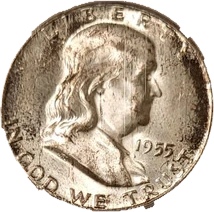
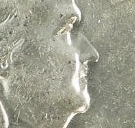
Variety and error comparison
A die clash can happen when opposing dies meet without a blank between them. One die can pick up part of the opposing design and transfer that detail to coins struck afterward. In this case the mark appears near the lips of the Franklin portrait.
Collectors use the same nickname for more than one date. The date, mint and exact die attribution matter more than the similarity at a glance. The Full Bell Lines designation describes the bell’s reverse detail and is a separate observation.
| Case | Look at | Expected clue | Alternative | Verify with |
|---|---|---|---|---|
| 1955 FS-401 | Franklin’s mouth | Raised clash details at documented positions | A scratch across the lips | Attributed 1955 examples |
| 1951 FS-401 | Same area on a 1951 coin | Clash pattern for the 1951 die | Applying 1955 markers to 1951 | Attributed 1951 examples |
| Ordinary coin | Mouth and nearby field | Normal portrait details | Light or toning exaggerates an edge | A normal same-date photograph |
| Post-mint mark | Surface across the lips or field | Incuse groove, displaced metal or irregular course | Small raised die clash | Change the light direction |
Three identification checks
Read the complete date
Confirm 1955 or 1951 and identify the issue. Photograph the whole coin before using a close-up.
Check whether the feature is raised
Turn the coin under a low light. Look for a raised shape in a known location. Compare it with the shadows around the normal portrait details.
Use a matching attribution
Compare the mouth and adjacent design with a certified example of the same date. Check bell lines independently if comparing an FBL sale.
Documented cases and value
Heritage reported $149 for a PCGS MS65 Full Bell Lines 1955 FS-401 on April 8, 2025 (lot 23461). Treat it as one recorded sale and use the same FS attribution and comparable grades. A designation for Full Bell Lines can change the set of relevant sales even when the Bugs Bunny attribution is the same. The 1951 value guide and Franklin series guide cover ordinary issues and general grade checks.
Summary
Check the date, identify the raised clash pattern near the lips and match the whole pattern to the correct attributed die. Price the variety and any bell-line designation separately.
Frequently asked questions
Is the Bugs Bunny half dollar a doubled die?
It is a die-clash variety. Another die left an impression that transferred to coins struck later.
Can a Franklin half dollar from 1951 be a Bugs Bunny?
Yes. PCGS lists a 1951 FS-401. Compare a 1951 reference when confirming the attribution.
Is a scratch near Franklin’s mouth enough?
No. Look for raised clash detail in the documented positions and rule out an incuse cut.
Does Bugs Bunny automatically mean Full Bell Lines?
No. Full Bell Lines refers to reverse bell details. It is checked separately from the die clash.