

 App Store

COIN ERRORS & VARIETIES · DIME
2021 Dime Errors: P and D Checks, Collar Clashes and Damage
Compare real 2021-P and D dimes, investigate reported rim anomalies, and separate mint errors from damage and high-grade coins.
 HeriBase TeamPublished
In this article
What should you know first?
A 2021 dime needs a supported mint-error diagnosis, not a dramatic nickname. Its Roosevelt portrait, torch reverse and P or D mint letter are normal. A seller has reported a 2021-P collar clash, but that listing is not independent authentication or a completed sale. Do not assign a rare-error premium from that description alone.
What do the real coins show?
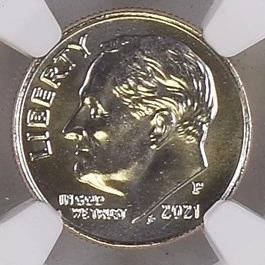
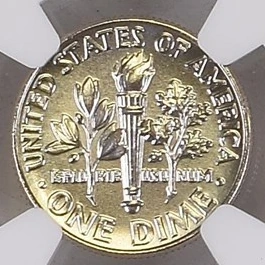
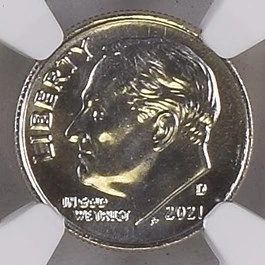
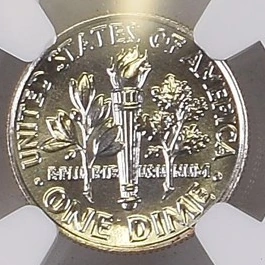
What is normal for this issue?
Roosevelt’s portrait and the torch between branches are the intended designs on 2021 circulation dimes. The year was not a transition to a new circulating dime design. Do not import a story about a different denomination’s redesign, or a later commemorative dime, into a 2021 error claim.
The circulation coin is copper-nickel clad over a copper core, with a nominal mass of 2.268 grams and diameter of about 17.91 millimeters. Its edge is normally reeded. Philadelphia and Denver coins carry P or D beside the date. Collector Proof manufacture must be considered separately; a reflective ordinary coin is not automatically a Proof or a mint error.
This guide uses actual 2021-P and 2021-D reference coins to show the intended design and mint positions. Neither photographed specimen is presented as the reported collar-clash coin. For mechanisms and other years, use the broader dime error guide, while keeping each coin’s date and evidence separate.
For the broader mechanisms and other dates,compare the dime error guide. A year-specific attribution still needs the exact diagnostics described below.
How do normal coins and errors compare?
| Coin or observation | Where to look | Meaning | How to confirm | Value context |
|---|---|---|---|---|
| Normal 2021-P or D | Date, mint letter and complete design | Ordinary circulation issue | Match year and manufacture first | Worn ordinary coin: 10¢ face value |
| Reported 2021-P collar clash | Seller describes partial ridges on the face of the rim | A reported individual case, not an independently established attribution | Sharp rim photographs and a matched mechanism | No verified sale range quoted |
| Wide rim or smooth edge | Entire edge, both faces and dimensions | Possible manufacture issue, wear or later alteration | Do not diagnose from a face-on crop alone | No automatic premium |
| Raised line or small lump | Relief and continuity with original metal | Possible die crack or chip; damage can imitate relief | Multiple lighting angles and repeatable detail | Severity and identification matter; no blanket price |
| Full Bands or Full Torch label | Reverse torch details and grading criteria | Strike-quality designation, not a mint-error diagnosis | Use the appropriate grading-service standard | Compare grade and quality separately |
What should you verify on a 2021 dime?
Where should the mint mark be checked?
Read the full 2021 date and the letter above it near Roosevelt’s neck. A weak or obscured letter can result from wear, strike weakness or damage. This photograph shows an ordinary P; it does not establish a rare missing-letter issue. A Denver coin needs its own D-mint evidence rather than a Philadelphia seller’s description.
What does the reported collar-clash case actually establish?
USA Coin Book item 695123, offered by QualityCoins1, describes a 2021-P dime with partial ridges on the rim face attributed to a collar clash. It is a seller report, not a grading-service certificate. The photographed D coin here is only a normal mint-position comparison, not that specimen. No attribution is inferred from the reference coin’s rim.
How is a collar clash different from a partial-collar strike?
Error-Ref defines a collar clash as damage to a die’s rim gutter from contact with the collar. On reeded issues, transferred serrations can appear along the design rim. A partial-collar strike instead concerns a blank only partly engaged by the collar during striking. The two mechanisms require different evidence; a wide rim or missing-looking reeding does not identify either on its own.
Do sharp torch bands make a coin an error?
No. Full Bands and Full Torch are grading-service descriptions of strike detail. An especially sharp ordinary dime may interest condition collectors, but that does not establish a die break, off-center strike or other mint error. Do not relabel a high-grade auction record as an error sale.
Could the feature be damage?
Can a raised lump be heat damage rather than a die chip?
Yes. The appearance alone is insufficient. In a January 2024 NGC-hosted forum discussion about a claimed 2021-P error, several members interpreted the coin as post-mint damage, with heat proposed as a cause. That is community opinion, not an NGC grading-service ruling, and the precise history of an unknown coin should not be asserted from photographs.
How should a scratch and a die crack be distinguished?
A die crack can leave a raised line when metal enters a crack in the die. A scratch cuts into the coin and can push up metal beside the cut, producing a misleading ridge. Use directional light from more than one side and examine the surrounding surface. Do not scrape or polish the area to test it.
Does a smooth or thickened rim prove a collar error?
No. Circulation wear, rolling and later pressure can change the edge. Photograph the full circumference and both faces, then measure the diameter. A coherent as-struck relationship is needed; an isolated smooth patch, a flat edge or a broad-looking border is not sufficient.
Does copper color establish a missing clad layer?
No. Normal clad construction, staining, coatings and chemical attack can produce confusing colors. A missing-layer claim requires mass, edge and surface evidence, with later alteration excluded. Do not use an acid test or remove metal from the coin.
What do the price records establish?
| Coin or category | Grade or attribution | Amount | Source and date | Basis and limitation |
|---|---|---|---|---|
| Ordinary worn 2021-P or D dime | Normal circulation issue | 10¢ | Face denomination | No error premium implied |
| 2021-P reported collar clash | USA Coin Book item 695123; seller-described | Not quoted | Listing accessed November 16, 2026 | An asking price is not a sale or independent authentication |
| 2021-D in the PCGS auction record | PCGS describes MS69FB | Not used as an error price | PCGS records an eBay sale dated March 20, 2023 | Condition/strike-quality context, not an error attribution; PCGS disclaims eBay accuracy |
| Unverified wide rims, chips or missing-letter claims | Individual coins not attributed here | Not quoted | No independently matched error-sale record established | Do not borrow another year’s or mechanism’s result |
The useful starting distinction is between face value, a quality premium and an error premium. A certified high-grade coin can have collector demand without any minting mistake. Conversely, a coin with a genuine small die chip does not automatically deserve the price of a dramatic wrong-planchet error.
The collar-clash listing supplies a specific report to investigate, not a market range. Without a matched independently attributed specimen and a trustworthy completed sale, publishing a $100–$500 estimate would create a false impression of evidence. This guide therefore leaves the error premium unquoted rather than transferring a price from an older dime.
Compare grade, surfaces, exact mechanism and severity when a reliable sale becomes available. A high asking price, an auction’s opening bid and a completed result are different amounts. Fees and sale dates must also be retained when using an actual record.
How should you check your coin?
1. Record the ordinary identity
Photograph the complete 2021 date, P or D and both faces under even light. Separate circulation manufacture from collector Proofs before comparing anything unusual.
2. Describe the physical feature
Record whether the anomaly is raised, recessed, rim-connected or confined to a letter. Add several edge views, actual mass and diameter measurements. Preserve uncertainty where photographs cannot resolve relief.
3. Match an attribution before a price
Compare the claimed mechanism with a specialist reference. Keep a seller report, a forum opinion and a grading-service attribution distinct. Seek in-hand review for a convincing major error without assigning it a speculative dollar range.
Keep the original photographs and measurements together. HeriBase can help with an initial photo-based identification; a coin-specific error attribution or certified grade still requires the appropriate evidence.
What is the key takeaway?
Begin with the normal 2021 P/D design, then test the specific anomaly. The reported collar clash remains qualified; high-grade torch detail is not an error, and a wide rim or surface lump needs evidence before it receives an error label or premium.
What else do collectors ask?
Did the circulating dime change design in 2021?
The 2021 circulation dime has the Roosevelt portrait and torch reverse. This guide does not substantiate a new-design transitional error for that year.
Are 2021-P and 2021-D dimes errors because of their mint letters?
No. P and D are normal mint identifiers. An alleged error requires a separate physical diagnosis.
Is a 2021-P collar clash independently authenticated here?
No. The cited individual example is a seller-described report. It is kept distinct from certification and from the normal reference photographs.
Is a partial collar the same as a collar clash?
No. A partial-collar strike concerns incomplete engagement of the blank with the collar. A collar clash involves die-to-collar contact that can alter the die.
Does Full Bands mean a mint error?
No. It describes strike detail under the relevant grading-service criteria. A quality premium should not be called an error premium.
What is a 2021 dime error worth?
The ordinary worn dime has a ten-cent face value. No independently matched sale range was established for the reported error claims discussed here, so no speculative premium is assigned.
Should I clean a suspected error before photographing it?
No. Preserve the original surfaces. Use even lighting and several viewing angles rather than cleaning, scraping or acid-testing the coin.
Where can you verify the evidence?
References and further reading
- PCGS CoinFacts: normal 2021-P Roosevelt dime
- U.S. Mint: dime history and specifications
- Error-Ref: collar-clash definition
- USA Coin Book: seller-reported 2021-P collar clash, item 695123
- NGC-hosted community discussion: 2021-P claimed error and damage opinions, January 2024
- PCGS: 2021-D MS auction record; not an error attribution
References accessed November 16, 2026. Publication dates and historical sale dates are retained separately. A catalog attribution is not itself a sale or a current buying offer.