

 App Store

COIN VALUE GUIDES · DOLLARS
1996 Silver Eagle Value:Bullion, P Proof and MS69 Comparisons
Identify the low-mintage 1996 American Silver Eagle bullion issue, distinguish the separate P Proof and compare one-ounce silver content with dated grade-specific guide values.
 HeriBase TeamPublished
In this article
Quick answer
A standard 1996 American Silver Eagle bullion coin contains one troy ounce of .999 fine silver and normally has no mint mark. Its $1 denomination is not a useful silver-market valuation. The separate 1996-P Proof is a different collector issue.
The PCGS retail guide checked October 23, 2026 lists ordinary bullion coins at $59 in MS65 and $74 in MS69. The bullion mintage is 3,603,386, making 1996 a notable low-mintage date. Grade, surface quality and date demand matter in addition to changing silver prices.
Coin photos
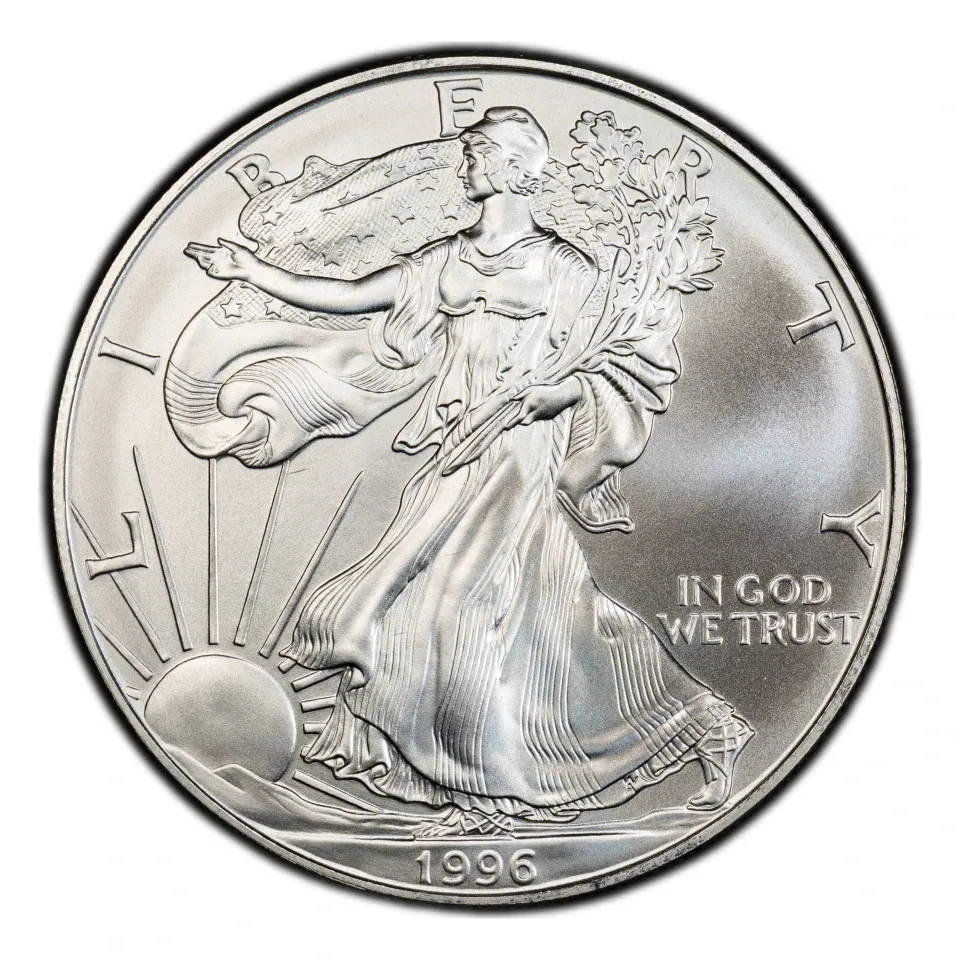
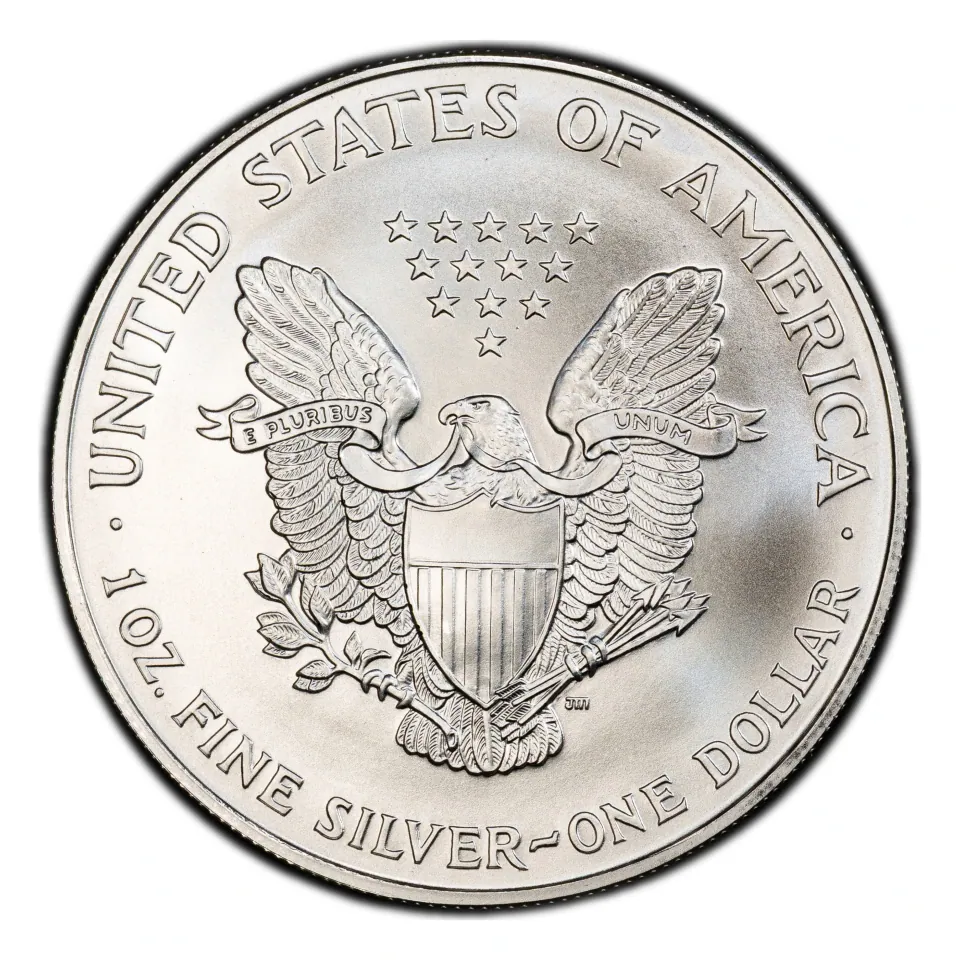
Basics & coin story
The American Silver Eagle program began in 1986. Its obverse adapts Adolph A. Weinman’s Walking Liberty design, with Liberty moving toward the sunrise. The 1996 reverse is John Mercanti’s heraldic eagle with shield, arrows and olive branch, not the landing eagle introduced for the later Type 2 design in 2021.
The 1996 bullion issue’s recorded 3,603,386 production makes it an important date in bullion collections. That number describes ordinary bullion coins, not the separate Proof product or the number surviving in a particular certified grade. A low-mintage date can command collector demand without making every example a perfect-grade rarity.
The design and one-ounce silver specification also distinguish it from a circulating dollar such as an Eisenhower. A dollar denomination does not imply the same size, alloy or purpose across series. Use the 1986 Silver Eagle guide for the program’s first-year context.
| Feature | What to check |
|---|---|
| Type / denomination | American Silver Eagle bullion / $1 |
| Fine silver | One troy ounce |
| Fineness | 99.9% silver (.999 fine) |
| Nominal weight / diameter | Approximately 31.103 g / 40.6 mm |
| Design | Weinman Walking Liberty / Mercanti heraldic eagle |
| Edge | Reeded |
| Bullion mint mark | None normally |
| Separate collector issue | 1996-P Proof |
| Bullion mintage | 3,603,386, per PCGS |
Identification
Separate no-mark bullion from P Proof
The ordinary bullion coin has no mint letter. The separate P Proof is identified and graded in its own manufacturing context. Do not treat the normal absence of a bullion mark as a missing-letter error, or apply Proof prices to a bullion coin simply because it is reflective.
Check the correct reverse generation
A 1996 coin should show the heraldic eagle and shield. A later landing-eagle design paired with a 1996 date would not match the normal issue. Identify both faces and use measurements and a reliable examination when authenticity is uncertain.
Inspect broad fields without touching them
Milk spots, haze, hairlines and contact marks can affect collector demand. MS69 and MS70 are numerical preservation claims, not a consequence of original packaging alone. Do not wipe or polish the surface to remove a spot.
Condition & value
Amounts are in U.S. dollars. PCGS retail-guide examples were checked October 23, 2026 and apply only to the stated issue, grade and designation. They are not guaranteed purchase offers; current market conditions and selling costs can change the amount received.
| Issue | Grade / condition | Value or reference | Basis | Important condition |
|---|---|---|---|---|
| Contained fine silver | One troy ounce | 1 × silver spot per troy oz | Metal reference | Changing component, not full collector price |
| 1996 bullion, regular | MS65 | $59 | PCGS retail guide | Problem-free stated grade |
| 1996 bullion, regular | MS69 | $74 | PCGS retail guide | Grade must be supported |
| 1996-P Proof | Exact PR grade and designation | Compare separately | Collector manufacture | No bullion price transferred |
Separate three numbers: the $1 face value, the market value of one ounce of silver, and the collector price for this date and grade. A retail premium can reflect demand for a date set and does not guarantee the same premium in a dealer’s buying offer.
The ordinary guide shows the same $59 reference across several lower Mint State grades in this check, while MS69 is $74. That is a more useful baseline than leading with an exceptional MS70 price. A perfect-grade comparison should never be transferred to an ungraded coin because its owner cannot see a flaw.
For a sale, match bullion versus Proof, exact grade, surface status and any certification context. Completed single-coin transactions are more informative than a high asking price or a multi-coin set. The grading scale provides general terminology; authentication remains separate from grade.
Summary
Identify the no-mark bullion issue versus P Proof, then separate silver content from collector grade. The low-mintage date is relevant, but it does not establish perfect preservation or a guaranteed buying premium.
FAQ
How much silver is in a 1996 Silver Eagle?
The standard bullion coin contains one troy ounce of .999 fine silver.
Should a 1996 bullion Silver Eagle have a mint mark?
No mint mark is normal for the ordinary bullion issue. The separate 1996-P Proof is a different collector product.
Does the 3,603,386 mintage include 1996 Proofs?
It is the ordinary bullion issue mintage, not a combined count of bullion and Proof products or a certified-grade population.
Can an ungraded 1996 Silver Eagle use MS70 prices?
No. MS70 is a specific preservation grade that must be established; original packaging or a bright surface does not prove it.
References
References and further reading
- PCGS CoinFacts: exact issue, specifications and available guide evidence
- U.S. Mint: American Eagle silver bullion standard
- PCGS: separate 1996-P Proof Silver Eagle
Sources and quoted guide evidence checked October 23, 2026. Guide estimates, historical sales, face value and metal-content calculations are identified separately.