

 App Store

COIN ERRORS · QUARTERS
1996 Quarter Errors:Wrong Planchets, Off-Center Strikes and Damage
Compare a normal 1996 quarter with documented striking errors, then use the mint mark, weight and rim to decide what warrants authentication.
 HeriBase Editorial TeamPublished
In this article
Quick answer
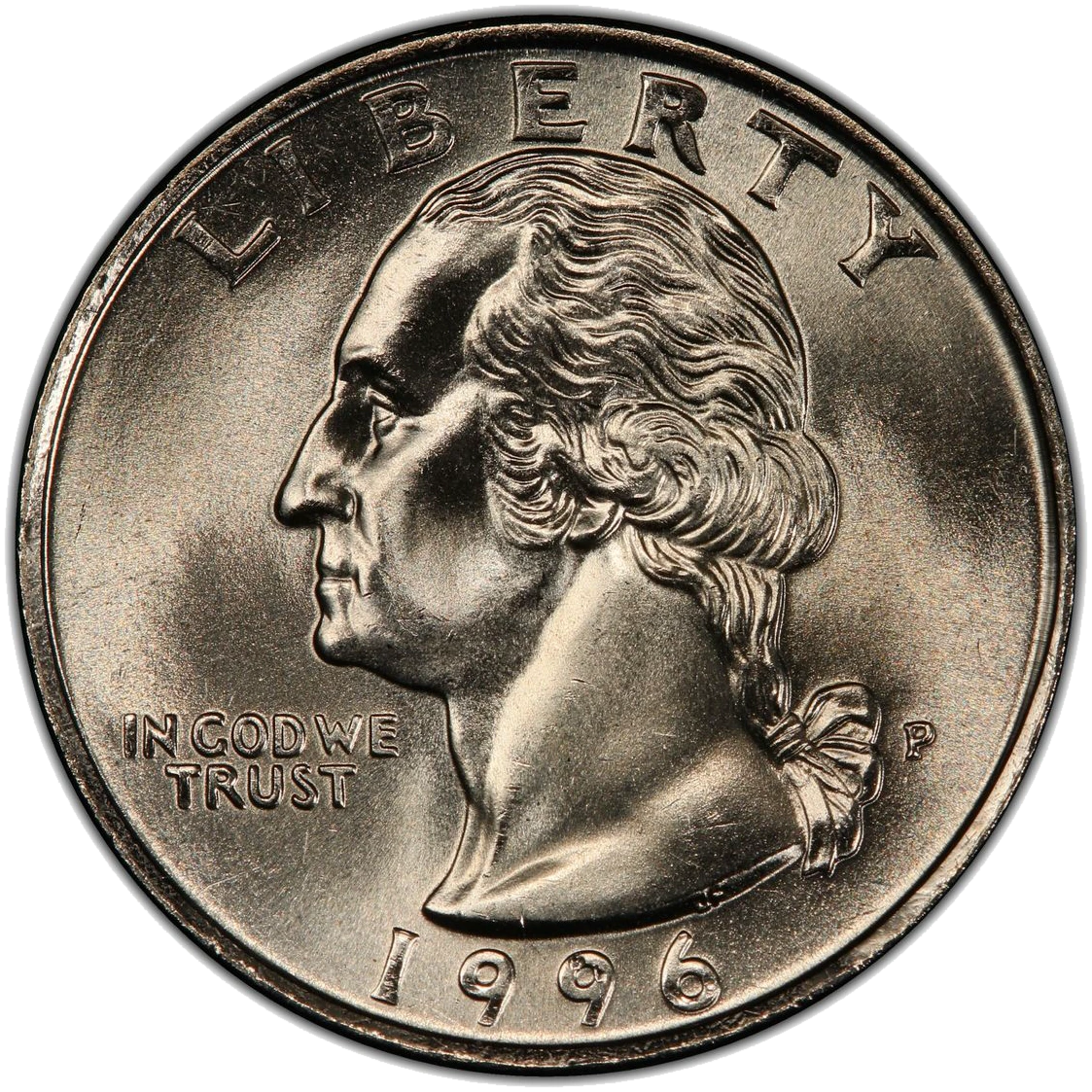
A worn, ordinary 1996-P or 1996-D Washington quarter is worth 25 cents. Both mint marks are expected. Genuine striking errors need physical evidence, such as undisturbed blank metal on an off-center strike or a clipped design on a smaller, mismatched planchet.
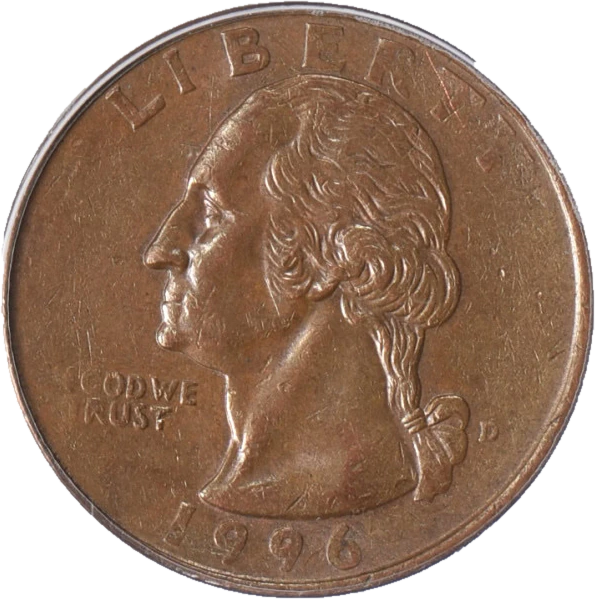
A copper-colored face or a thin, flat shelf around the date needs further testing. Heritage documented a 1996-D struck on a five-cent planchet. Its auction result is a comparison for that specific error.
Coin photos
Basics & coin story
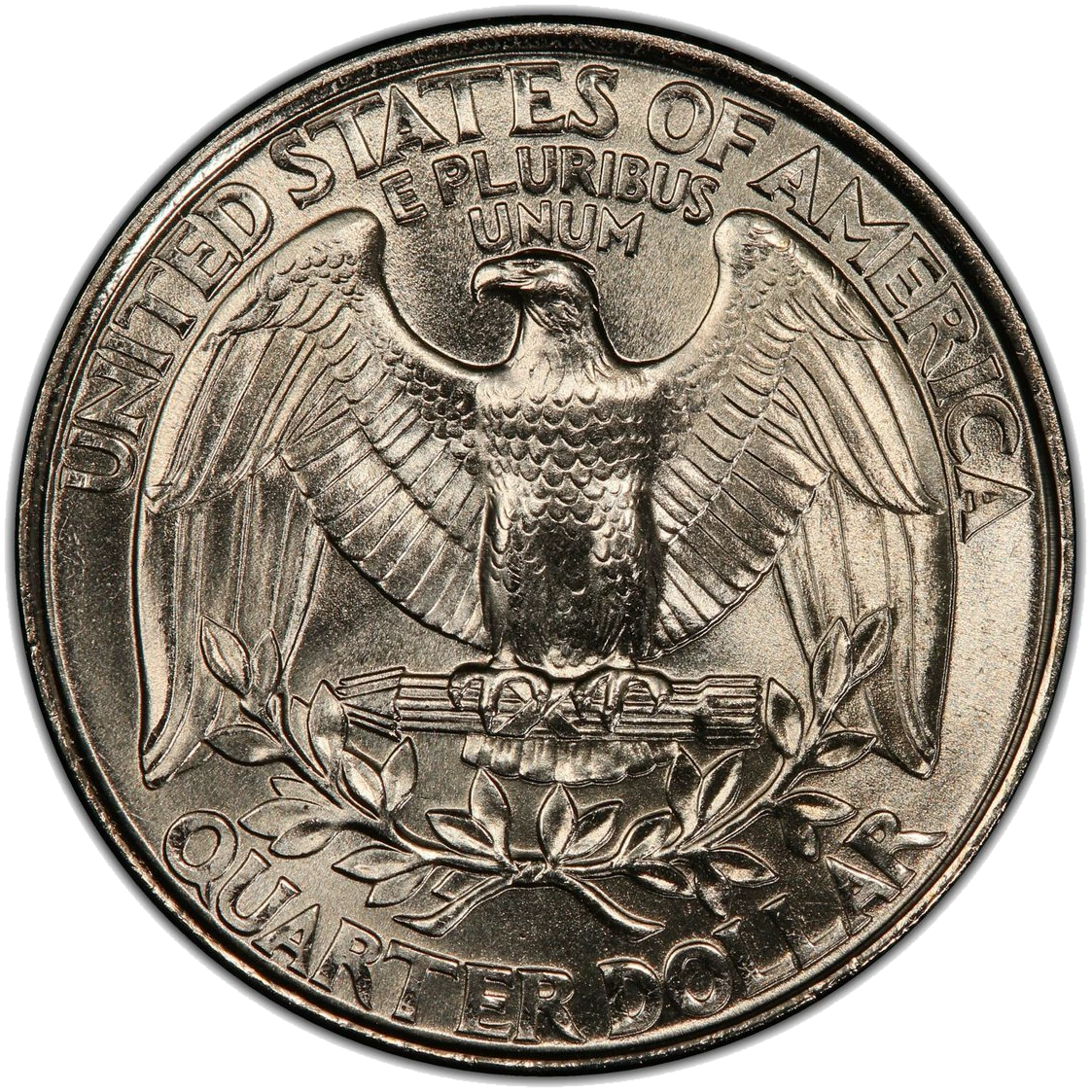
The 1996 quarter still used John Flanagan’s Washington portrait and eagle reverse. Philadelphia struck 925,040,000 and Denver 906,868,000 regular quarters. San Francisco made clad and silver Proofs for collectors.
The 1996-W coin promoted in that year’s U.S. Mint set was a Roosevelt dime. For a 1996 quarter, compare the actual mark and finish before treating a letter or silver-colored edge as unusual.
| Feature | What to check |
|---|---|
| Regular P and D | Copper-nickel clad over a copper core |
| Clad dimensions | 5.67 g nominal; 24.30 mm |
| P or D | Obverse, to the right of Washington’s ribbon |
| 1996-S | Clad and 90% silver Proofs; match the issue separately |
Identification
Distinguish off-center strikes from a shifted die
On an off-center strike, look for blank planchet and corresponding displacement on both faces. A wide rim confined to one face can result from a misaligned die. A broadstrike can have a spread edge with the design still on the planchet. Compare the illustrations in the off-center and broadstrike guide.
Measure an undersized coin before guessing its planchet
Record the weight on a scale that reads 0.01 g and measure across the largest diameter without clamping the edge. Heritage lot 9128 is a certified Denver quarter on a five-cent planchet. Part of the right-side design missed the smaller blank, while the mint mark remained visible. The auction page lists the standard quarter weight in its generic metadata, so use the auction attribution and physical observations when comparing this specimen.
Check color and flat doubling under angled light
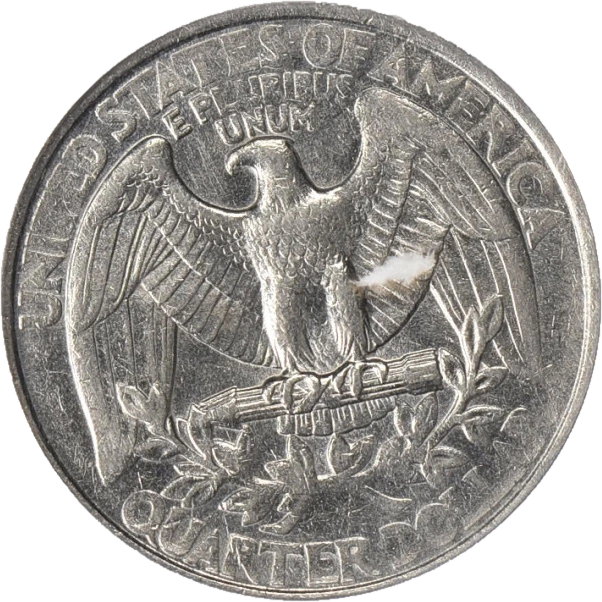
The normal clad edge often shows a copper core. An entirely copper-looking face can come from wear, exposure or plating. A certified 1996-D pictured above has a copper-colored obverse and a retained reverse clad layer. Its ANACS holder reports 4.67 g, roughly a gram below a standard quarter. Inspect the complete edge and consult the missing clad layer diagnostics before ruling anything in. Flat shelf-like doubling is usually a striking effect. A doubled die requires a repeatable match across several features.
Condition & value
Amounts are in U.S. dollars. Retail guide values are estimates for the stated grade, mint and designation. A dated sale is a record of one coin. Neither is a guaranteed purchase offer.
| Issue | Grade / condition | Value or reference | Basis | Important condition |
|---|---|---|---|---|
| Regular 1996-P or D | Ordinary circulated | $0.25 | Face value | Both mint marks are normal |
| 1996-D on five-cent planchet | ANACS MS63 | $172.50 on September 11, 2004 | Heritage lot 9128 | One documented sale; match denomination of planchet, grade and design visibility |
| 1996-D missing obverse clad | ANACS AU58; 4.67 g | Compare certified missing-layer sales | GreatCollections item 1354759 | One documented specimen; weight alone cannot authenticate |
| Off-center strike | Authenticated with readable date | Compare completed sales for the same error | Match offset, condition and surviving date | A minor rim shift has a different market |
| 1996-S Proof | Clad or silver | Compare the correct Proof issue | Separate spot and Proof premium | Confirm composition and finish |
Summary
Verify the expected mint mark, then compare both faces, the complete edge and the measurements. The best price comparison is a certified 1996 example with the same production fault and similar condition.
Frequently asked questions
Is the P on a 1996 quarter an error?
No. P identifies a normal Philadelphia strike.
Are all 1996-S quarters silver?
No. San Francisco produced both clad and 90% silver Proof quarters.
How much should a normal 1996 quarter weigh?
A normal clad quarter weighs 5.67 grams nominally. Confirm the weight on a calibrated scale.
Does a wide rim prove an off-center strike?
No. Inspect both faces for displacement and visible unstruck metal. One shifted face can indicate a misaligned die.
What makes a 1996 error price comparable?
Match the documented error type, mint and date, retained design, and condition.