

 App Store

COIN ERRORS & VARIETIES · PENNY
1992 Close AM Penny: No Mint Mark, D and Wide AM Checks
Check AMERICA and the FG initials, keep Philadelphia and Denver separate, and distinguish a transitional reverse from ordinary worn lettering.
 HeriBase TeamPublished
In this article
What is the variety, and what is the value reference?
A genuine 1992 Close AM penny uses a reverse design with the A and M of AMERICA nearly touching; ordinary 1992 circulation cents have the wider spacing. Both no-mark and D-mint varieties require attribution. A 1992-D AU58BN example sold for $3,525 in June 2012; that sale does not price an ordinary Wide AM coin or every Philadelphia example.
What do the real reference coins show?
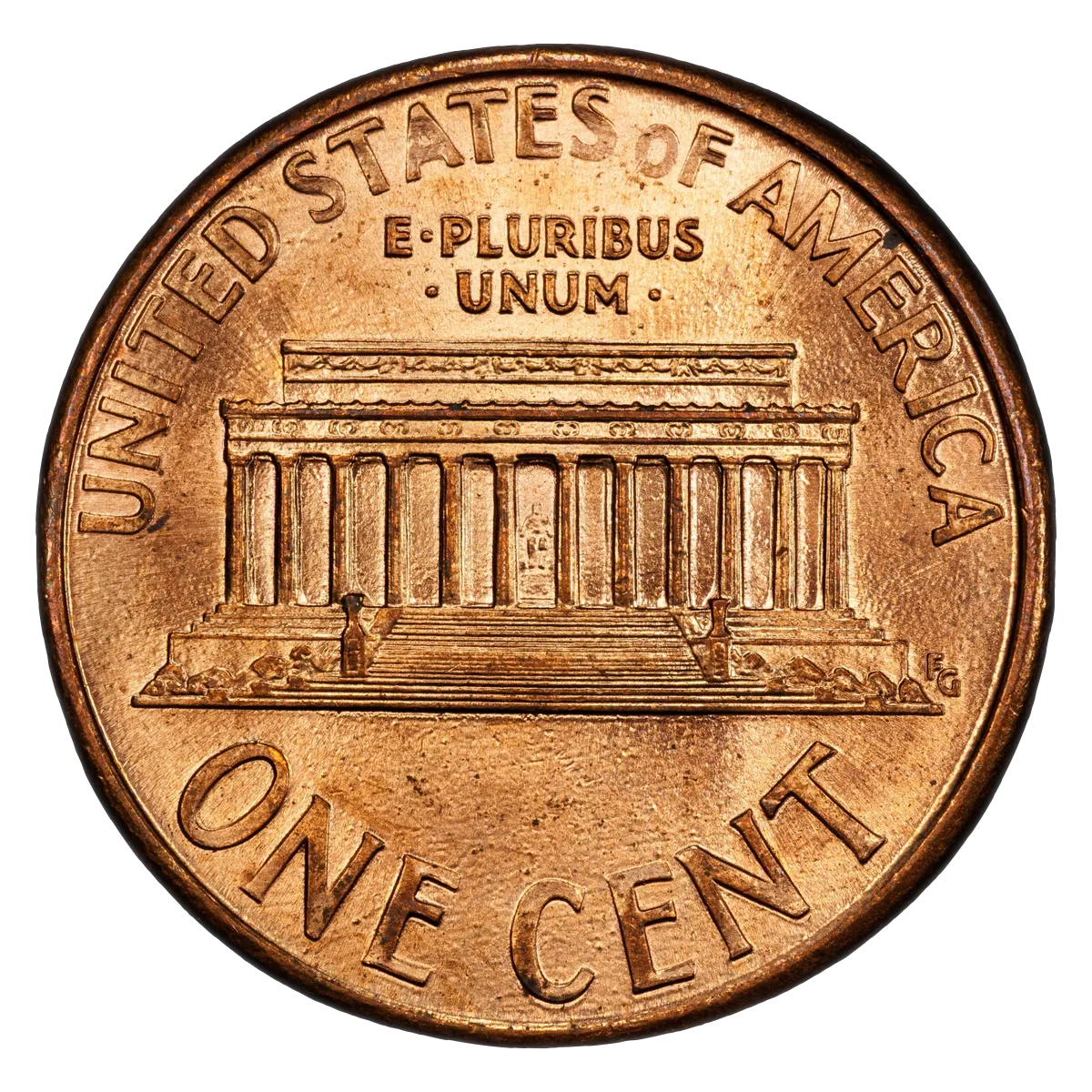
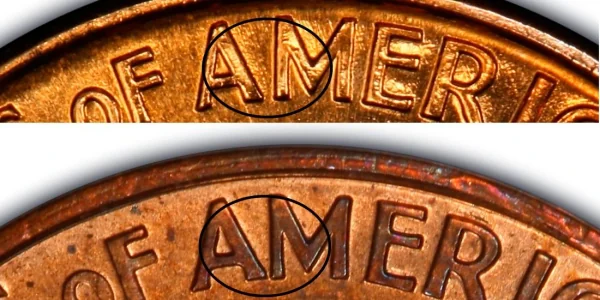
How do normal coins, the variety and damage differ?
| Coin / observation | Feature to check | Meaning | Common mistake | Before pricing |
|---|---|---|---|---|
| Ordinary 1992 circulation reverse | Visible separation between A and M | Normal Wide AM design | Wear may blur the gap | No Close AM premium established |
| 1992 Close AM, no mint mark | Nearly touching AM; full reverse matches | Philadelphia transitional reverse variety | No mint letter alone is normal | Use the Philadelphia variety record |
| 1992-D Close AM | Nearly touching AM plus D on obverse | Denver transitional reverse variety | Do not borrow Philadelphia prices | Use the D-mint and matching color/grade |
| Later normal Close AM reverse | Similar tight letters on another date | May be normal for that issue | Always read the front date | Not a 1992 attribution |
| Damaged or blurry AM | Metal spread, scratches or poor focus | Unresolved observation | A closed-looking gap is insufficient | No attributed value assigned |
How do you identify it without mistaking damage for an error?
This is a design-comparison problem rather than a missing-letter problem. The important distinction is which reverse design was used with a 1992 obverse. PCGS treats the Close AM entries separately from the ordinary circulation issue, and its discussion connects the reverse to the following year’s design. The date and the reverse must therefore be examined as a pair.
The tiny D on the portrait side also matters. A collection label may use “1992-P” as shorthand for Philadelphia, but the ordinary cent does not need a printed P to identify that mint. Two cents with the same reverse nickname can still belong to different mint listings. Separate them before comparing their certified grades, color designations or sale histories.
How close should A and M be?
Turn to AMERICA on the reverse. Examine the space between A and M with the coin level and the image sharply focused. Compare the shapes of both letters and the adjacent design, not merely a dark line in a photograph.
A contact mark can push metal toward a neighboring letter, and heavy wear can make a gap ambiguous. If the photograph cannot show the letter edges distinctly, record the result as unresolved rather than choosing the more valuable label.
What does the FG area add?
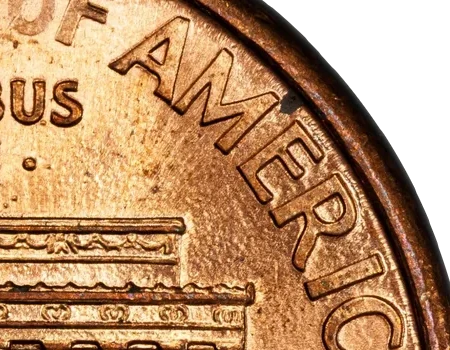
Check the reverse as a whole. The FG initials near the Memorial provide a supporting design comparison. Use an attributed example and examine their relationship to the building; do not make a final decision from AM alone.
Keep a full obverse image with the date and D, if present. A reverse-only photograph cannot distinguish a Philadelphia variety from a Denver variety, and the enlarged reference photo is not automatically the specimen in a price record.
What should you exclude before naming the variety?
Keep glare, weak focus, scratches and displaced metal out of the attribution. Take one full-face photograph and one close-up under steady light, then repeat with the light coming from another angle. A feature that vanishes with a reflection is different from a raised part of the design. Do not clean, scrape or press the area to make a suspected feature clearer.
When the match remains uncertain, describe the observation rather than assigning a rare name. The appraisal and authentication guide explains which questions can be explored with photographs and when the physical coin needs examination.
What are the three practical checks?
- Photograph the obverse date and mint area, then the complete reverse in the same set of notes.
- Compare A/M spacing and the supporting FG design with an attributed same-year example; exclude moved metal and weak focus.
- Choose the no-mark or D listing, obtain attribution when needed, and compare like grade, color and surface condition.
Which price belongs to your exact coin and condition?
| Coin / attribution | Condition | Reference | Basis and date | Limits |
|---|---|---|---|---|
| Ordinary 1992 or 1992-D Wide AM | Worn circulation example | 1-cent face value | Ordinary baseline, absent another premium feature | Not a Close AM valuation |
| 1992-D Close AM / FS-901 | ANACS AU58; PCGS index labels AU58BN | $3,525 | Reported sale, Stack’s Bowers, June 2012, lot 2245 | Original description and grading service retained |
| 1992 Close AM, no mint mark | Unverified grade/color | Not quoted | Separate Philadelphia entry requires matching evidence | Do not copy the 1992-D sale |
| Uncertain AM or disturbed surfaces | Unattributed | Not quoted | No variety confirmation | Photograph and examine before pricing |
The cited auction description uses the historic phrase “Proof reverse” for the die style on a business-strike coin. It does not establish that the coin was manufactured as a Proof. The sale record names ANACS, even though it is indexed on PCGS; the reference photograph above is a different specimen.
A seller’s listing is not a completed sale, and a large historical result does not establish an ordinary coin’s value. Match the full attribution, manufacture, grade and surface condition first. Fees, shipping and selling costs can also change what a buyer pays or a seller receives. Use the grading and surface-condition guide when deciding which comparison is relevant.
What should you conclude before pricing it?
A useful 1992 Close AM identification connects three observations: a 1992 date, the correct reverse design and the mint on the other side. Tight-looking letters by themselves are not enough. Treat no-mark and D coins separately, and keep an attributed historical sale distinct from ordinary face value or an unverified asking price.
Continue with the Coin Errors & Varieties directory and Penny errors and varieties photo list, Find a coin’s mint mark, Penny identification and value checks.
Frequently asked questions
What is a 1992 Close AM penny?
It is a 1992 cent with the Close AM reverse design, most visibly indicated by nearly touching A and M in AMERICA. Confirm the complete design and mint.
Is no mint mark a 1992 penny error?
No. Philadelphia cents normally lack a P mint letter. The reverse design, not that blank mint area, is the subject here.
Are 1992 and 1992-D Close AM the same listing?
No. Philadelphia and Denver varieties have separate listings and sale histories. Read the obverse before using a price.
Can I identify it from AM alone?
Use AM as the first check, then confirm the supporting reverse design and undisturbed surfaces. Blurry or damaged letters can be misleading.
Does Close AM mean the coin is a Proof?
No. The reverse-design terminology should not be confused with manufacture. The business-strike transitional variety requires its own attribution.
What does the $3,525 result apply to?
A 1992-D attributed example described as ANACS AU58 in the June 2012 Stack’s Bowers sale, lot 2245. It is not a current price for every 1992 penny.
Should I polish the letters to see the gap?
No. Cleaning or tooling can damage the very surfaces needed for attribution. Use better lighting and focus instead.
References and dated evidence
Open factual and price references
- PCGS: Philadelphia 1992 Close AM
- PCGS: Denver 1992-D Close AM
- PCGS auction record: Stack’s Bowers June 2012, lot 2245
Editorial review: November 16, 2026. Historical source and sale dates are retained in the tables; reviewing them does not make those figures live quotations.